A metal building kit uses an engineered steel frame; a pole barn uses wood posts set in the ground with trusses on top. The steel kit spans wider, lasts longer, and handles heavier snow and wind. A pole barn can come in cheaper for simple covered space, like a hay shed or an open equipment shelter. The right pick depends on how wide you need to span, how long the building has to last, and whether it is a finished shop or a basic cover.
This guide sits under the metal building kits pillar in our Basics & Buying silo. Below: the core difference between the two systems, how they compare on span, lifespan, and cost, and which one fits your use. If you are weighing a steel kit against a pole barn quote, this is the context that tells you which number is the cheaper one.
The core difference
What separates a metal building kit from a pole barn
The split is the frame. A metal building kit is built around an engineered steel frame, columns and rafters cut and punched to a stamped design. A pole barn, also called post-frame, is built around wood posts buried in the ground or set on brackets, with wood or light trusses carrying the roof.
That single choice drives everything downstream. Steel arrives as a pre-engineered kit, every piece labeled to a plan, which is what our what is a metal building kit guide walks through. A pole barn is framed more like a house: posts, girts, and trusses sized by a builder and sheathed in metal panels.
Both end up wrapped in steel siding and roofing, so from the road they can look alike. The difference is under the skin. One is a steel skeleton bolted to a foundation; the other is a wood post structure with steel on the outside. That is also why a pole barn sits closer to stick-built construction than to a steel kit in how it goes up.
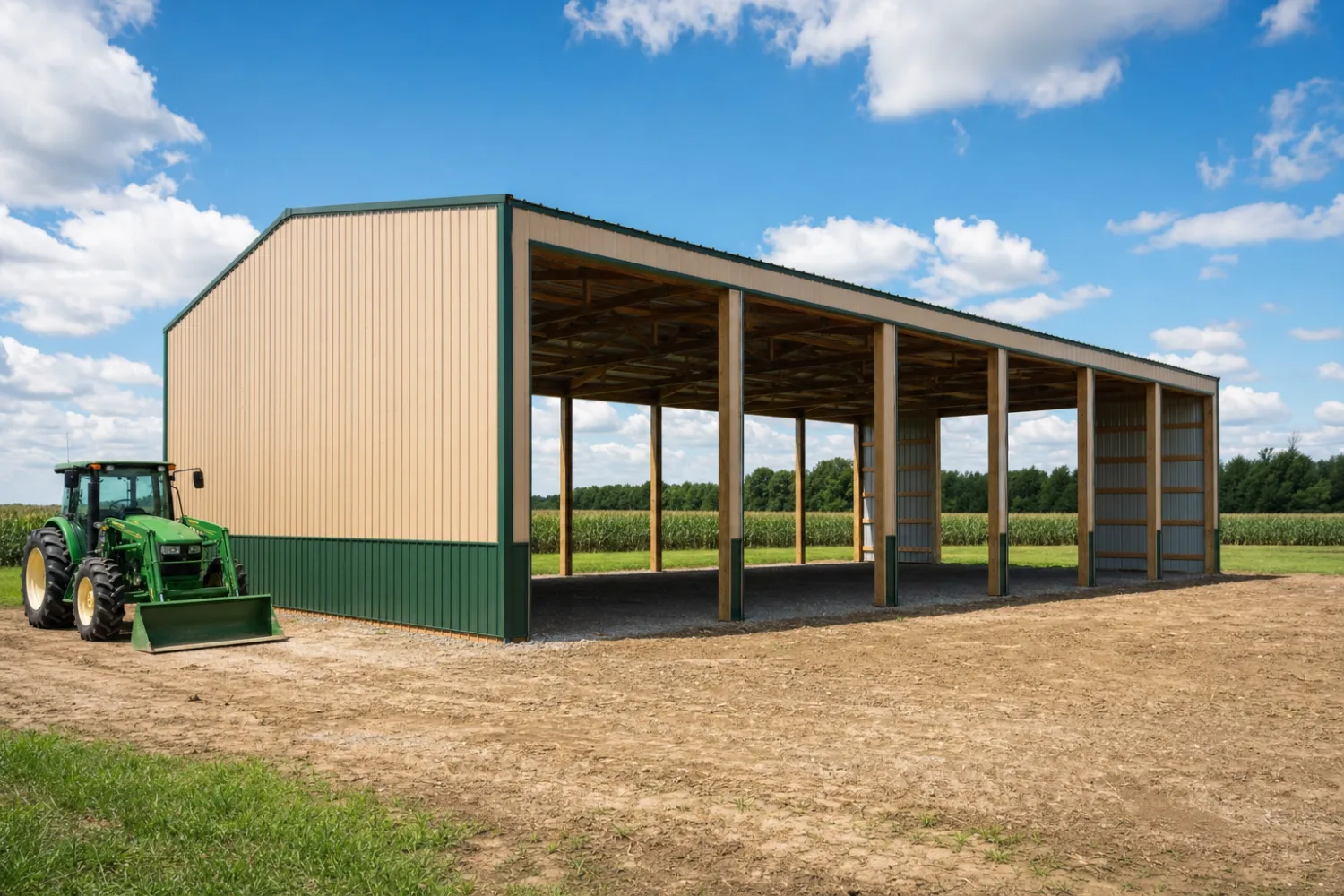
Span and lifespan
Clear span and how long each one lasts
Steel wins on both reach and years. An engineered steel frame clears wider spans with no interior posts and carries heavier loads, and steel does not rot, warp, or feed insects the way buried wood posts can.
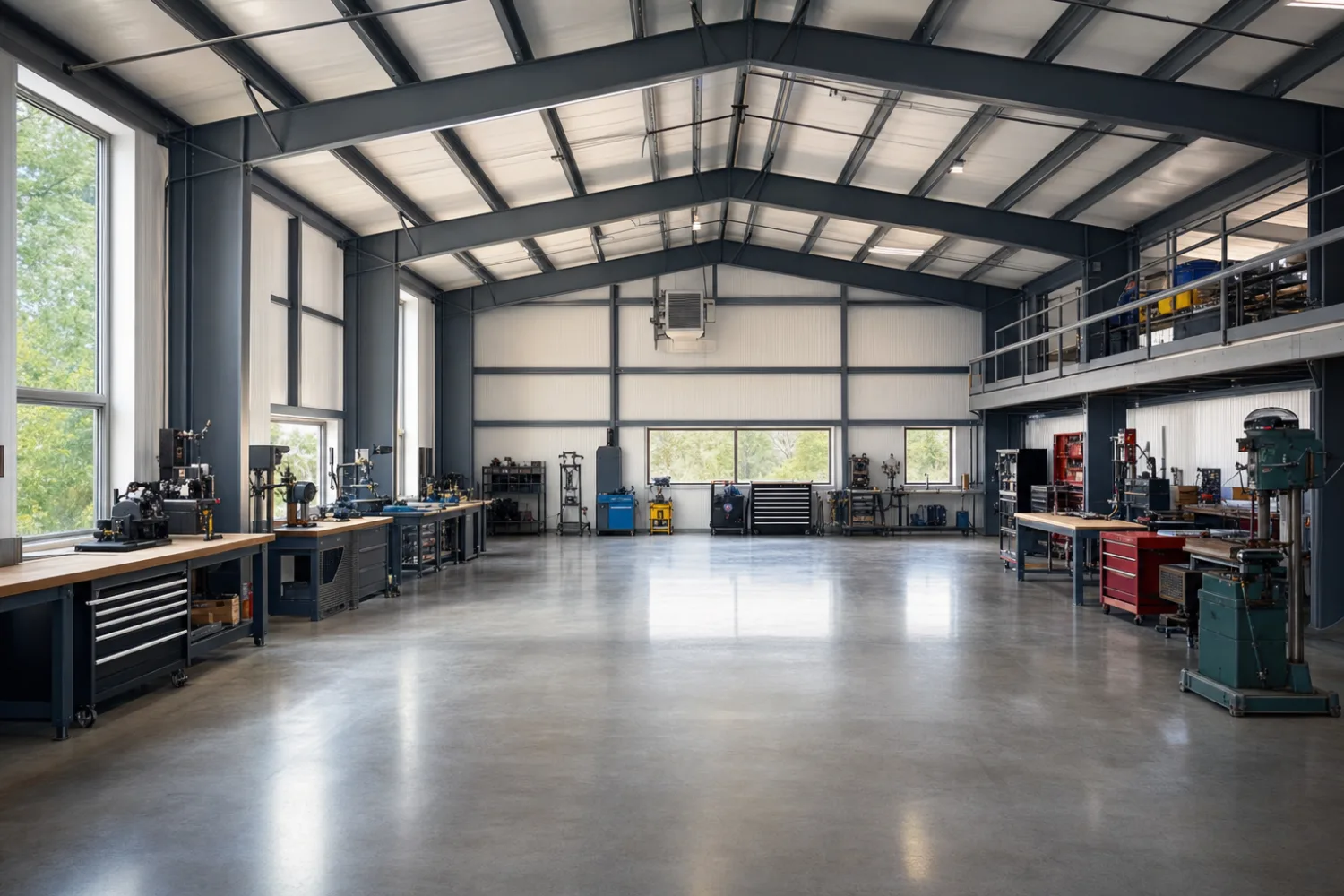
Clear span is the headline. A steel kit can hold a wide open floor with nothing in the middle, which matters for a shop, a barn, or any building where you move equipment. A pole barn can span fairly wide too, but the posts and truss spacing put practical limits on it, and an extra-wide post-frame building still wants more interior support. For how steel handles real snow and wind loads, the engineering is stamped to your site.
Lifespan is the quiet difference. A steel frame sits on or above the slab, away from soil moisture, and a quality steel building holds up for decades, which is part of why metal buildings last as long as they do. A pole barn lives or dies by its posts: where wood meets soil, rot and termites are the long-term risk, even with treated posts and modern brackets.
None of this makes a pole barn a bad building. A well-built post-frame shed can stand for a long time. It means the steel kit carries less long-term risk on span and on the structure itself, which is what you are paying the extra for.
Cost
Which is cheaper, a metal building kit or a pole barn
For simple, basic covered space, a pole barn is often cheaper to put up. For a finished, wide-span, long-term building, a steel kit usually wins on value once you total the whole job.
The reason is what each system is good at. Wood posts and trusses are inexpensive material, and a basic pole barn skips a full slab, so an open hay shed or equipment cover can come in lower. A steel kit costs more in frame material up front, but it buys clear span, load capacity, and a structure that needs less over time.
The trap is comparing a bare pole barn to a finished steel building. Add a slab, insulation, doors, and a finished interior to a pole barn and the gap narrows fast, sometimes to within a few thousand dollars ‹confirm› on a mid-size building. For the full picture, see the metal building kit prices guide and our reference cost guide.
Compare finished, not bare
A pole barn quote is often for an open shell, while a steel kit quote includes the engineered frame and fasteners. Before you call one cheaper, price both to the same finish: same slab, same doors, same insulation. The prices guide breaks down what belongs in each line so you compare like for like.
Finish and code
Finishing, code, and durability
A steel kit is easier to finish out and permit as a long-term occupied building; a pole barn shines as simple ag or storage cover. The gap shows up the moment you want a heated, finished, code-compliant space.
Finishing favors steel for a shop or a pole-barn-style workshop you plan to use. A steel frame gives you clean bays to insulate, wire, and line, and the engineering is already stamped. A pole barn can be finished too, but framing around posts and bracing for a heated interior adds steps a steel kit has already solved.
Code is the other divide. Many jurisdictions treat a pole barn as an agricultural or accessory structure with lighter requirements, while a permitted shop or commercial building leans toward engineered steel with a stamped plan. Always check your local building department before you commit, because the rules change by county and by use.
On durability, steel resists fire, rot, and insects in ways wood cannot, and the frame is protected inside the shell. A pole barn is durable for what it is, but the buried-post risk and the wood structure put a ceiling on it. Both rely on good panels and detailing to keep weather out and last.
Which to pick
Which one to build, by use
Let the use decide. Simple cover and ag storage point to a pole barn; a finished shop, a wide-span building, or anything you want to last points to a steel kit. Here is how the common projects land:
- Open hay shed or equipment cover. Pole barn. Simple, low-cost, and it does not need a slab or a finished interior.
- Basic ag or livestock shelter. Pole barn works well, and it is the traditional choice for a reason.
- Shop, workshop, or garage you will finish. Steel kit. You want the clear span, the load rating, and an easy interior to line out. See metal building uses.
- Wide-span or long-term building. Steel kit, stamped for your local loads. This is where the engineered frame earns its cost.
| Metal building kit | Pole barn | |
|---|---|---|
| Frame | Engineered steel columns and rafters | Wood posts and trusses |
| Clear span | Wide, no interior posts | Moderate, post and truss limited |
| Lifespan | Decades, steel does not rot | Good, but buried posts can rot |
| Best cost case | Finished, wide-span, long-term | Simple, basic covered space |
| Fire & insects | Resists fire, rot, termites | Wood structure, more exposure |
| Finishing | Clean bays, stamped plan | Frame around posts, more steps |
| Best for | Shops, garages, commercial, wide span | Ag cover, hay sheds, storage |
A system comparison, not a verdict. The right pick is the one that matches your use and budget.
FAQ
Metal building vs pole barn: common questions
What is the difference between a metal building and a pole barn?
A metal building kit is built on an engineered steel frame of columns and rafters; a pole barn is built on wood posts set in the ground with wood or light trusses. Both get wrapped in steel panels, so they can look alike, but the steel kit spans wider and lasts longer while the pole barn is simpler and often cheaper for basic cover.
Which is cheaper, a metal building or a pole barn?
For simple, open covered space like a hay shed, a pole barn is usually cheaper to put up because wood posts are inexpensive and it can skip a full slab. Once you add a slab, insulation, doors, and a finished interior, the gap narrows, and a steel kit can win on value over the life of the building. Price both to the same finish before you decide.
Which lasts longer, a metal building or a pole barn?
A steel building generally lasts longer. The steel frame does not rot, warp, or feed insects, and it sits away from soil moisture. A pole barn can last a long time when built well, but its buried wood posts are the long-term weak point, where rot and termites are the risk even with treated wood.
Is a pole barn good for a shop?
It can be, but a steel kit is usually the better shop. A steel frame gives you a wide clear span and clean bays to insulate, wire, and finish, and the engineering is stamped for a permitted, occupied building. A pole barn can be finished into a shop, but framing around the posts and bracing for a heated interior adds steps.
Can a metal building be pole-barn style?
Yes. Many steel kits are built in a pole-barn or post-frame look, with the same low-slope roof and open bays, but on an engineered steel frame instead of wood posts. You get the familiar style with steel span and durability. Ask your supplier to confirm the frame is steel, not wood, if that is what you want.
Do pole barns need a concrete slab?
Not always. A basic ag pole barn can sit on gravel or bare ground, which is part of why it is cheaper for simple cover. A finished shop or garage, in steel or post-frame, usually wants a slab. If you are pricing a pole barn against a steel kit, decide on the floor first so you compare the same building.
Are metal buildings or pole barns easier to permit?
It depends on use and county. Many areas treat a pole barn as an agricultural or accessory structure with lighter rules, while a permitted shop or commercial building often leans toward engineered steel with a stamped plan. Check your local building department before you commit, because the requirements change by jurisdiction.
Related guides
Keep reading
This build-type decision connects to the rest of your planning. Follow these next:
- Metal building kits: the complete guide (the parent pillar).
- Metal building kits vs stick-built (steel against traditional framing).
- What is a metal building kit? (how the steel system works).
- Metal building uses (pole-barn-style and other common builds).
- Metal building kit prices (what each system costs in full).
- Metal building cost guide (the full reference on budgeting a build).