A two-car garage needs a floor of at least 20 feet by 20 feet to park two standard cars, but 24 feet by 24 feet is the size most owners are glad they built. The 20-foot square fits two vehicles side by side with little room to open doors or walk between them, while 24 by 24 gives you space to step out, store gear along the walls, and pull in without lining up to the inch.
That is the short version. The size you need tracks what you park, whether you want a workbench or shelving, and how wide your doors are, so the right answer for a pair of compact sedans is not the right answer for two full-size trucks. This page sits under the metal garage kits pillar and gives you the full version: the minimum, the comfortable size, and what pushes it up. For the kit-level walkthrough, see the 2-car metal garage kits guide.
Sizes
The common two-car garage sizes
Two-car metal garages cluster around four footprints, and each one buys a different amount of working room. A 20 by 20 is the bare minimum that earns the name. A 24 by 24 is the popular default. A 24 by 30 or 30 by 30 turns the garage into a place you also work and store, not just park.
| Footprint | Square feet | What it gives you |
|---|---|---|
| 20 x 20 | 400 sq ft | Two cars, tight. Little room for doors, walking, or storage |
| 24 x 24 | 576 sq ft | The comfortable default. Two cars plus room to move and shelve |
| 24 x 30 | 720 sq ft | Two cars plus a workbench, lawn gear, or a third stall of storage |
| 30 x 30 | 900 sq ft | Two trucks or a car-plus-shop, with real space to spare |
Common two-car footprints, not a verdict. Pick by what you park and whether the garage also works for you.
Width matters more than depth for a two-car garage, because two vehicles park side by side. Hold the width at 24 feet if you can, since that is what turns a parking box into a usable room. Depth of 20 feet clears a standard car, but 24 feet of depth lets a full-size truck fit with the door closed and leaves a strip of storage in front. For the full range of widths and lengths, see metal building sizes.
What changes it
What pushes the size up
The 24 by 24 default assumes two ordinary cars and a little storage. Three things push you past it: bigger vehicles, a workspace, and the way you open your doors. Add them up before you order, because adding later costs more than building right the first time.
- Trucks and SUVs. Full-size pickups run longer and wider than sedans, so two of them want 24 feet of width and 26 to 30 feet of depth, not the 20-foot minimum.
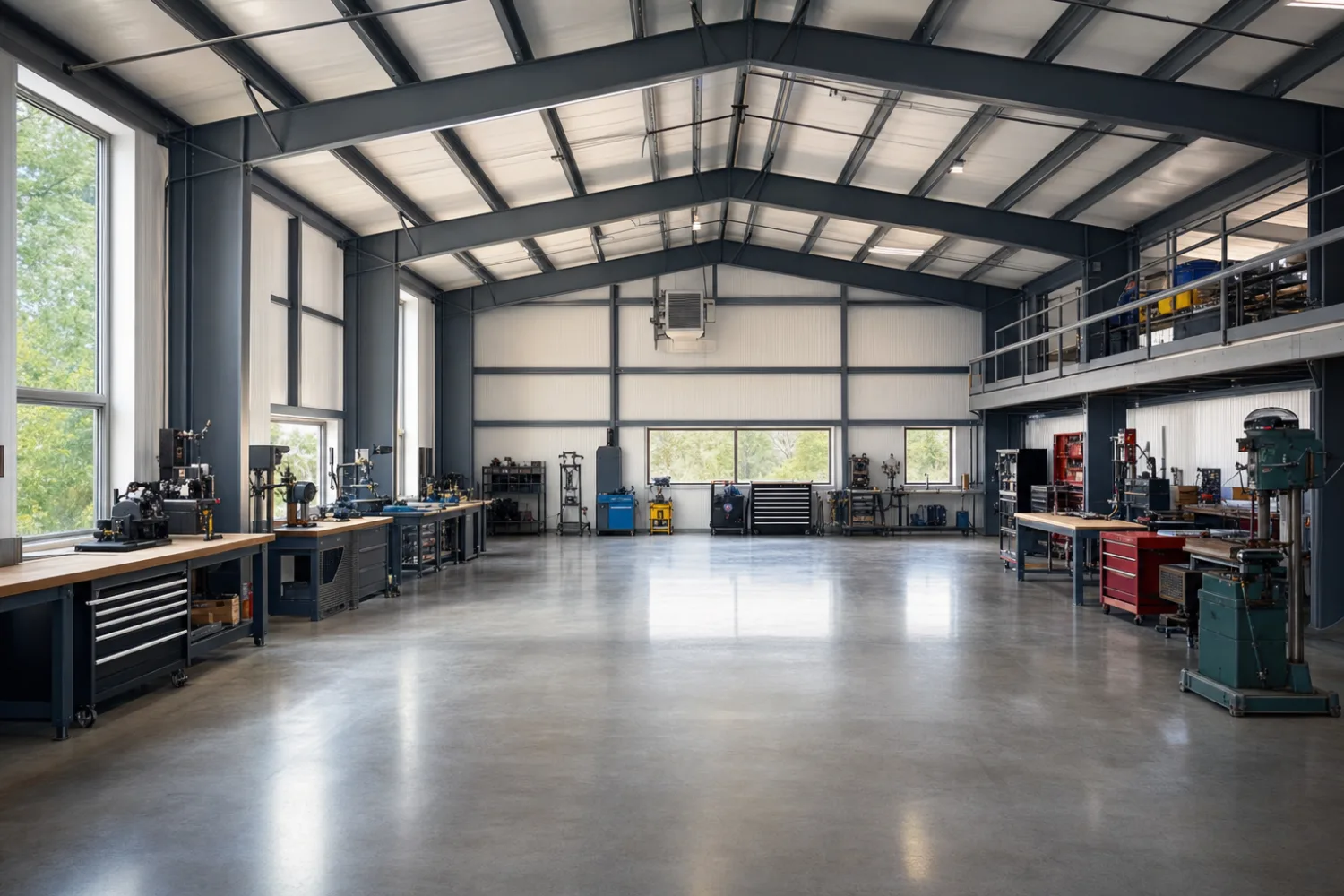
- A workbench or shop. A bench, a tool chest, and room to swing a board want a 24 by 30 at least. If the garage doubles as a shop, look at workshop garage combo buildings.
- Storage along the walls. Shelving, bikes, a mower, and yard tools eat a 2 to 3 foot strip on each wall, which a 20-foot floor does not have to give.
- Car doors and walking room. Two cars in a 20-foot width sit close enough that opening a door means dinging the other car. The 24-foot width is what buys that clearance back.
The cheapest square footage you will ever buy
Steel scales well, so stepping from a 20 by 20 to a 24 by 24 adds far less to the price than the extra room is worth, often a few hundred to a couple thousand dollars ‹confirm› depending on height and options. Almost no one regrets going wider; plenty of owners regret building tight. When in doubt, add the four feet.
Doors and height
Door size and ceiling height matter as much as the floor
A floor big enough to park in does no good if the door is too narrow to drive through or the wall is too low to clear an SUV. Size the openings and the height alongside the footprint, not after it.
For a two-car garage you have a choice: one wide door or two single doors. A single 16-foot door fits both cars through one opening and looks clean, while two 9-foot doors give each car its own bay and a post between them. Plan the rough opening for the vehicle, not the car you drive today. The garage door options and sizes guide covers the widths and how they fit the wall.
Wall height sets what fits and what you can store overhead. A 9-foot wall clears most cars and SUVs with a standard 8-foot door. Step up to a 10 or 12-foot wall if you want a taller door for a truck with a rack, overhead storage, or a future lift. The roof pitch adds a few feet at the peak on top of the wall height, so a 10-foot wall gives you more headroom in the center than the number suggests.
Size the garage for what you will own, not just what you park today. The four feet you add now costs less than the wall you would have to move later.
Related
Read more
Sizing a two-car garage connects to the rest of the build. Follow these next:
- Metal garage kits: the complete guide (the parent pillar).
- 2-car metal garage kits (the kit-level guide to this size).
- Metal garage kits buyers guide (how to spec and order the whole building).
- Garage door options and sizes (one wide door or two, and how wide).
- Metal building sizes (the full range of widths and lengths).