A metal storage shed kit is a small steel building you bolt together yourself to store tools, lawn gear, bikes, and seasonal equipment. It ships as a flat set of pre-cut panels, framing, fasteners, and a door, sized for a backyard or a corner of a property rather than a commercial lot. You set a level base, anchor the frame, and raise the shell over a weekend or two with hand tools. The result is a weather-tight, rust-resistant building that outlasts a wood or plastic shed and takes the sun, rain, and wind a backyard shed has to live in.
This guide sits under the metal building uses pillar, in the slot for owning one storage building of your own rather than renting space in someone else’s. Below: what a metal storage shed kit includes, the common sizes, why steel beats wood and plastic, how to base and anchor it, what the DIY build involves, and what the kit costs. If you want a row of rentable units instead of one shed for your own gear, the self-storage building kits guide is the closer fit.
What it is
What a metal storage shed kit is
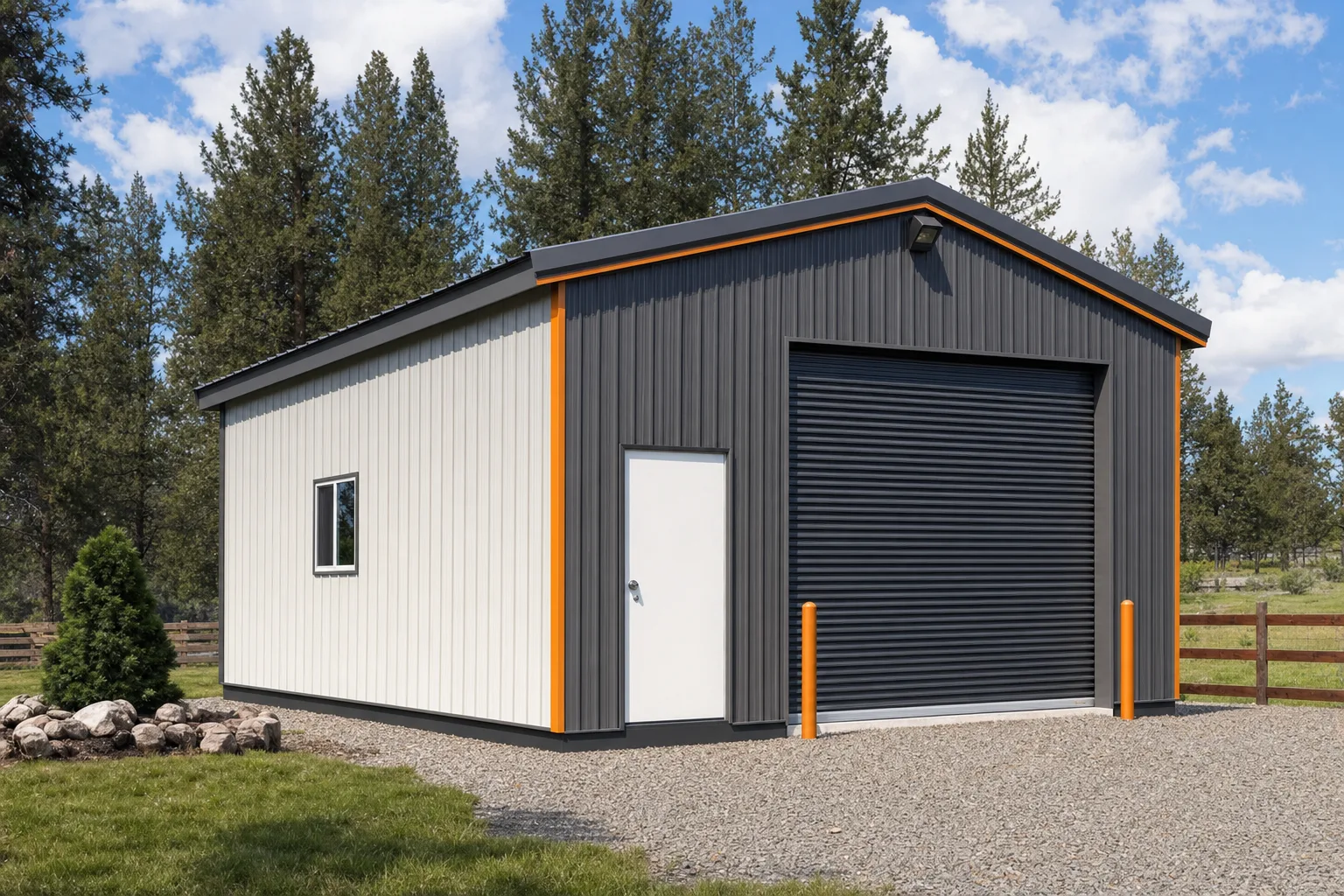
A metal storage shed kit is a complete small steel building broken into parts you assemble on site. The box, or the bundled pallet, holds the wall and roof panels, the framing members, the trim, the fasteners, and a door, all cut and punched to fit. Nothing is welded in the field. You bolt or screw the pieces together by the numbered instructions, which is what makes a shed kit a true do-it-yourself project rather than a contractor job.
Most shed kits use light-gauge steel, formed channel or tube framing wrapped in galvanized or painted steel panels. The galvanized coating is the quiet workhorse here: it fights rust without paint, which suits a shed that sits out in the weather on every side. For the wider view of how a bolt-together steel building goes up, the metal building construction types pillar covers the bolt-up method these kits use, scaled down to backyard size.
A storage shed kit sits at the small end of the steel-building family. It is not engineered for the wide clear spans or heavy loads a shop or barn needs, and it is not a rental product. It is a single, modest building for your own things. If you want to lean one against an existing wall instead of standing it free, a lean-to storage building covers that pattern, and if your gear is tractors and implements rather than tools, the equipment and implement storage guide fits better.
Sizes
Common metal storage shed sizes
Storage sheds run from a locker-sized box up to a small outbuilding, and the right size comes from listing what goes inside before you shop. A shed that is too small fills in a season; one that is too large wastes money and yard. Here are the common footprints and what each one tends to hold, as a starting point to confirm against your own gear list.
| Shed size | Rough floor area | What it tends to hold |
|---|---|---|
| 6×4 | 24 sq ft ‹confirm› | Garden tools, a mower, a few bins |
| 8×6 | 48 sq ft ‹confirm› | Mower, trimmer, ladders, shelving on one wall |
| 10×8 | 80 sq ft ‹confirm› | Lawn equipment, bikes, a workbench |
| 10×12 | 120 sq ft ‹confirm› | A riding mower, tools, seasonal storage |
| 12×16 | 192 sq ft ‹confirm› | ATV or small trailer, plus full lawn and tool storage |
| 12×20 | 240 sq ft ‹confirm› | A small workshop corner with room to walk around gear |
Illustrative shed sizes, not a fixed catalog. Confirm dimensions and door openings against your own equipment before you order.
Notice that height matters as much as floor area. A riding mower or an ATV needs the door opening and the eave to clear it, so check the door width and the headroom, not only the square footage. If your list keeps growing past a 12×20, you are no longer shopping for a shed; the metal building sizes pillar maps the larger widths and heights, and the metal building size chart lists footprints side by side so you can see where a shed ends and a garage begins.
Metal vs wood
Metal storage shed vs wood or plastic shed
Steel wins a backyard shed on the long run. A wood shed looks warm on day one, then it rots at the base, warps, and feeds termites; a plastic shed is light and cheap, then it fades, cracks in cold, and sags under snow. A steel shed does none of that. It does not rot, burn, or feed pests, and a galvanized or painted shell holds its finish for years with almost no upkeep.
- Rot and pests. Steel will not rot, and termites and carpenter ants have nothing to eat. A wood shed fights both from the first wet season.
- Fire. A steel shed will not feed a fire the way a dry wood shed does, which matters if you store fuel, a mower, or a generator.
- Weather. A properly anchored steel shed takes wind and snow better than thin plastic, and it does not warp or fade the way wood and resin do.
- Upkeep. No painting, no sealing, no board replacement. You hose it off. A wood shed wants paint or stain every few years to survive.
A wood shed is cheaper to buy and more expensive to keep. A steel shed flips that: a little more up front, then years of leaving it alone while it does its one job.
Steel is not flawless. A bare metal shed can sweat inside when warm, damp air meets cool panels, so a moisture and airflow plan matters even at this size. A ridge or eave vent and a base that drains keep the inside dry. The same condensation and ventilation logic that protects a full steel building applies to a shed, scaled down. Get the airflow right and a steel shed stays dry where a sealed plastic box can drip.
Base and anchoring
Foundation and anchoring for a metal shed
A metal shed needs a flat, level base and a real anchor to the ground. The base keeps the floor square and dry; the anchors keep the shed from moving in wind. Skip either and you get a door that will not latch, a floor that puddles, or a light shed that walks across the yard in a storm.
Three bases cover most sheds. A poured concrete slab is the best of them: flat, permanent, and easy to anchor into. A gravel pad over a level, tamped bed drains well and costs less, and it suits a shed with its own steel floor frame. A patio-paver or treated-timber base works for the smallest sheds on firm, level ground. Whatever you pick, the base has to be level and a touch larger than the shed so water sheds away from the walls.
Anchor it like you mean it
A light steel shed is exactly the kind of building wind likes to lift, so anchoring is not optional. Bolt the frame to a concrete slab with the kit’s anchors, or use ground anchors and cables on a gravel pad. In storm and high-wind country, confirm the shed and its anchor kit are rated for your local wind loads ‹confirm› before you buy. The construction types pillar explains how steel buildings are stamped for snow and wind, and the same idea scales down to a shed: an unanchored shed is a sail, not a building.
Check your local rules before you pour. Many areas let you put up a small shed without a permit under a size threshold, but that threshold and the setback from your property line vary by town ‹confirm›. A quick call to the local office saves a costly redo. The metal building buying checklist covers the permit, anchor, and base questions worth settling before any steel arrives.
DIY build
What it takes to build the shed yourself
Most metal storage shed kits are a genuine weekend project for two people with hand tools. The panels are pre-cut and pre-punched, the instructions are numbered, and the whole shell goes together with bolts and self-drilling screws. You are assembling, not fabricating, which is the entire appeal of a kit over a custom build.
Plan the build in order. Set and level the base first and let any concrete cure. Lay out and sort the parts by the manifest so nothing stalls you mid-build. Frame the floor or anchor the base rail, stand and brace the walls, then set the roof and screw down the panels. Trim, the door, and the anchors finish it. Two people make the wall and roof stages far safer than one, since steel panels catch wind and edges are sharp.
- Tools. A cordless drill or impact driver, a socket set, a level, a tape, a step ladder, and work gloves cover most kits ‹confirm›. No welding, no special equipment.
- Crew and time. Plan two people and a weekend for a small to mid shed ‹confirm›; a larger 12×20 can run longer. Rushing a roof alone is how panels bend and people get hurt.
- Safety. Cut edges on steel panels are sharp, so wear gloves, and never set roof panels in gusty wind.
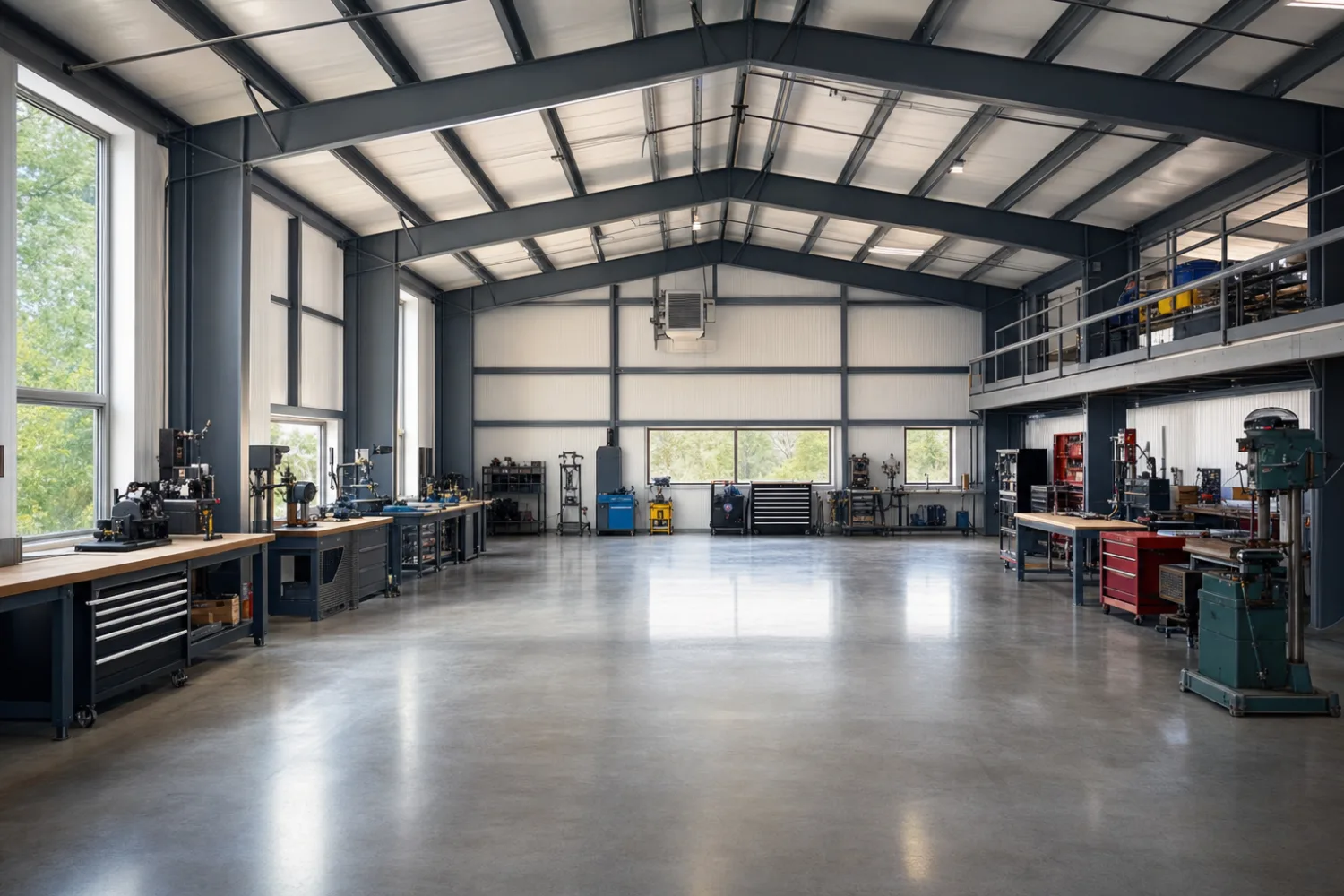
If a bolt-together build is new to you, read the method before the panels arrive. A backyard shed uses the same bolt-up construction as a full kit, and seeing how the larger version goes together makes the shed instructions click. If you would rather a bigger, more finished building you can heat and wire, a metal workshop building kit is the next step up from a plain storage shed.
Cost
What a metal storage shed kit costs
A metal storage shed is one of the cheapest steel buildings you can buy, because it is small, light, and mostly panel. As a dated 2026 illustration, a small steel shed kit often runs in the range of $600 to $2,500 ‹confirm› for the kit alone, with mid-size sheds landing higher and a stout 12×20 reaching into the low thousands ‹confirm›. Treat that as a starting band to confirm with a real quote, not a price.
The kit is only part of the spend. The base is the line people forget: a concrete slab can cost as much as the shed itself ‹confirm›, while a gravel pad is far cheaper. Delivery, an anchor kit, and any upgrade in gauge or wind rating add to the total too. For how those lines move on steel buildings generally, the metal building kit prices pillar and the cost guide break down what drives the number.
Where a metal shed earns its keep is the years after the sale. There is no paint, no rot repair, and no board replacement, so the upkeep cost is close to nothing. A cheap wood or plastic shed can cost more over a decade once you count the maintenance and the replacement. Buy the shed that fits your gear with a little room to grow, anchor it well, and it quietly does its job for a long time.
Sizing up
When a shed is not enough
A storage shed is built for storing things, not for working or living in them. If your plan creeps past keeping gear out of the weather, a different building serves you better, and it is cheaper to buy the right one once than to outgrow a shed in a year.
- You want to work in it. Power, lighting, a real bench, and room to move point to a metal workshop building kit, which is engineered for it.
- You are parking vehicles. Cars, trucks, or an RV want a taller, wider building; the metal garage kits pillar covers those.
- You want a finished hideaway. A heated, finished retreat is a man cave or she shed, not a bare storage shed.
- You are storing implements. Tractors, mowers, and farm gear fit an equipment and implement storage building with the clearance they need.
Match the building to the job and a metal storage shed shines at exactly what it is for: keeping your tools, your mower, and your seasonal things dry, secure, and out of the house. For everything bigger, the metal building uses pillar maps the full range so you can land on the right building the first time.
FAQ
Metal storage shed kits: common questions
What is a metal storage shed kit?
It is a small steel building that ships as a set of pre-cut, pre-punched panels and framing you bolt together yourself on a level base. The kit includes the walls, roof, trim, fasteners, and a door, sized for a backyard rather than a commercial lot. You add the base and anchor it down. It is the single-building, own-it version of storage, as opposed to the rentable units a self-storage facility is built from.
Can I build a metal storage shed myself?
Yes. Most shed kits are a weekend project for two people with hand tools: a drill, a socket set, a level, and gloves ‹confirm›. The panels are numbered and the shell goes together with bolts and screws, with no welding. Set and level the base first, then work in order from walls to roof. A second person makes the wall and roof stages far safer, since steel panels catch wind. The method is the same bolt-up construction a full kit uses, scaled down.
How long does a metal shed last compared to a wood shed?
A steel shed will not rot, warp, or feed termites, so a galvanized or painted shed holds up for many years with almost no upkeep ‹confirm›, while a wood shed needs paint or stain every few years and still rots at the base over time. A plastic shed is cheaper but fades and can crack in cold or sag under snow. Over a decade, the low maintenance is where a metal shed pulls ahead.
Do I need a concrete slab for a metal storage shed?
Not always, but you need a flat, level base. A poured slab is the best option and the easiest to anchor into, a tamped gravel pad drains well and costs less and suits a shed with its own steel floor, and pavers or treated timber can work for the smallest sheds on firm ground. Whatever you choose, keep it level and slightly larger than the shed so water sheds away from the walls.
Do I need a permit for a metal storage shed?
It depends on your town. Many areas allow a small shed without a permit under a size threshold, but that threshold and the required setback from your property line vary ‹confirm›, so a quick call to your local office settles it before you build. The buying checklist covers the permit, setback, and anchor questions worth confirming first.
How do I keep a metal shed from sweating inside?
Give it airflow and a base that drains. Condensation forms when warm, damp air meets cool steel, so a ridge or eave vent and a dry base keep the inside from dripping. Avoid sealing the shed up tight with no ventilation. It is the same condensation and ventilation principle a full steel building uses, scaled down to a backyard shed.
How much does a metal storage shed kit cost?
As a dated 2026 illustration, a small steel shed kit often runs roughly $600 to $2,500 ‹confirm› for the kit alone, with mid-size sheds higher and a 12×20 reaching into the low thousands ‹confirm›. The base is a separate cost, and a concrete slab can match the price of the shed, while gravel is cheaper. Confirm with a real quote and see the cost guide for what drives the total.
Related guides
Keep reading
A storage shed is the small end of the steel-building family. Follow these next:
- Metal building uses & applications (the parent pillar).
- Self-storage building kits (rentable units, the income version of storage).
- Lean-to storage buildings (storage leaned against an existing wall).
- Equipment & implement storage buildings (room for tractors and farm gear).
- Metal workshop building kits (the step up when you want to work, not just store).
- Man caves & she sheds (a finished, heated retreat instead of a bare shed).
- Metal building size chart (footprints side by side, where a shed ends and a garage begins).