Two things shape a metal building in West Virginia: the mountains and a patchwork of local enforcement. The terrain pushes snow and wind loads up and down with elevation, so the design numbers for your exact site matter far more than any single statewide figure. And West Virginia issues no building permit at the state level, so whether you need one, and what it costs, comes down to your county or town.
This guide is part of our metal buildings by state series, the pillar that frames codes, loads, and price drivers state by state. Below you get the West Virginia picture: which codes the state adopts, when an engineer has to stamp your drawings, the load concerns that follow elevation, and the metros where permitting is real. Treat every number here as a starting point to confirm with your local building department, not a quote.
Codes & permits
West Virginia building codes and permits
West Virginia runs a statewide building code, but it does not enforce that code for you. The West Virginia State Fire Commission adopts the model codes, while individual counties and municipalities choose whether to apply and enforce them ‹confirm›. The state has adopted the 2018 International Building Code and 2018 International Residential Code, with the 2015 International Energy Conservation Code on the energy side ‹confirm›. In rural counties that do not enforce, you may not pull a permit at all, though state electrical rules and floodplain limits still apply.
Where a jurisdiction does enforce the code, expect to submit a site plan and stamped structural drawings. Steel framing typically needs the seal of a West Virginia-registered engineer, and the foundation plan has to support the frame ‹confirm›. State law adds one more gate: under the West Virginia Contractor Licensing Act, a written contract and a licensed contractor are listed as prerequisites to obtaining a building permit ‹confirm›. For the full mechanics of stamps, drawings, and trade permits, read our metal building permits and codes guide.
Verify locally
Because enforcement in West Virginia is decided county by county and town by town, the only reliable answer is the one from the office that covers your parcel. Call your local building department before you order steel, and confirm the permit, the setbacks, and whether a stamped drawing is required for your exact address.
Loads
Snow, wind, and seismic loads in West Virginia
In West Virginia, snow is usually the load that drives the frame, and it climbs with elevation. A building near the Ohio River sits in a milder profile than one in the Allegheny highlands, where ground snow loads run much heavier ‹confirm›. Wind matters too, and seismic demand stays low to moderate across most of the state ‹confirm›. None of these are set statewide. Your jurisdiction sets the design values for your site, so the ranges below are typical starting points to verify locally, not fixed numbers.
| Load type | Typical West Virginia range ‹confirm› | Who sets it |
|---|---|---|
| Ground snow load | About 20 to 50+ psf, rising with elevation | Local jurisdiction |
| Design wind speed | Roughly 115 mph design range | Local jurisdiction (IBC/IRC) |
| Seismic | Low to moderate in most counties | Local jurisdiction |
Typical ranges to confirm with your building department. Highland counties carry heavier snow than the river valleys.
The practical takeaway: get your building engineered for the snow and wind at your address, then make sure the quote is stamped for those numbers. Our snow load and wind load guide explains how those figures translate into frame and anchor design, so you can read a quote and see whether it covers your site or a softer set of assumptions.
Climate & insulation
Climate zones and insulation for West Virginia
Most of West Virginia falls in IECC climate zone 5, with the lower river valleys closer to zone 4 and the highest mountains pushing into zone 6 ‹confirm›. That means your insulation priority is cold-weather R-value, paired with serious condensation control. Steel skins sweat when warm interior air meets a cold panel, and the damp mountain climate makes that worse if you skip a vapor strategy.
Plan the envelope before the steel arrives. A continuous insulation layer plus a managed air and vapor barrier keeps a West Virginia shop usable through the winter and stops the drip that rusts fasteners from the inside. Our metal building insulation guide walks through the assemblies that fit a cold, humid zone, so you specify the right R-value instead of discovering the gap in January.
Price factors
What drives metal building prices in West Virginia
Two regional factors move the West Virginia number more than the catalog does: freight and access. Steel ships from mills outside the state for many buyers, so distance and delivery into mountain terrain add to the landed cost ‹confirm›. Site access is the quiet one. A steep or narrow lot raises crane and crew time, and a remote parcel stretches the haul. These are illustrative drivers for 2026, not a quote ‹confirm›.
Engineering for highland snow also adds steel where the loads demand it, which is real money you should see itemized rather than buried in a total. For the line items that make up a kit price and how they shift by region, see our metal building kit prices pillar. Compare two quotes on the same loads and the same gauge, or you are comparing the wrong things.
Popular uses & metros
Popular builds and where permitting is real
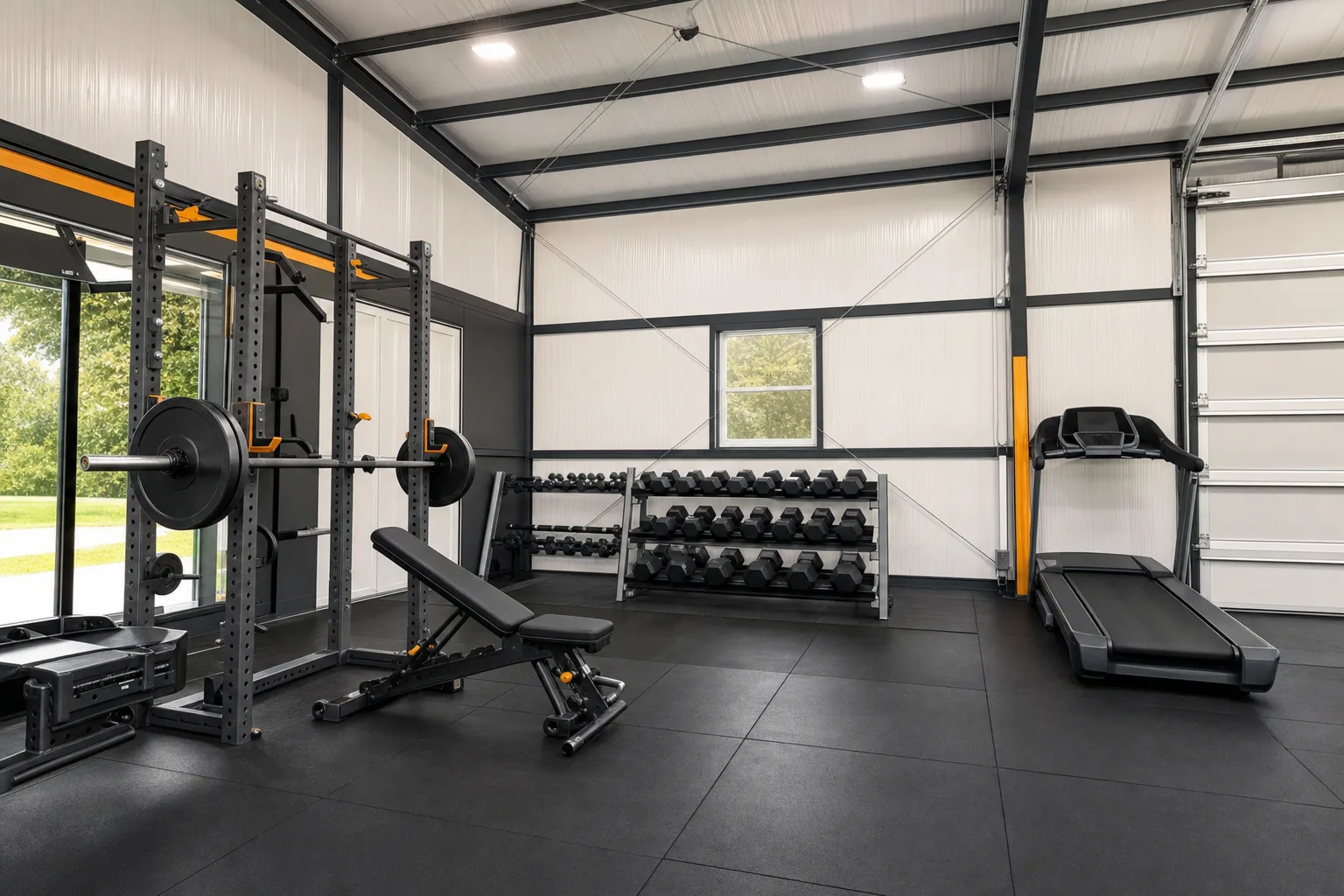
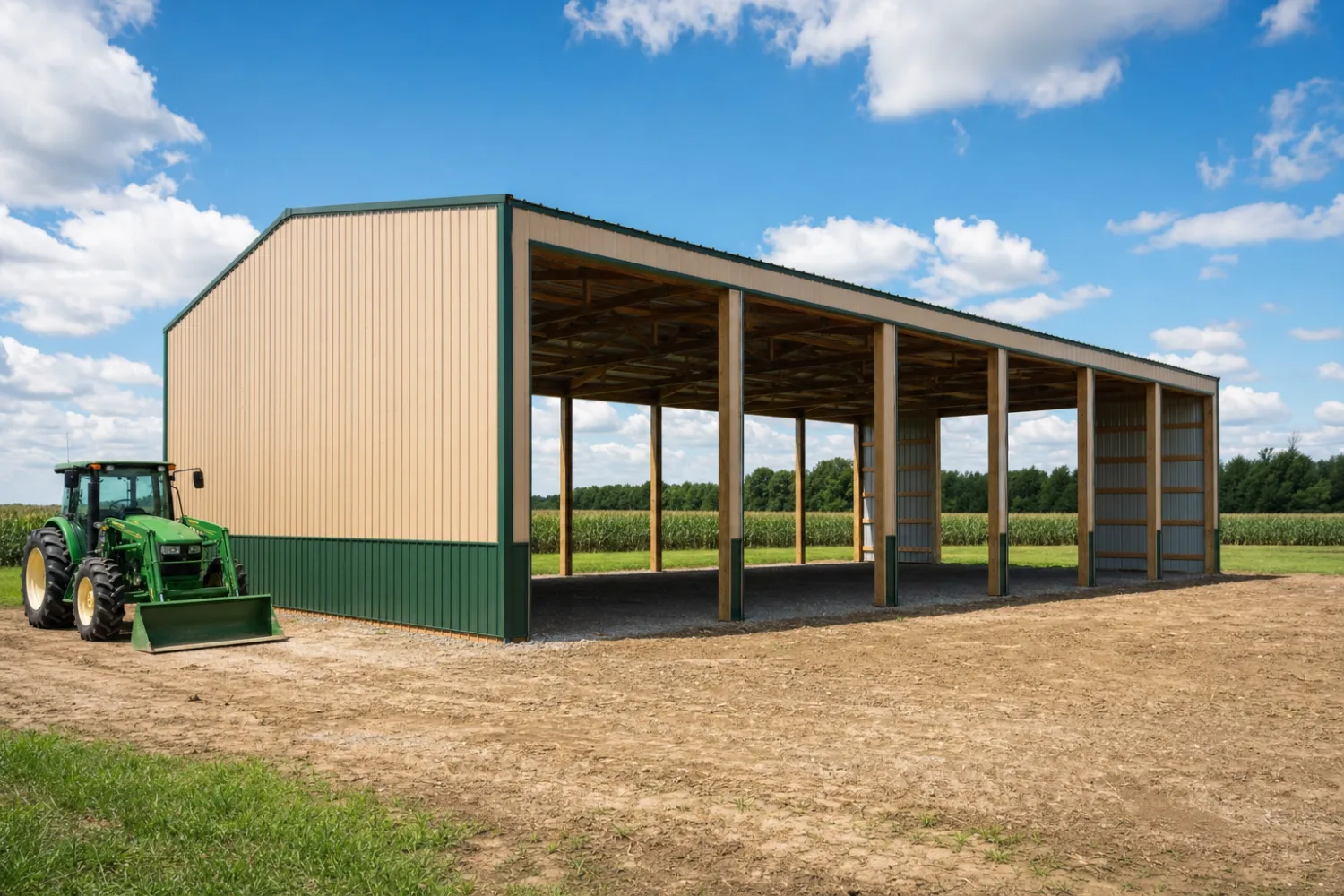
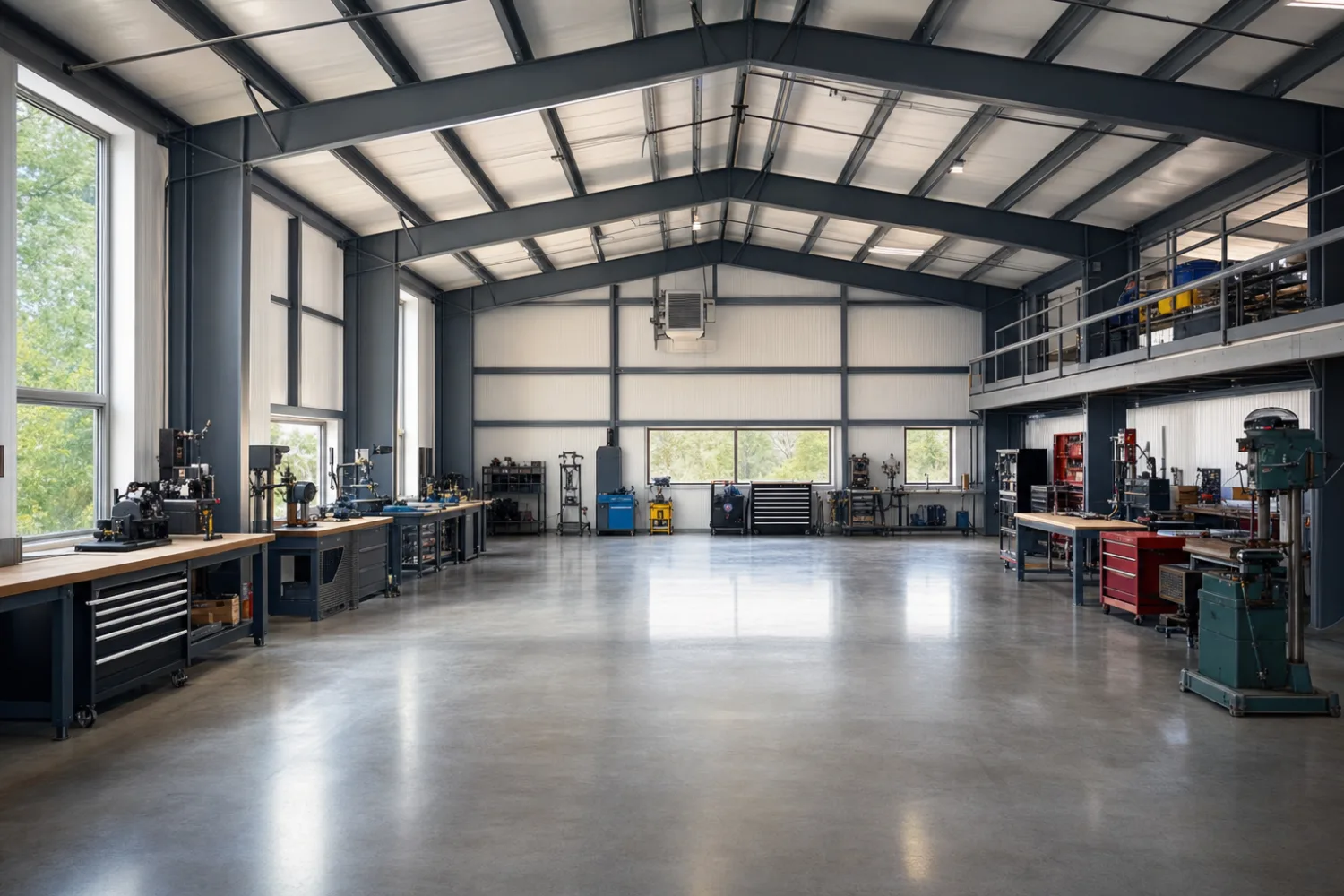
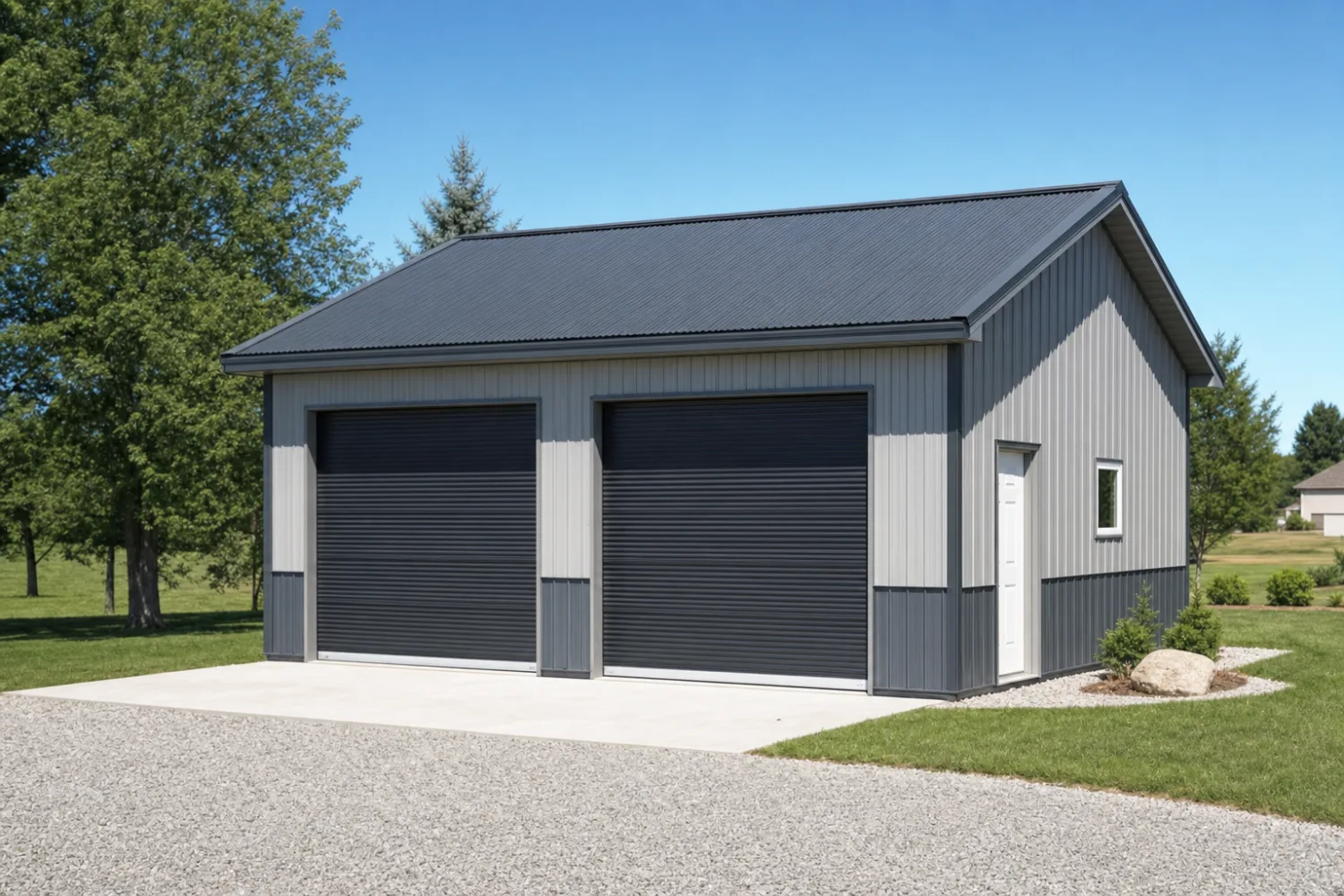
Across West Virginia, the common builds are garages, home workshops, equipment and pole-style ag buildings, and a growing number of barndominiums on rural acreage. The frame and permit reality changes sharply between a rural county and a city, so the metro you build near sets the rules as much as the building does.
- Charleston (Kanawha County). The state capital and its largest metro enforces permitting through the city’s building and permits office ‹confirm›. Expect stamped drawings for a permanent steel building.
- Huntington and Morgantown. Both cities actively enforce the building code, so plan on a permit and engineered plans for anything past a small shed ‹confirm›.
- Wheeling. The City of Wheeling requires permits for new structures, carports, and major work, with its own permitting office ‹confirm›.
- Martinsburg and the Eastern Panhandle. Berkeley and Jefferson counties run robust permit and inspection offices. Berkeley County notes that steel beams require the seal of a West Virginia-registered engineer ‹confirm›.
If your parcel sits in a rural county with no enforcement, you may build without a permit, but the smart move is still a stamped drawing and a documented load rating. It protects resale, insurance, and any future appraisal. Confirm the exact office and its requirements with your county or city before you order.
FAQ
West Virginia metal building questions
What building code does West Virginia use?
West Virginia adopts the model codes through the State Fire Commission, including the 2018 International Building Code and 2018 International Residential Code, plus the 2015 International Energy Conservation Code ‹confirm›. Counties and municipalities decide whether to enforce them, so the code that applies to your build depends on your location. Confirm with your local building department.
Do you need a building permit for a metal building in West Virginia?
It depends on your jurisdiction. Cities like Charleston, Huntington, Morgantown, and Wheeling, along with counties like Berkeley and Jefferson, generally require permits for permanent structures over about 200 square feet ‹confirm›. Many rural counties do not enforce building codes and may not require a permit at all. Always verify with the office that covers your parcel.
Do I need an engineer’s stamp for a steel building in West Virginia?
In enforcing jurisdictions, yes. Local authorities typically ask for stamped, engineered drawings showing the frame and foundation can carry your local snow and wind loads, and steel framing often needs the seal of a West Virginia-registered engineer ‹confirm›. Your manufacturer can usually supply the stamped plans for your address.
Can I build a metal building on my property in West Virginia?
Usually yes, subject to local zoning, setbacks, and any HOA rules. Most jurisdictions require a permit for permanent structures over a small-shed threshold, so check your zoning classification, your property-line setbacks, and the permit requirements before you buy. Start with a call to your county or city building department.
What happens if you build without a permit in West Virginia?
In a jurisdiction that enforces, building without a permit can bring a stop-work order, fines, and in serious cases an order to bring the structure up to code or remove it. It can also complicate insurance claims, appraisals, and a future sale. If your area enforces, pull the permit before you start.
Does a metal building increase property taxes in West Virginia?
A permanent metal building is an improvement, so it can raise the assessed value and the tax on your property. A temporary, movable structure is treated differently. Your county assessor sets the assessment, so ask them how a new building would be valued before you commit.
Can you put up a metal building kit yourself?
For simpler bolt-up kits, a capable owner can handle much of the assembly, and many buyers do. Larger red iron frames want equipment and a crew. Either way, an enforcing jurisdiction still expects permitted, engineered plans, so do the paperwork even when you do the labor.
Read next
Keep reading
Compare West Virginia with its neighbors, then dig into the topics that decide your build:
- Metal building kits in Pennsylvania
- Metal building kits in Maryland
- Metal building kits in Virginia
- Metal building kits in Ohio
- Metal building permits and codes
- Snow load and wind load explained
- Metal building foundation options
- Metal building insulation
- Metal building kit prices (pillar)
Sources
Sources
Code, permit, and engineering facts above are attributed below. Load, climate-zone, and price values are typical ranges flagged ‹confirm› and should be verified with your local building department.
- West Virginia Contractor Licensing Act, prerequisites to obtaining a building permit (§30-42-10): https://code.wvlegislature.gov/30-42-10/
- UpCodes, West Virginia adopted 2018 International Building Code: https://up.codes/viewer/west_virginia/ibc-2018/chapter/6/types-of-construction
- Berkeley County, WV Building Permit Process (steel beams require seal of a West Virginia-registered engineer): https://www.berkeleywv.org/580/Building-Permit-Process
- Red Directional, Zoning & Permitting for Steel Buildings in PA, OH & WV: https://reddirect.com/blog/zoning-permitting-steel-buildings-pa-oh-wv/
- Metal Buildings, Metal Building Permits and Codes: State-by-State Guide: https://www.metal-buildings.org/metal-building-permits-and-codes/