Two things shape a metal building in Ohio more than anything else: a permit you pull locally, and a foundation built for frost. Ohio sits inland, so winter sets the design. Ground snow in the north and a frost line that runs roughly 36 inches below grade ‹confirm› matter more than wind on most sites. Get the local permit and the footing depth right, and the rest of the build falls into place.
This guide sits under our metal buildings by state hub, where each state page covers the codes, loads, and climate that change how a kit gets engineered. Below you get Ohio’s permit reality, its dominant load drivers, the climate split that decides your insulation, and the real building departments in the state’s largest metros. None of it replaces your local jurisdiction, and the guide says so at every step.
Codes & permits
Ohio building codes and permits
Ohio writes its codes at the state level and enforces them locally, so the office that issues your permit is a county, township, or city building department, not the state. Residential work follows the Residential Code of Ohio (RCO), and commercial work follows the Ohio Building Code (OBC) ‹confirm›, both administered under the state Board of Building Standards. Ohio adopts editions of the model International codes with state amendments ‹confirm›, so the exact edition in force depends on the year and your jurisdiction.
A permit is generally required once a detached metal building exceeds 200 square feet or is used commercially ‹confirm›. Smaller accessory structures often skip the building permit but still answer to local zoning setbacks. For a residential kit on a standard foundation, you usually do not need an engineer’s seal unless the design steps outside prescriptive code, for example deep unbalanced fill or an engineered slab ‹confirm›. Commercial buildings need construction documents sealed by an Ohio-registered design professional ‹confirm›. Utility hookups can trigger separate electrical, plumbing, or mechanical permits.
For the full national picture of stamps, drawings, and approvals, read metal building permits and codes. Then verify the edition, the size threshold, and the stamp rule with your local building department before you order steel, because the office down the road has the final say.
Loads
Wind, snow, and seismic loads in Ohio
Snow is Ohio’s headline load. The northern counties along Lake Erie sit in a true snowbelt, and ground snow loads climb well above what a southern Ohio site carries ‹confirm›. Wind runs moderate for an inland state, and seismic risk stays low across most of Ohio, with a higher pocket near the Anna area in the west ‹confirm›. The table below gives typical ranges to plan around, not design values to build from.
| Load type | Typical Ohio range | Who sets it |
|---|---|---|
| Ground snow load | 20–40 psf, higher in the Lake Erie snowbelt ‹confirm› | Local building department |
| Design wind speed | Roughly 105–115 mph, ASCE 7 basis ‹confirm› | Local building department |
| Seismic | Low statewide, elevated near western Ohio ‹confirm› | Local building department |
| Frost depth | About 36 in below grade ‹confirm› | Local building department |
Typical ranges for planning. Your jurisdiction sets the design numbers your kit gets stamped to.
Loads are set jurisdiction by jurisdiction, never by one statewide figure, so a kit sized for Cincinnati can be under-built for Cleveland. To understand how these numbers translate into frame and fastener decisions, read snow load and wind load explained. Then confirm your site’s design snow, wind, and seismic values with your local building department, and have the kit engineered to those exact figures.
Climate
Climate zones and insulation in Ohio
Ohio spans IECC climate zones 4A and 5A ‹confirm›, a cold and mixed-humid band that asks two things of your insulation at once. Winters are cold enough to reward a real R-value in the roof and walls, so a heated shop or barndominium holds temperature without burning fuel. Summers are humid, which makes condensation control just as important as raw R-value.
The condensation trap
Warm, moist Ohio air hitting cold steel is where unconditioned buildings get wet. A continuous vapor barrier and proper ventilation keep that moisture off the frame and the contents, and they matter as much as the insulation thickness.
For the assembly options that handle both jobs, the cold and the humidity, read metal building insulation. The right answer depends on whether you heat the space, and on whether you are in the colder zone 5A north or the milder zone 4A south ‹confirm›.
Price
What drives metal building prices in Ohio
Ohio is steel country, and that helps your freight line. The state’s mill heritage around Cleveland and Youngstown means shorter hauls for raw steel than a buyer in the mountain West faces, which trims one cost that goes into every quote. Local labor rates, your county’s permit fees, and the snow and frost engineering your site demands move the number more than the steel itself ‹confirm›.
As a dated 2026 illustration, a basic enclosed kit shell tends to run a few thousand dollars higher in the heavier-snow north than on a comparable southern Ohio site, because the frame and footings work harder ‹confirm›. For the full breakdown of what goes into a quote, see the metal building kit prices guide, then price your own build against real local labor and permit costs rather than a national average.
Where you build
Popular builds and metro building departments
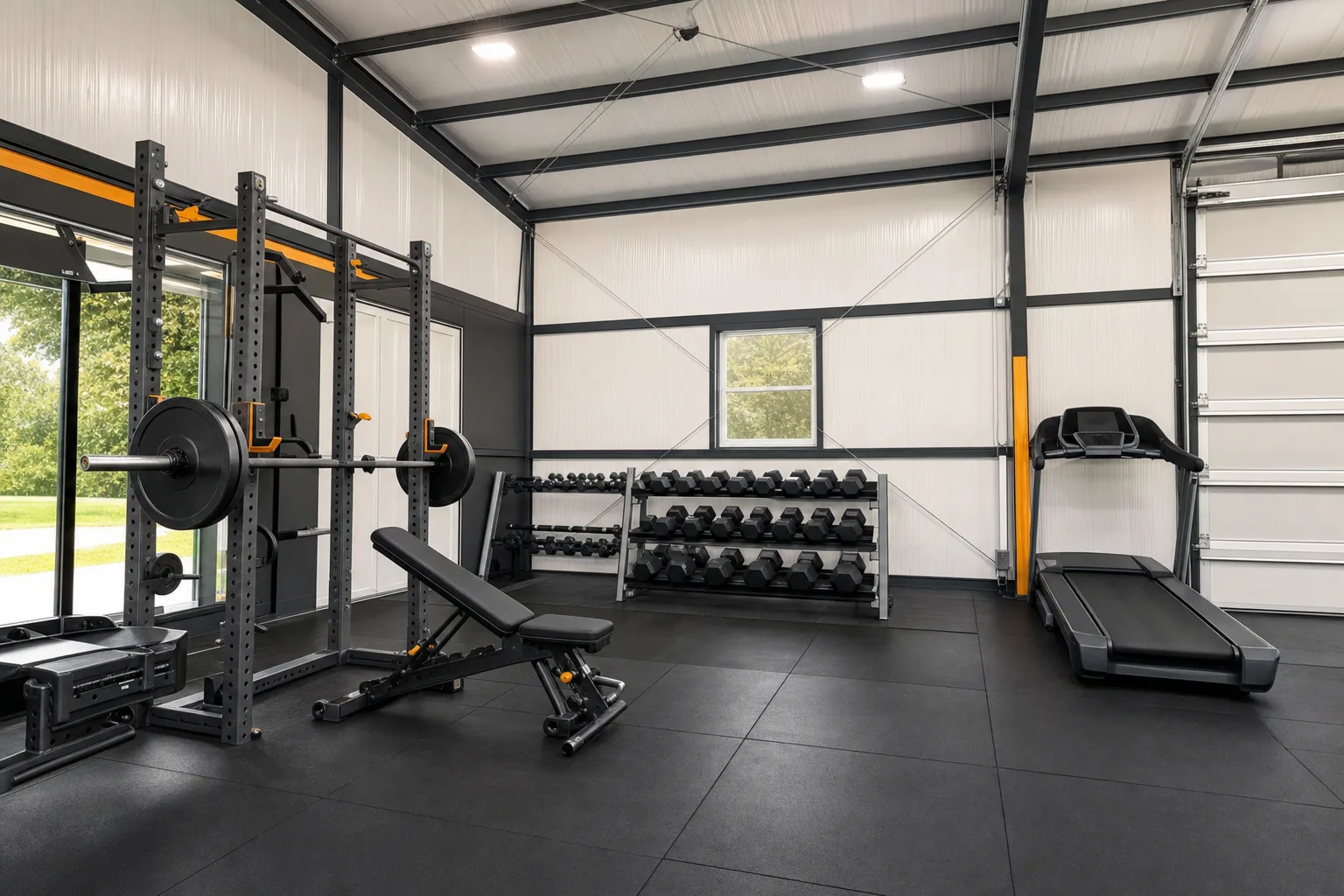
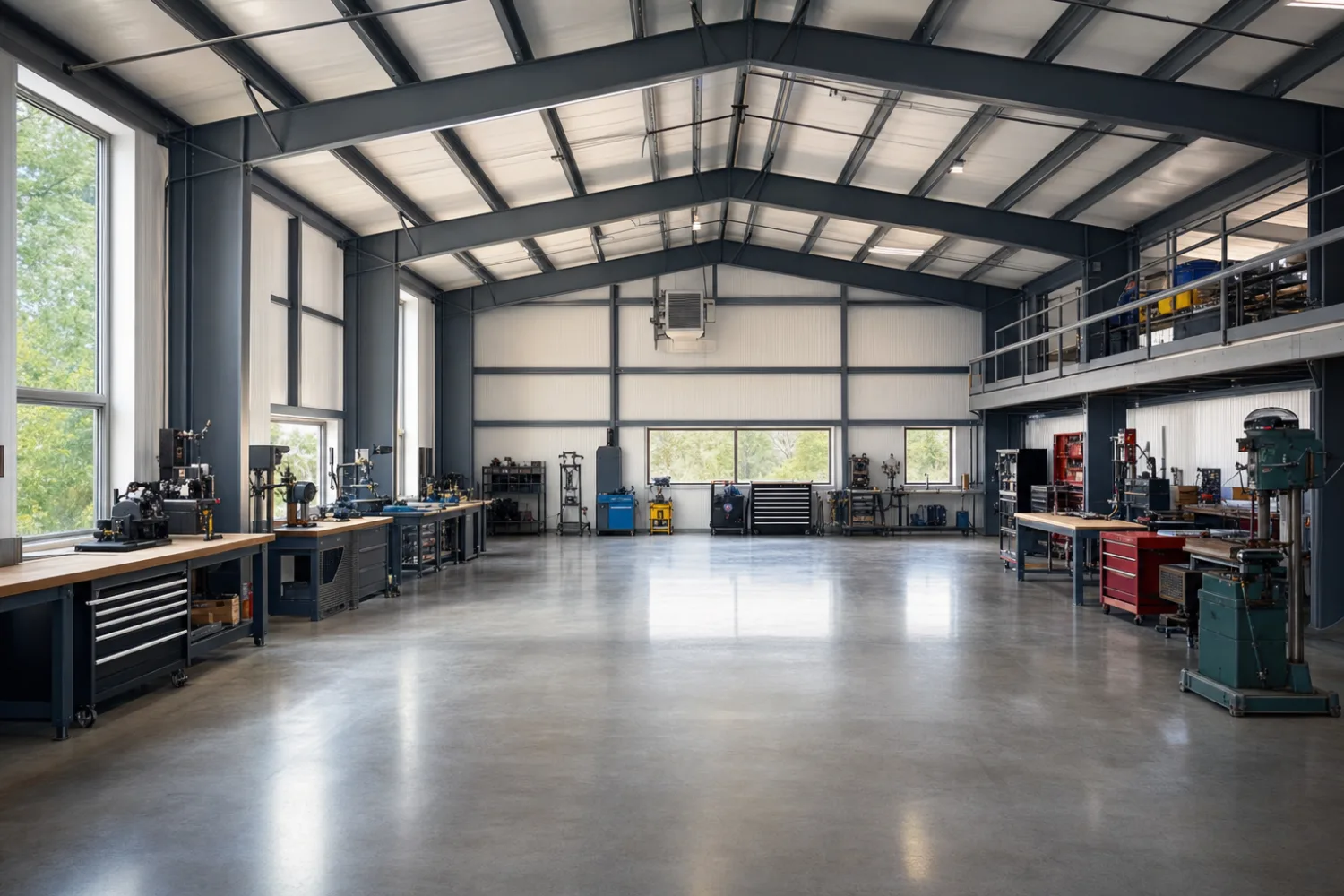
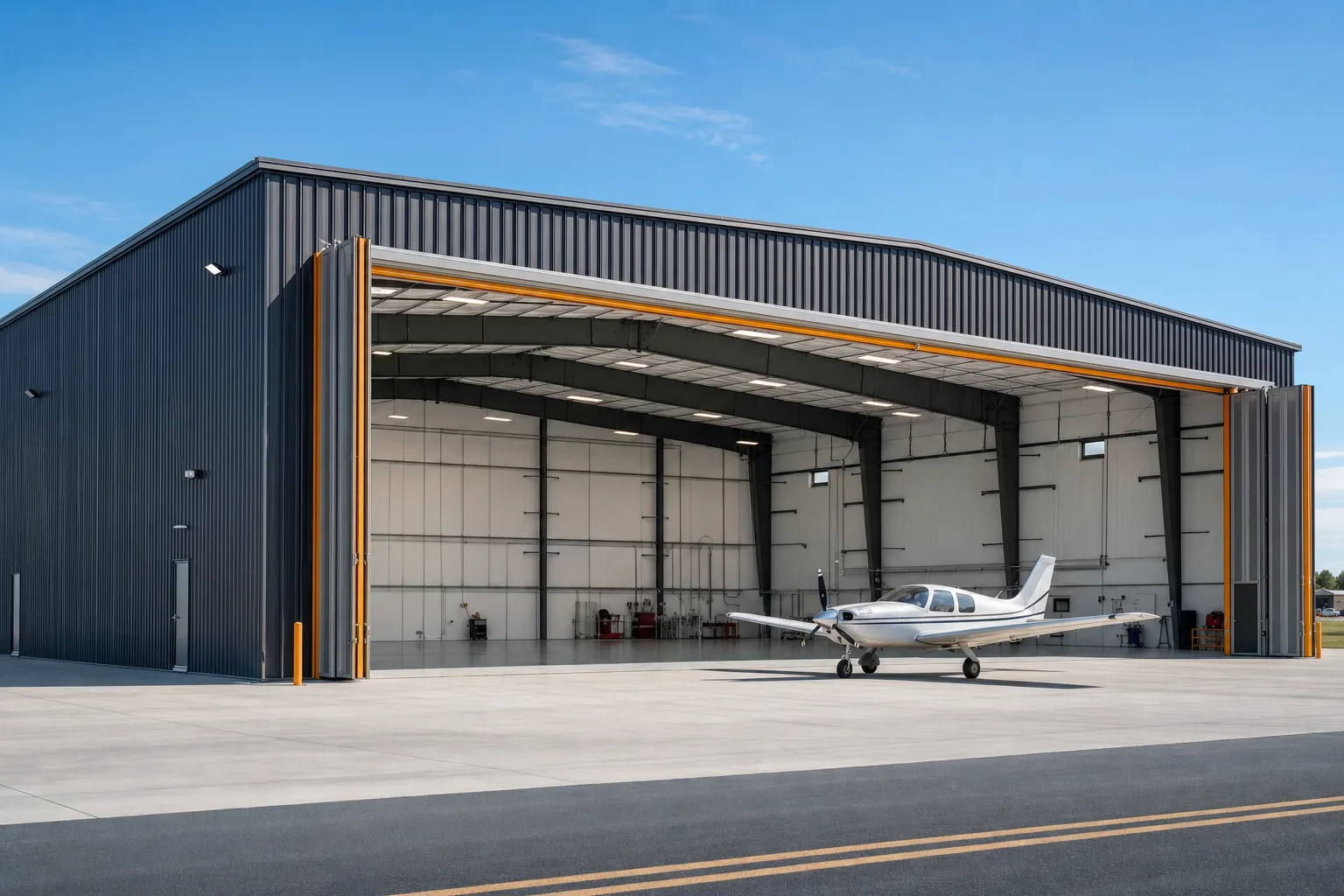
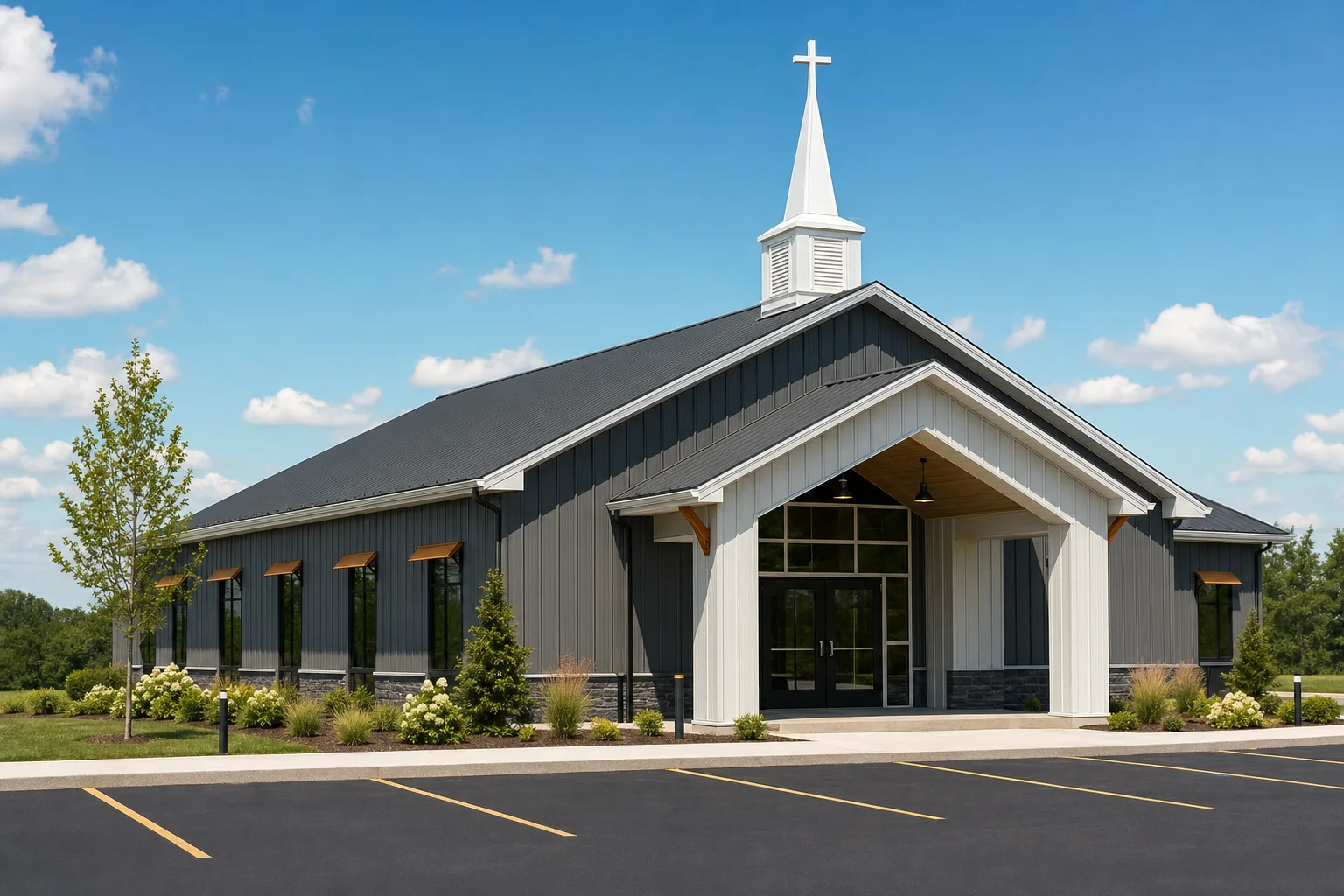
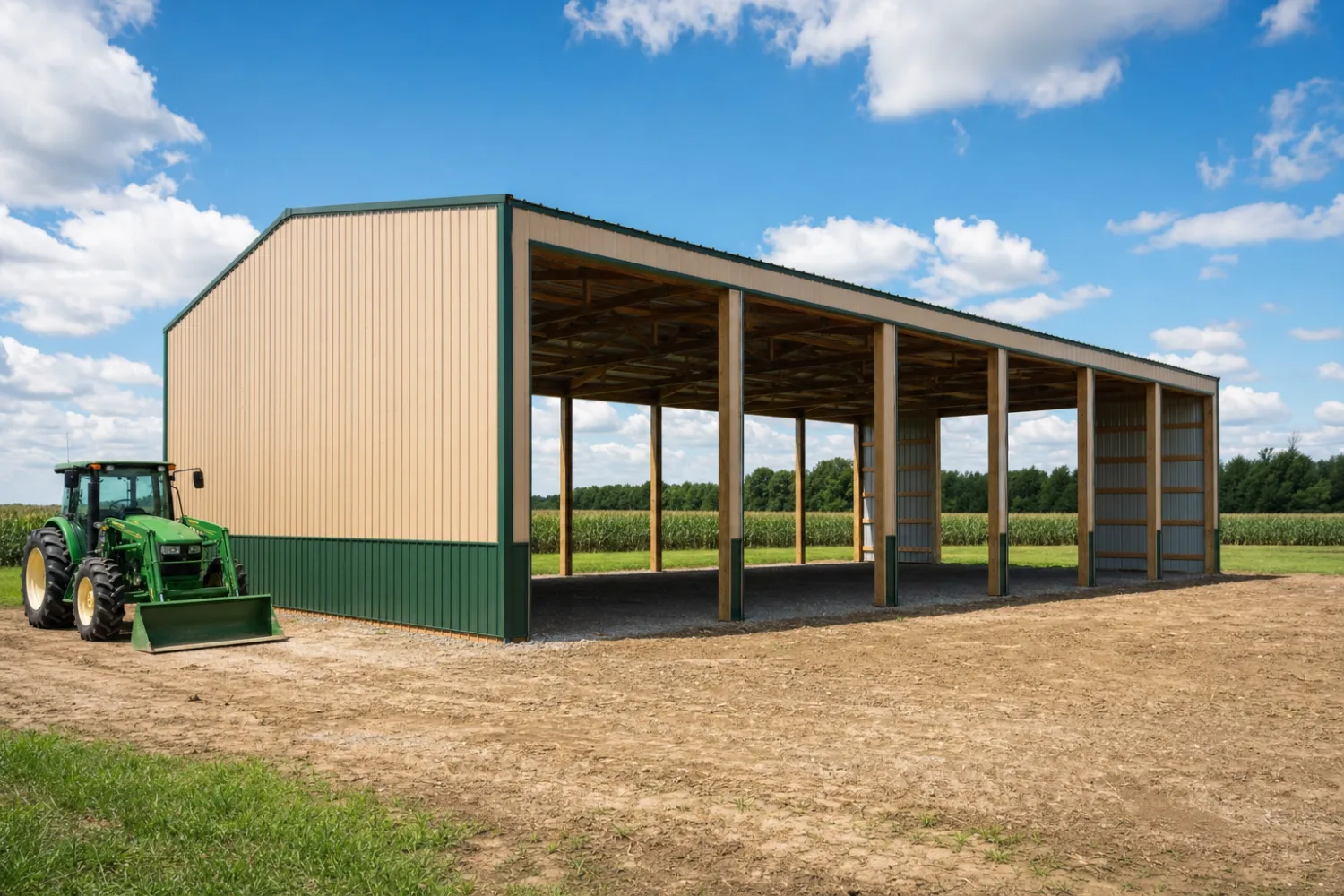
Ohio’s mix of farmland and metros drives what people put up. In the rural counties, pole-style ag buildings and equipment storage lead. Closer to the cities, detached garages, home workshops, and the occasional barndominium are the common kits. Whatever you build, the permit comes from the local office, and Ohio’s big metros each run their own.
- Columbus. The City of Columbus Department of Building and Zoning Services handles city permits, with Franklin County covering unincorporated areas ‹confirm›.
- Cleveland. The City of Cleveland building department serves the city, with Cuyahoga County and suburban departments covering the rest of the metro ‹confirm›.
- Cincinnati. Cincinnati’s buildings and inspections office serves the city, with Hamilton County beyond it ‹confirm›.
- Dayton. Montgomery County Building Regulations reviews residential and commercial submissions across much of the Dayton area ‹confirm›.
Always start with the office that covers your exact parcel, because city, county, and township jurisdictions overlap in Ohio and the rules shift across a line on the map. Call before you order, confirm the permit path, and ask which loads they want the kit engineered to.
FAQ
Ohio metal building questions
Do you need a permit for a metal building in Ohio?
In most cases, yes. A detached metal building generally needs a building permit once it exceeds 200 square feet or is used commercially ‹confirm›, and many jurisdictions also require a zoning permit for setbacks. Smaller accessory structures may skip the building permit but still answer to local zoning. Confirm the threshold with your local building department.
What building code does Ohio use for metal buildings?
Residential projects follow the Residential Code of Ohio (RCO), and commercial projects follow the Ohio Building Code (OBC), both based on the model International codes with Ohio amendments ‹confirm›. The state Board of Building Standards maintains them, and local departments enforce them. The exact edition in force depends on the year and your jurisdiction.
Do metal building plans need an engineer’s stamp in Ohio?
For a residential kit on a standard foundation, you usually do not need an engineer’s seal unless the design steps outside prescriptive code, such as deep unbalanced fill or an engineered slab ‹confirm›. Commercial buildings need construction documents sealed by an Ohio-registered design professional ‹confirm›. Your building department confirms which applies.
How deep do footings need to be in Ohio?
Ohio’s frost line runs roughly 36 inches below grade, so foundation and footing plans are generally designed to reach that depth or deeper ‹confirm›. The exact requirement is set by your local building department and can vary with soil and site conditions, so verify it before you pour.
What are the snow load requirements in Ohio?
Ground snow loads vary across the state, running lighter in the south and heavier in the Lake Erie snowbelt of the north ‹confirm›. Ohio sets these locally rather than with one statewide number, so a kit sized for one county can be under-built for another. Get your design snow load from your local building department and have the kit engineered to it.
Who issues building permits in Ohio?
Permits come from the local level, a county, township, or city building department, not the state ‹confirm›. In the metros, offices like the City of Columbus Department of Building and Zoning Services or Montgomery County Building Regulations handle review and inspection ‹confirm›. Start with the office that covers your exact parcel.
Can you build a metal building under 200 square feet without a permit in Ohio?
Often, yes, a detached accessory structure under 200 square feet generally does not need a building permit ‹confirm›, but it still has to meet local zoning setbacks and any township rules. Larger or commercial buildings do need a permit. Always confirm with your local building department, because thresholds differ by jurisdiction.
Read next
Keep reading
Compare Ohio with its neighbors, then go deeper on the topics that decide your build:
- Metal building kits in Pennsylvania
- Metal building kits in Michigan
- Metal building kits in Indiana
- Metal building kits in Kentucky
- Metal building permits and codes
- Snow load and wind load explained
- Metal building foundation options
- Metal building insulation
- Metal building kit prices
Sources
Sources
- Ohio building code adoptions, UpCodes: https://up.codes/codes/ohio
- Ohio Revised Code Chapter 3781, building standards: https://codes.ohio.gov/ohio-revised-code/chapter-3781
- Pole barn permits in Ohio, CMT Components: https://cmtcomponents.com/blog/pole-barn-permits-in-ohio/
- Montgomery County (Dayton) Building Regulations: https://www.selectmcohio.com/building
- Union County, Ohio Building Department FAQ: https://www.unioncountyohio.gov/departments/Engineer/BuildingDeptFAQ