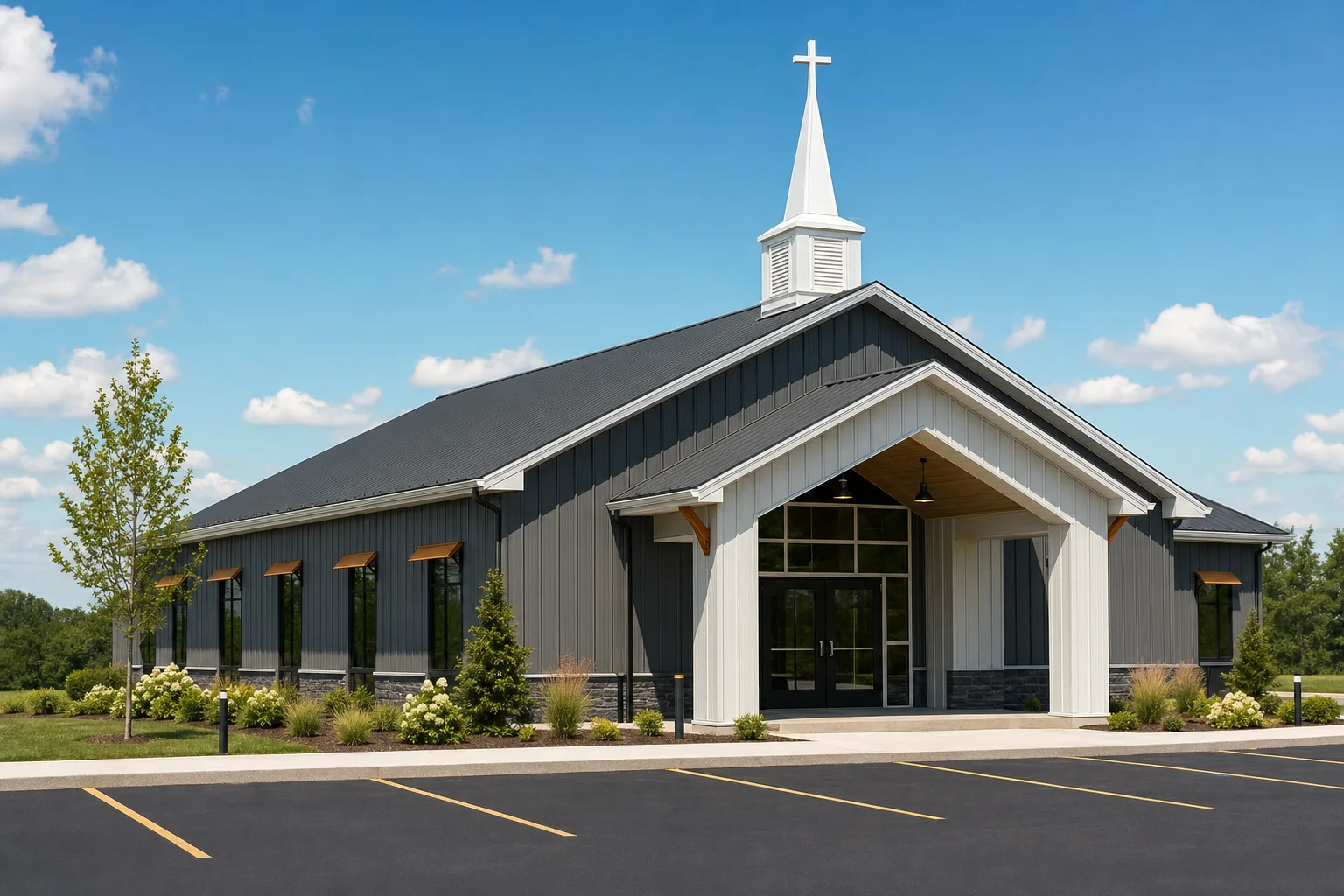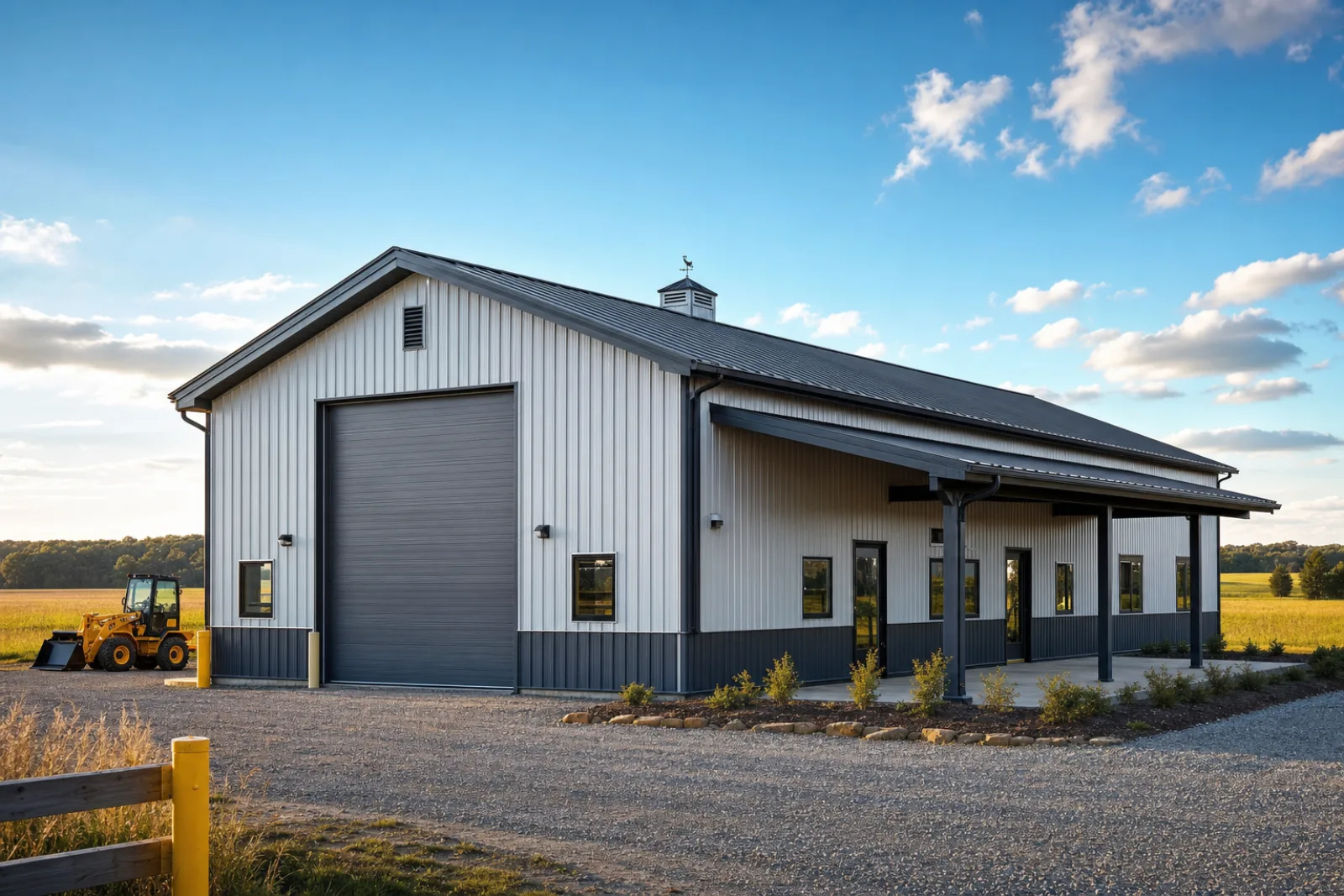
In Michigan, two things decide your metal building: snow and the local building department. The state sits in cold, lake-effect country, so ground snow load is the design driver almost everywhere ‹confirm›, and the permit that approves your steel is issued by your city, township, or county, not by the state. Get those two right and the rest of the project follows.
This guide sits under our metal buildings by state pillar and covers what changes when you build in Michigan: the codes your drawings answer to, the snow and wind loads your frame carries, the climate zone your insulation fights, and what drives price in the state. Treat every load and code figure here as a starting point, then verify it with your local building department before you buy.
Codes & permits
Michigan codes and who issues your permit
Michigan runs on two statewide model codes. The Michigan Building Code (MBC) governs commercial and industrial structures, and the Michigan Residential Code (MRC) governs one and two-family homes and their accessory buildings. Both are state-adopted versions of the International Code Council family, with the 2021 edition in force ‹confirm›. Your steel building answers to one of these depending on how you use it.
The state writes the code, but your local building department enforces it. You pull the permit from your city, township, or county, and that office sets the site-specific snow, wind, and frost numbers your engineer designs to. Michigan’s Bureau of Construction Codes inside LARA publishes the statewide rules and points you to the local authority that issues the permit. For the full process, see our metal building permits and codes guide.
Most Michigan metal buildings need stamped, engineered drawings from a Michigan-licensed engineer or architect submitted with the permit application ‹confirm›. The plans show the framing, the anchor design, and the load path. One common exemption: a detached, one-story accessory structure of 200 square feet or less usually needs no building permit, though zoning setbacks still apply. Anything larger, and the permit and stamped plans come back into play.
Verify locally
Snow load, wind exposure, frost depth, and the exact plan-review requirements are set by your local building department, not by a statewide number. Confirm them in writing for your parcel before you order steel. Building without a required permit can mean fines, a stop-work order, and retroactive plan review.
Loads
Snow, wind, and seismic loads in Michigan
Snow is Michigan’s dominant load. The state runs cold, and lake-effect bands off Lake Michigan and Lake Superior pile heavy snow on the western Lower Peninsula and the Upper Peninsula, so ground snow load drives the roof design on most projects. Wind matters but rarely governs, and seismic demand stays low across the state.
Treat the figures below as typical ranges ‹confirm›, not as your number. Ground snow load climbs as you move north and toward the lakeshore, which is why a frame stamped for southern Michigan can fall short in the Upper Peninsula. Your county sets the design value. For how these forces translate into a frame, read snow load and wind load explained.
| Load type | Typical Michigan range ‹confirm› | Who sets it |
|---|---|---|
| Ground snow load | Roughly 25 to 60+ psf, higher near the lakes and in the U.P. | County / local building department |
| Basic wind speed | Roughly 105 to 115 mph (Risk Category II) | Local building department |
| Seismic | Low demand, low Seismic Design Category | Local building department |
| Frost depth | Roughly 42 to 48 inches, deeper up north | County / local building department |
Typical ranges only. Confirm your parcel’s design loads with your local building department before ordering.
Because snow governs, do not shop on price alone. A quote stamped for a light snow load reads cheaper, then fails review in heavy-snow country. Ask which ground snow load the steel is engineered for, and match it to the figure your building department gives you.
Climate
Climate zone and insulation in Michigan
Michigan is a cold-climate state, so insulation here is about holding heat and stopping condensation. Most of the Lower Peninsula falls in IECC climate zones 5 and 6, and the Upper Peninsula reaches zone 7 ‹confirm›. The colder the zone, the more R-value the code expects in a heated building.
Two priorities sit side by side in a Michigan steel building. First, high R-value in the roof and walls keeps heating bills down through long winters. Second, a vapor and condensation strategy keeps warm indoor air from sweating against cold steel, which is the leading cause of rust and drips in northern buildings. A continuous insulation layer with a proper vapor retarder handles both. Our metal building insulation guide walks the options for a cold, humid climate like this one.
Price
What drives metal building price in Michigan
Michigan price comes down to steel, freight, engineering, and labor. The state sits inside the Great Lakes steel region, so mill distance works in your favor compared with far western states, and freight on a kit stays moderate. Snow-rated engineering is the line that pushes Michigan quotes up: a roof designed for heavy ground snow uses more steel than the same building in a mild state.
As a dated, illustrative 2026 figure, a 40×60 kit commonly lands in the range of $40,000 to $90,000 ‹confirm› depending on whether you buy bare steel or a finished, erected building, before foundation and local labor. Your snow load, your foundation depth, and regional labor rates move that number more than the steel itself does. For the full breakdown, see our metal building kit prices pillar, and plan the slab early with metal building foundation options since Michigan frost depth drives footing design.
Uses & metros
Popular uses and Michigan building departments
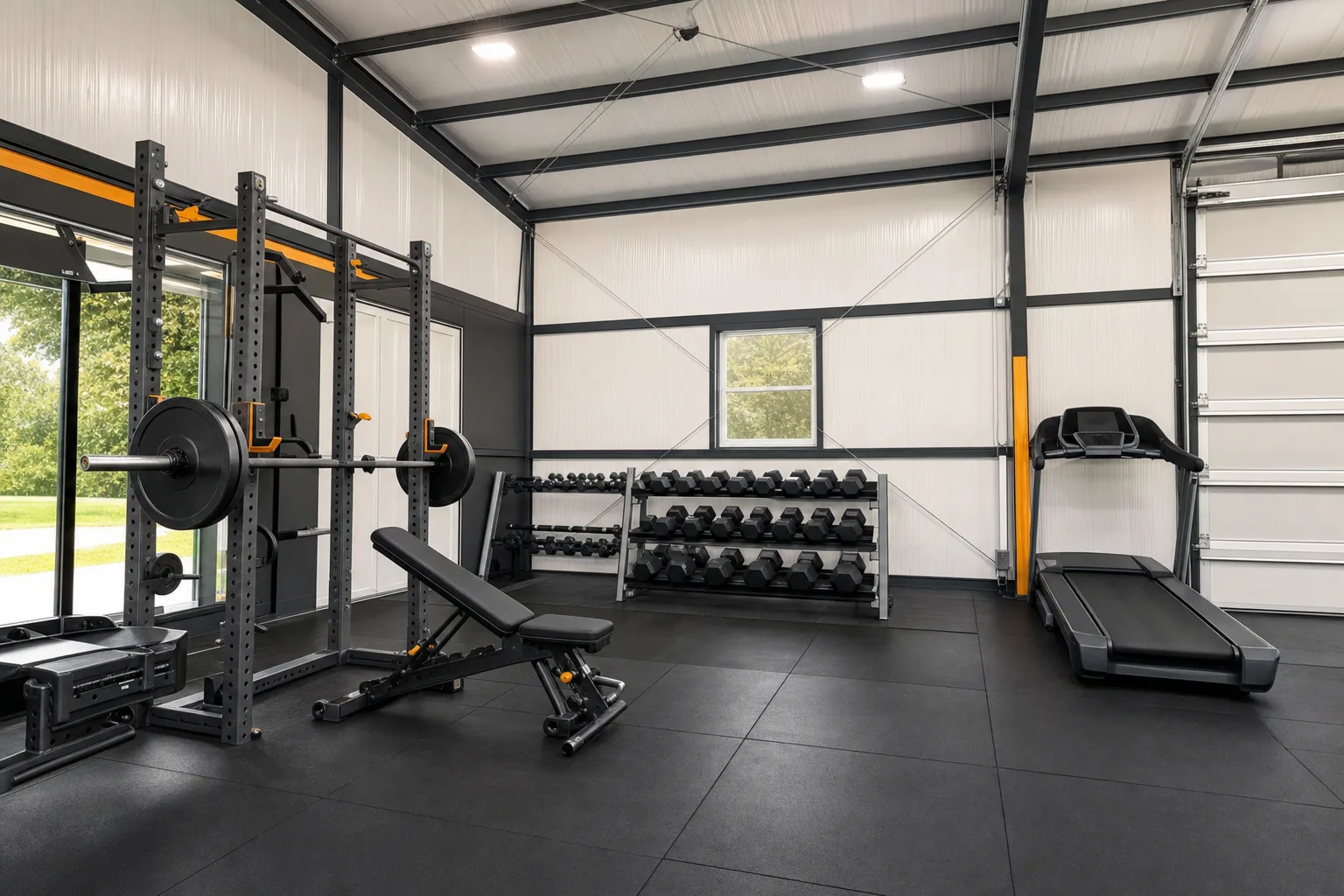
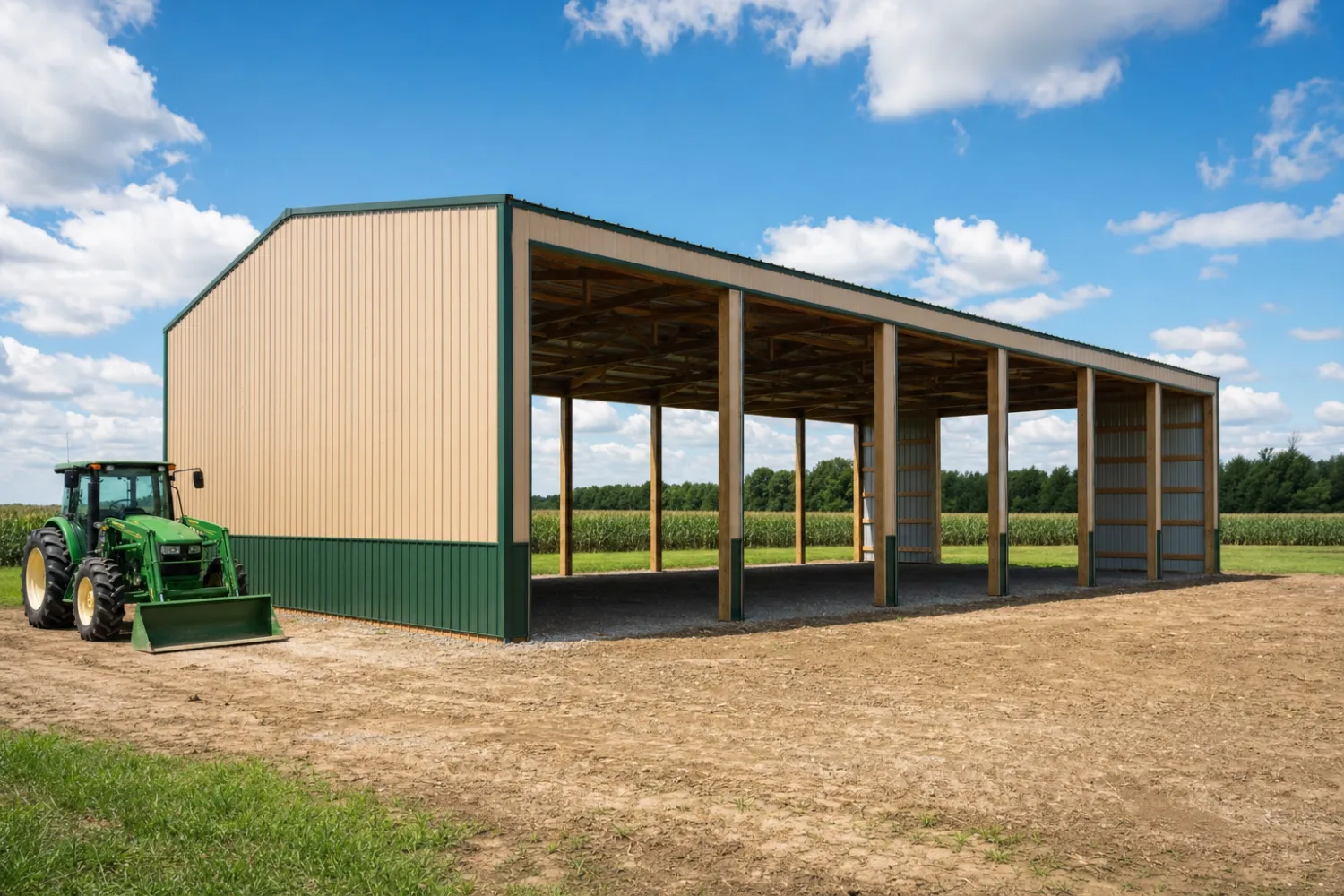
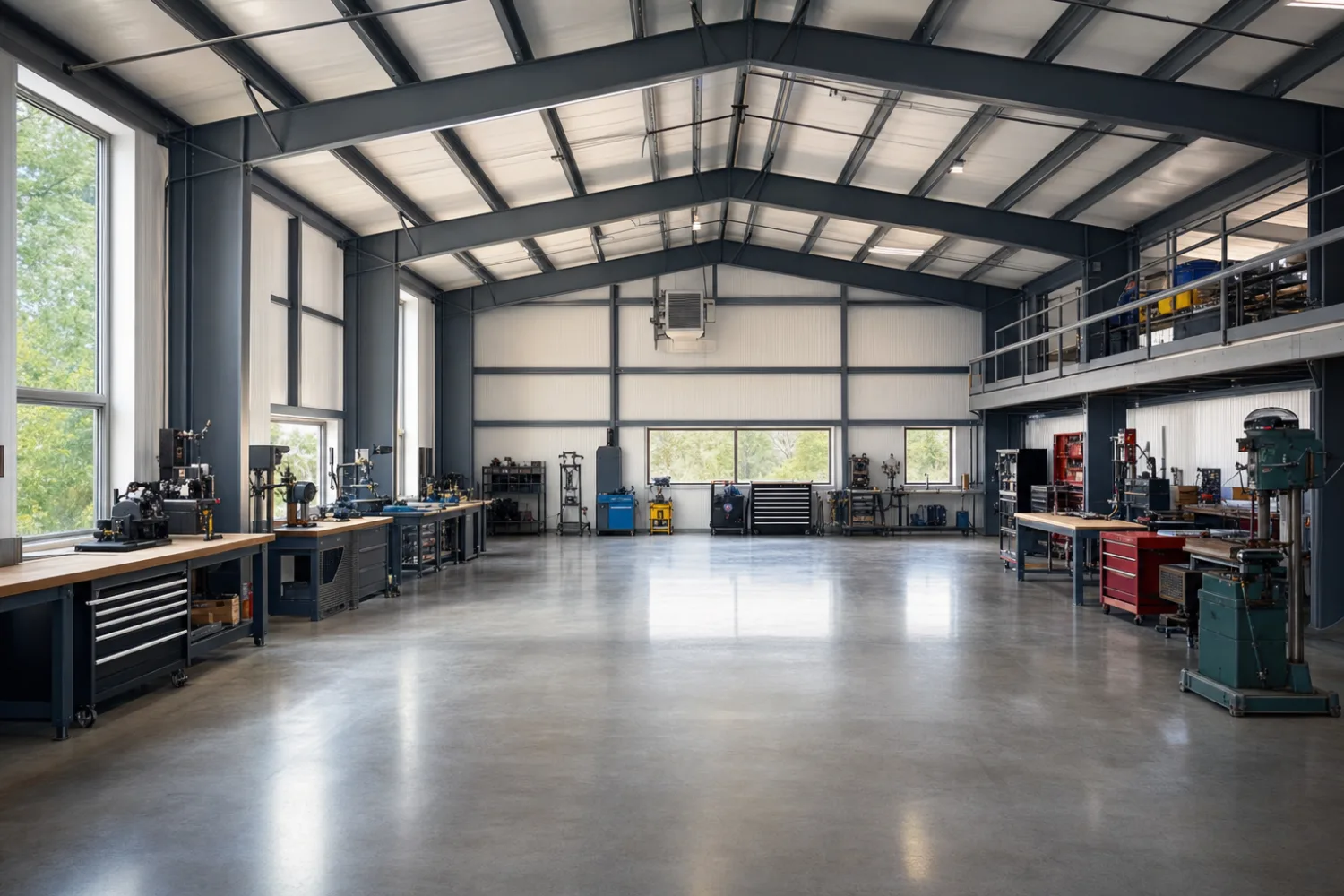
Michigan owners build steel for cold-weather work. Pole barns and ag buildings cover the rural counties, heated workshops and garages protect equipment through winter, and barndominiums and storage buildings round out the demand. Every one of them lives or dies on the snow rating and the local permit.
Permits are local, so the department you deal with depends on where you build. A few of the state’s largest metros and their building authorities:
- Detroit. The City of Detroit Buildings, Safety Engineering and Environmental Department (BSEED) handles building permits ‹confirm›.
- Grand Rapids. The City of Grand Rapids Development Center reviews building permits ‹confirm›.
- Warren and Sterling Heights. Each city runs its own building department for Macomb County’s suburbs ‹confirm›.
- Lansing and Ann Arbor. The capital and the university city each issue permits through their own city building offices ‹confirm›.
Outside the cities, your township or county building department is the office that matters. Confirm the department, the fees, and the submittal list for your exact address before you order, because two neighboring jurisdictions can run the process differently.
FAQ
Michigan metal building questions
What is the largest structure you can build in Michigan without a permit?
A detached, one-story accessory structure of 200 square feet or less, such as a small shed, is generally exempt from a building permit under the residential code. Zoning rules, setbacks, and property lines still apply, and anything larger than 200 square feet typically needs a permit and stamped plans. Confirm the threshold with your local building department.
Do you need a permit for a metal building in Michigan?
Yes, in almost every case. Michigan enforces the Michigan Building Code and Michigan Residential Code through local building departments, and a steel building over the small accessory-structure exemption needs a building permit, usually with engineered drawings. The permit comes from your city, township, or county, not the state.
What happens if you build without a permit in Michigan?
Building without a required permit can trigger fines, a stop-work order, and a requirement to apply for a retroactive permit. If the finished work does not meet the building code, you can be ordered to correct or remove it at your own cost. Pulling the permit first is far cheaper than fixing it after.
Do metal buildings in Michigan need engineered drawings?
In most jurisdictions, yes ‹confirm›. Local building departments typically require stamped, sealed plans from a Michigan-licensed engineer or architect that show the framing, anchoring, and snow and wind load path. Reputable kit suppliers provide engineered drawings sized to your county’s design loads. Confirm the exact submittal list with your building department.
How much snow load does a metal building in Michigan need?
It depends on your county. Ground snow load is the dominant design force in Michigan and climbs sharply near the Great Lakes and in the Upper Peninsula. There is no single statewide number, so your local building department sets the design value for your parcel, and your frame must be engineered to meet it.
What is the average cost of a 40×60 metal building in Michigan?
As a dated 2026 illustrative range, a 40×60 building commonly runs about $40,000 to $90,000 ‹confirm› depending on whether you buy a bare kit or a finished, erected structure, and before foundation work. Snow-rated engineering and frost-depth foundations push Michigan costs above those of milder states.
Who issues building permits in Detroit?
The City of Detroit Buildings, Safety Engineering and Environmental Department, known as BSEED, handles building permits and plan review inside the city ‹confirm›. Outside Detroit, you deal with the building department of the city, township, or county where you are building. Confirm the office for your exact address.
Read next
Keep reading
Compare Michigan with its neighbors, then go deeper on the codes, loads, and costs that decide your build:
- Metal building kits in Ohio
- Metal building kits in Indiana
- Metal building kits in Wisconsin
- Metal building kits in Illinois
- Metal building permits and codes
- Snow load and wind load explained
- Metal building foundation options
- Metal building insulation
- Metal building kit prices (the cost pillar)
Sources
Sources
- Michigan LARA, Bureau of Construction Codes, Building Permit Information: michigan.gov
- 2021 Michigan Building Code, Chapter 22 Steel (ICC): codes.iccsafe.org
- Michigan Building Code 2015, Chapter 22 Steel (UpCodes): up.codes
- Cambridge Township, Sheds, Garages and Pole Buildings (200 sq ft permit exemption): cambridgetwpmi (PDF)