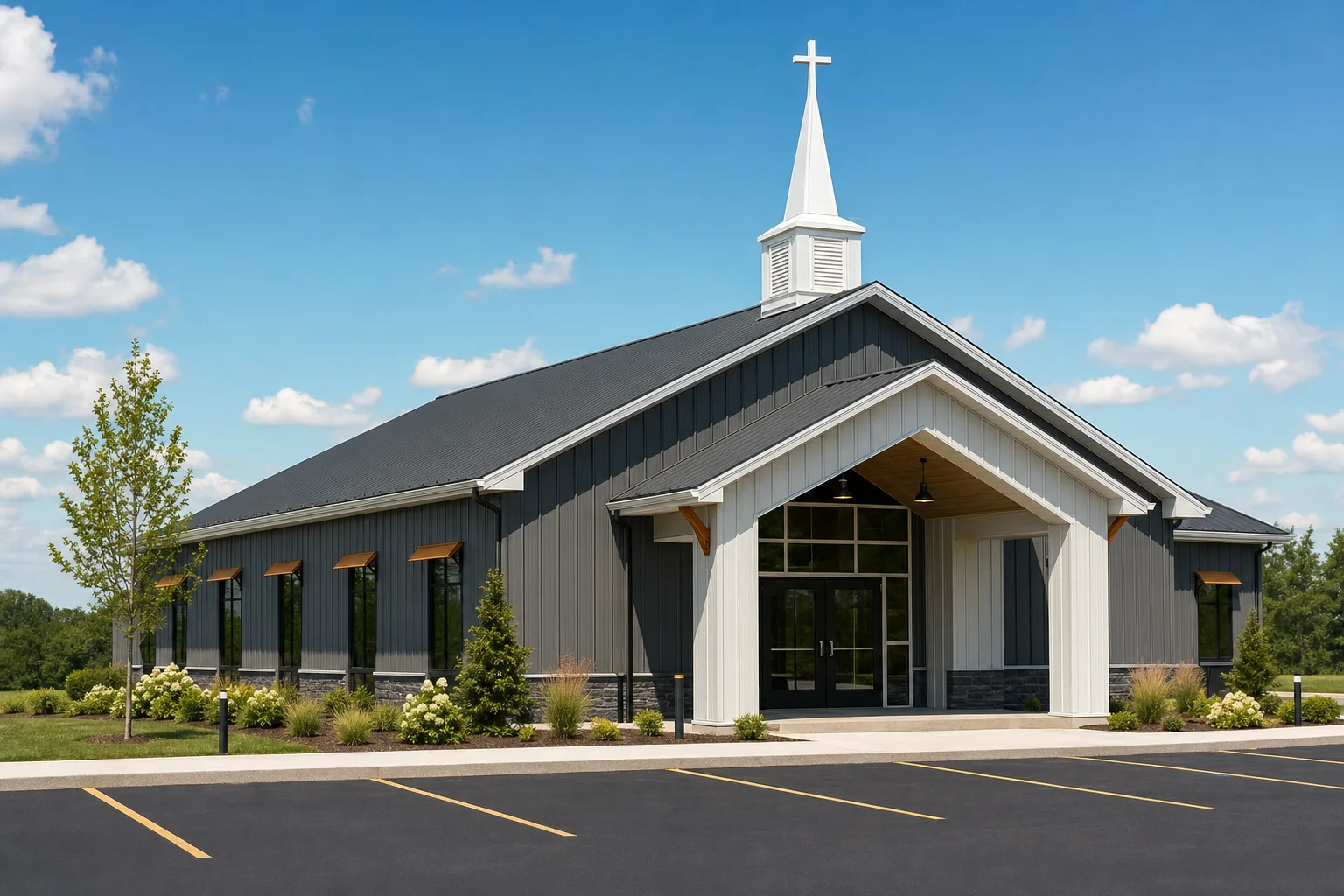
Two things shape a metal building in Kansas more than anything else: wind and the fact that the state runs no single building code. Kansas sets no statewide residential or commercial building code, so the rules that govern your metal building kits in Kansas are written by your city or county, not by Topeka. Plan around open-plain wind first, then confirm the exact code and permit path with the local building department before you order steel. ‹confirm›
This guide sits under our metal buildings by state pillar. Below you get the code and permit reality, the wind and snow loads that drive an engineer-stamped design, the climate zones that decide your insulation, what moves price in Kansas, and the real building departments in the state’s largest metros. Treat every load and code value here as a starting point to verify locally, never as a final number.
Codes & permits
Building codes and permits for a Kansas metal building
Kansas has no statewide building code, so adoption happens at the local level. Most Kansas cities and the more populated counties adopt a recent edition of the International Building Code (IBC) for commercial work and the International Residential Code (IRC) for homes and accessory structures, often with local amendments. ‹confirm› Rural counties may enforce little or nothing, while agricultural buildings on actively farmed land outside city limits are frequently exempt from the permit itself, though zoning setbacks still apply. ‹confirm›
For the permit, most Kansas building departments want structural blueprints and a foundation plan that are certified and stamped by an engineer licensed in the State of Kansas. ‹confirm› A reputable kit supplier provides those sealed drawings for your wind and snow loads. Expect to also submit a scaled site plan showing the structure and its distance to property lines, your intended use, and any plumbing or electrical sub-contractor details. Permits and the code edition are set by your jurisdiction, so read our metal building permits and codes guide for the general process, then verify the specifics with your local building department.
The 200 square foot line
Across many Kansas jurisdictions a detached accessory building of 200 square feet or more needs a building permit, while smaller storage sheds may be exempt. ‹confirm› Setback rules, though, apply to a structure of any size. A carport or shop that skips the permit can trigger fines, forced changes, or trouble at resale, so confirm the threshold before you build.
Loads
Wind, snow, and seismic loads in Kansas
Wind is the dominant design load in Kansas. The state sits in Tornado Alley with long, open exposure, so building departments push for frames engineered to real design wind speeds. Typical Kansas design winds land in roughly the 115 to 130 mph range ‹confirm›, with the figure rising on exposed sites and falling in sheltered ones. Snow matters too, heavier in the north, and seismic demand stays low across most of the state.
| Load type | Typical Kansas range | Who sets it |
|---|---|---|
| Design wind speed | 115 to 130 mph ‹confirm› | Local building department / IBC adoption |
| Ground snow load | 20 to 30 psf ‹confirm› | County, varies north to south |
| Seismic | Low demand, Seismic Design Category A to B ‹confirm› | Local jurisdiction per IBC |
Typical Kansas ranges only. Your county or city sets the binding number, so verify locally.
Read these as planning ranges, not as the value your permit will require. A jurisdiction in northern Kansas can call for a higher snow load than one near the Oklahoma line, and an exposed rural site can carry a stiffer wind requirement than a built-up lot in the same county. The point that does not change: order the building stamped for your local loads. Our snow load and wind load guide explains how those numbers translate into frame and anchor design, and your building department confirms the exact figures.
Climate
Climate zones and insulation in Kansas
Most of Kansas falls in IECC climate zone 4, with the cooler northwest edging toward zone 5. ‹confirm› That puts the state in mixed territory: hot, humid summers and cold, dry winters, with wide day-to-night swings on the plains. The practical result is that you fight two problems at once, summer heat gain and winter heat loss, and condensation sits underneath both.
Because warm, moist summer air meets cool steel, condensation control ranks alongside R-value on a Kansas building. A continuous vapor barrier behind the insulation, paired with enough R-value for a zone 4 to 5 winter, keeps a shop or barndominium dry and comfortable. For an unheated storage building you can run lighter, but you still want a vapor barrier under the roof. Our metal building insulation guide covers the assemblies that work in a climate like this.
Price factors
What drives metal building prices in Kansas
Steel is a national commodity, so the base price of a Kansas kit tracks the wider market. What shifts your delivered number is local: freight, the load rating your jurisdiction requires, and the crew and concrete rates near your site. Kansas sits a fair haul from the Gulf and Midwest steel mills, so freight to a remote county can add more than it would near a rail hub.
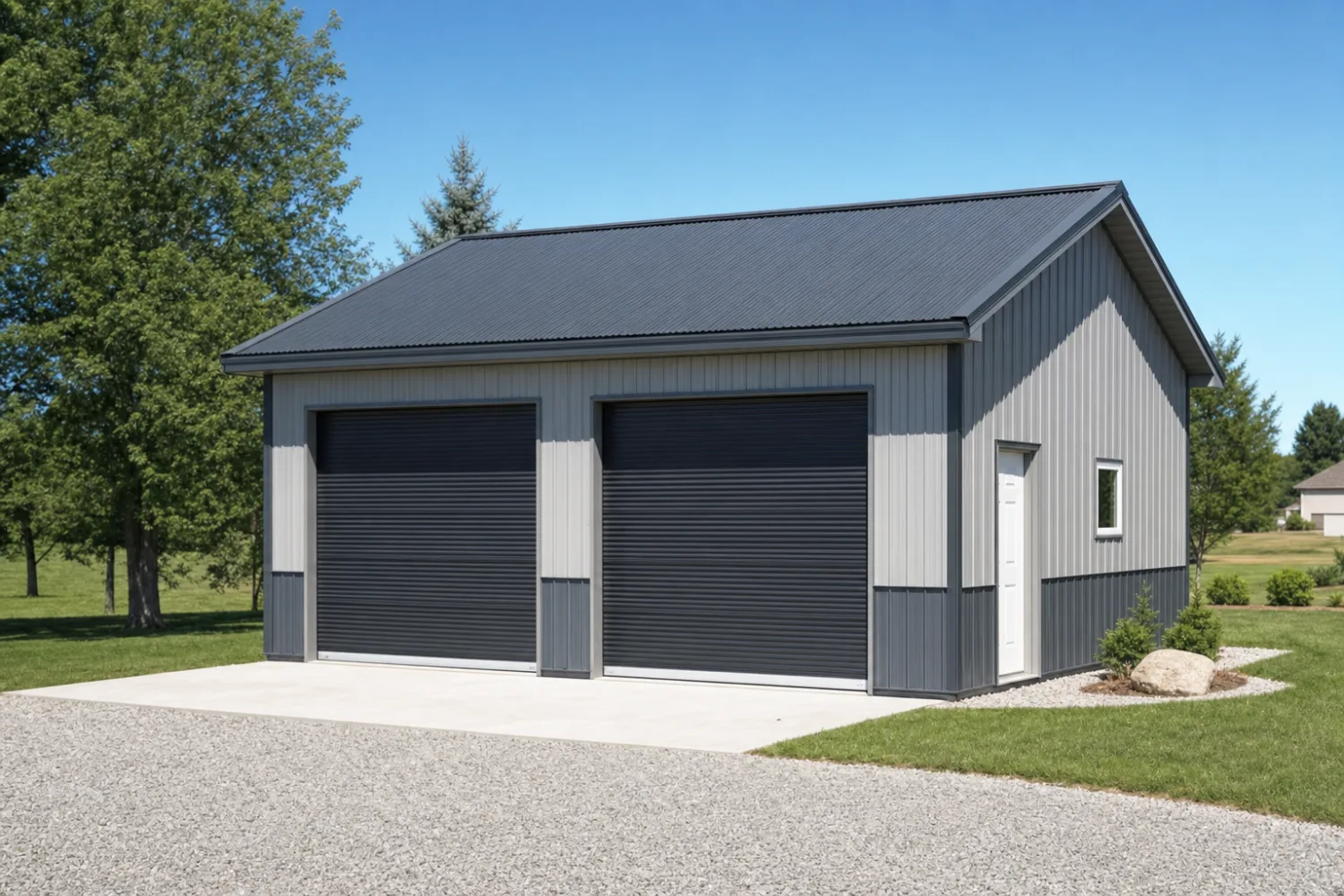
A higher design wind speed nudges the frame heavier, which adds steel and cost, and a remote site raises both freight and labor. As a dated, illustrative gauge for 2026, plan a wide range and price the shell, the foundation, and delivery as separate lines. ‹confirm› For the full breakdown of what moves a quote, see our metal building kit prices pillar, and get every figure in writing before you commit.
Uses & metros
Popular uses and metro building departments in Kansas
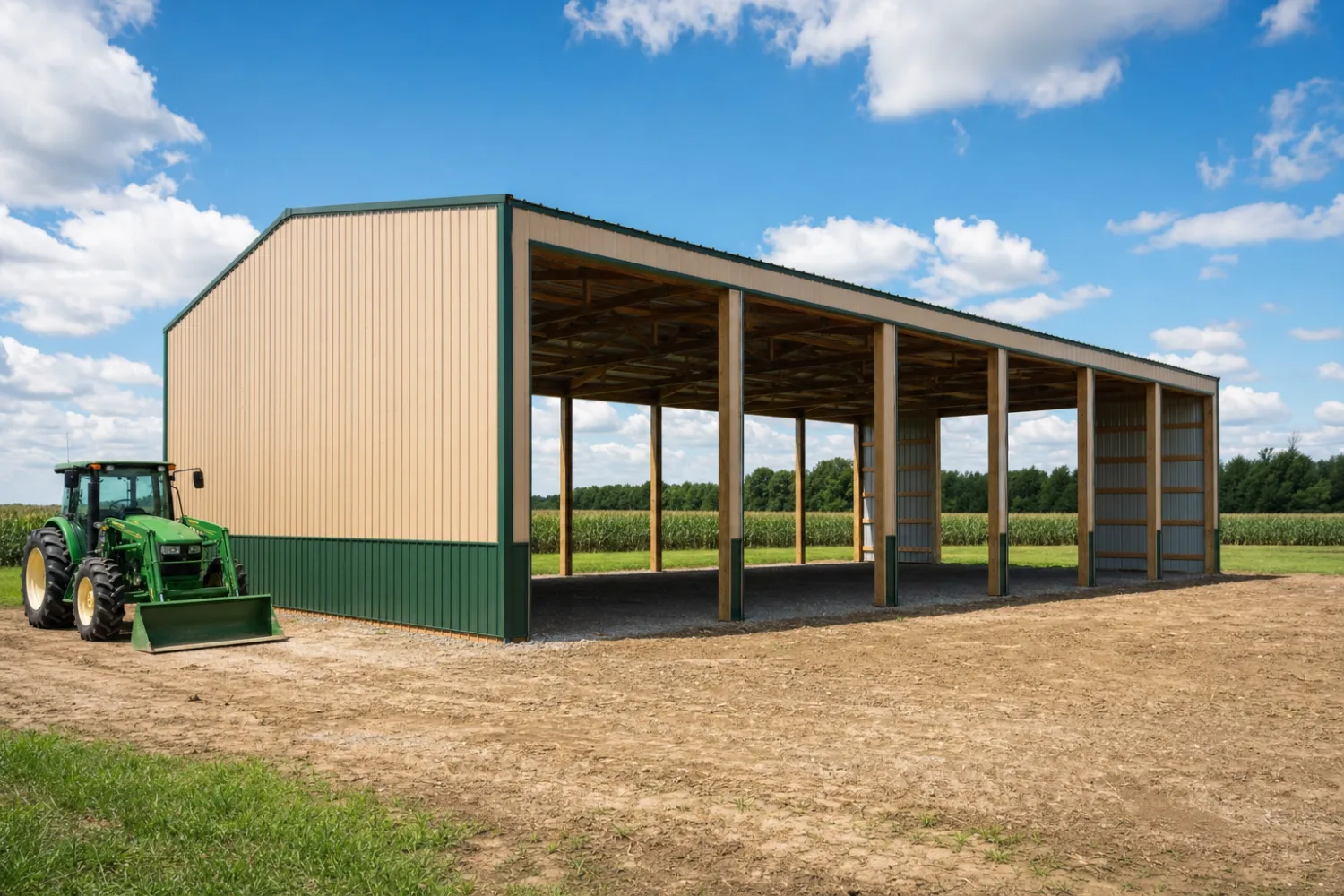
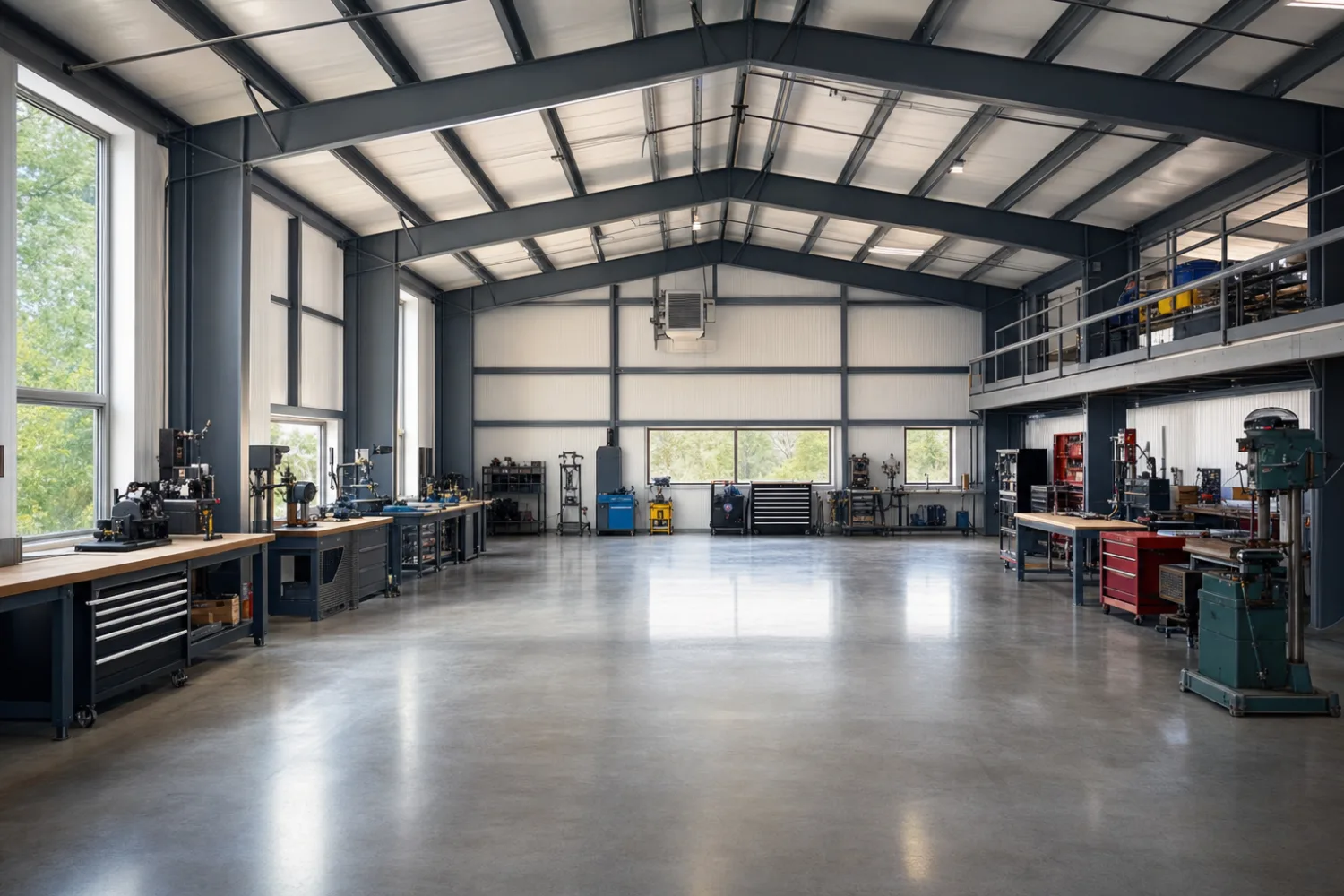
Kansas demand leans agricultural and working: equipment and hay storage on the farm, shops and garages in town, barndominiums on acreage, and warehouses near the cities. Wide, clear-span steel fits all of them, which is why red iron shops and pole-style ag buildings are common across the state. Where you build decides who reviews the plans.
- Wichita and Sedgwick County. The Metropolitan Area Building and Construction Department (MABCD) handles permits and inspections for Wichita and Sedgwick County from offices on West 3rd Street North. ‹confirm›
- Johnson County metros (Overland Park, Olathe). County and city building-codes offices review permits, and a residential accessory building of 200 square feet or more needs one. ‹confirm›
- Topeka and Kansas City, Kansas. Each city runs its own development or building-permits office that adopts and amends the model codes locally. ‹confirm›
- Rural counties. Smaller counties may require only a site plan and building drawings, and some enforce no building code at all, so call ahead. ‹confirm›
Naming the metro that matters to you is the fastest path: confirm the adopted code edition, the wind and snow load, the setbacks, and whether your use qualifies for an agricultural exemption with that office before you order. Your county is the authority, not any supplier.
FAQ
Kansas metal building questions
Do I need a permit for a metal building in Kansas?
In most Kansas cities and populated counties, yes. A detached accessory building of 200 square feet or more generally needs a permit, and setbacks apply at any size. Rural counties may require less, and agricultural buildings on farmed land outside city limits are often exempt. Confirm with your local building department before you build.
Does Kansas have a statewide building code?
No. Kansas does not enforce a single statewide building code. Cities and counties adopt their own codes, usually a recent edition of the IBC or IRC with local amendments, so the rules change from one jurisdiction to the next. ‹confirm›
Do I need engineer-stamped drawings for a metal building in Kansas?
Most Kansas building departments require structural and foundation plans certified and stamped by an engineer licensed in Kansas. ‹confirm› A good kit supplier provides sealed drawings engineered for your local wind and snow loads, which is what the department reviews.
What wind speed should a Kansas metal building handle?
Typical Kansas design wind speeds fall in roughly the 115 to 130 mph range, higher on exposed sites. ‹confirm› Kansas sits in Tornado Alley, so wind is the leading design load. Your jurisdiction sets the binding figure, so order the building stamped for it.
Can I build a metal building on my own property in Kansas?
Usually yes, within local zoning, building codes, and any HOA rules. Check that your zoning allows the use, confirm setbacks from property lines, and pull the required permit. Most jurisdictions require permits for structures above a small shed size, commonly 200 square feet.
Does a metal building raise my property taxes in Kansas?
A permanent metal building anchored to a foundation is an improvement, so it can raise the assessed value and the property tax on it. The county appraiser makes that call. Ask your county how a new shop, garage, or barndominium would be assessed before you build.
Can I put up a metal building kit myself in Kansas?
Many bolt-up kits are built for owner assembly, and a small garage or carport is a realistic do-it-yourself project. Larger red-iron shops want equipment and a crew. Either way the building still needs the right permit and engineer-stamped plans for your jurisdiction.
Read next
Keep reading
Compare neighboring states and dig into the codes, loads, and foundation choices behind a Kansas build:
- Metal building kits in Nebraska (the northern plains neighbor).
- Metal building kits in Missouri (east across the state line).
- Metal building kits in Oklahoma (south into deeper Tornado Alley).
- Metal building kits in Colorado (west toward heavier snow country).
- Metal building permits and codes (how the permit path works).
- Snow load and wind load explained (turning loads into a frame).
- Metal building foundation options (slabs, piers, and anchoring).
- Metal building insulation (R-value and condensation control).
- Metal building kit prices (the full cost breakdown).
Sources
Sources
Every code, permit, and load value above is flagged to verify locally. These are the references used:
- Kansas Building Codes Explained (MeltPlan): https://www.meltplan.com/blogs/kansas-building-codes-explained-a-complete-guide-for-design-professionals
- Johnson County, KS Accessory and Agriculture Building permits: https://www.jocogov.org/department/building-codes/building-permits/accessory-and-agriculture-building
- Permitting a Metal Building in Rural Kansas (KCON): https://kcon.build/2025/06/26/https-kcon-build-2025-06-17-permitting-a-metal-building-in-morris-geary-and-wabaunsee-counties/
- Metal Building Permit Requirements by State (Engineered Metal Buildings): https://www.engineeredmetalbuildings.com/blog/metal-building-permit-requirements-by-state-western-us/
- Metropolitan Area Building and Construction Department, Wichita / Sedgwick County (MABCD): https://www.sedgwickcounty.org/mabcd/
- Wichita-Sedgwick County Planning Department: https://www.wichita.gov/157/Wichita-Sedgwick-County-Planning