A metal building in Nebraska answers to two things before anything else: the load it has to carry and the local office that permits it. On the open plains that means designing for snow and high prairie wind, then confirming the exact figures with the city or county that issues your permit. Nebraska sets most of this at the local level, so a building that passes in one county can need a different stamp a county over.
This guide is part of our metal buildings by state series, an overview of how codes, loads, and climate shape a steel building in each state. Use it to frame the right questions before you buy, then verify every number with your local building department. Below: the permit reality, the loads that drive a Nebraska design, the climate, what moves price, and where the major metros send you to pull a permit.
Codes and permits
Permits and building codes in Nebraska
Nebraska does not enforce a single statewide building code on every project. Many cities and counties adopt and amend their own edition of the International Building Code and International Residential Code ‹confirm›, so the rules that apply to your build depend on the jurisdiction, not on a blanket state law.
The permit comes from your city or county building department, not from the state ‹confirm›. A pre-engineered steel building usually needs engineer-stamped, sealed drawings for the frame and foundation once it crosses a size or occupancy threshold ‹confirm›, which is the norm our permits and codes guide walks through. Smaller agricultural structures can fall under different rules in some counties, so do not assume a shed is exempt until the office confirms it.
Verify before you buy
Call the building department for the parcel where the building will stand and ask three things: which code edition they enforce, whether they require an engineer’s stamp for your size, and the snow and wind values they design to. Get the answers in writing and hand them to your supplier. Verify with your local building department before you sign anything.
Loads
Wind, snow, and seismic loads in Nebraska
On the Nebraska plains, snow and wind drive the design and seismic is usually a minor factor ‹confirm›. Ground snow load tends to climb as you move north and west, and the open exposure across most of the state pushes wind to the front of the conversation, especially in severe-storm country.
Treat the figures below as typical ranges, not as your jurisdiction’s adopted numbers. The county or city sets the values you build to, and our snow load and wind load guide explains how the two combine on a steel frame. Confirm the exact design loads with your building department before you order steel.
| Load type | Typical Nebraska range ‹confirm› | Who sets it |
|---|---|---|
| Ground snow load | Roughly 20–30 psf across much of the state, higher north and west | County or city building dept |
| Design wind speed | Open-country exposure, commonly in the 105–115 mph range | County or city building dept |
| Seismic | Low design category over most of Nebraska | County or city building dept |
Illustrative typical ranges only ‹confirm›. Your jurisdiction sets the real numbers. Verify locally.
Wind is the line item buyers underbuy. A frame stamped for the right exposure and gust speed costs more than a bargain shell, and on the plains that capacity is the point. If a quote does not name a wind speed and a snow load, it is not yet a real Nebraska quote.
Climate
Climate and insulation for Nebraska steel buildings
Nebraska sits in a cold continental climate, much of it in IECC climate zone 5 ‹confirm›, so insulation works hardest against winter heat loss while still managing summer humidity. The priority is a healthy R-value for the cold months, paired with real condensation control for the swing seasons.
Big temperature swings drive condensation inside an uninsulated steel shell, and that moisture, not the steel itself, is what shortens a building’s life. A vapor barrier and the right insulation system handle both jobs at once, which is the case our metal building insulation guide lays out. If you plan to heat a shop or finish a barndominium, specify the insulation at order time rather than chasing it later.
Pricing
What drives metal building prices in Nebraska
Your Nebraska price comes down to the steel market plus how far the kit travels and what local labor costs ‹confirm›. The shell is a commodity; freight and site work are where states diverge.
- Freight and distance. The farther your site sits from the fabricator, the more the haul adds across the plains ‹confirm›.
- Local labor. Crew rates in and around Omaha and Lincoln differ from rural counties, and that shows up on the erection line ‹confirm›.
- Foundation. Cold-climate frost depth means deeper footings, so the slab and footing detail is a real cost driver. See foundation options.
- Load upgrades. Higher snow and wind ratings add steel, which adds cost, and that is money well spent on the plains ‹confirm›.
As a dated, illustrative point for 2026, a basic Nebraska shell runs in the range you would expect for the Midwest, but the only number that matters is the quote for your size, loads, and site ‹confirm›. Our metal building kit prices guide breaks the line items down so you can compare two bids honestly.
Popular uses
Popular builds and where to permit them
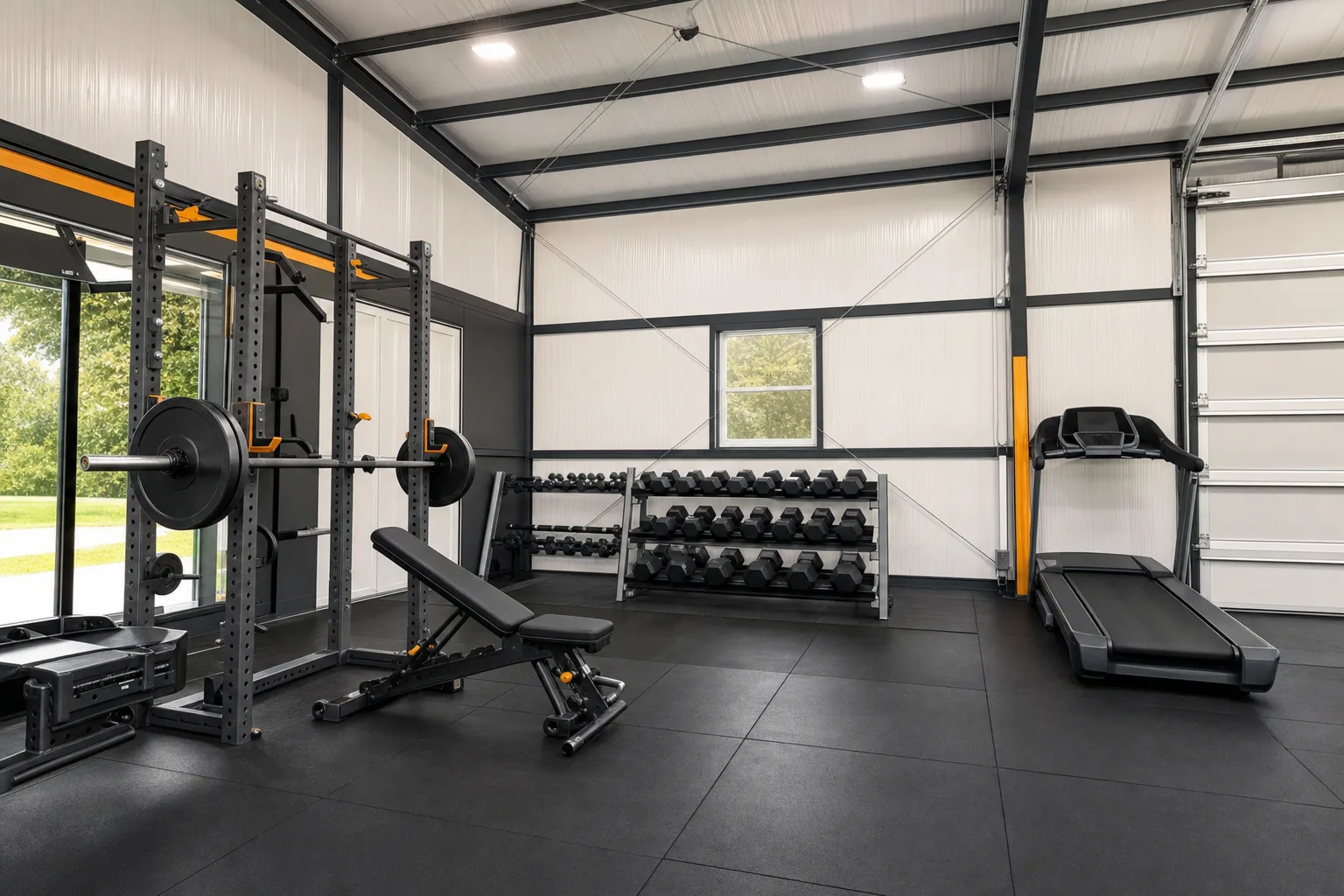
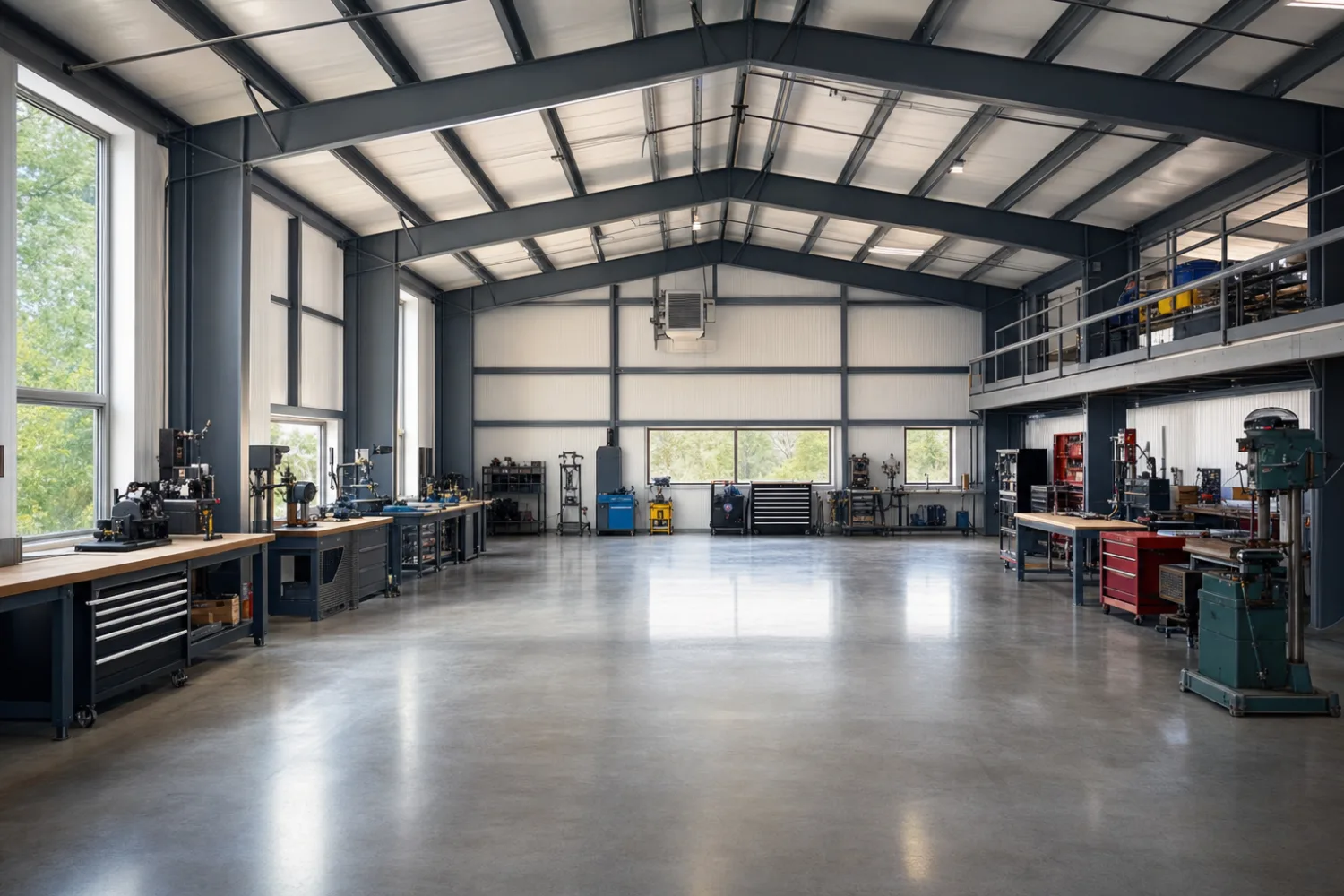
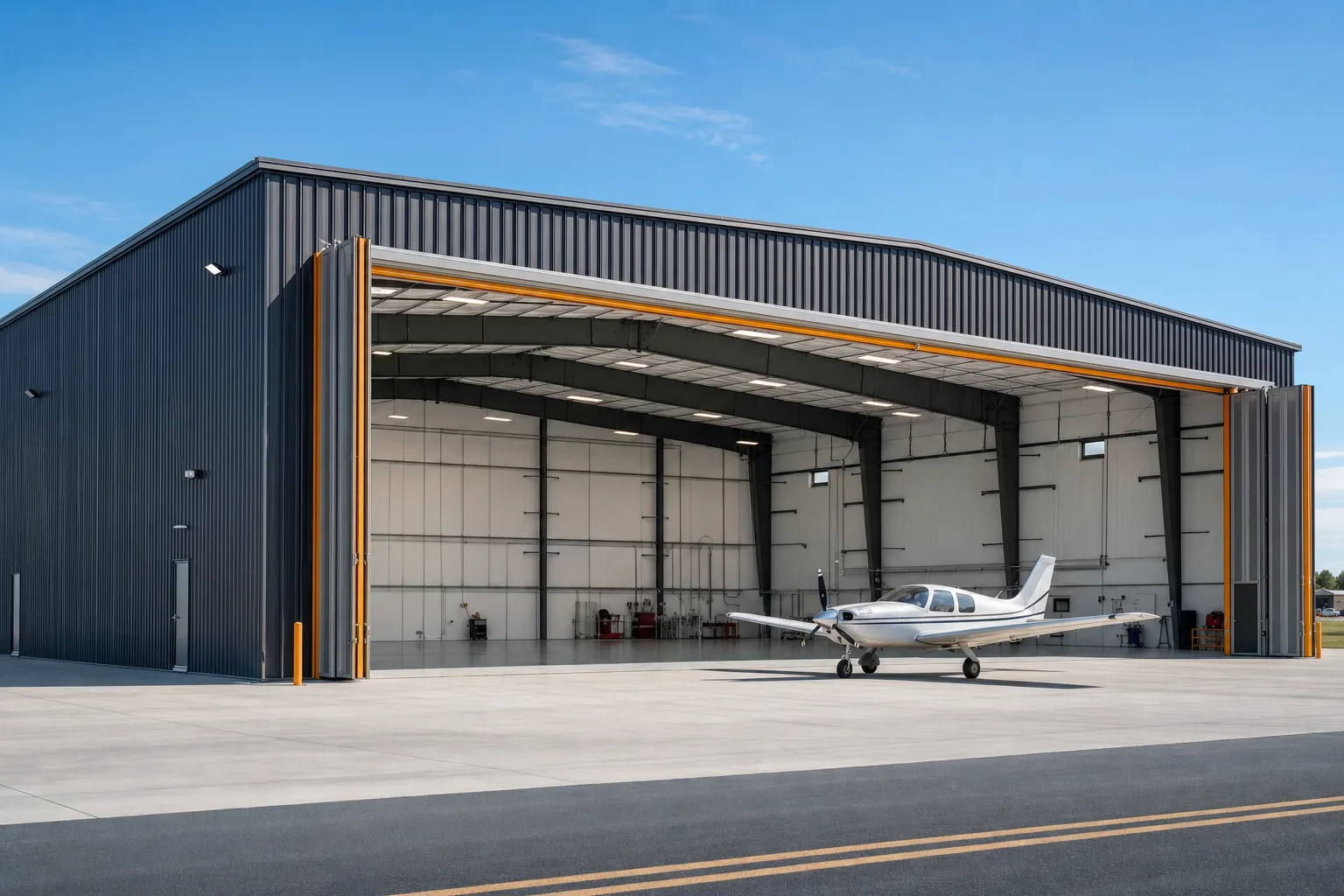
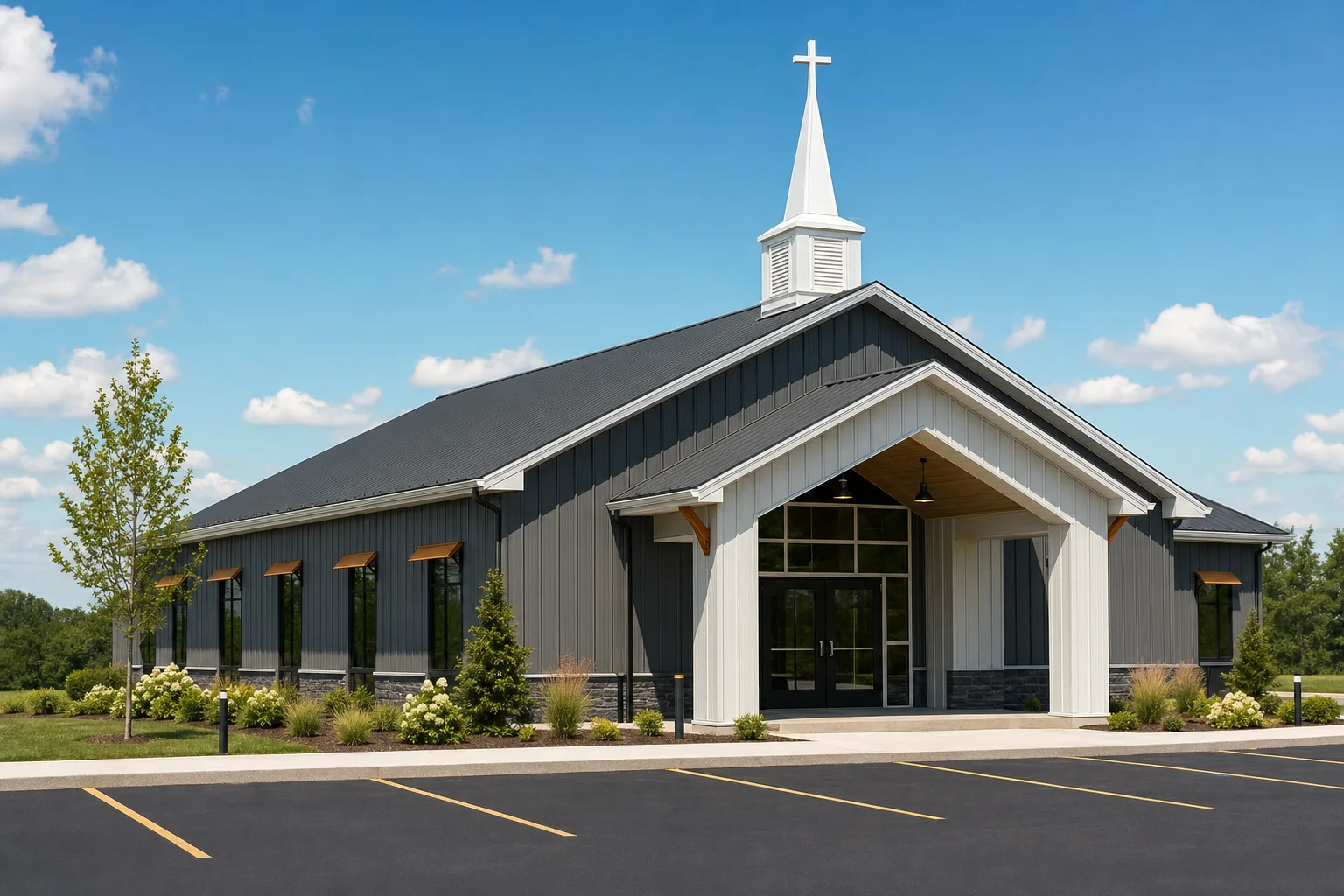
Nebraska’s farms and metros put up a lot of steel: machine sheds, grain and equipment storage, shops, garages, riding arenas, and barndominiums. Agriculture sets the tone statewide, while the metros add garages, contractor shops, and small commercial buildings.
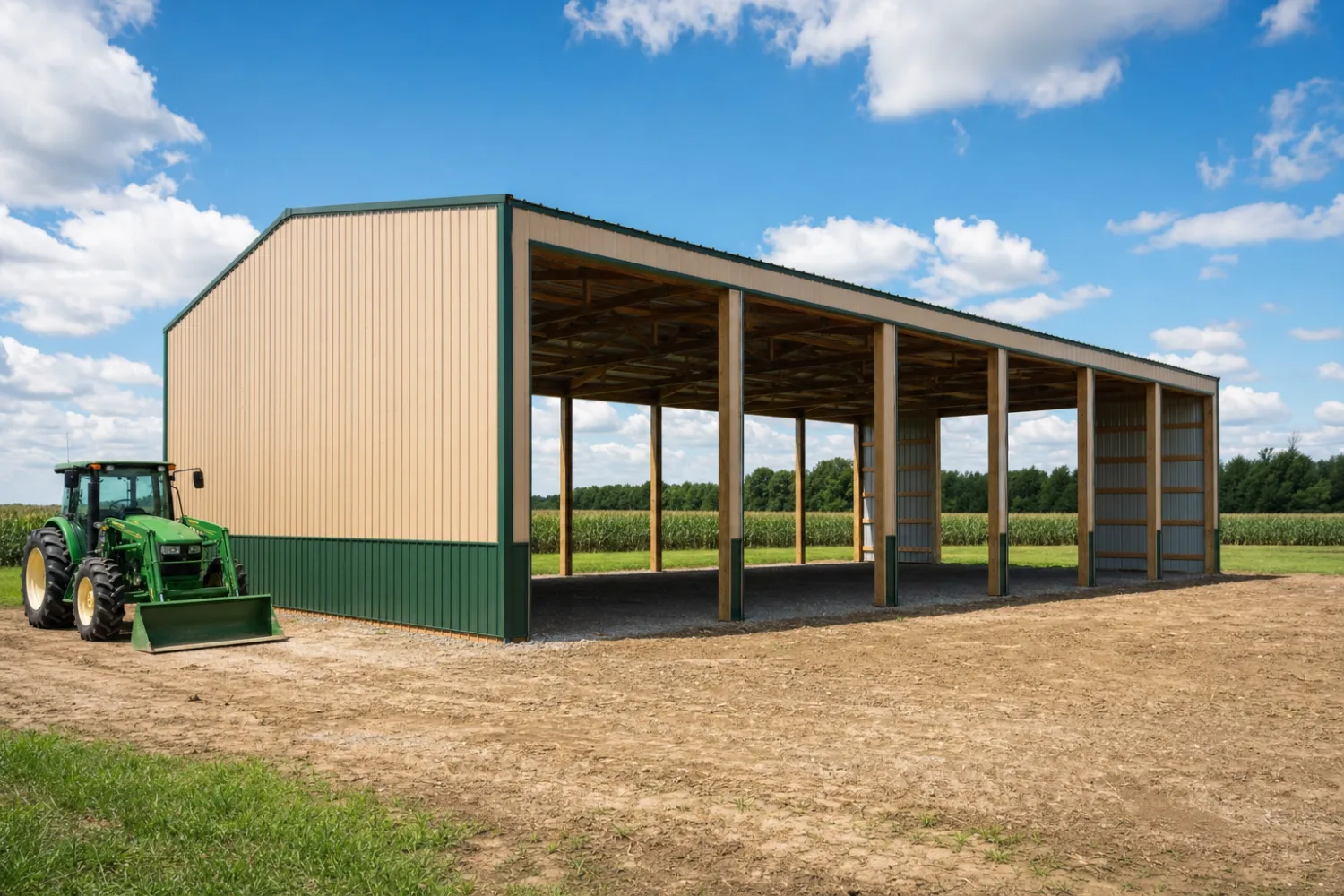
Where you pull the permit depends on the parcel. Inside Omaha, the City of Omaha Permits and Inspections Division handles building permits ‹confirm›. In Lincoln, the Building and Safety Department reviews and inspects ‹confirm›. Outside city limits, the county takes over, so a build in unincorporated Douglas, Lancaster, or Sarpy County goes through that county’s office ‹confirm›. Confirm the right office for your exact address with your local building department before you design.
FAQ
Nebraska metal building questions
Do you need a permit for a metal building in Nebraska?
In most cases, yes. Building permits in Nebraska are issued locally, so a city or county office reviews the project against the code it enforces ‹confirm›. Some small agricultural structures follow different rules in certain counties, but you should never assume an exemption. Confirm with your local building department before you order.
Does Nebraska require engineer-stamped drawings for a metal building?
Often, yes. A pre-engineered steel building usually needs sealed, engineer-stamped drawings for the frame and foundation once it passes a size or occupancy threshold set by the jurisdiction ‹confirm›. The threshold varies, so ask the office that will issue your permit what they require for your size.
What snow load does a metal building in Nebraska need?
Ground snow load is set locally and tends to run higher as you move north and west, commonly in a range around 20 to 30 psf across much of the state ‹confirm›. That figure is illustrative only. Your county or city sets the value you build to, so verify it with the building department.
What wind speed should a Nebraska metal building be rated for?
Most of Nebraska is open-country exposure, and design wind speeds commonly fall in the 105 to 115 mph range ‹confirm›, though severe-storm areas can push higher. Treat that as a starting point and confirm the adopted design wind speed with your jurisdiction before ordering steel.
What size building can you put up without a permit in Nebraska?
It varies by jurisdiction. Some offices exempt small accessory structures under a set square footage, but the threshold differs from one city or county to the next ‹confirm›. Do not rely on a number you heard elsewhere; confirm the exemption, if any, with your local building department.
Who issues building permits in Omaha?
Inside the city, the City of Omaha Permits and Inspections Division reviews and issues building permits ‹confirm›. If your site sits outside the city limits, the county office handles it instead. Check the jurisdiction for your exact parcel before you apply.
Are pole barns and ag buildings allowed in Nebraska?
Yes, and they are common on Nebraska farms. Many counties treat genuine agricultural structures under separate rules, which can change what review and inspection apply ‹confirm›. The classification depends on use and location, so confirm how your county handles ag buildings before you build.
Read next
Read next
Keep going with the neighboring states and the topics that shape a Nebraska build:
- Metal building kits in South Dakota (heavier northern snow country).
- Metal building kits in Iowa (the Missouri River neighbor to the east).
- Metal building kits in Kansas (plains wind and storm country to the south).
- Metal building kits in Colorado (mountain snow and elevation to the west).
- Metal building permits and codes (how permits and stamps work).
- Snow load and wind load explained (the two loads that drive a plains design).
- Metal building foundation options (slabs, footings, and frost depth).
- Metal building insulation (R-value and condensation control for cold winters).
- Metal building kit prices (the cost guide and line items).
- Metal buildings by state (back to the state hub).
Sources
Sources and where to verify
Use these authoritative references to confirm the code edition, permit authority, and design loads for your exact parcel. Local figures govern, so treat every value above as a prompt to verify, not a final number.
- Nebraska code adoption (UpCodes): https://up.codes/codes/nebraska
- International Code Council (ICC): https://www.iccsafe.org/
- Nebraska State Fire Marshal Agency: https://sfm.nebraska.gov/
- City of Omaha Permits and Inspections: https://permitsandinspections.cityofomaha.org/
- City of Lincoln Building and Safety: https://www.lincoln.ne.gov/City/Departments/Building-Safety