Two things shape a metal building in Missouri more than anything else. First, the state has no statewide building code, so what you can build, and whether you need a permit at all, is decided by your county or city, not by Jefferson City. Second, Missouri sits where Tornado Alley meets the New Madrid Seismic Zone, so wind drives the design statewide and earthquake loads matter in the southeast ‹confirm›.
This guide is part of our metal buildings by state series, an independent reference for people planning a steel building. It covers how Missouri handles codes and permits, the loads your kit has to carry, the climate your insulation has to fight, and what moves the price here. Every hard number below is a starting point to confirm with your local building department, not a statewide rule.
Codes & permits
Missouri building codes and permits, by jurisdiction
Missouri is one of the few states with no mandatory statewide building code, so your code and permit rules come from the city or county where you build. Urban areas set the bar high and rural counties often set almost none.
In the metros, expect the International Building Code (IBC) for commercial work and the International Residential Code (IRC) for homes and accessory buildings ‹confirm›, plus a permit pulled before you pour. Kansas City and St. Louis both run full plan review and inspection programs. In many rural Missouri counties, an enclosed shop or an agricultural building may need only zoning and setback approval, and some need nothing at all. The only way to know your rule is to call the office that issues the permit.
When a permit is required in a Missouri city, plans usually have to be sealed by a professional engineer (PE) licensed in Missouri ‹confirm›. A reputable kit supplier provides stamped drawings sized for your site, which is the document your reviewer wants to see. Our permits and codes guide walks the full process. Verify the edition and the stamp rule with your local building department before you order.
The Missouri quirk
Because there is no statewide code, two counties an hour apart can hold a metal building to completely different standards. Never assume the rule from your last project, or your neighbor’s, carries over. Confirm in writing with the jurisdiction that will inspect the build.
Loads
Wind, snow, and seismic loads in Missouri
Wind is the load that drives most Missouri designs. The state sees frequent severe thunderstorms and tornadoes, and a typical design wind speed runs around 115 mph for standard buildings ‹confirm›, higher near open country. Your kit has to be braced and anchored for that, not just stood up.
Snow is a secondary concern that grows as you move north. Ground snow loads are modest in the south of the state and heavier across northern Missouri, with typical roof design values in a rough 15 to 25 psf range ‹confirm›. Seismic load is the wildcard. The New Madrid Seismic Zone in the southeastern Bootheel is one of the most active fault systems east of the Rockies, and buildings there can fall into a higher Seismic Design Category (C or D) that adds bracing and connection requirements ‹confirm›.
| Load type | Typical Missouri range | Who sets it |
|---|---|---|
| Design wind speed | ~115 mph, higher in open terrain ‹confirm› | Local building department per IBC/IRC |
| Roof snow load | ~15 to 25 psf, heavier in the north ‹confirm› | County or city, by region |
| Seismic category | Low statewide; C to D in the SE Bootheel ‹confirm› | Local code, New Madrid zone mapping |
| Frame stamp | PE-sealed drawings where permits apply | City or county plan review |
Treat these as planning ranges to verify locally, not as one statewide number.
None of these are set in Jefferson City, so the honest answer is always the same: get the exact wind, snow, and seismic figures for your parcel before you buy. Our snow load and wind load guide explains how those numbers turn into steel, and your local building department confirms the values that apply to you.
Climate & insulation
Climate and insulation for a Missouri steel building
Most of Missouri sits in a mixed-humid climate, roughly IECC climate zone 4A, with hot sticky summers and cold winters ‹confirm›. The far north trends colder and the far south milder, but the practical takeaway holds statewide: you are fighting moisture as much as temperature.
In a humid climate, the first job of insulation is condensation control. Warm Missouri air hitting cool steel panels sweats, and that drip rusts fasteners and ruins anything stored below. A continuous vapor barrier with proper insulation and ventilation stops it before it starts. Cold northern winters add a case for higher R-value in the roof if you plan to heat the space. Our metal building insulation guide covers the assemblies that work in a climate like this. Match the build to whether you are heating, cooling, or just keeping equipment dry.
Price factors
What drives metal building prices in Missouri
Missouri prices track the national steel market, then bend on a few regional factors. The big one is freight. Steel is heavy, so the distance from the mill or fabricator to your site shows up in the quote, and a remote rural parcel costs more to deliver to than a lot near Kansas City or St. Louis.
Labor is the other lever. Crews are easier to book and competitive around the metros, while a build in the Ozarks or the northern farm counties may carry a travel premium. Site work matters too: a flat, accessible pad keeps the foundation budget down, and the foundation you choose can swing the total as much as the steel does. For current ranges and how to read a quote line by line, see our metal building kit prices guide. Any figure you see this year is illustrative ‹confirm› and worth confirming with a live quote for your address.
Uses & metros
Popular uses and Missouri building departments
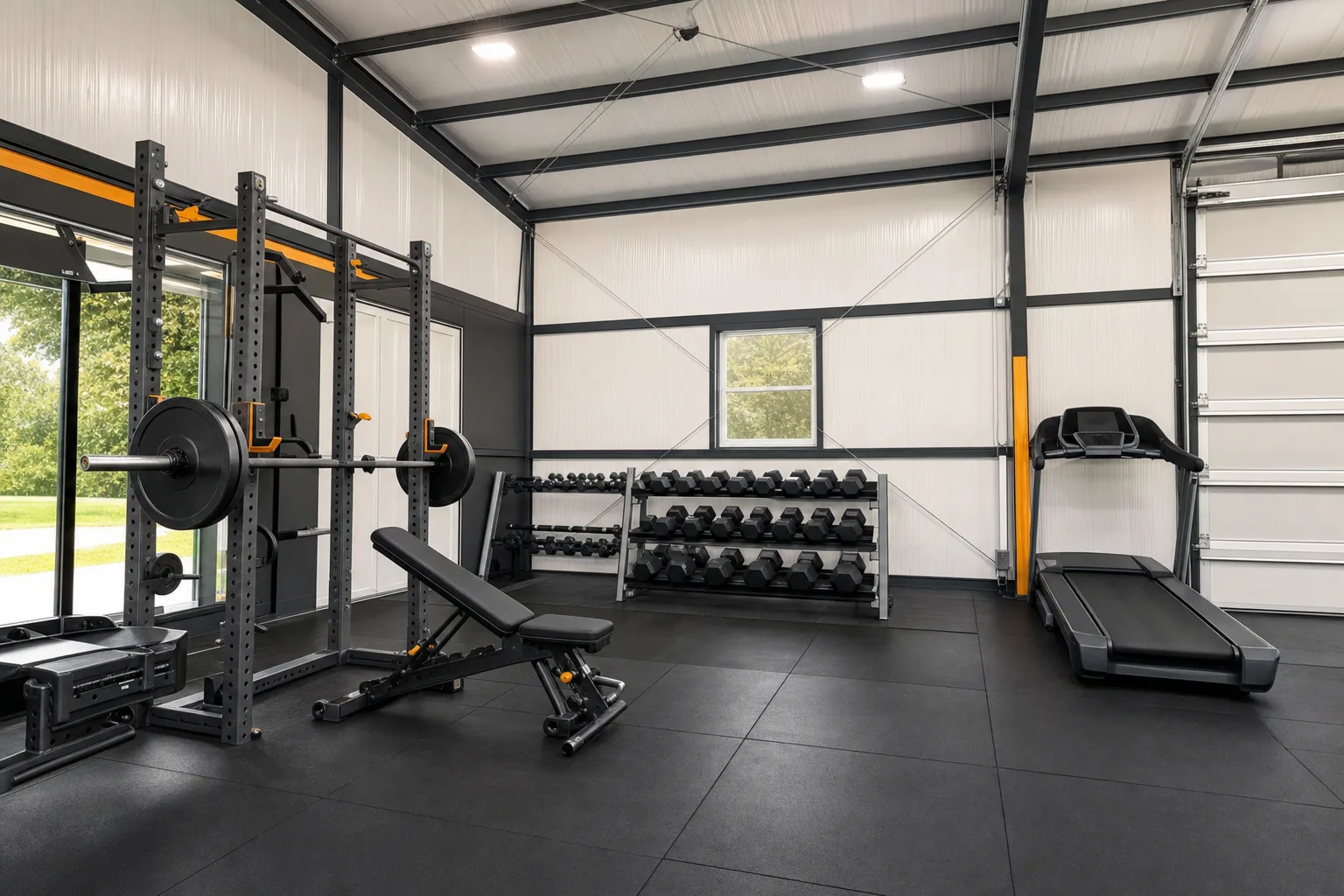
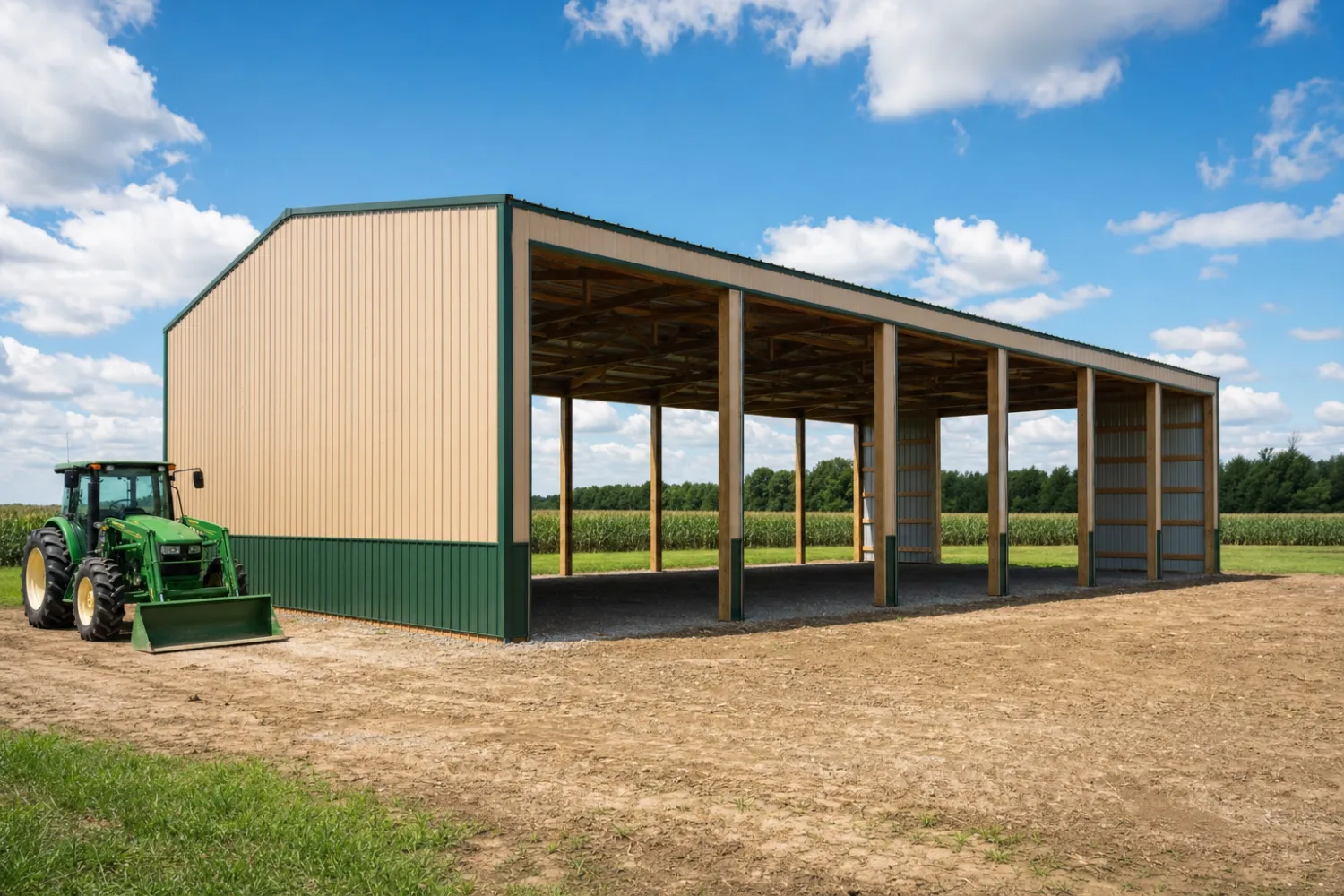
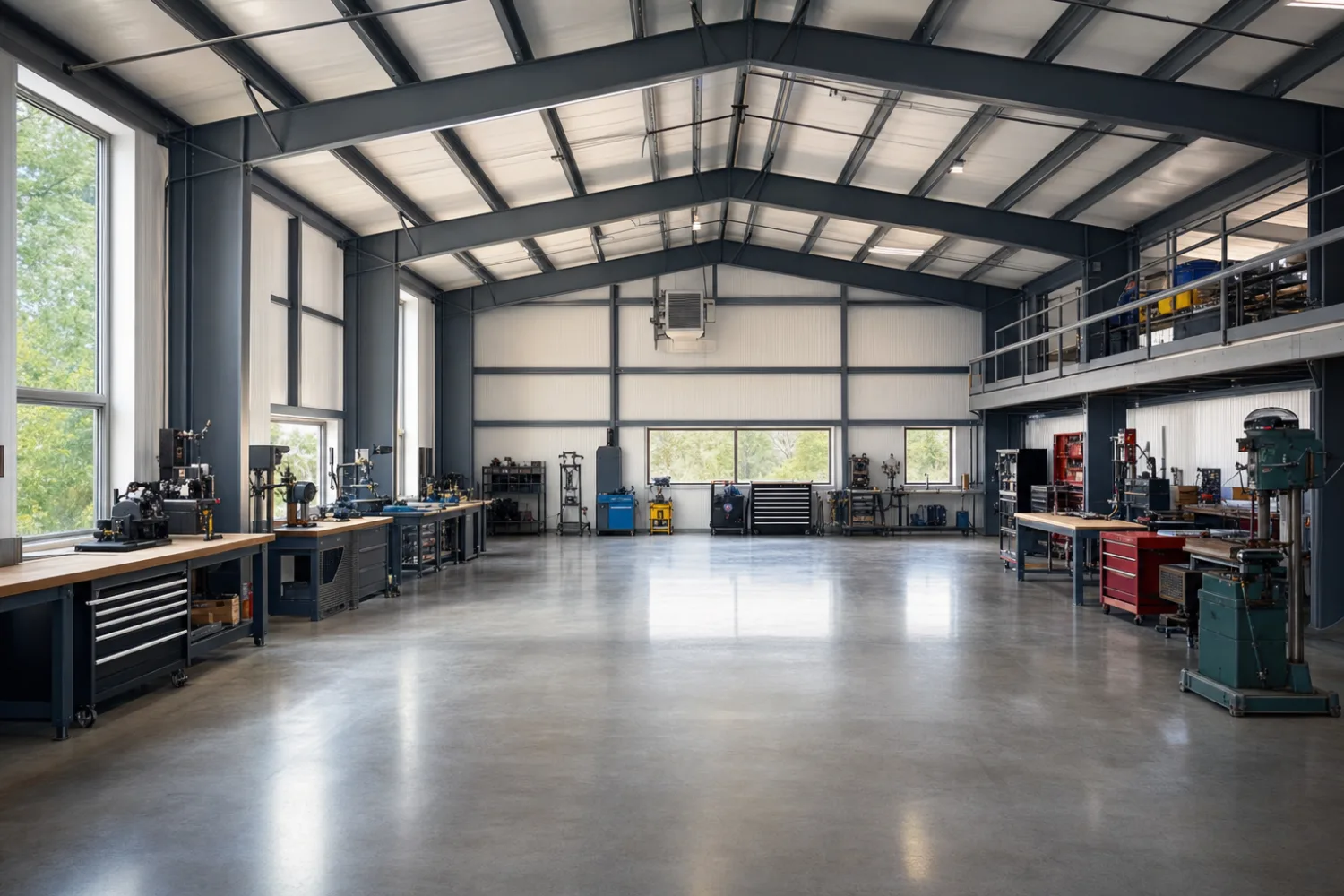
Missouri builds a lot of steel. Across the farm belt you see machine sheds, livestock barns, and grain storage. Around the metros it is workshops, detached garages, and a growing run of barndominiums that pair a shop with living space under one roof. Commercial buyers add warehouses and contractor yards.
Because permitting is local, the office you deal with depends on your metro. Here is where the four biggest markets start:
- Kansas City. The City Planning & Development Department, Permits Division, at City Hall, (816) 513-1500, handles plan review and permits inside the city limits.
- St. Louis. The City of St. Louis Building Division issues permits and runs inspections for projects in the city ‹confirm›; St. Louis County and the surrounding municipalities run their own offices.
- Springfield. Springfield Building Development Services reviews and permits work in the city ‹confirm›, with Greene County covering the unincorporated areas.
- Columbia. The City of Columbia Building and Site Development office handles permits in town ‹confirm›, while Boone County covers the rest.
Confirm the exact office and current fees with your jurisdiction ‹confirm›. If your parcel is unincorporated, your county, not the nearest city, is the authority that matters.
FAQ
Missouri metal building questions, answered
Do I need a building permit for a metal building in Missouri?
It depends on where you build. Missouri has no statewide building code, so the answer comes from your city or county. Most metal buildings in the metros and incorporated towns need a permit once they pass a small size threshold, while some rural and agricultural counties require only zoning approval or nothing at all. Call your local building department before you order.
How big of a shed can I build without a permit in Missouri?
Many Missouri jurisdictions exempt a single-story accessory building of 120 square feet or less, and some, such as St. Charles County, allow up to 200 square feet ‹confirm›. Even when no building permit is needed, you still have to meet local zoning, setback, and easement rules, and an HOA can be stricter. Verify the exemption with your own city or county.
What happens if you build a metal building without a permit in Missouri?
When a permit was required and you skip it, the jurisdiction can issue a stop-work order, charge fines that run well above the normal permit fee, and require you to bring the building up to current code. In the worst case it can order the structure removed at your expense. Unpermitted work can also block a refinance or sale and complicate an insurance claim.
Do you need engineer-stamped drawings for a metal building in Missouri?
In most Missouri cities that require a permit, yes. Plans usually have to be sealed by a professional engineer licensed in Missouri ‹confirm›. A good kit supplier provides stamped drawings sized for your wind, snow, and seismic loads, which is the document plan review asks for. Confirm the requirement with your building department, since rural counties may not ask for it.
Does a metal building increase property taxes in Missouri?
Often, yes. A permanent structure anchored to a foundation is an improvement, and your county assessor can reassess the property to reflect it. A small, movable structure on blocks may be treated differently. Ask your county assessor how a given building affects your assessment before you commit.
What is a metal building classified as?
Most steel buildings fall under non-combustible construction, because the primary columns and beams are steel rather than wood. Your local code uses that classification, along with the building’s use and size, to set the requirements your plans have to meet.
Can you put up a metal building kit yourself in Missouri?
For a straightforward bolt-up kit, many owners do. A smaller, lightly customized building goes together quickly with a few helpers and basic tools. Wide spans, heavy steel, and tall walls call for equipment and a crew. Whoever raises it, the permit, the stamped drawings, and the inspections still apply where your jurisdiction requires them.
Read next
Keep reading
Planning a build near a Missouri border, or want the loads and foundation in more depth? Start here:
- Metal building kits in Iowa (the northern neighbor).
- Metal building kits in Illinois (across the Mississippi to the east).
- Metal building kits in Arkansas (to the south).
- Metal building kits in Kansas (to the west).
- Metal building permits and codes (how the permit process works).
- Snow load and wind load explained (turning load numbers into steel).
- Metal building foundation options (slabs, piers, and what they cost).
- Metal building insulation (controlling condensation in a humid climate).
- Metal building kit prices (the full pricing breakdown).
Sources
Sources
We cite the public references behind the values above. Loads, codes, and permit rules are set locally in Missouri, so treat these as starting points and confirm the current rule with your jurisdiction.
- Missouri code adoption reference (UpCodes) – https://up.codes/codes/missouri
- City of Kansas City, MO – City Planning & Development Department (permits) – https://www.kcmo.gov/city-hall/departments/city-planning-development
- USGS – New Madrid Seismic Zone overview – https://www.usgs.gov/programs/earthquake-hazards/science/new-madrid-seismic-zone
- St. Charles County, MO – building and permit information – https://www.sccmo.org/180/Building-Permits
- City of Independence, MO – residential accessory structure permits – https://www.independencemo.gov
- Missouri Division of Professional Registration – Board for Architects, Professional Engineers (PE seal) – https://pr.mo.gov/apelsla.asp