If you are putting up a metal building in Oklahoma, two things drive the project more than anything else: wind and local permitting. Oklahoma sits in the heart of tornado and high-wind country, so your building has to be engineered for serious wind loads, and the rules that govern it are set and enforced by your city or county, not the state. Plan for stamped engineering and a trip to the local permit office before you pour a slab.
This guide is part of our metal buildings by state pillar, where we break down what changes from one state to the next. Below you get the code and permit reality in Oklahoma, the wind, snow, and seismic loads your frame has to carry, how climate shapes insulation, what moves price, and the real building departments in the state’s largest metros. Every hard number here is a starting point you verify locally, not a statewide guarantee.
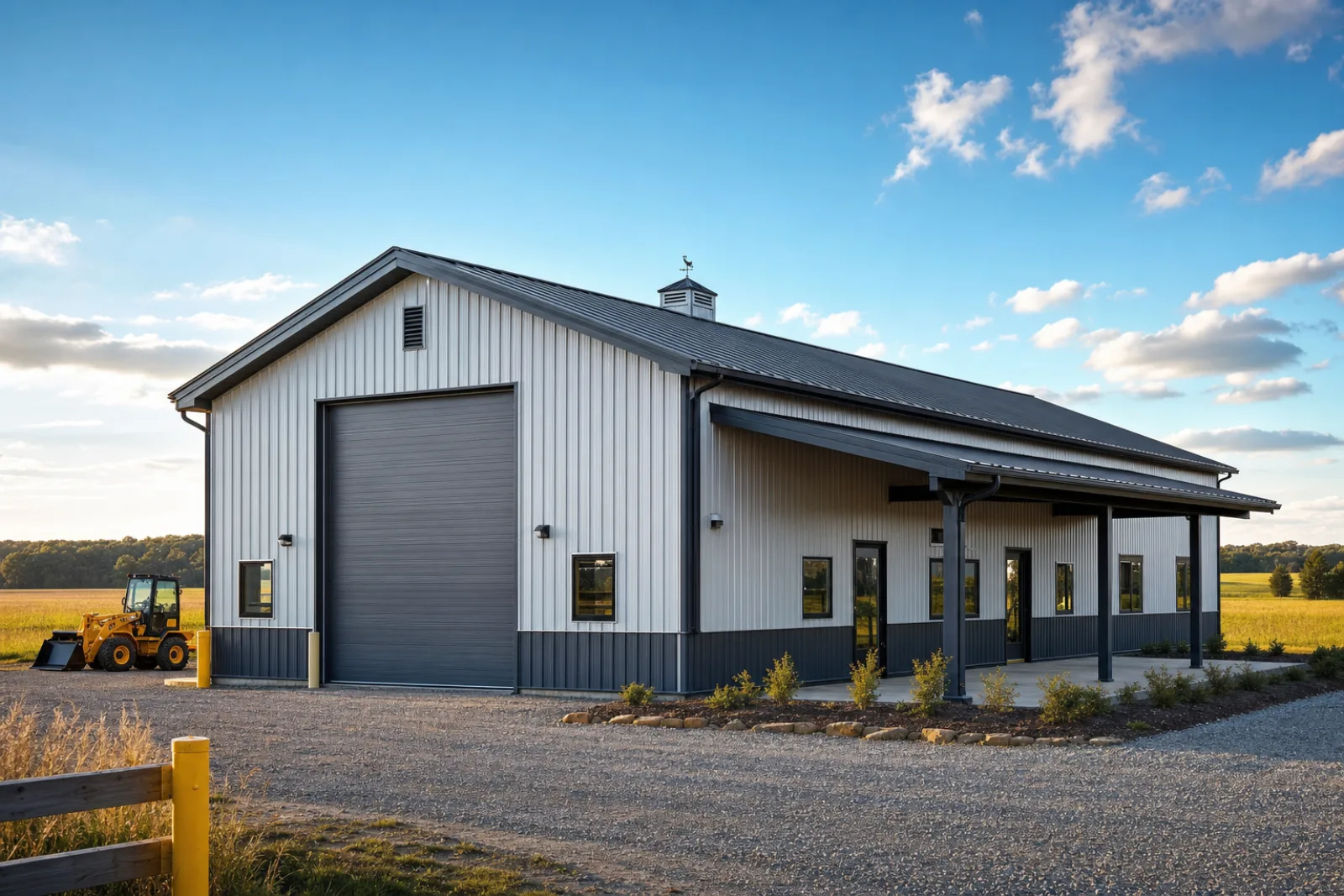
Codes & permits
Oklahoma building codes and permits, explained
Oklahoma sets minimum statewide building codes, but your city or county enforces them and issues the permit. The state agency that adopts those minimums is the Oklahoma Uniform Building Code Commission (OUBCC), which establishes the baseline editions of the International Building Code (IBC) and International Residential Code (IRC) that apply across the state ‹confirm›. Local jurisdictions can adopt their own edition and add amendments on top, so the exact code in force depends on where you build.
Under Oklahoma law, the permit itself is issued by the city, town, or county with jurisdiction over your property, not by a single state office. For most metal buildings you will need to submit a site plan, a foundation design, and structural drawings that are stamped and sealed by an engineer licensed in Oklahoma ‹confirm›. That engineer’s seal is what tells the building official your frame was designed for the wind and other loads at your address.
Verify before you buy
Codes and permit thresholds are set at the local level, so the only authoritative answer comes from your local building department. Call them before you order a kit. Ask which code edition they enforce, whether a sealed engineering package is required, and what the setback rules are for your lot.
Loads
Wind, snow, and seismic loads in Oklahoma
Wind is the load that defines a metal building in Oklahoma. The state runs through tornado alley and sees straight line winds across open plains, so building officials enforce wind design closely and your engineer sizes the frame and anchors around it. Most Oklahoma jurisdictions design to ultimate wind speeds in the range of roughly 105 to 115 mph ‹confirm›, with the exact figure pulled from the adopted code and your specific site. Treat that as a band to verify locally, never as a fixed statewide number.
Snow and seismic demand are lighter, though neither is zero. Ground snow loads across most of the state run modest, often in the 5 to 15 psf band ‹confirm›, climbing in the higher, colder panhandle. Seismic demand is low to moderate ‹confirm›; Oklahoma’s induced seismicity has drawn attention in recent years, so confirm the seismic design category with your local department rather than assuming. For the full picture of how these forces work, read snow load and wind load explained.
| Load type | Typical Oklahoma range ‹confirm› | Who sets it |
|---|---|---|
| Wind | ~105–115 mph ultimate design speed | Local jurisdiction, via the adopted code |
| Snow | ~5–15 psf ground snow, higher in the panhandle | Local building department |
| Seismic | Low to moderate, design category varies by site | Engineer, per site and adopted code |
Typical ranges only. Your engineer and local building department set the binding values for your address.
Climate & insulation
Climate and insulation for an Oklahoma steel building
Oklahoma is a mixed, humid climate, which makes condensation control the first job of your insulation, not raw R-value. The state sits mostly in IECC climate zone 3A, with the north and panhandle reaching zone 4A ‹confirm›. That means hot, humid summers and cold snaps in winter, and a steel shell that will sweat if warm interior air meets cold panels without a vapor barrier between them.
Start with a continuous vapor barrier and good airflow, then add R-value to suit how you use the building. A working shop or a finished insulated metal building earns more insulation than a cold storage barn. If you plan to heat or cool the space, talk to your supplier about the assembly that controls moisture first and traps heat second, because in this climate the moisture is what ruins steel and stored goods.
Price factors
What drives metal building prices in Oklahoma
Oklahoma is reasonably well placed for steel pricing, but a few regional factors still move your number. The state has steel fabrication and distribution within reach, so freight is rarely the worst part of a quote, though hauling to a remote panhandle or far southeast site adds cost. Local labor rates, site prep on uneven or rural ground, and the engineering needed to hit wind loads all feed the final figure.
The biggest swing is usually the wind rating itself. A frame engineered for high Oklahoma wind speeds uses more steel and heavier anchorage than the same building in a calm region, so two identical footprints can price differently once the loads are set ‹confirm›. For how the pieces add up, see our metal building kit prices guide. Figures here are illustrative for 2026 and should be confirmed with a current quote.
Uses & metros
Popular uses and metro building departments
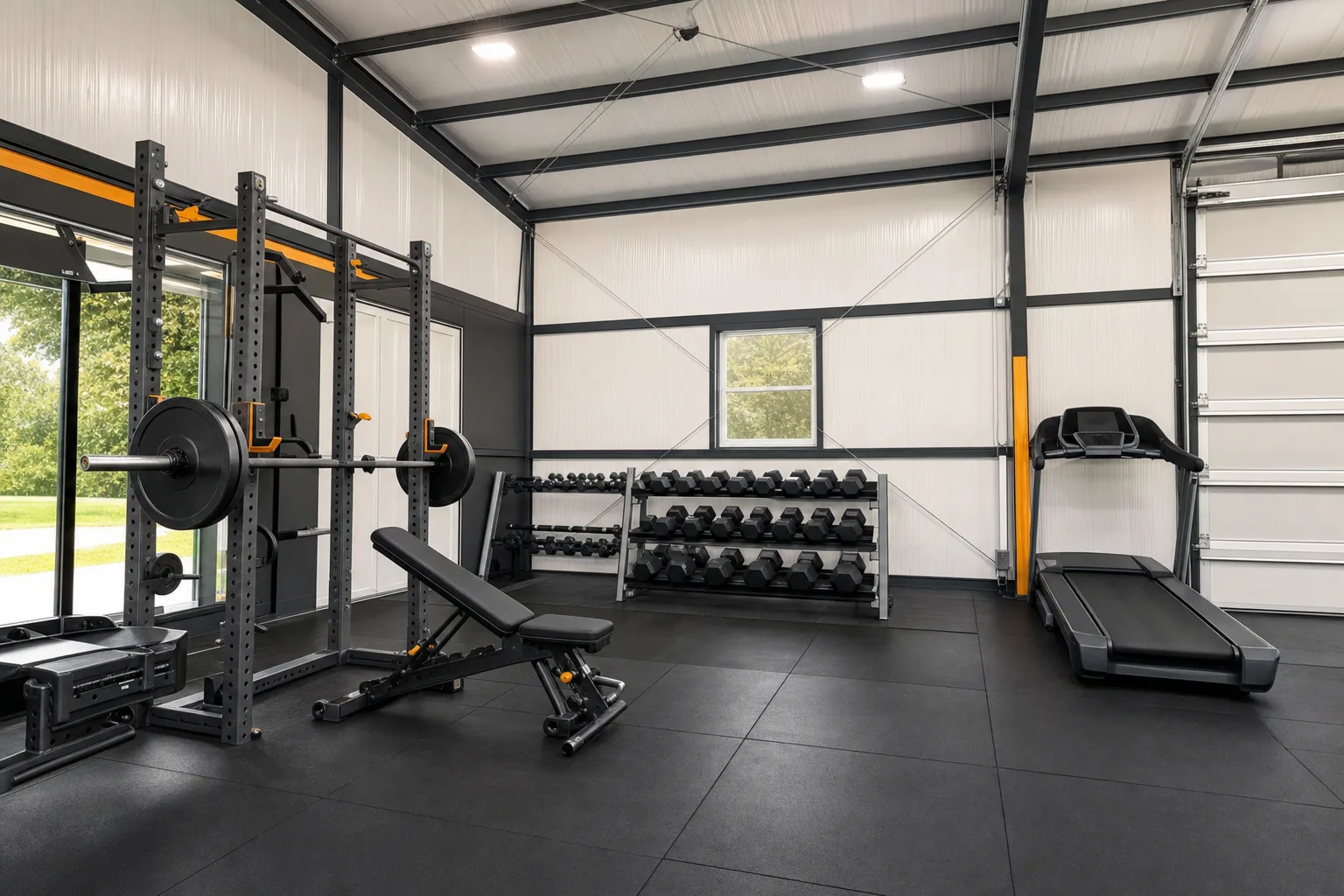
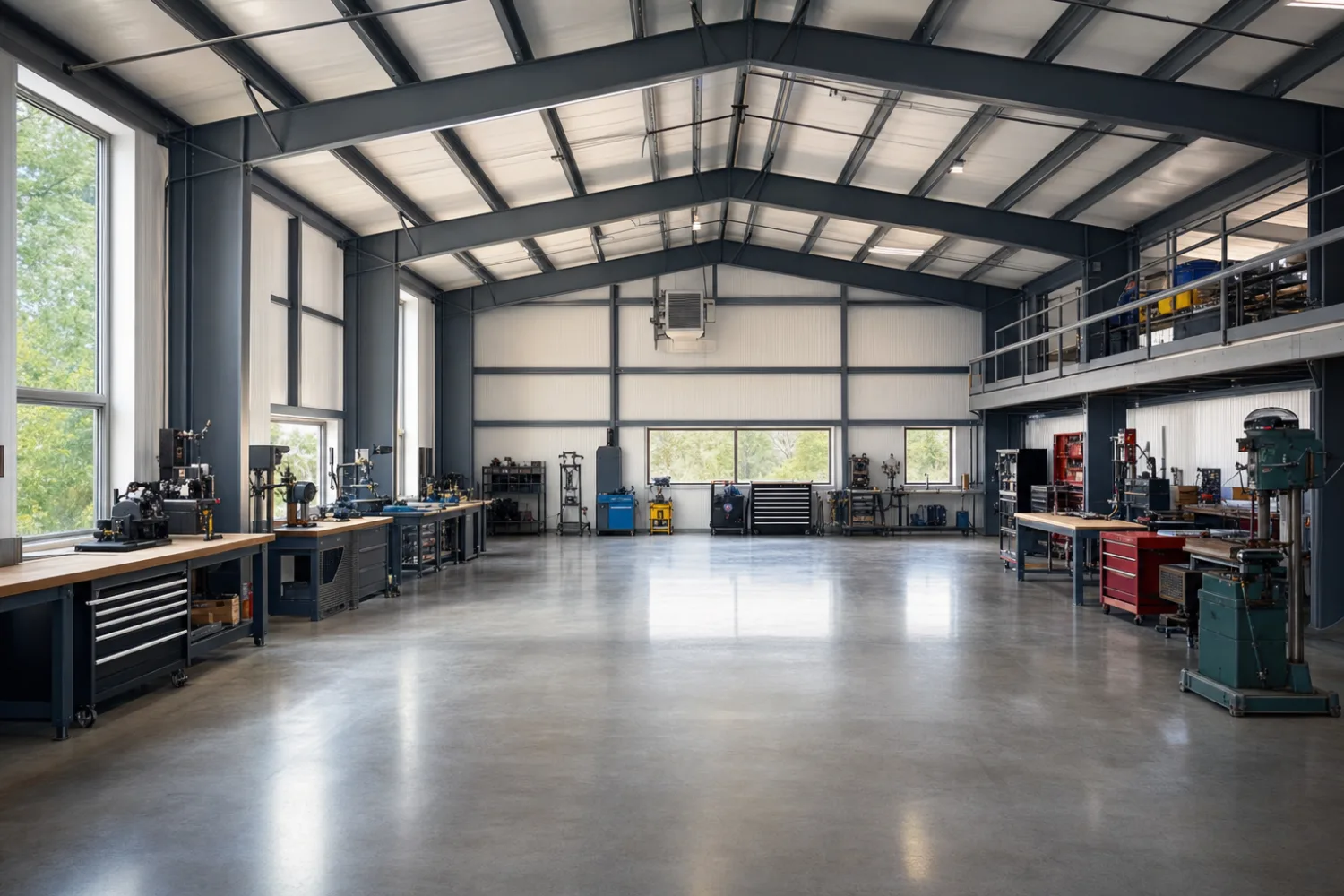
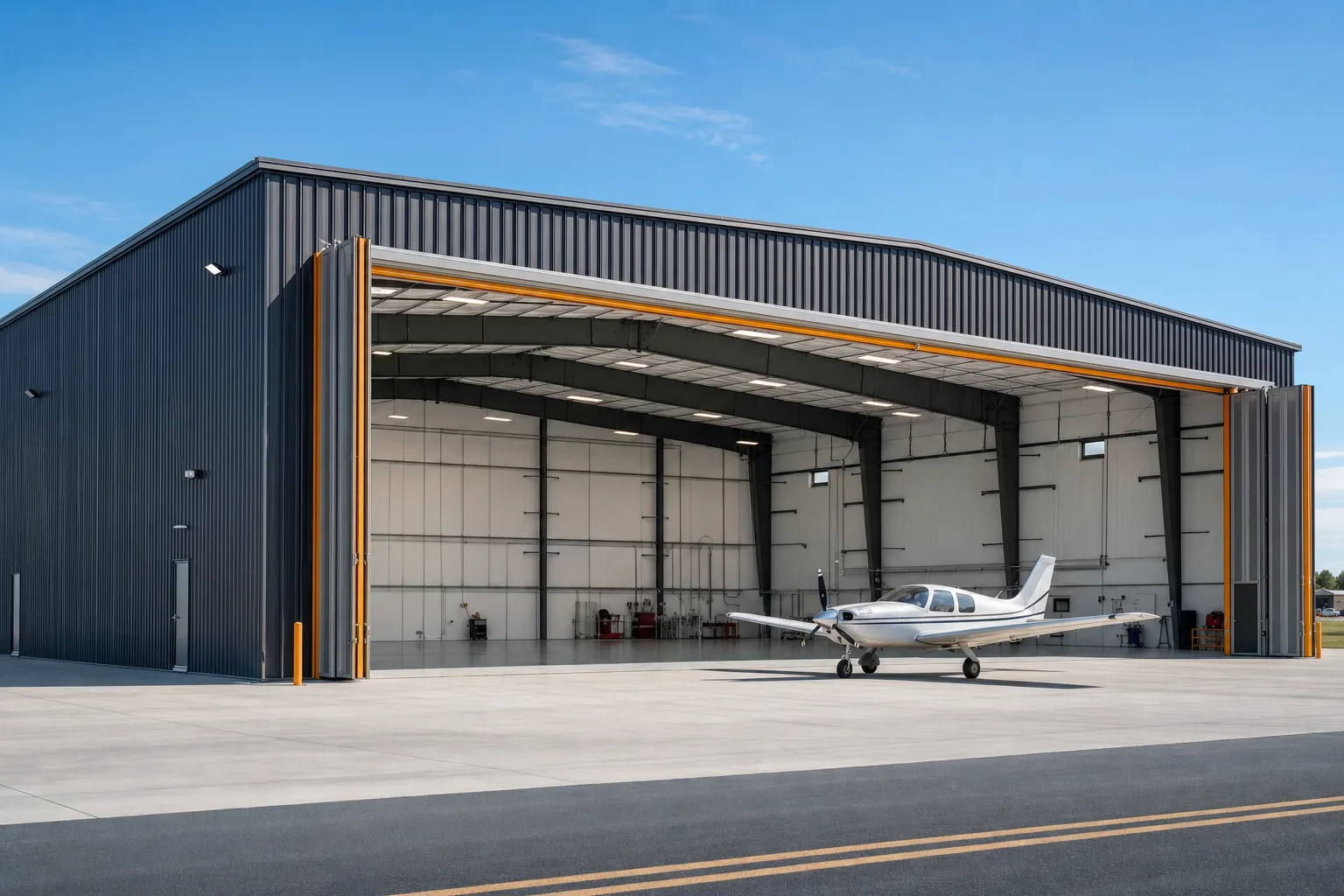
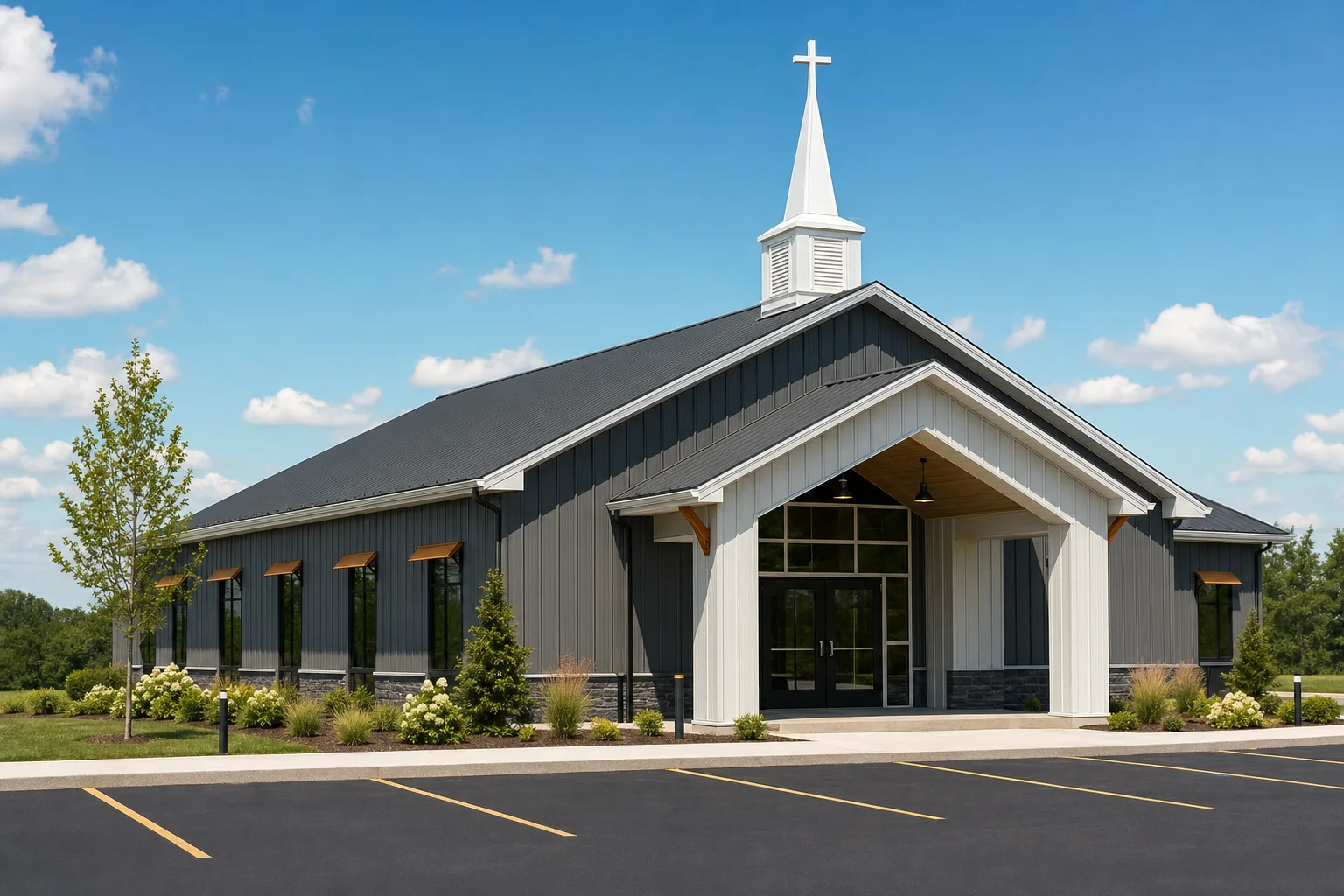
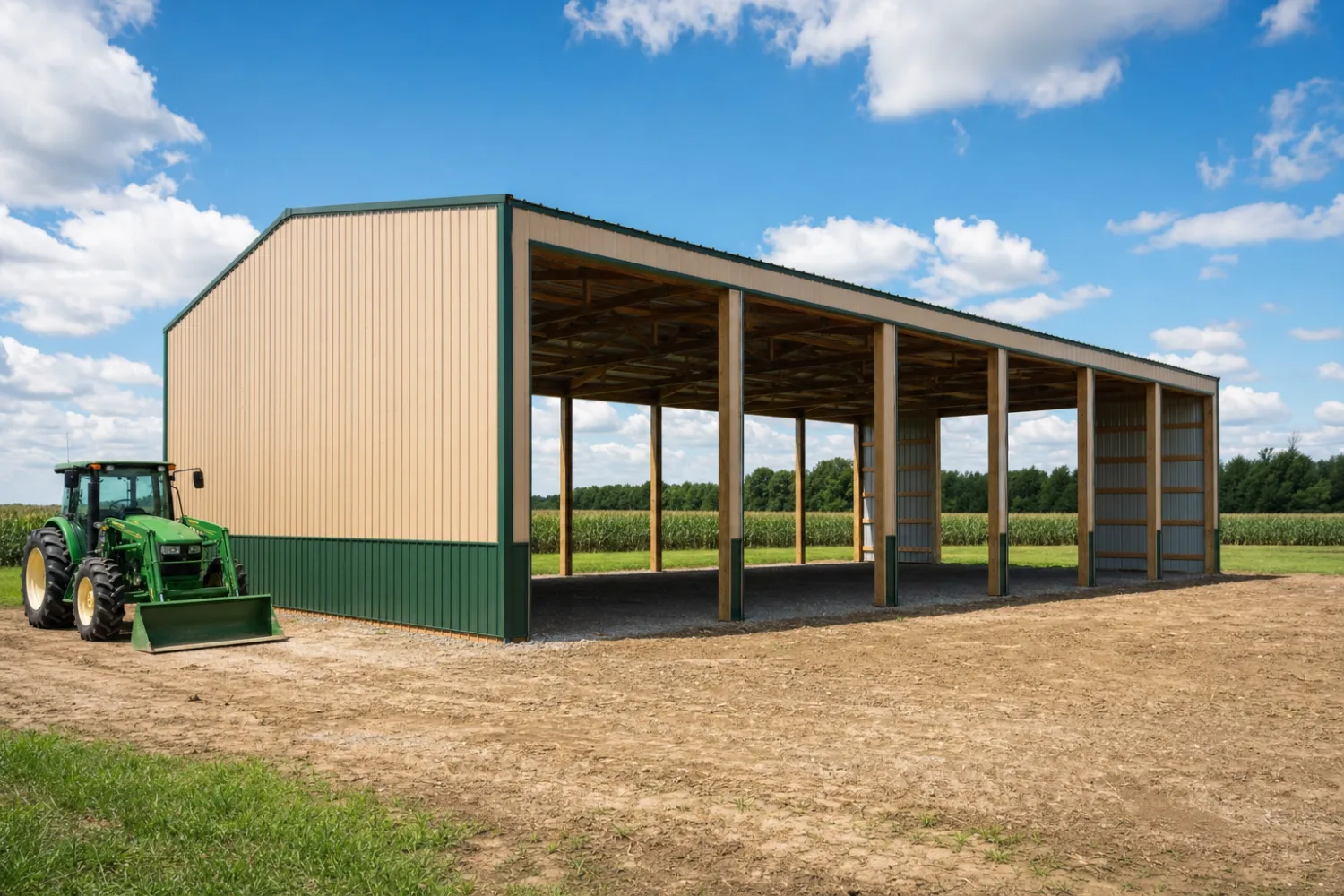
Oklahomans build steel for work and for the land. Agricultural buildings, equipment and hay barns, riding arenas, workshops, and large garages are common across the rural counties, while metro and suburban owners lean toward shops, slab-founded garages, and the growing barndominium. Whatever you build, the permit comes from the jurisdiction your property sits in.
In the Oklahoma City metro, permitting and plan review run through the City of Oklahoma City’s development offices, including its Planning Department and Community Development division at the downtown Development Center on West Main Street ‹confirm›. The OUBCC sits in Oklahoma City as well, on NW 23rd Street, as the state code body. In the Tulsa and Norman metros and the smaller cities, you deal with that city’s own permit office or, outside city limits, the county. Always confirm the office, the code edition, and the fee schedule for your exact address before you order.
FAQ
Oklahoma metal building questions, answered
What requires a building permit in Oklahoma?
In Oklahoma, most new construction, structural additions, and detached accessory buildings need a permit, and the threshold is commonly 200 square feet for accessory structures, though it varies by city and county. Trade work like electrical, plumbing, and HVAC needs its own permits. Confirm the exact triggers with your local building department, because each jurisdiction sets its own rules.
How much is a building permit in Oklahoma?
Permit fees are local and usually charged per square foot or by project valuation. In Oklahoma City, new residential construction starts around a minimum fee near 75 dollars and runs roughly 0.16 dollars per square foot, with commercial rates higher. Other cities and counties set their own schedules, so check with your city hall or county clerk for the current figure.
Can I build a metal building on my property?
In most cases yes, but it depends on your zoning, setbacks, and any HOA rules, plus a permit once you pass the size threshold. Start by confirming your property’s zoning allows the use, then check setback distances from property lines. For a permitted build you will likely need stamped engineering, so contact your local building department before you order.
How do I get a permit for a metal building in Oklahoma?
Bring your local building department a site plan showing where the structure sits, a foundation design, and structural drawings stamped by an engineer licensed in Oklahoma. Add the legal description of your property and the size and intended use. The office reviews the package, issues the permit, and schedules inspections at the foundation, framing, and final stages.
What is the largest building you can put up without a permit?
Across much of Oklahoma the common exemption is a single-story accessory structure of 200 square feet or less with no plumbing, gas, or electrical wiring, following the widely adopted code language. Even when a building is exempt, zoning and setback rules still apply. Some jurisdictions use a lower limit, so verify the number where you build.
Does a metal building increase property taxes?
A permanent metal building anchored to the ground is generally added to your property’s assessed value, which can raise property taxes. A light, movable structure on a non-permanent foundation is treated differently. Your county assessor decides how a given structure is classified, so ask them how your planned building would be valued.
Can you put up a metal building yourself in Oklahoma?
Many bolt-together kits are designed for owner assembly, and plenty of Oklahomans erect their own carports, garages, and shops. The permit, the engineering, and the inspections still apply the same as they would for a contractor. For anything wide-span or tall, confirm with your building department whether owner-built work is allowed for that scope.
Read next
Keep reading
Compare Oklahoma with its neighbors, then dig into the loads, foundation, and pricing that decide your build:
- Metal building kits in Texas
- Metal building kits in New Mexico
- Metal building kits in Kansas
- Metal building kits in Arkansas
- Metal building permits & codes
- Snow load & wind load explained
- Metal building foundation options
- Metal building insulation
- Metal building kit prices
Sources
Sources
Every hard value above is a starting point to verify with your local building department. Sources cited:
- Oklahoma Uniform Building Code Commission (statewide minimum codes): https://oklahoma.gov/oubcc.html
- Oklahoma Statutes §74-324.11, building permits issued by city, town, or county: https://law.justia.com/codes/oklahoma/title-74/section-74-324-11/
- City of Oklahoma City permit requirements and fees: https://www.okc.gov/departments/development-services
- Oklahoma City Planning Department and Community Development (Development Center, 420 W Main St), via Google Maps: https://www.google.com/maps/search/building+department+Oklahoma+City+Oklahoma
- Carport and accessory-structure permit guidance, Oklahoma 200 sq ft threshold: https://okstructures.com/blog/carport-permits-in-oklahoma/
- Metal building permits, codes, and engineering requirements (stamped drawings): https://www.steelstructuresamerica.com/metal-building-permits-codes-and-engineering-requirements-what-you-need-to-know/
- Oklahoma building permit guide and municipal fee structures: https://www.permitflow.com/state/oklahoma