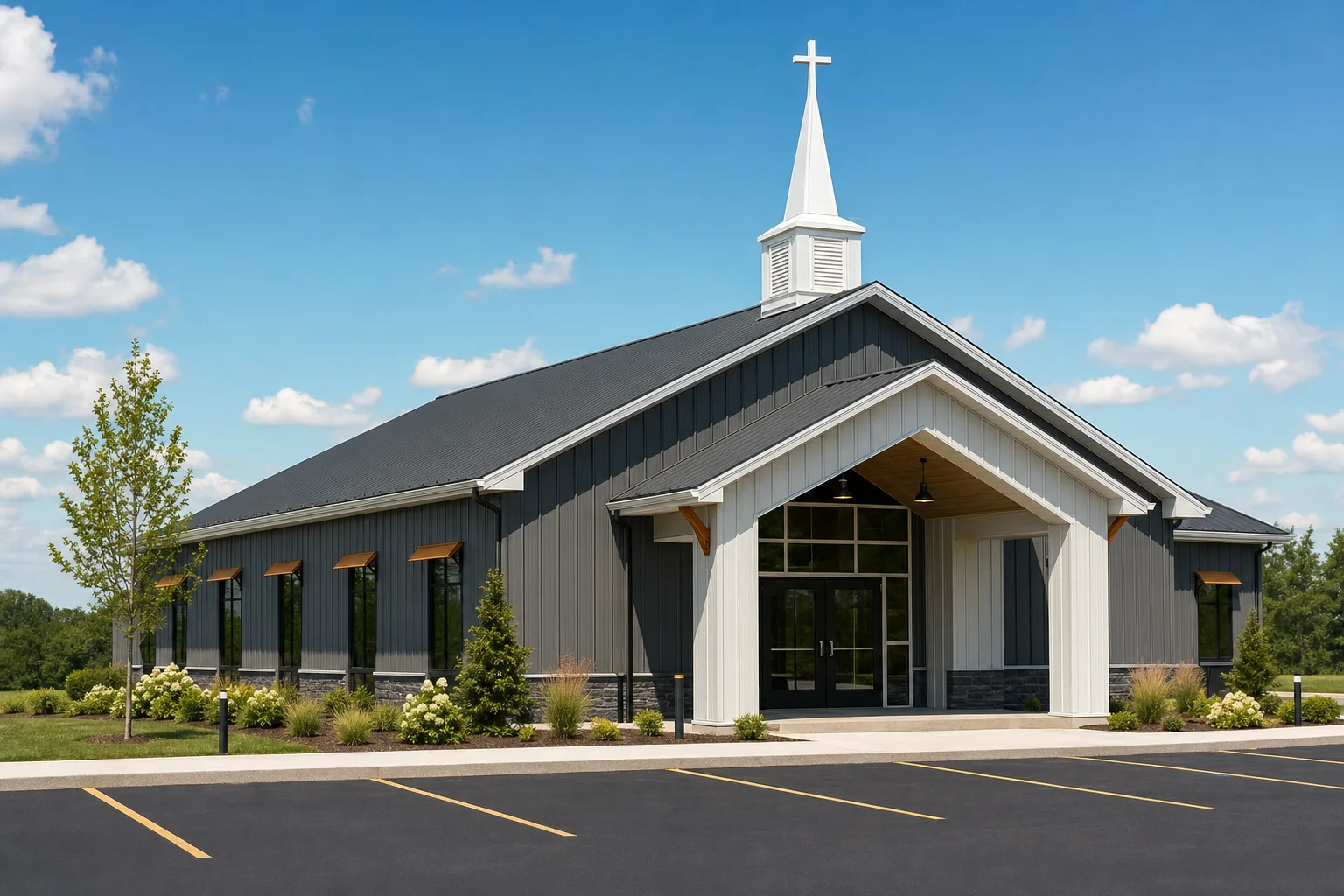
Two forces shape a metal building in Arizona more than any other: the load your site has to carry, and the fact that the state sets no building code of its own. In the low desert around Phoenix, wind and monsoon storms drive the engineering. In the high country near Flagstaff, snow takes the lead. Because Arizona hands code adoption to each city, town, and county, the rules that govern your build come from your local jurisdiction, never from a single statewide standard.
This guide sits in our metal buildings by state series, the pillar that maps how codes, loads, and prices shift from one state to the next. Below you will find how Arizona handles permits and stamped drawings, what wind and snow ranges to plan for, how the desert climate steers insulation, and which building departments issue the permit in the Phoenix metro. Every hard number here is a typical range to confirm locally, not a promise.
Codes & permits
Arizona codes, permits, and stamped drawings
Arizona has no statewide building code, so your city or county is the authority having jurisdiction. Most Arizona jurisdictions adopt a version of the International Building Code (IBC) or International Residential Code (IRC) ‹confirm›, then layer on local amendments for wind, soil, and setbacks. The edition in force depends on where you build, which is why the first call you make is to the local permit counter, not the steel supplier.
For most metal structures larger than a small storage shed, you submit engineered drawings: a foundation plan, a roof framing plan, wall elevations, and a cross section with framing details. Those drawings and the structural calculations usually have to be stamped and sealed by an architect or engineer registered in Arizona ‹confirm›. A reputable kit supplier provides the engineering package built to your site’s loads. Our permits and codes guide walks the full submission process step by step.
Who issues the permit depends on your address. Inside a city, the municipal department handles it; on unincorporated county land, the county does. Small accessory buildings are often exempt: many Arizona jurisdictions waive the structural permit for a detached, non-habitable structure of 200 square feet or less with no utilities ‹confirm›, though zoning, setbacks, and HOA rules still apply. Verify every threshold with your local building department before you order or pour a slab.
The one rule that never changes
Confirm your code edition, load values, and exemptions in writing with the jurisdiction that covers your exact parcel. Two addresses ten miles apart can sit under different counties, different amendments, and different fee tables.
Loads
Wind, snow, and seismic loads in Arizona
Wind is the load that defines most Arizona builds. The low desert sees high summer monsoon winds, dust storms, and microbursts, so frames in the Phoenix and Tucson basins are engineered for those gusts first. Snow only governs in the higher elevations, where the design load climbs sharply with altitude. Seismic demand runs lower across most of the state, though it still factors into the calculation. None of these is a single statewide number; your local jurisdiction sets the design values per ASCE 7.
| Load type | Typical Arizona range ‹confirm› | Who sets it |
|---|---|---|
| Wind | Roughly 90 to 115 mph basic wind speed across much of the state, with monsoon microbursts pushing local design higher | Local department, per ASCE 7 |
| Snow | Near zero in the low desert; 40 psf and well above in the high country around Flagstaff and the White Mountains | County or city, by elevation |
| Seismic | Generally low to moderate statewide, assigned by mapped ground motion | Local jurisdiction, per ASCE 7 |
Treat every figure as a planning range to verify locally, not a fixed code value.
The practical takeaway: a building stamped for Flagstaff snow is over-built and over-priced in Yuma, and a desert-rated frame can fail review in the mountains. Order the kit to the loads your jurisdiction publishes for your parcel. Our snow and wind load guide explains how those numbers translate into steel, and your local building department confirms the exact values you design to.
Climate & insulation
Arizona climate zones and insulation priorities
Arizona spans several climate zones, from the hot-dry low desert up to cold mountain country, so there is no one insulation answer for the state ‹confirm›. The Phoenix and Yuma basins sit in a hot-dry zone where the priority is keeping radiant heat out and a cooled interior in. Flagstaff and the high country shift toward cold-climate rules, where R-value to hold heat matters more ‹confirm›.
In the desert, the dry air means condensation is less of a daily fight than it is in humid states, but a hot metal roof still radiates heat hard, so a reflective or insulated roof system earns its cost in cooling bills. In the high country, you insulate for winter heat retention the way a cold-state owner would. Either way, match the system to your zone; our metal building insulation guide breaks down the options by climate.
Price factors
What drives metal building prices in Arizona
Arizona pricing tracks the same drivers as the rest of the country, with a few regional twists. Steel is a national commodity, so the base shell moves with the market, but freight from the mill and the fabricator to your site adds cost the farther you are from a major corridor. A build outside Phoenix or Tucson, deep in rural Arizona, often carries a higher delivery line than one near the interstate ‹confirm›.
Local labor and permitting round out the picture. Metro labor rates and plan-review fees differ from rural counties, and the engineering required for high desert wind can nudge the design cost up. Treat any dollar figure you see as a dated, illustrative 2026 range, not a quote ‹confirm›. For the full breakdown of what moves a number up or down, see our metal building kit prices pillar.
Uses & departments
Popular uses and Phoenix-area building departments
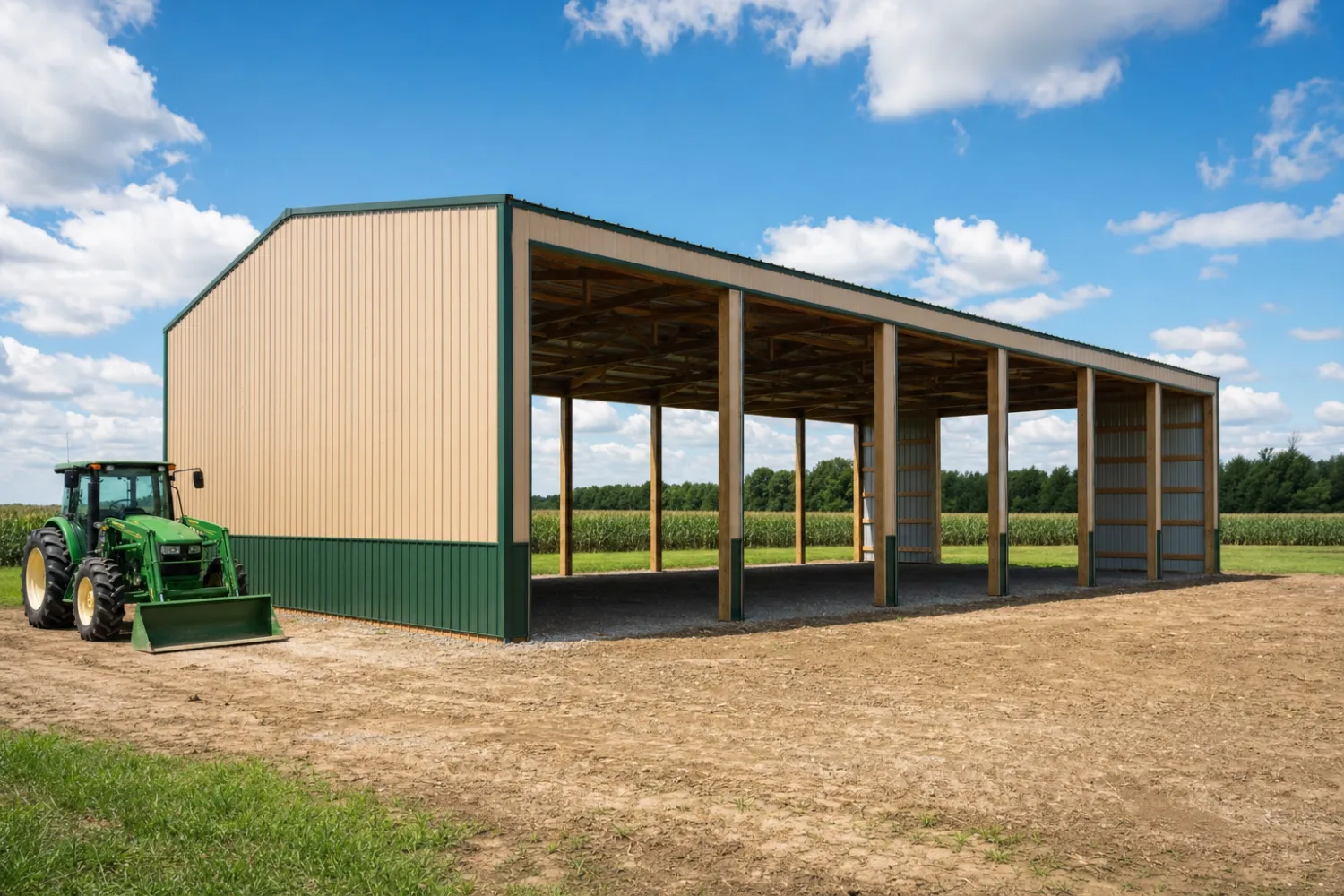
Across Arizona, owners put steel up for desert workshops, RV and equipment storage out of the sun, garages, agricultural cover, and commercial warehouses along the growth corridors. The dry climate is kind to steel, and a metal shell shrugs off the heat better than many alternatives, which is part of why the format is popular here.
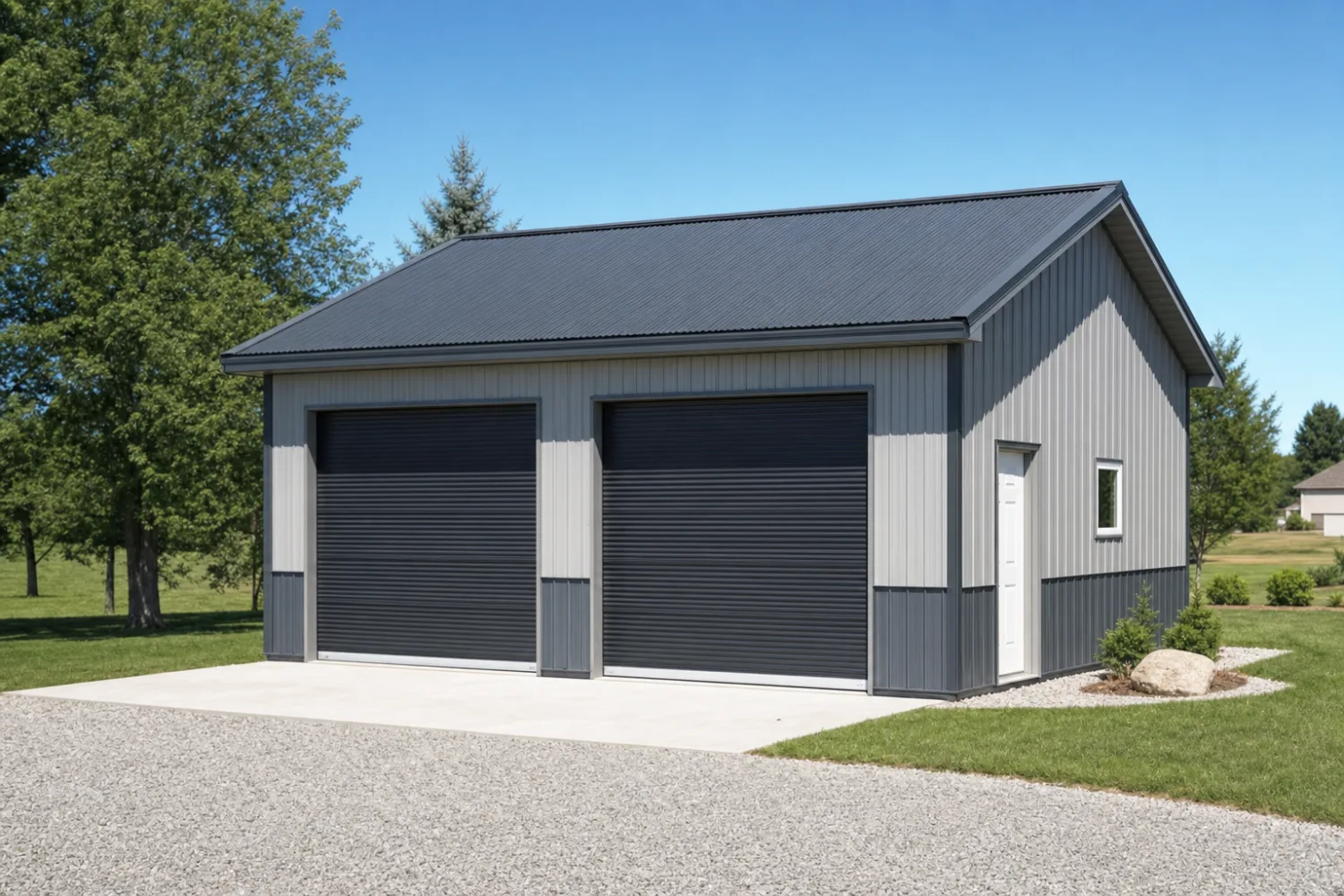
Where you build decides who reviews the plans. In the state’s largest metro, two departments handle most permits: the City of Phoenix Planning & Development Department for parcels inside the city, and the Maricopa County Planning & Development Department for unincorporated county land ‹confirm›. Tucson builds run through the City of Tucson or Pima County, and each surrounding city, from Mesa to Chandler to Scottsdale, runs its own counter. Find the department for your exact address before you design, because the loads, fees, and review times are set there.
FAQ
Arizona metal building questions, answered
Do I need a permit for a metal building in Arizona?
In most cases, yes. Arizona jurisdictions require a building permit for metal structures larger than a small storage shed, and many waive the structural permit only for a detached, non-habitable building of 200 square feet or less with no utilities ‹confirm›. Even when the structure is exempt, zoning, setbacks, and HOA rules still apply. Always confirm with your local building department first.
What can you build in Arizona without a permit?
Across most Arizona cities and counties, a detached accessory structure of 200 square feet or less with no electrical, plumbing, or gas can usually go up without a structural permit ‹confirm›. Some jurisdictions set the line lower, near 120 square feet. The exemption covers the permit, not the zoning code, so you still meet setback and height limits.
Do metal building drawings have to be stamped by an engineer in Arizona?
For most permitted metal buildings, yes. Local departments generally require engineered framing, foundation, and roof plans, with the drawings and structural calculations stamped and sealed by an architect or engineer registered in Arizona ‹confirm›. A good kit supplier provides this engineering package built to your site’s wind and snow loads.
How long does it take to get a building permit in Arizona?
It varies by city and project. Residential reviews range from over-the-counter for minor work to about 45 business days for a full plan review, while commercial projects can run from 30 to 105 days ‹confirm›. Phoenix and Tucson standard residential reviews often land around 30 to 45 business days, with faster turnarounds in some smaller jurisdictions.
What county in Arizona has no building codes?
Greenlee County, in eastern Arizona, is the one county with no residential building codes or code inspections; it does not review construction plans or issue Certificates of Occupancy ‹confirm›. You still meet state law, local zoning, floodplain rules, and septic requirements, and you may still need a zoning use permit. Confirm the current rules directly with the county.
Can I build a metal building on my own property in Arizona?
Usually yes, as long as the use fits your parcel’s zoning and you meet the building code and permit requirements. Check the zoning classification, verify setbacks and easements, and submit stamped engineered drawings when the structure exceeds the exemption size. Your local building department confirms what your specific lot allows.
What happens if you build without a permit in Arizona?
Building without a required permit can bring stop-work orders, fines that run well above the standard permit fee, and orders to bring the structure up to code or remove it. Unpermitted work also complicates insurance claims, refinancing, and resale. Pulling the permit up front is far cheaper than fixing an unpermitted build later.
Read next
Keep reading
Building near a state line, or want the mechanics behind the loads and the slab? Start here:
- Metal building kits in California
- Metal building kits in Nevada
- Metal building kits in Utah
- Metal building kits in New Mexico
- Metal building permits & codes
- Snow load & wind load explained
- Metal building foundation options
- Metal building insulation
- Metal building kit prices
Sources
Sources
We verify Arizona code and permit facts against these public sources. Quantitative wind, snow, seismic, and climate-zone figures are flagged as typical ranges to confirm with your local building department, since Arizona sets them at the jurisdiction level.
- Arizona Building Officials, Permit Information: https://www.azbo.us/permits-info.html
- Pima County, Metal Buildings submission requirements: https://www.pima.gov/1122/Metal-Buildings
- Cochise County, Building Safety Division (permit value threshold): https://www.cochise.az.gov/211/Building-Safety
- Maricopa County Planning & Development: https://www.maricopa.gov/797/Planning-Development
- City of Phoenix Planning & Development Department: https://www.phoenix.gov/
- Bullhead City, pre-engineered metal building permitting policy: https://www.bullheadcityaz.gov/media/offdyqr0/metal-storage-buildings-072025.pdf
- RHINO Steel Building Systems, Metal Building Permits & Codes: https://www.rhinobldg.com/blog/construction-permits-for-metal-buildings