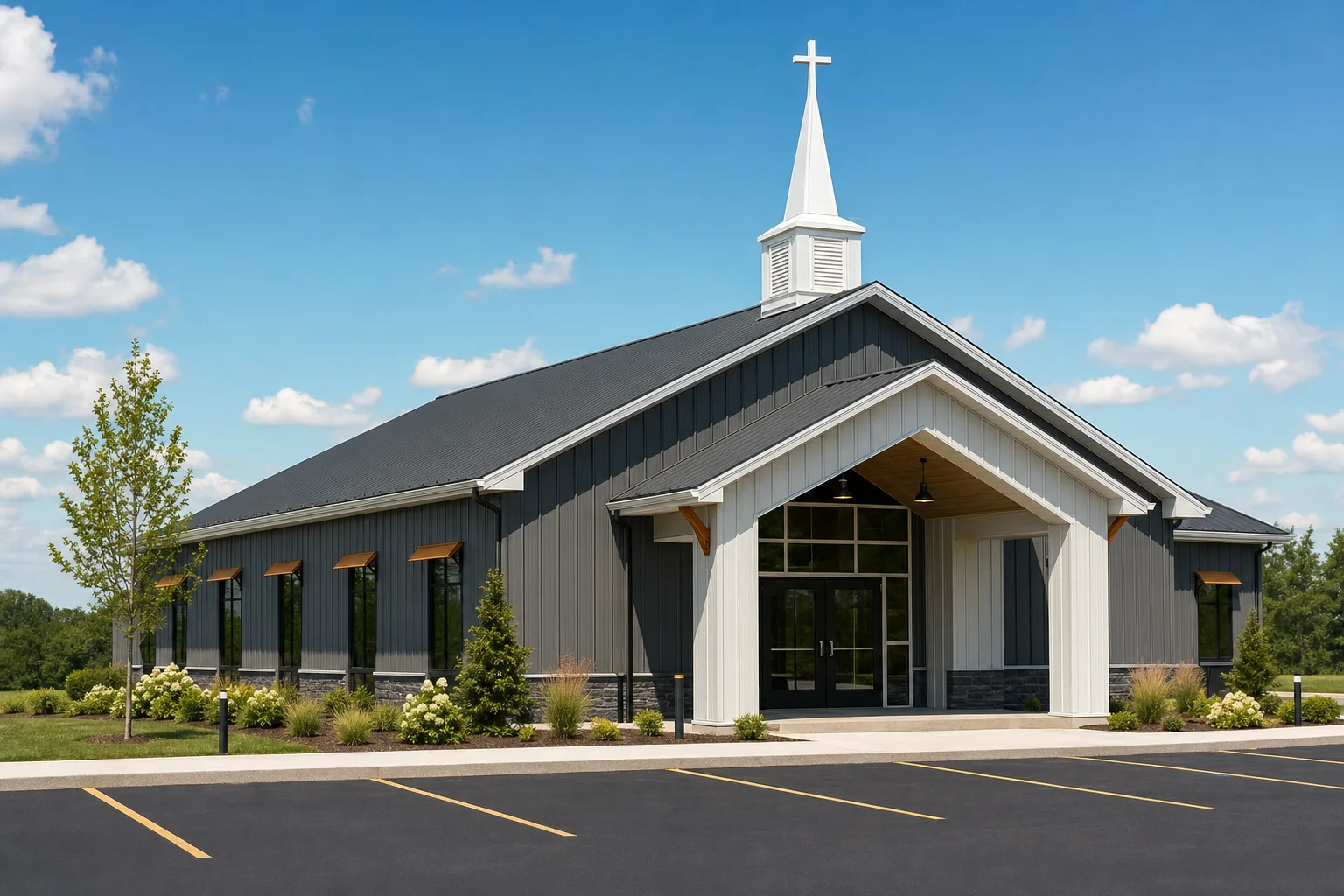
Most barndominiums take 6 to 12 months to build, measured from breaking ground to move-in ‹confirm›. The steel shell is the fast part: a kit frame bolts up in one to three weeks once the slab is cured. The months go to the foundation, permits, and the interior finish work, which is the same plumbing, wiring, drywall, and flooring any house needs.
This page sits under the metal building homes pillar and gives the full timeline behind a question that shapes how you plan a build. Below: how the months break down phase by phase, what stretches a schedule or shortens it, and where a kit saves real weeks against a stick-built house.
The timeline
How long each phase of a barndominium takes
Read the schedule phase by phase, because a barndominium does not build all at once. Each stage hands off to the next, and a delay in one, a slow permit, a wet site, a back-ordered truss, pushes everything behind it. The table below sets rough, illustrative timeframes for a typical owner-built or contractor-built home, with the steel shell as the quickest line on the page.
| Phase | Illustrative timeframe | What happens |
|---|---|---|
| Design & permits | 1–3 months ‹confirm› | Floor plan, engineered drawings, permit and plan review |
| Site prep & foundation | 2–4 weeks ‹confirm› | Grading, footings, slab pour, then cure time before steel |
| Shell erection | 1–3 weeks ‹confirm› | Bolt up the frame, set roof and wall panels, close it in |
| Rough-in (systems) | 3–6 weeks ‹confirm› | Plumbing, electrical, and HVAC run before walls close |
| Insulation & drywall | 2–4 weeks ‹confirm› | Vapor barrier, insulation, interior framing, drywall |
| Interior finish | 1–3 months ‹confirm› | Flooring, cabinets, fixtures, trim, paint, final inspection |
Illustrative ranges, not a guarantee. Permits, weather, crew size, and DIY all move every row. Confirm against your own plan.
Add the phases and a smooth project lands near six months; a complex one with slow permits or a harsh winter lands near twelve or more. The shell going up in a couple of weeks is the part people picture, but the foundation that has to cure first and the finish work that follows are where the calendar fills up.
What drives it
What makes a barndominium take longer or go faster
Five things move a barndominium timeline more than the building itself. Get them lined up and a kit home goes up fast; let them stack against you and the same home drags for a year.
- Permits and inspections. The single most common delay is paperwork, not construction. A busy building department or a plan that needs revisions can add weeks before a shovel moves, so file early and build the wait into your plan.
- DIY versus a contractor. A hands-on owner who self-builds saves money but adds time, since one or two people work slower than a crew. A general contractor compresses the schedule and the financing that comes with it. Weigh the trade in the build plan, not after.
- Weather and site. A wet site delays grading and the slab pour, and a poured slab wants days to cure before steel lands on it. A hard winter slows finish trades too, so a fall start can push completion into spring.
- Kit lead time. A barndominium kit is engineered and fabricated to your order, so allow weeks for the drawings, the stamp, and delivery before the frame ever arrives. Order it while the foundation work is underway.
- Finish complexity. A simple open plan finishes faster than a custom layout with a loft, multiple baths, and high-end cabinetry. The interior is the longest variable phase, and your finish choices set its length.
The shell is not the schedule
Owners often assume a metal home is fast because the steel goes up in days. The frame is fast, but it is a small slice of the calendar. The foundation that cures before it and the systems and finish that follow it are the same work any house needs, on the same clock. Plan around the finish phase, not the shell. For the wider trade-offs of building this way, see our barndominium pros and cons guide.
Versus stick-built
Where a barndominium saves time over a regular house
A barndominium does build faster than a comparable stick-built house, but the savings come from the shell, not the whole job. A pre-engineered steel frame arrives cut, punched, and ready to bolt, so there is no stick framing to cut on site and no waiting on framing crews. That dries the building in and weatherproofs it in weeks, which lets the interior trades start sooner.
After the shell, a barndominium finishes on the same timeline as any house, because the inside is the same: the plumbing, wiring, and drywall do not care what holds the roof up. That is why the format wins weeks, not months, against wood. For how the two compare on cost and durability as well as speed, see our metal home versus traditional house comparison.
Steel buys you a dry, closed-in building in weeks instead of months. What it cannot speed up is the kitchen, the bathrooms, and the inspections, which run on the same clock as any home.
To hold the schedule, line up the long-lead items early: file the permit, order the kit, and book your trades before the slab cures. A barndominium rewards a builder who sequences the work, since the steel will not wait on a permit and the finish will not wait on a back-ordered fixture. For how the full build and its budget run together, see our cost to build a barndominium from a kit guide.
Related
Read more
This timeline answer connects to the build process, the budget, and the trade-offs. Follow these next:
- Metal building homes: the complete guide (the parent pillar).
- Cost to build a barndominium from a kit (the build process and its full budget).
- Barndominium kits explained (what ships and how the kit fits the schedule).
- Barndominium pros and cons (the honest ledger, build speed included).
- Financing a barndominium or metal home (how a build loan tracks the timeline).
- Metal home vs traditional house (where each format wins, speed included).