Yes, you can paint a metal building, inside and out, as long as you prep the surface and use a paint made for metal. Clean the panels, scuff the factory finish so paint can grip, treat any rust, prime bare or rusty spots, then roll or spray on a 100% acrylic or elastomeric coating rated for steel. Done right, a repaint refreshes the color and adds a fresh layer of corrosion protection that lasts years.
This page sits under the metal building kits pillar and answers the painting question on its own terms: when a building needs paint, how to prep a factory finish so the new coat sticks, which products to use, and the few cases where painting is the wrong move. For the broader look at finishes and color matching, our colors and trim guide covers factory options. Here we settle the repaint itself.
Why paint
When a metal building needs paint
Most metal buildings ship with a baked-on factory paint or metallic coating, so you rarely paint a new one. You repaint later for one of three reasons: the original finish has faded or chalked, you want a different color, or surface rust has started and a fresh coat is part of stopping it.
- Fading and chalk. Factory finishes hold color for years, but sun slowly dulls them and leaves a powdery film called chalk. A wash and a repaint bring the building back and reset the clock.
- A color change. A new owner or a new use can call for a different look. Painting is the cheapest way to change the color of a building you already own.
- Corrosion control. Where the coating has been scratched or has worn through and rust has appeared, treating the rust and repainting seals the steel again before the damage spreads.
If rust is the reason, paint is only half the fix. You have to stop the moisture or breach that started it first, which our rust and corrosion prevention guide walks through. Paint over active rust on a wet surface and it will lift within a season.
How to do it
How to paint a metal building so the coat lasts
A metal repaint is mostly prep. The paint itself goes on fast; the surface work decides whether it holds for years or peels in a year. Work in four steps: clean, treat, prime, then topcoat.
- Clean. Pressure-wash the panels to strip dirt, chalk, and mildew, then let them dry fully. A clean, dry surface is the single biggest factor in whether the new paint bonds.
- Treat rust and dull the gloss. Wire-brush or sand any rust back to sound metal, and lightly scuff the slick factory finish so the new paint has something to grip.
- Prime the bare and rusty spots. Hit any exposed or treated steel with a rust-inhibiting metal primer. Sound, scuffed factory finish often takes a quality acrylic topcoat directly, but bare metal always wants primer first.
- Topcoat. Spray or roll on two thin coats of a paint rated for metal, letting each dry per the label. Two thin coats beat one thick one for adhesion and even color.
Choosing the paint matters as much as the prep. The flat panels and the structural frame want different products, and the table below sorts the common ones.
| Paint type | Best use on a metal building | Notes |
|---|---|---|
| 100% acrylic (DTM) | Exterior steel panels and trim | Direct-to-metal acrylics flex with the panel as it expands and hold color in sun |
| Elastomeric coating | Older or slightly weathered roofs | Thick, rubbery film that bridges small gaps and adds a moisture barrier |
| Rust-inhibiting enamel | Frame, brackets, bare-steel spots | Oil or alkyd enamel built to seal and protect exposed structural steel |
| Epoxy or urethane | High-wear interior floors and shop areas | Tougher, harder finish for surfaces that take abrasion or chemicals |
Match the product to the part. Panels want a flexible acrylic; bare frame steel wants a rust-inhibiting enamel.
Read the panel warranty first
Some factory finishes carry a paint warranty, and painting over them can void it. Check what your building warranty says before you repaint a panel that is still covered. Once a finish is past warranty or already failing, a repaint protects the steel and the warranty point is moot.
Inside and out
Painting the panels, the frame, and the interior
You can paint every steel surface of the building, but each one takes a different approach. The exterior panels, the structural frame, and the interior walls each have their own prep and product.
Exterior panels are the most common repaint, and a flexible direct-to-metal acrylic is the standard choice because it moves with the steel as it heats and cools. The primary frame, the red-iron columns and rafters, ships with a red-oxide primer that is a starting coat, not a finish; on an exposed or shop-style interior you can topcoat it with a rust-inhibiting enamel for looks and added protection. For the frame itself, our red iron steel explainer covers what that primer does and does not do.
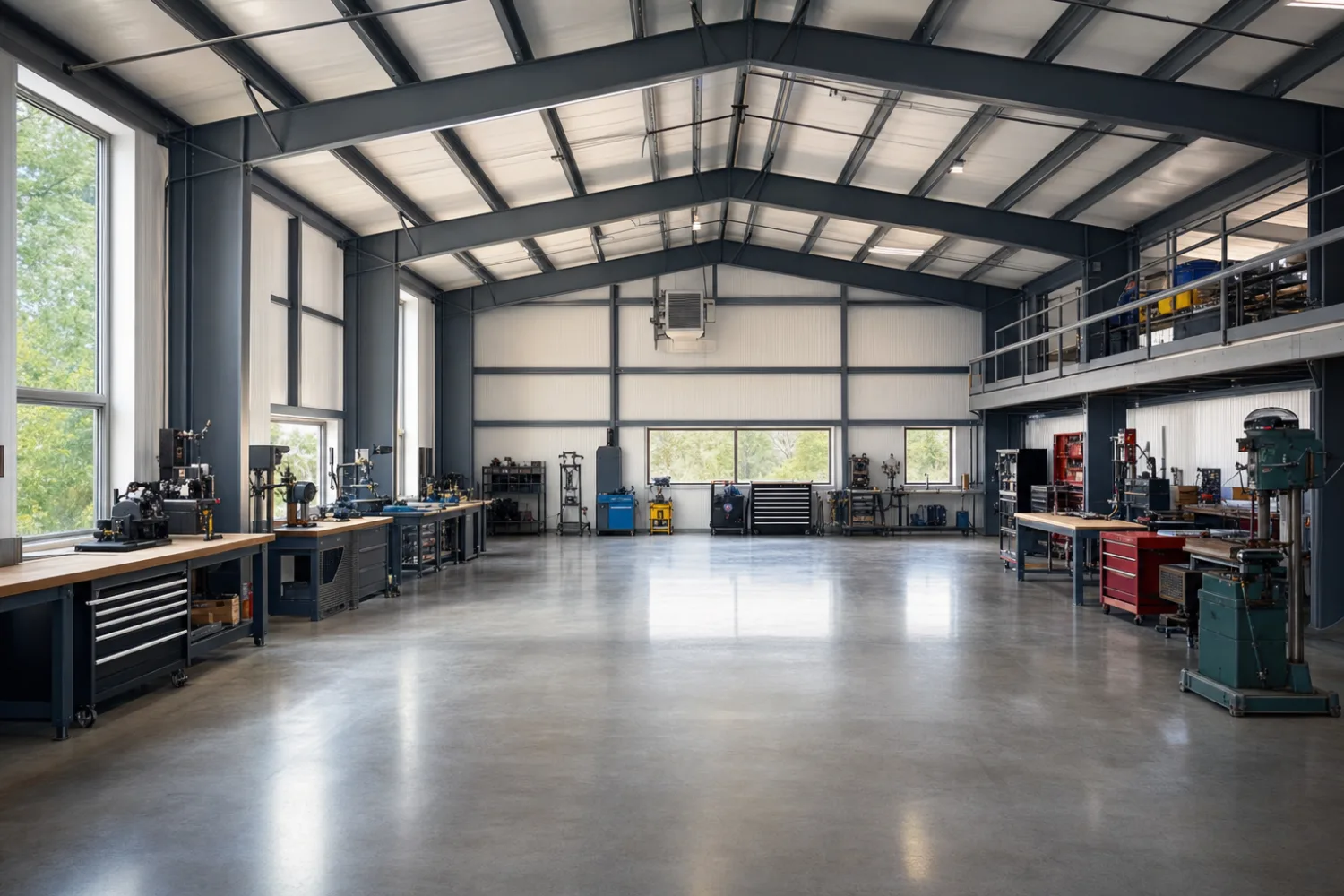
Interior walls behave the same as the outside: clean, scuff, prime bare spots, topcoat. The one extra concern indoors is moisture. If the building is not insulated and sealed, condensation can bead on the steel and lift paint from behind, so condensation and ventilation deserve a look before you paint an interior.
Paint is not a substitute for prep or for fixing what is wrong. It seals a sound surface and refreshes the look, but it cannot stop rust that is still being fed by moisture.
When to skip it
When painting is the wrong move
Painting is not always the answer. A few situations call for fixing or replacing instead of coating, and knowing them saves you a wasted weekend.
- A finish still under warranty. If the factory paint is sound and covered, leave it; a wash usually restores it, and painting can forfeit the coverage.
- Active, advanced rust. A panel rusted through or flaking past sound metal is a replacement, not a paint job. Coating over deep rust hides the problem, it does not fix it.
- A wet or moving surface. Paint applied over condensation, a leak, or unaddressed ground contact peels fast. Solve the moisture source first.
- Galvanized that is still working. A faint white haze on galvanized steel is the zinc doing its job, not failure, and it does not need paint to keep protecting the steel.
When the surface is sound and the timing is right, though, painting is one of the cheaper jobs in metal building maintenance: a wash, some prep, and a quality coating add years of color and corrosion protection for the cost of paint and a weekend.
Related
Read more
This question connects to finishes, coatings, and upkeep. Follow these next:
- Metal building kits: the complete guide (the parent pillar).
- Metal building colors & trim (factory finishes and how to pick a color).
- Metal building maintenance (where a repaint fits in the upkeep schedule).
- Galvanized vs Galvalume vs painted steel (the factory coatings you are painting over).
- Rust & corrosion prevention (fixing the rust before you seal it with paint).
- Condensation & ventilation (stopping the indoor moisture that lifts paint).