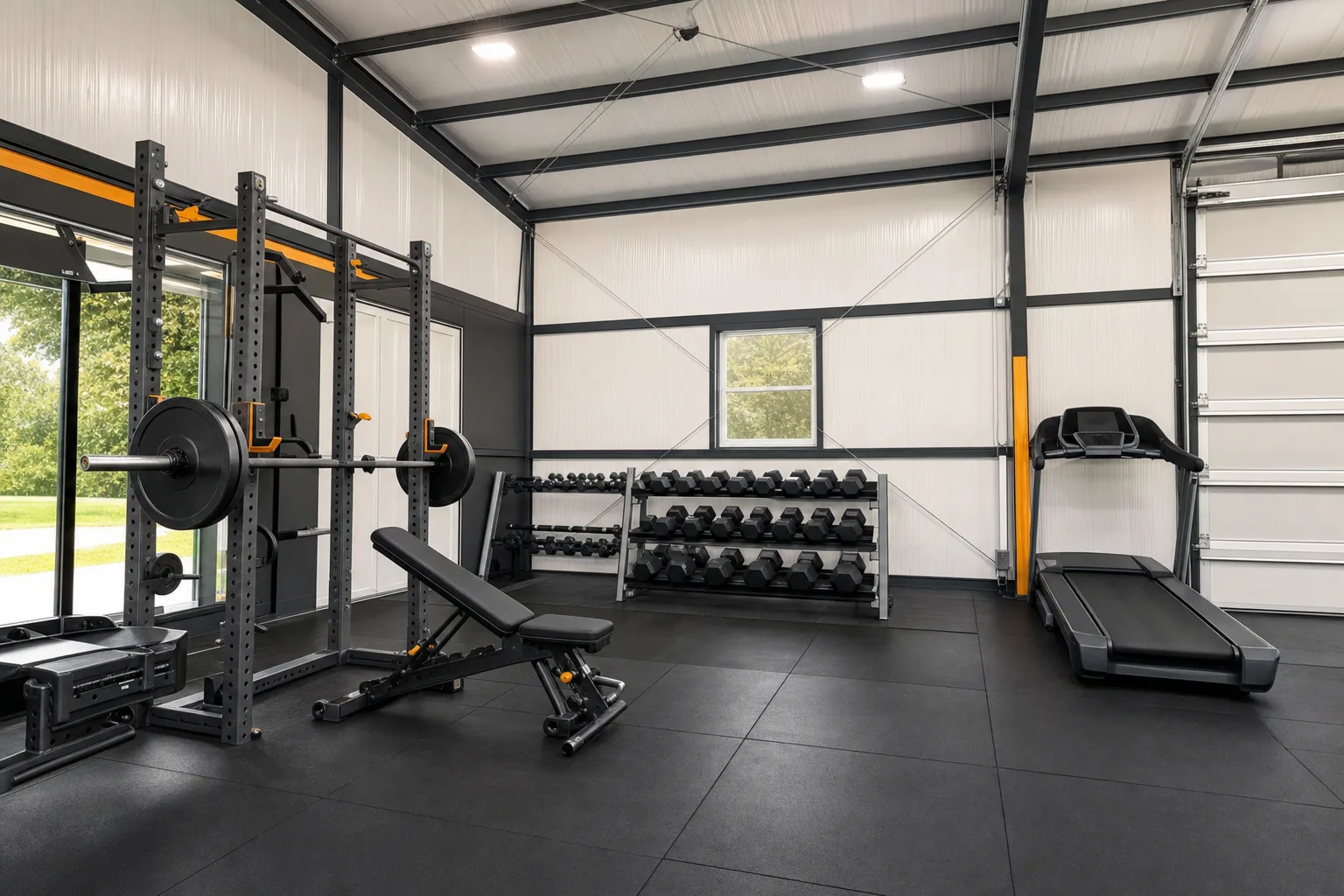
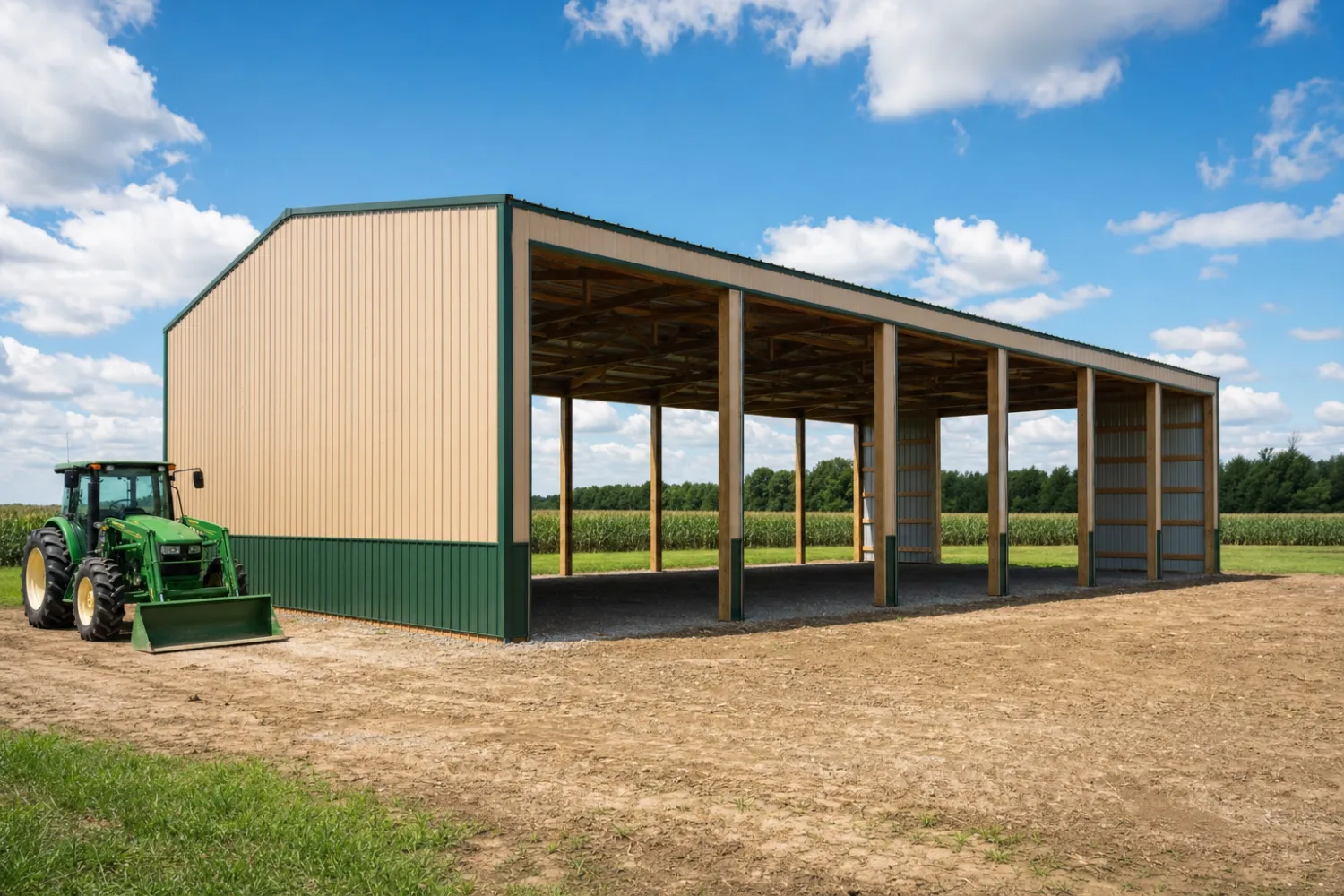
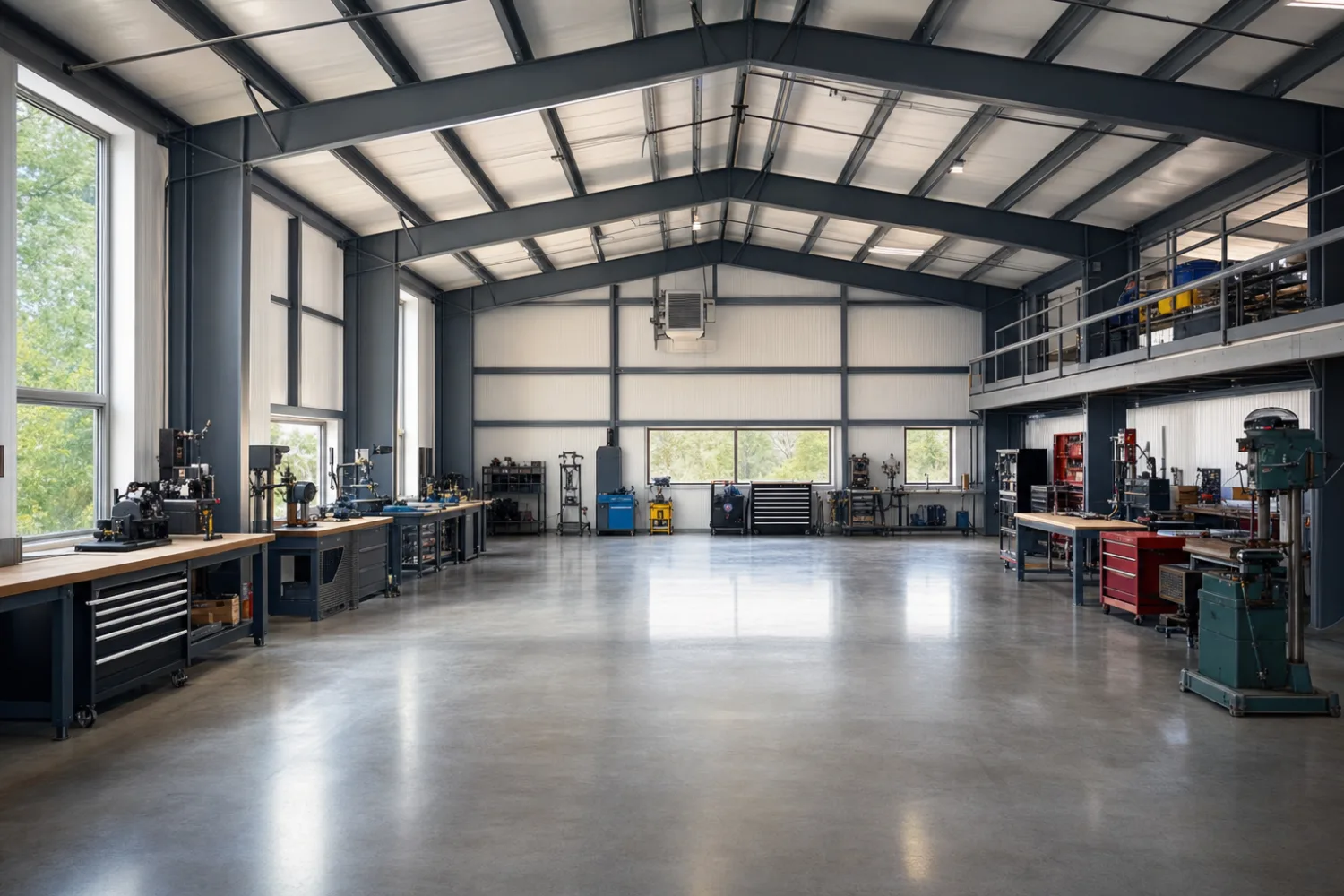
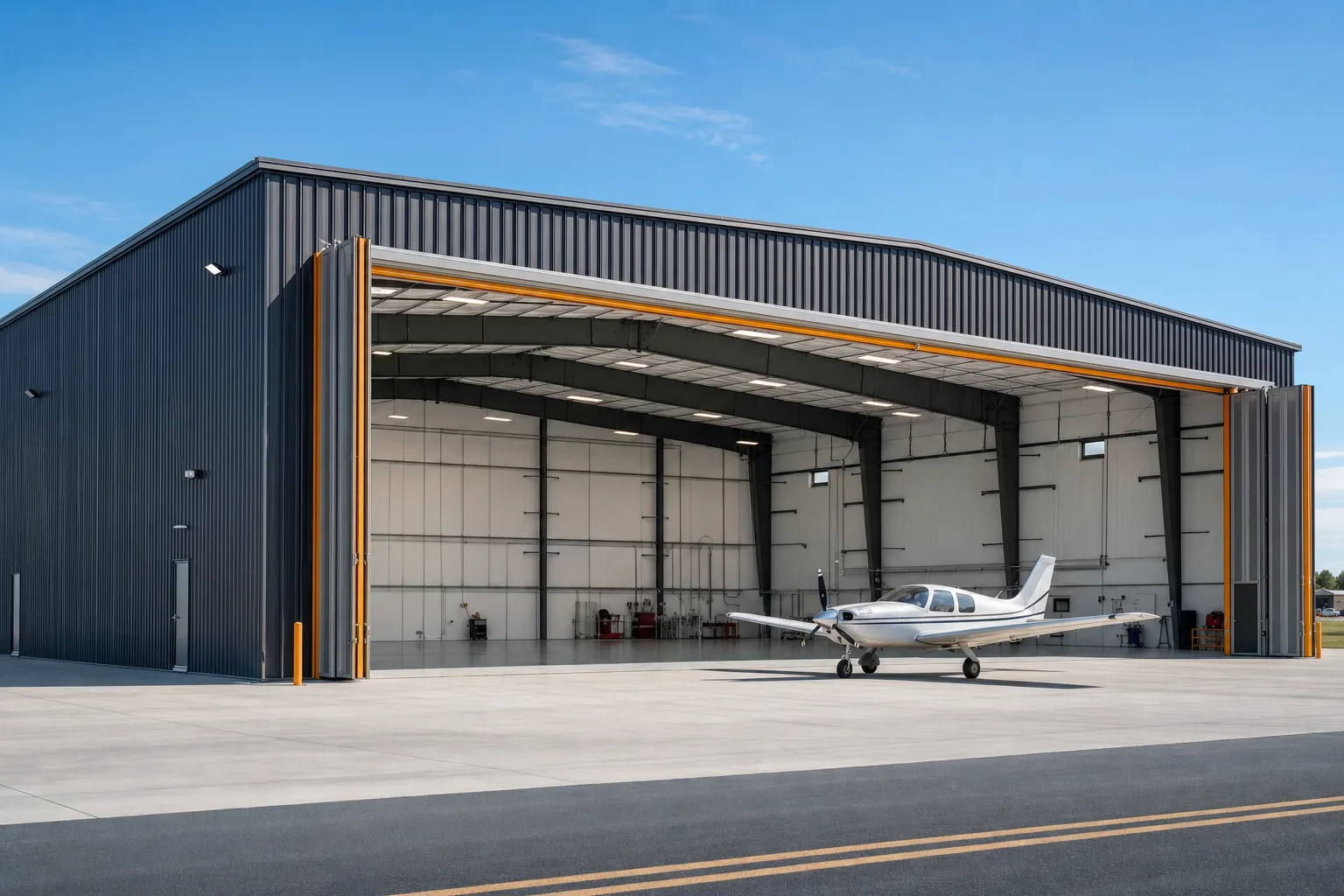
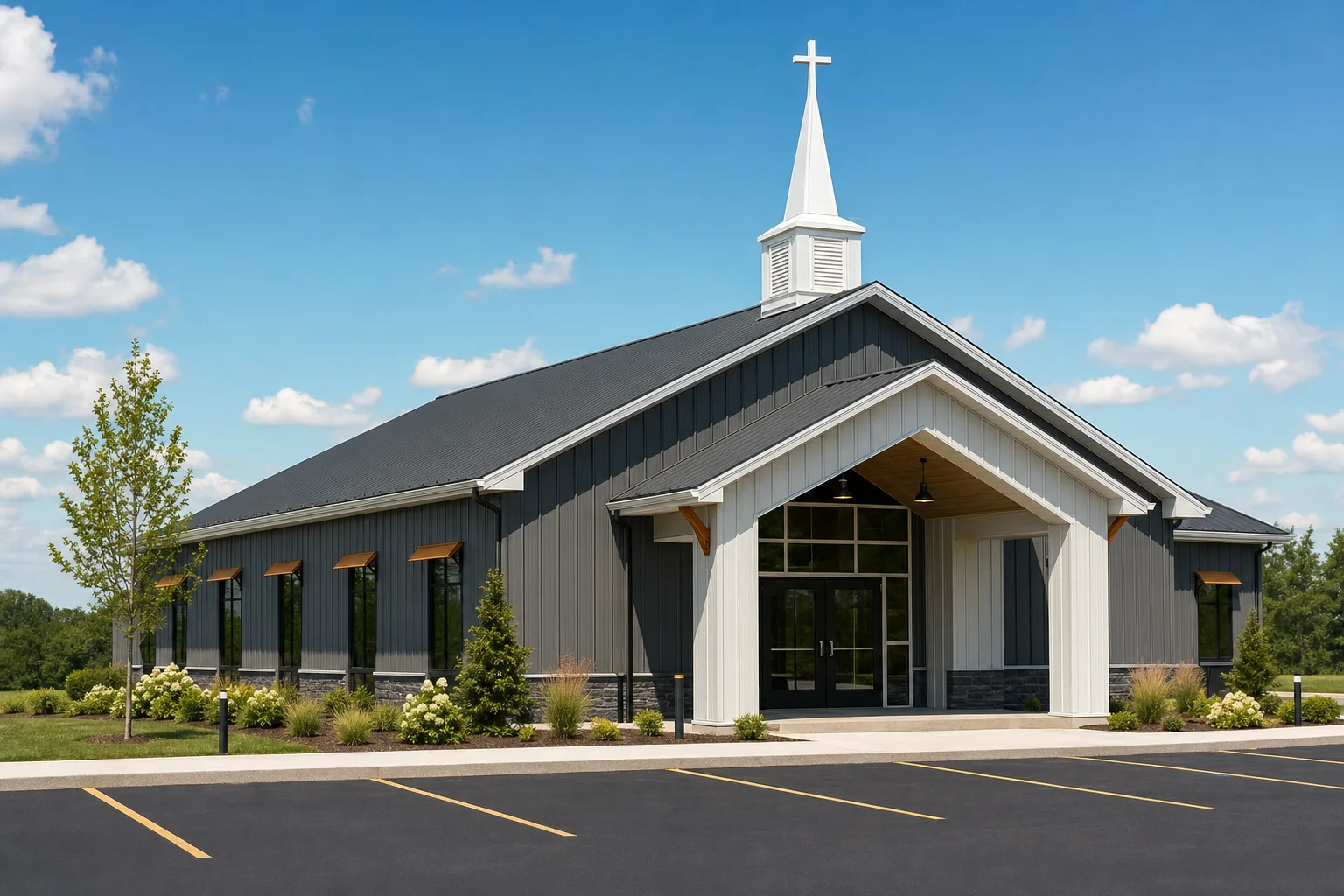
Metal building colors live on three parts of the shell: the wall panels, the roof, and the trim that frames them. You pick a main wall color from a standard palette of roughly two dozen baked-on finishes ‹confirm›, a roof color that often contrasts, and a trim color for the corners, eaves, and openings. Add a wainscot band or a two-tone scheme and a plain steel box starts to look designed. The palette is set by the panel maker, so your real decision is how you combine the colors, not whether a custom shade exists.
This guide sits under the metal building kits pillar and covers the look of a building, not its structure. Below: where color appears, how the paint ties to the steel and its warranty, two-tone and wainscot schemes, how to choose a color, whether colors fade, and the trim pieces that finish the job. Read it before you fill in the color line on a quote.
Color system
How metal building color works
Color on a metal building sits on separate parts, and each one is its own pick. The wall panels carry the main color, the roof carries its own, and the trim adds an accent that outlines the shape. A wainscot band gives you a fourth color near the ground. Once you see the building as those parts, the choices get easy to make.
The palette comes from the panel manufacturer, not the builder. Most lines offer around two dozen ‹confirm› standard colors, from neutral tans and grays to barn red, forest green, and deep blue. The names change by brand, but the families repeat, so you choose from a known set rather than mixing paint. Specialty and bright colors sometimes cost more or carry a shorter finish warranty, which is worth asking about up front.
Here is how the colored parts of a building break down, and the choice each one asks of you:
| Element | What it is | Your choice |
|---|---|---|
| Wall panels | The vertical sheeting on the sides and ends | The main body color, from the standard palette |
| Roof panels | The sloped covering over the building | A roof color, often darker or contrasting |
| Trim | Metal that caps corners, eaves, ridges, and openings | An accent color that frames the building |
| Wainscot | A band of panel along the base of the walls | A second wall color for a two-tone look |
| Gutters & downspouts | Optional drainage along the eaves | Matched to the trim or the wall |
| Doors & windows | Roll-up and walk doors, window frames | Matched or contrasted as an accent |
The colored parts of a metal building, and the pick each one asks of you.
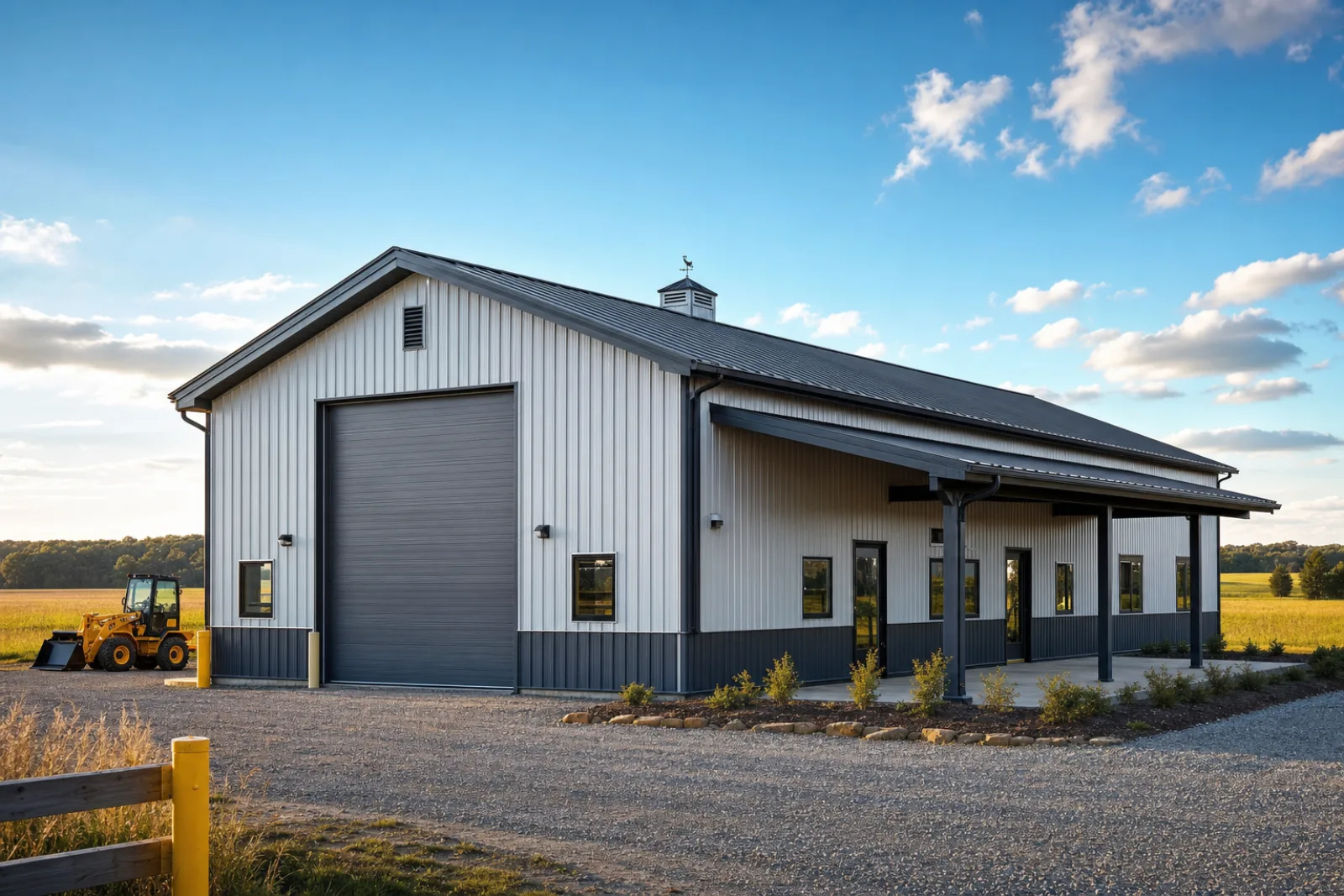
Paint and finish
How the paint finish ties to the steel and its warranty
The color you pick is a baked-on paint over a coated steel panel, so the finish is only as good as the coating beneath it. Panels start as galvanized or Galvalume steel for rust resistance, then take a factory paint system that carries the color and its own warranty.
The base coating fights corrosion; the paint fights fading and chalk. Our galvanized vs Galvalume vs painted steel guide covers how those layers differ. A common exterior paint is a silicone-modified polyester, with premium lines using a tougher coating that holds color longer. The point is that color and protection are two systems on one panel, and a good color over a weak coating still rusts.
Ask for two numbers, because a panel carries two warranties. The structural warranty covers the steel; the finish warranty covers the paint against fade, chalk, and peel, often in the range of 25 to 40 years ‹confirm› on a standard color. Brighter and specialty colors can carry shorter terms ‹confirm›. The full warranty picture lives in our metal building warranties guide.
Match the finish to the climate
In coastal salt air or strong sun, the coating under the color matters more than the shade itself. Ask which paint system the quote includes and what its finish warranty says about fade and chalk, then weigh that against the standard option. A premium finish costs a little more at order time and shows years later in how the color holds.
Two-tone and wainscot
Two-tone schemes and wainscot
A two-tone building uses two wall colors instead of one, most often through a wainscot. Wainscot is a band of panel, usually 3 to 4 feet ‹confirm› tall, that runs along the base of the walls in a second color. It breaks up a tall blank wall and hides the scuffs and splashes that collect near the ground.
Beyond wainscot, a two-tone scheme pairs the walls, roof, and trim in a planned combination. A light wall with a dark roof and matching dark trim reads clean and modern; a barn-red wall with white trim reads traditional. The roof is the largest single block of color, so it sets the mood as much as the walls do. Our metal building roof styles guide covers how roof shape and color work together.
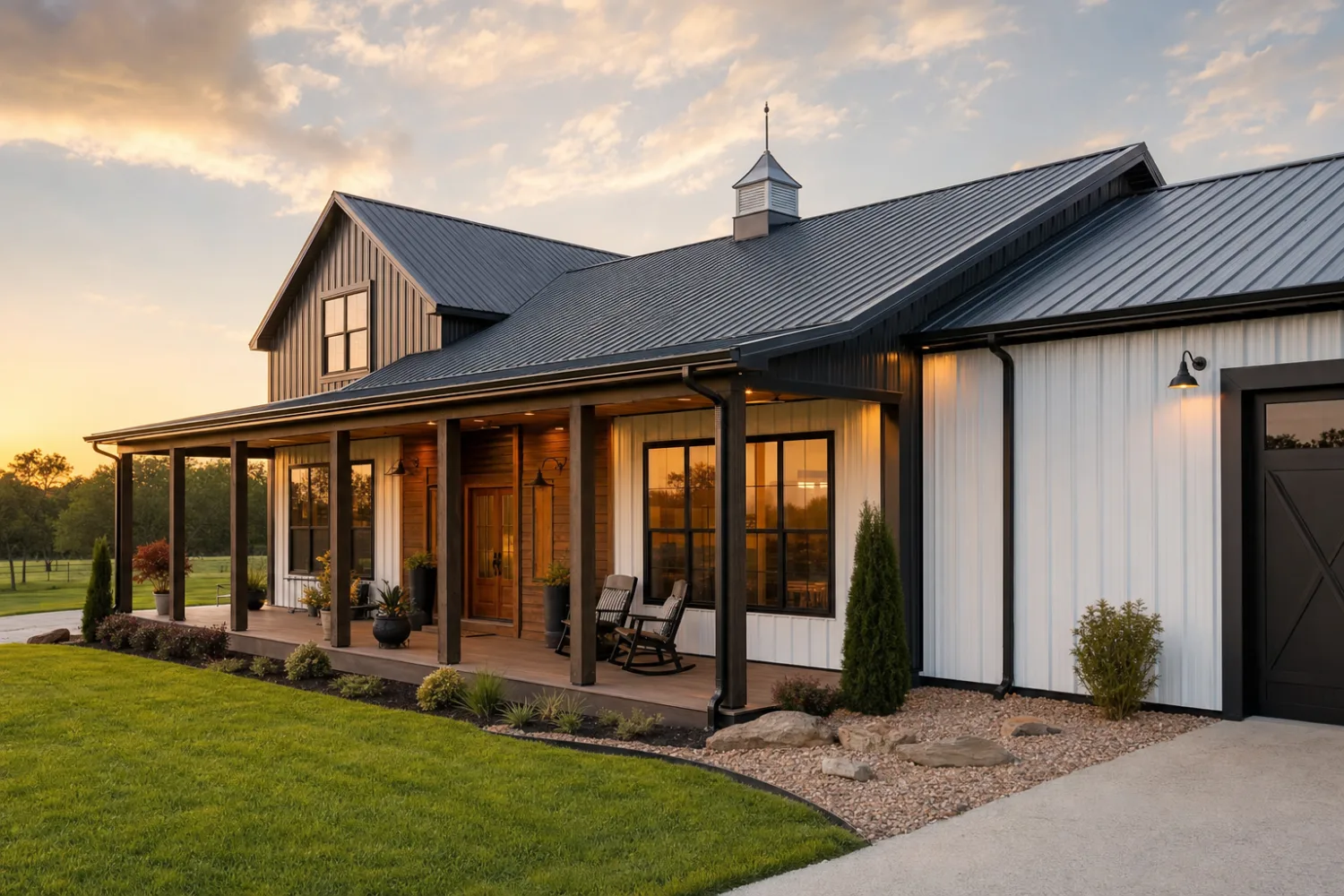
Two-tone work shows up most on metal building homes, where the shell has to look like a house, not a shed. A wainscot in stone gray under a tan wall, or trim lines that mimic board and batten, can make a steel building read as a finished home from the curb. The same tricks dress up a shop or barn when curb appeal counts.
Choosing colors
How to choose your metal building colors
Choose colors for the setting, the rules, and the climate, in that order. Match or complement the house and the land first, check any HOA or county limits second, then weigh how the color handles heat and visibility.
If the building sits near a home, pull the color from the house: match the roof, echo the siding, or repeat the trim so the two read as one property. On open land you have more freedom, though an earth tone that settles into the tree line ages better than a bright shade that fights it.
Color also changes how the building behaves. A dark roof absorbs more heat than a light one, so in a hot climate a lighter or reflective roof keeps the interior cooler and can trim cooling costs. In snow country a darker roof sheds snow faster. Visibility cuts both ways: a bright color stands out for a roadside business, while an earth tone keeps a backyard shop quiet.
Order a color chip, not a screen
A color on a monitor or a printed brochure rarely matches the baked finish on real steel under sunlight. Ask the supplier for physical color chips and hold them outside before you commit. The finish you order is the one you keep, so an hour spent comparing chips in daylight beats living with a shade that looked different on screen.
Fade and longevity
Do metal building colors fade over time?
Every painted finish fades and chalks under UV, but a quality baked-on coating holds its color for decades before the change is easy to see. The fade is even across a wall, so the building ages as a whole rather than blotching in patches.
Bright and dark colors show fade sooner than neutrals, because there is more pigment to lose and more contrast to notice. Reds and deep blues tend to shift first; tans, grays, and whites hold the longest. The finish warranty puts a number on it, often guaranteeing the color stays within a set fade limit for 25 to 30 years ‹confirm› on a standard shade.
You can slow fade with an occasional rinse to clear the chalk and grime that dull the surface. There is no repainting a metal panel back to factory quality, so the color you order is the color you live with. That is one more reason to pick from the standard palette and confirm the finish warranty in writing. Every coating term here is defined in our metal building glossary.
Trim pieces
The trim that finishes a building
Trim is the formed metal that caps every edge and opening, and it does two jobs: it seals the gaps where panels meet and it frames the building in your accent color. Skimp on trim and a building looks unfinished and leaks at the corners; spec it well and the shell looks tailored.
These are the pieces that show up on a typical quote:
- Corner trim wraps the vertical edges where two walls meet.
- Eave and rake trim finish the roof edges along the sides and the gable ends.
- Ridge cap closes the peak where the two roof slopes come together.
- Base, gable, and door trim frame the bottom of the walls, the gable, and the openings.
- Gutters and downspouts carry water off the eaves, matched to the trim or the wall.
Most buyers run the trim in a single accent color so the building reads as one piece. White trim on a colored wall is the classic look; trim that matches the roof ties the top and the edges together. Whatever you choose, confirm the trim color and the pieces included on the quote, because trim is easy to leave off a low bid and costly to add later.
FAQ
Metal building colors: common questions
What colors are available for a metal building?
Most panel lines offer around two dozen ‹confirm› standard baked-on colors, covering neutral tans, grays, and whites plus barn red, forest green, navy, and similar tones. The exact names and count vary by manufacturer, and some brands add specialty or bright colors at extra cost or with a shorter finish warranty. You choose a wall color, a roof color, and a trim color from that set.
Do metal building colors fade?
Yes, every painted finish fades and chalks under UV, but a quality baked-on coating holds its color for decades before the change is obvious. Bright and dark colors fade sooner than neutrals. The finish warranty, often 25 to 30 years ‹confirm› on a standard shade, guarantees the color stays within a set fade limit for the covered period.
Can you do a two-tone metal building?
Yes, and many buyers do. The common way is a wainscot, a band of a second wall color along the base of the walls. You can also pair a light wall with a dark roof and matching trim for a planned two-tone scheme. Two-tone schemes cost little more and make a plain shell look finished, which is why they are popular on homes and shops.
What is wainscot on a metal building?
Wainscot is a band of wall panel, usually 3 to 4 feet ‹confirm› tall, that runs along the bottom of the walls in a color different from the rest. It creates a two-tone look, breaks up a tall blank wall, and hides the scuffs and dirt that collect near the ground. It is a finish choice, not a structural one.
Does color affect how hot the building gets?
Yes, the roof color does. A dark roof absorbs more solar heat than a light one, so a light or reflective roof keeps the interior cooler in a hot climate and can lower cooling costs. In cold or snowy regions a darker roof sheds snow faster. Insulation matters more than color for indoor comfort, but the roof shade still moves the needle.
Can I match my metal building to my house?
Usually, yes. Standard palettes include enough neutral and traditional tones to match most roofs, siding, and trim, and you can echo all three on the building so the two read as one property. Pull the colors from the house, order physical chips to confirm, and check any HOA or neighborhood limits before you commit.
Related guides
Keep reading
Color is one of the last choices on the quote, and it connects to the coating, the roof, and the warranty. Follow these next:
- Metal building kits: the complete guide (the parent pillar).
- Galvanized vs Galvalume vs painted steel (the coating under the color).
- Metal building roof styles (how roof shape and color work together).
- Metal building warranties (the finish and structural warranties to confirm).
- Metal building homes (where two-tone and curb appeal matter most).
- Metal building glossary (every color and coating term defined).