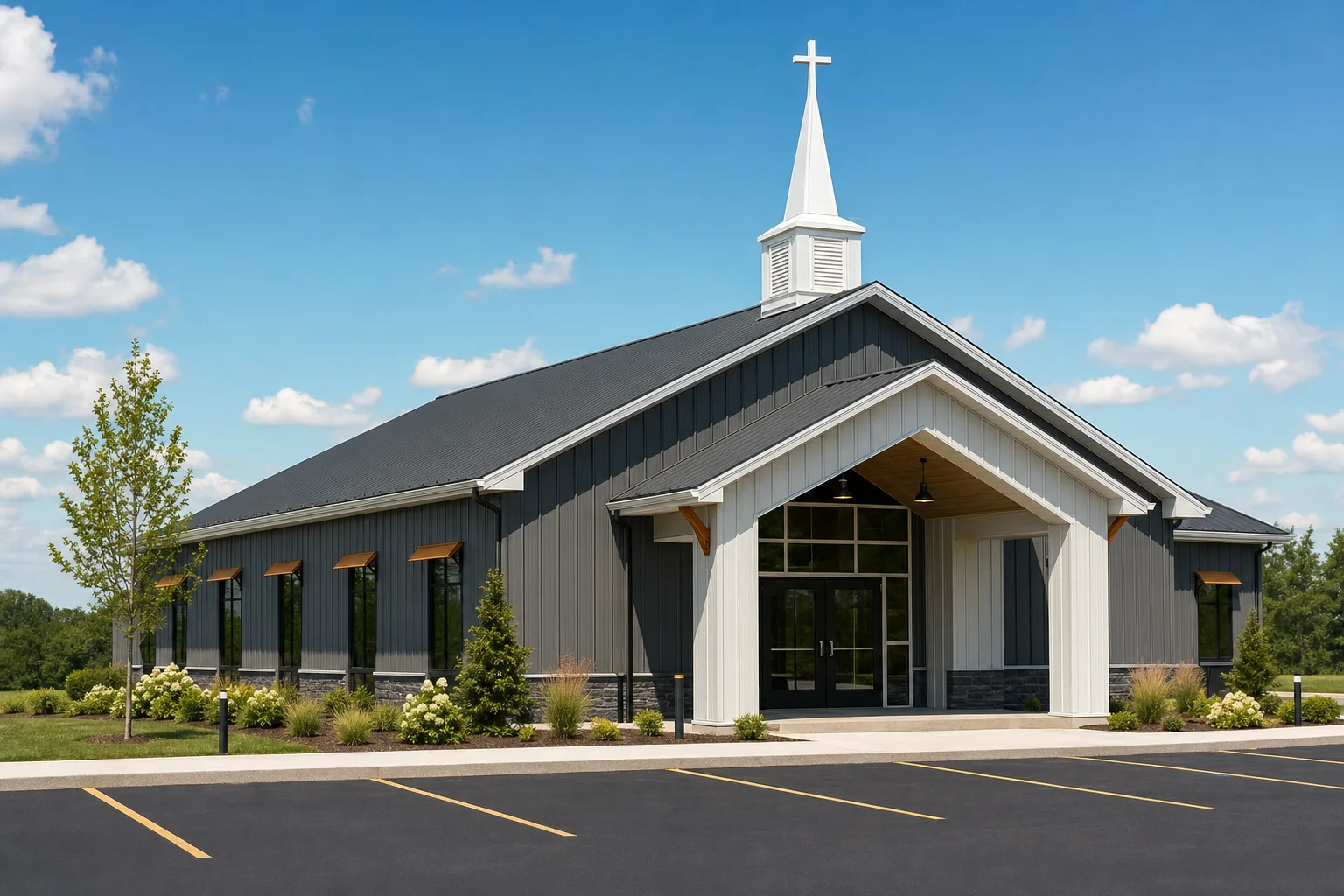
Red iron steel is hot-rolled structural steel, the I-beam and wide-flange shape used in commercial construction, named for the rust-inhibiting red-oxide primer that coats it at the mill. In a metal building it forms the primary frame: the columns and rafters that carry the whole load down to the foundation. Because it spans wide and holds heavy loads, red iron is the framing steel behind most pre-engineered shops, barns, and commercial buildings.
This page sits under the metal building kits pillar and answers the red iron question on its own terms: what the steel is, why it wears that red coat, what it does inside a building, and how it differs from the lighter tube and formed steel you see on carports. If a supplier quotes a frame without explaining the steel, this is the context that lets you read the spec.
The name
Why it is called red iron
The red comes from a coating, not the metal. Red iron is ordinary hot-rolled structural steel, the same grade that frames warehouses and bridges, and the mill sprays it with a red-oxide primer before it ships. That primer slows rust on the bare steel and gives the frame its signature rust-red color, so crews on a jobsite started calling the material itself red iron.
Hot-rolled means the steel is shaped while glowing hot, rolled into the I-beam and wide-flange sections that carry load with the least material. The shape is the point. An I-beam puts most of its steel where the bending stress is highest, in the top and bottom flanges, so it holds a long span without sagging. That efficiency is why red iron frames reach across a building with no posts in the middle of the floor.
In a kit
What red iron steel does in a metal building
Red iron is the skeleton. In a pre-engineered metal building kit, red iron forms the primary frame, the welded columns and rafters that stand the building up and carry every load to the foundation. The roof and wall panels, the purlins, and the girts all hang off that frame; the red iron is what makes the structure a building and not a shell.
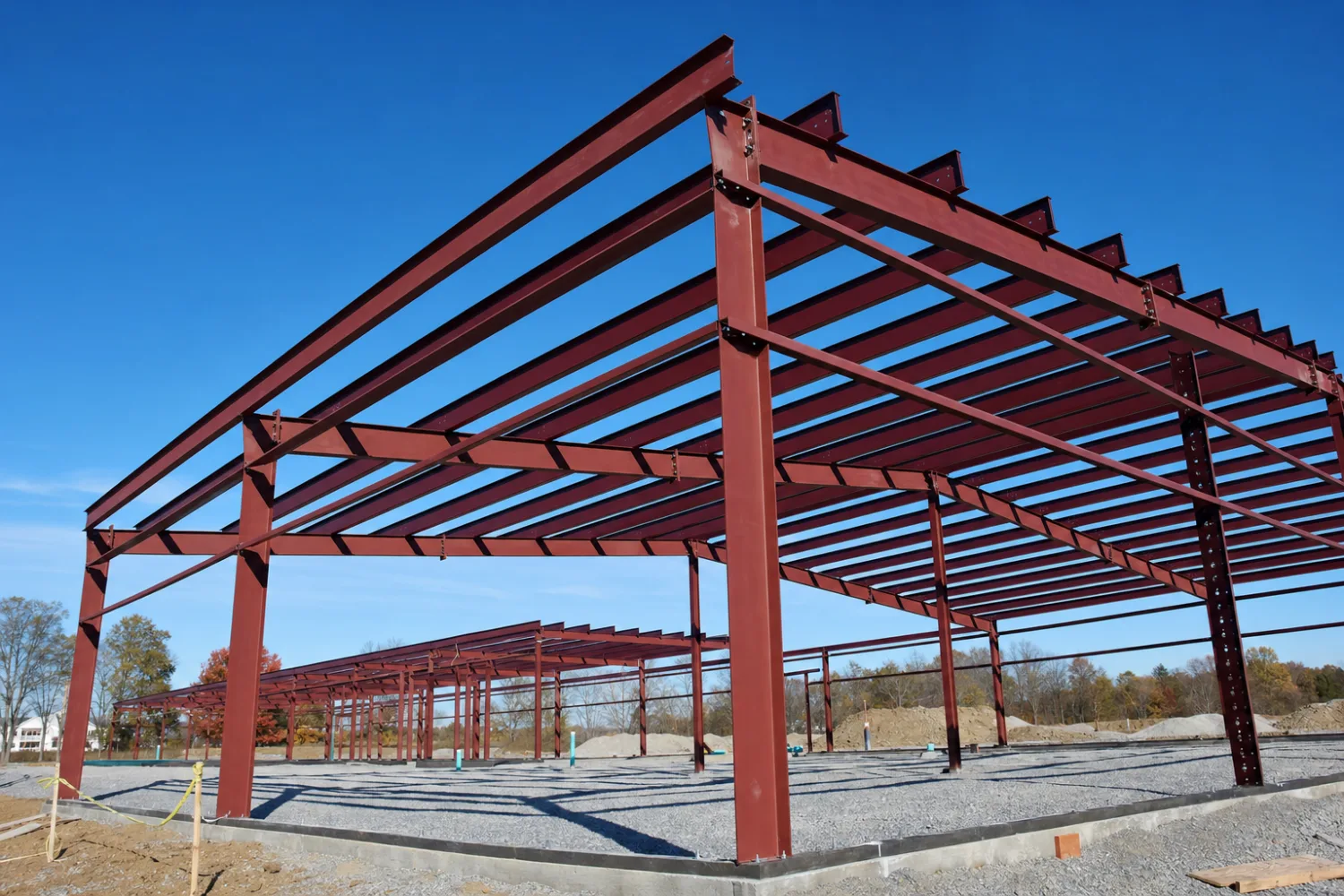
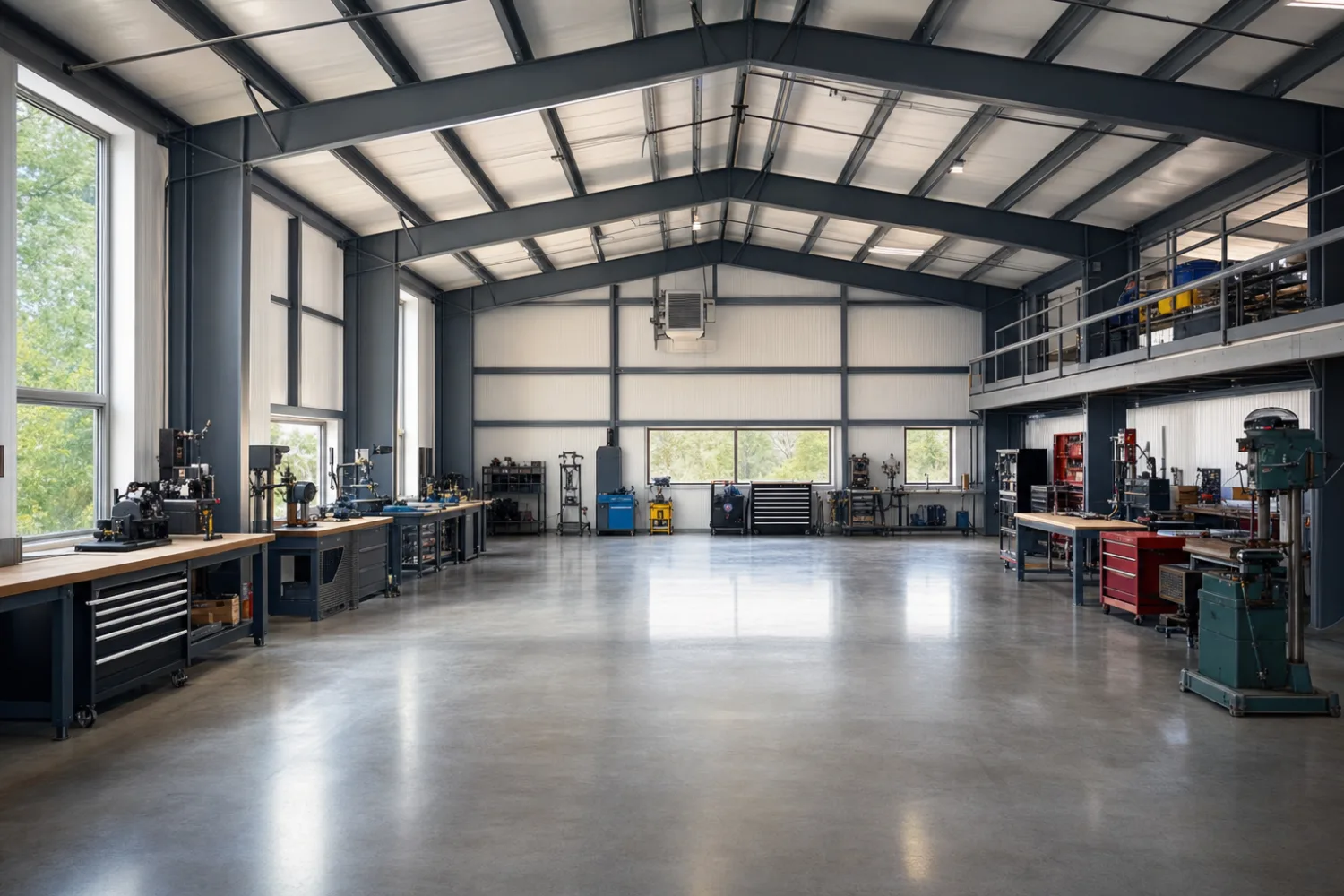
Its advantage is reach and strength. A red iron frame spans wide and clear, so a 50-foot shop has open floor with no columns in the way, and it takes heavy snow and high wind that lighter steel cannot. The tradeoff is weight and cost. Red iron is heavy, so raising it wants equipment and a crew, and it runs more per pound than tube. For a wide building stamped for real snow and wind loads, that cost buys capacity you cannot get any other way.
How it compares
Red iron steel vs tube and light-gauge steel
Red iron is one of three framing steels you will meet in a kit, and it sits at the heavy-duty end. Tube steel is hollow square tubing, lighter and cheaper, common on carports and small garages. Light-gauge is thin formed steel used for secondary members. Red iron is the structural workhorse that carries the primary load.
| Red iron | Tube steel | Light-gauge | |
|---|---|---|---|
| Form | Hot-rolled I-beam | Hollow square tubing | Cold-formed thin steel |
| Role | Primary frame | Light frames, carports | Purlins, girts, trim |
| Clear span | Wide, no posts | Short to moderate | Not load-bearing alone |
| Load capacity | High | Light to moderate | Low on its own |
| Finish | Red-oxide primer | Usually galvanized | Galvanized |
| Best for | Shops, barns, commercial | Carports, small garages | Secondary framing |
Three framing steels, three jobs. Red iron carries the load; the others support and enclose.
Steel thickness is sold by gauge, where a lower number means thicker steel, and red iron is measured by its structural section rather than gauge alone. The deeper comparison between a red iron primary frame and a tube frame, and which one your span and budget call for, lives in our construction types silo. The short version: match the steel to the span, not to the sticker price.
The coating
Does red iron steel rust?
The red-oxide primer is a starting coat, not the final defense, so red iron can rust if water sits on bare steel. On an enclosed building that rarely happens, because the frame lives inside the shell, away from the weather, and a quality red iron frame holds up for decades. The primer buys time during shipping and erection; the dry, sheltered life inside the building does the rest.
Where frame rust starts
On a finished building, frame rust traces to moisture, not the steel. Trapped condensation on inside surfaces is the usual culprit, so insulation and ventilation that keep the steel above the dew point matter more than the primer. The panels that face the weather rely on their own coatings, which our galvanized vs Galvalume vs painted steel guide breaks down.
Related
Read more
Red iron connects to framing, coatings, and loads. Follow these next:
- Metal building kits: the complete guide (the parent pillar).
- Construction types & framing (red iron vs tube, frame shapes, and how kits go together).
- Steel gauge explained (how panel and tube thickness is measured).
- Galvanized vs Galvalume vs painted steel (the coatings that fight rust on the panels).
- Snow load & wind load explained (the loads a red iron frame is stamped to carry).