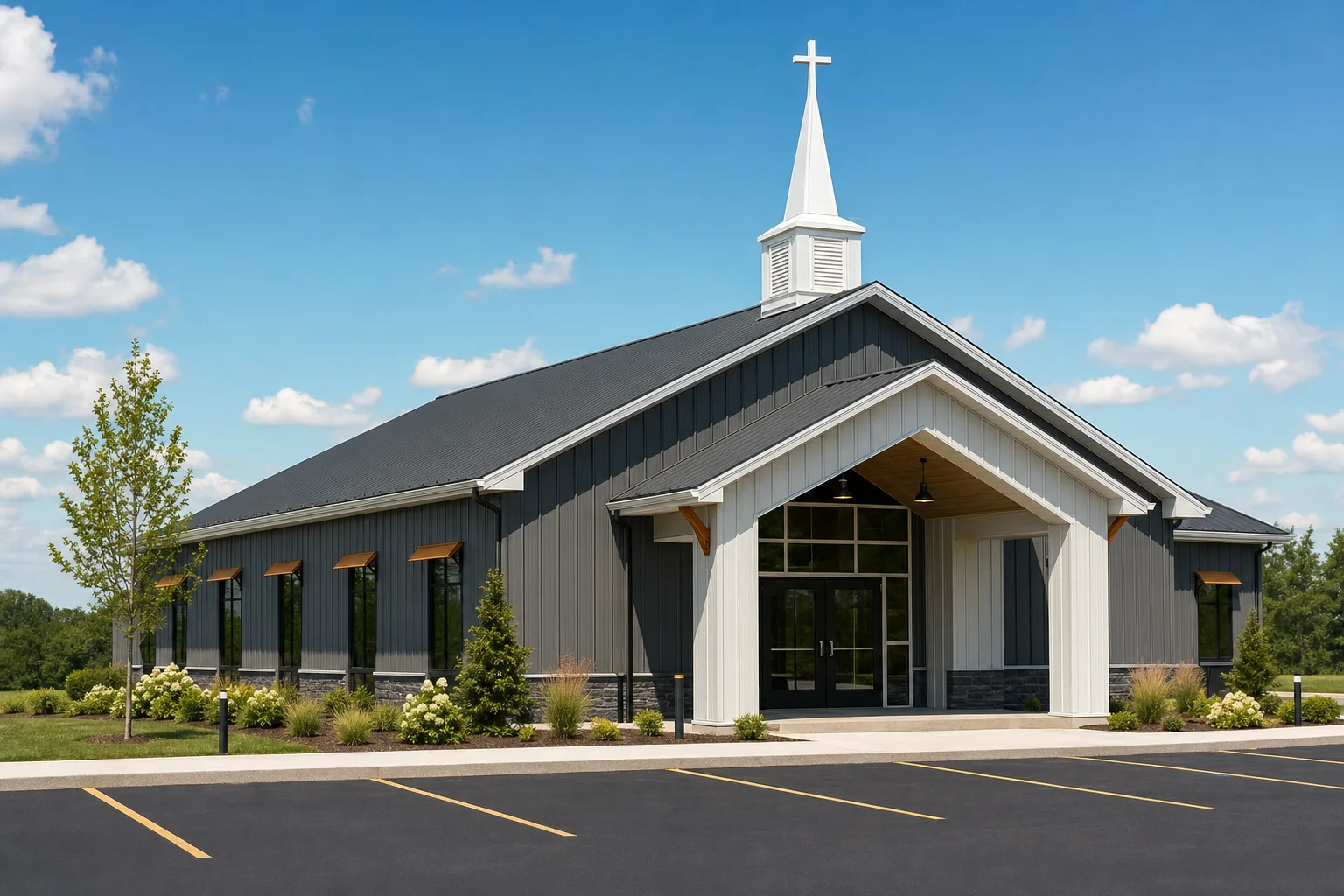
Yes, a metal building can be a permanent home. Set on a permanent foundation, insulated and finished to the residential code, and permitted as a dwelling, a steel building is a permanent house in every way that counts: it is appraised, taxed, financed, and insured as real property, and a sound steel frame lasts 50 years or more ‹confirm›. What makes a home permanent is the foundation, the finish, and the permit, not the framing material.
This page sits under the metal building homes pillar and answers the permanence question on its own terms: what the code counts as a permanent dwelling, how long a steel home holds up, and why a lender, an appraiser, and an insurer treat a finished metal home the same way they treat a stick-built one. For the comfort and legality of occupying one, our can you live in a metal building answer covers that ground. Here the question is permanence.
What makes it permanent
Does a metal building count as a permanent structure?
Yes, once it sits on a permanent foundation and is permitted as a dwelling. The code draws its line between permanent and temporary at the foundation and the use, not at the material. A steel building anchored to a poured slab, footings, or piers, with water, power, and sewer run to it and a residential permit on file, is a permanent home. The same building on skids or wheels, or permitted as a portable shed, is not.
That distinction decides how the building is titled. A permanent dwelling is real property, fixed to the land and taxed with it, the way any house is. A movable structure stays personal property, closer to a vehicle than a home. The table below sets out what moves a steel building from one column to the other.
| What it takes | Why it makes the home permanent |
|---|---|
| Permanent foundation | A poured slab, footings, or piers anchor the building to the land, the first thing an inspector and an appraiser check |
| Residential permit | Permitting it as a dwelling, not a shed or accessory building, holds it to the occupied-home code |
| Connected utilities | Permanent water, sewer or septic, and electrical service mark it as a lived-in home, not a temporary structure |
| Full interior finish | Insulation, a vapor barrier, drywall, and flooring turn the shell into conditioned living space |
| Real-property title | Recorded with the land and taxed as real estate, which is what lenders and insurers require |
What separates a permanent home from a temporary building. Confirm each line against your local code before you build.
Built to last
Is a metal building durable enough to be a permanent home?
Yes. A steel frame outlasts the mortgage written against it. The structure does not rot, warp, split, or feed termites, and it does not burn, so the frame itself is rarely the limit on a metal home’s life. A well-built steel home lasts 50 years or more ‹confirm›, and the frame inside it often stays sound far longer.
The one thing that ends a steel home is rust, and you hold rust off with coatings and dry air, not with thicker metal. A quality finish on the panels, a sound primer on the frame, and proper insulation and a vapor barrier keep moisture off the steel so the home does not corrode itself from the inside. Keep it dry and maintained and a metal home ages as slowly as any house, which is why metal building homes read as permanent to the people who live next to them.
Permanence is in the foundation and the finish
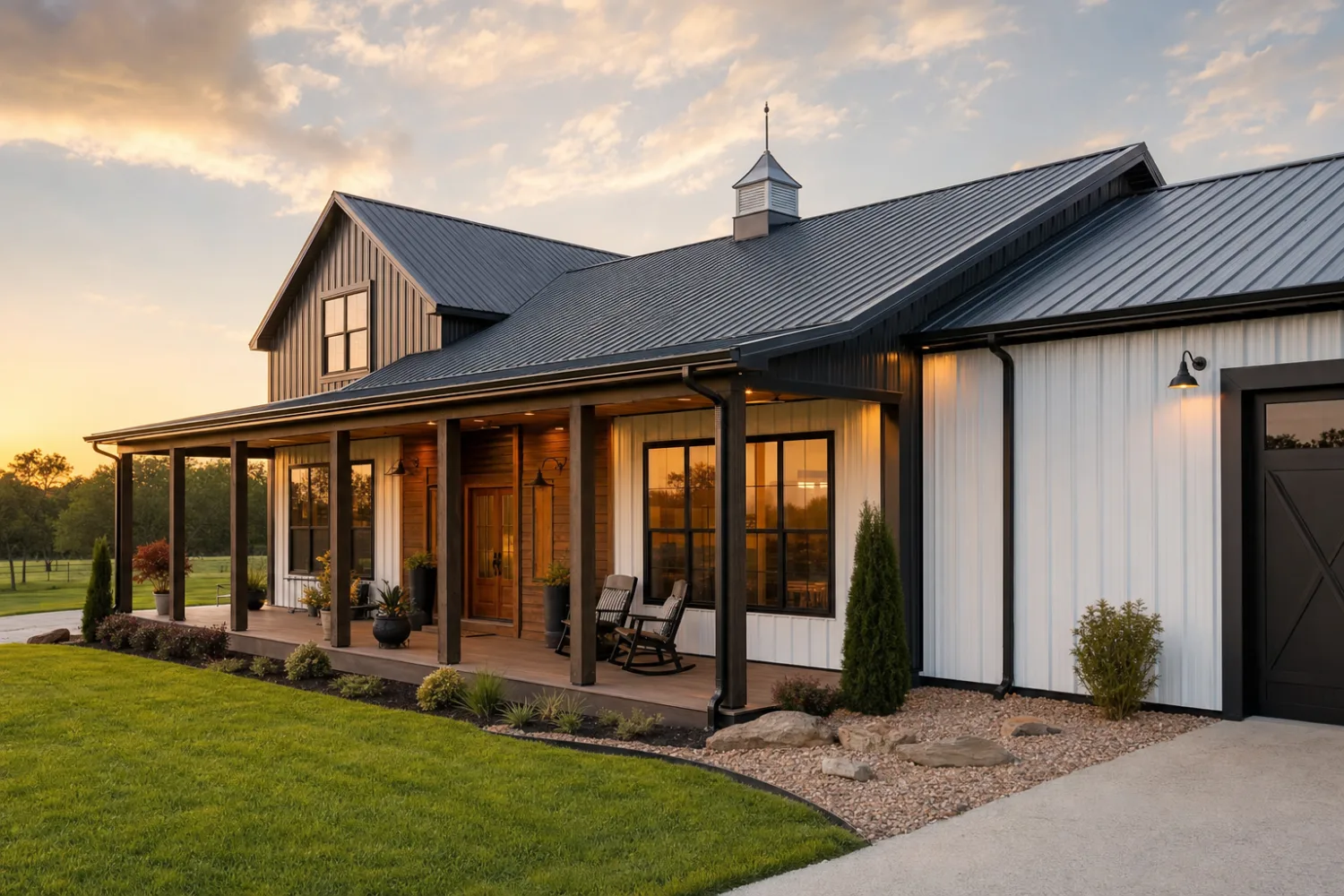
A bare steel shell on gravel is a temporary building. The same frame on a poured foundation, sealed, insulated, finished, and permitted as a dwelling is a permanent house. Spend on the foundation, the moisture control, and the interior, because that is the work that turns a kit into a home that lasts. Weigh the full case in our barndominium pros and cons guide.
Real property
Will a lender and appraiser treat a metal home as permanent?
Yes, when it is on a permanent foundation and permitted as a dwelling. To a lender, an appraiser, and an insurer, a finished metal home is a house: it carries a standard mortgage, it appraises against comparable homes in the area, and it insures as a permanent residence. The steel frame does not move it into a different category. The foundation, the permit, and the finish keep it in the house category.
A permanent home is one the land owns and a bank will lend against. Put a steel building on a real foundation, permit it as a dwelling, and finish it like a house, and it answers to the same rules a wood-framed home does.
Financing is where this gets tested. A metal home on a permanent foundation qualifies for the same construction and mortgage products a stick-built home does, which our barndominium financing guide walks through in full. The same permanence protects what the home is worth: a finished steel home on a real foundation holds its resale value and reads as a permanent house to the next buyer. For how it compares to a conventional house over the long run, see metal home vs traditional house.
Related
Read more
This answer connects to the foundation, financing, and durability that make a steel home permanent. Follow these next:
- Metal building homes: the complete guide (the parent pillar).
- Financing a barndominium or metal home (the mortgage that treats it as real property).
- Resale value of metal building homes (how permanence protects value).
- Metal home vs traditional house (where each format wins over the long run).
- Can you live in a metal building? (the comfort and legality of occupying one).
- Metal building kits: the complete guide (the wider steel-building family).