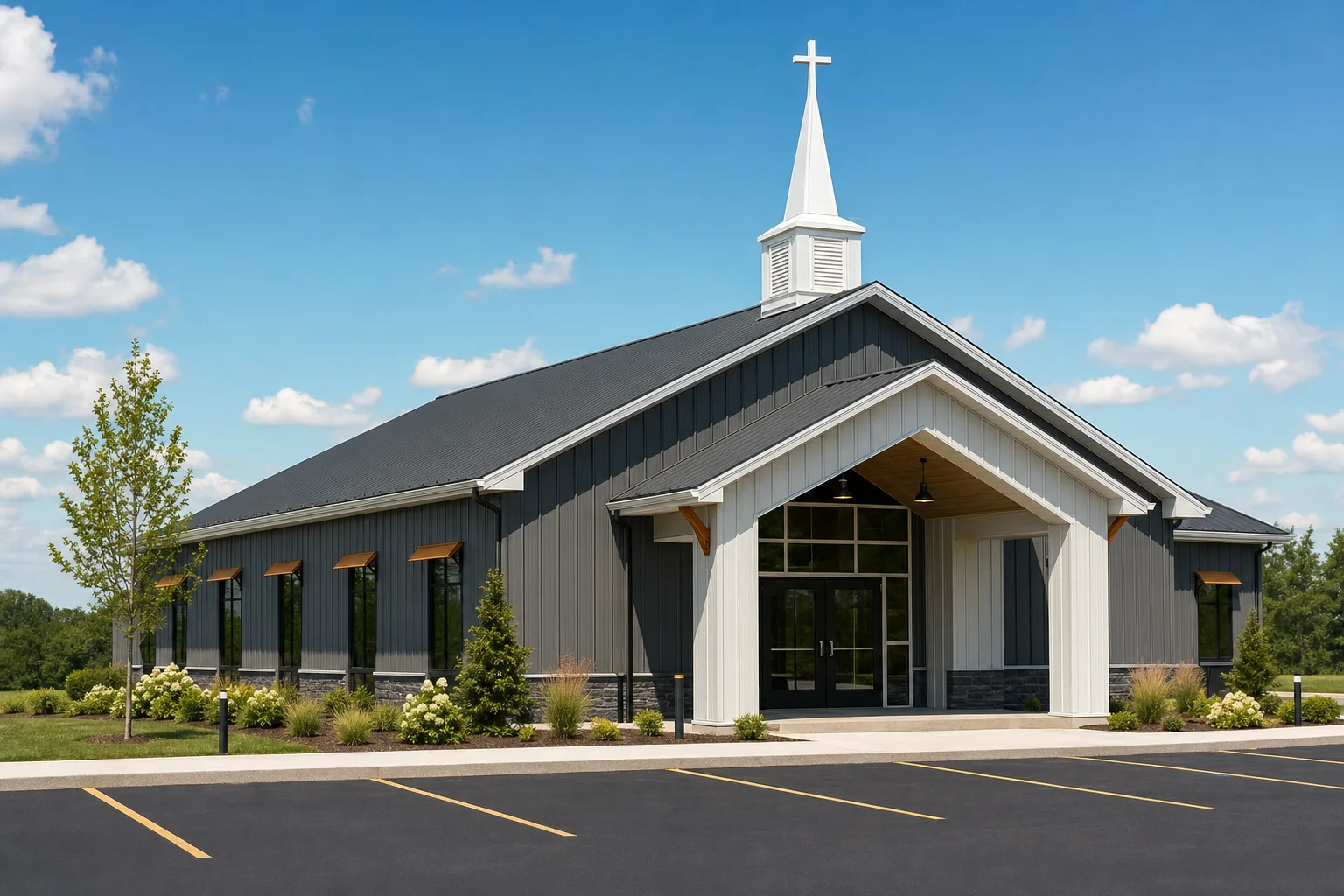
Not for every building. A small bolt-up kit, a carport, a single-car garage, or a light tube-steel shed, can go up with two people and hand tools over a weekend. A larger red-iron building with heavy structural columns and rafters needs a crew of three to five ‹confirm› plus lifting equipment, because the steel is too heavy and the spans too high to raise safely by hand. The frame type and the building size decide whether you need a crew, not the brand of kit.
This page sits under the metal building construction types pillar and answers the crew question on its own terms: which buildings one or two people can handle, which ones demand a crew and a lift, what a crew costs against doing it yourself, and how to read your own kit before you decide. For the full side-by-side on the choice, our hiring a crew vs DIY assembly guide goes deeper.
DIY range
When you can build it without a crew
Light, small, and bolt-up is the do-it-yourself zone. If your kit is tube steel or light-gauge, the members are light enough that one or two people can carry, position, and bolt them with a drill, a ladder, and a few hand tools. Carports, RV covers, small sheds, and single-car garages fall here, and the panels follow the same logic: a bolt-up kit ships pre-cut and pre-punched so you bolt parts together instead of cutting or welding on site.
The honest limit is the roof. Even on a small building, lifting rafters and setting roof panels overhead is the point where a second set of hands stops being optional. Two people is the realistic floor for most DIY kits, not one. If you want the full picture before you commit, our can you build a metal building yourself answer covers the skills and time it takes.
Crew range
When you do need a crew
Heavy frames and wide spans need a crew, every time. Once a building runs on a red-iron primary frame, the columns and rafters weigh hundreds of pounds each and stand too high to raise by hand. You need a crew to guide and brace the steel and a machine to lift it, so the work stays safe and the frame goes up square. Trying to muscle a red-iron rafter into place without equipment is how people get hurt.
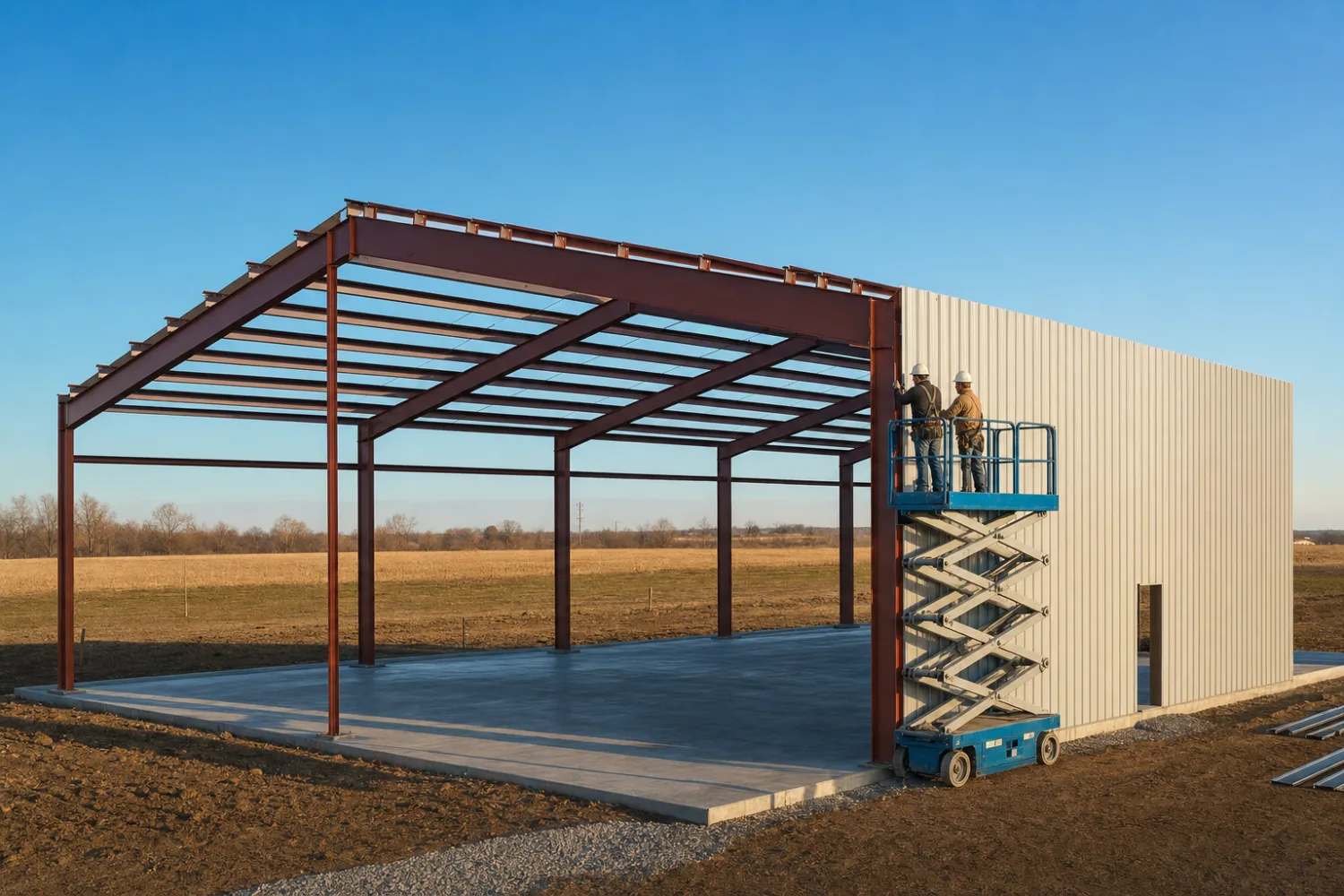
Three signs your build wants a crew: a red-iron or rigid structural frame, a clear span past roughly 30 feet ‹confirm›, and wall heights that put the rafters out of ladder reach. Hit any one of those and the job moves from a two-person weekend to a crew with a forklift or boom lift. The frame is the tell, so check whether your kit is red iron or tube before you plan the labor.
By building
How many people each building takes
Match the crew to the frame and the size. The ranges below are typical 2026 guidance, not a rule, since your loads, wall height, and site access all shift the number. Confirm the lift and labor against your own engineered drawings.
| Building | Frame | People | Lifting gear |
|---|---|---|---|
| Carport / RV cover | Tube steel | 1 to 2 ‹confirm› | None, hand tools |
| Single-car garage | Tube / light-gauge | 2 ‹confirm› | Ladders, maybe a hoist |
| 2-car garage / small shop | Light red iron or tube | 2 to 3 ‹confirm› | Ladders, possible lift |
| 30-ft+ shop or barn | Red iron | 3 to 5 ‹confirm› | Forklift or telehandler |
| Wide-span / commercial | Red iron | 4 to 6+ ‹confirm› | Boom lift or crane |
A planning guide, not a verdict. Wall height, snow and wind loads, and site access move these numbers.
The pattern holds across the table: as the frame gets heavier and the span gets wider, the crew grows and the lifting gear gets bigger. A carport needs neither; a commercial shell needs both. Most home shops and barns land in the middle, where a small crew and a rented forklift turn a multi-week solo struggle into a few organized days.
Cost & time
What a crew costs against doing it yourself
A crew costs money but buys speed and safety. Professional erection on a kit building often runs a notable share of the shell price ‹confirm›, and in exchange a job that might take you weeks of weekends goes up in days. Our how long does assembly take answer puts real ranges on both paths, so you can weigh your time against the labor bill.
Renting the lift, keeping the labor
A middle path exists. On a 2-car garage or small shop, plenty of owners do the bolting themselves but rent a forklift or telehandler and pull in two or three friends for the frame day, then finish the panels at their own pace. Line up the tools you need first, and read the step-by-step assembly overview so the crew day runs tight.
Doing it yourself saves the labor line and teaches you the building, which helps when you add on or repair it later. The trade is time, the risk of a slow or unsafe lift, and a frame that has to come out square the first time. For a wide red-iron building, the safe answer is a crew. For a carport or small garage, two capable people and a free weekend is plenty. The frame on your drawings settles it, so read that line before you book labor or block out a Saturday.
Related
Read more
The crew question connects to frame type, tools, and assembly time. Follow these next:
- Construction types & DIY (the parent pillar: bolt-up, weld-up, and frame shapes).
- Hiring a crew vs DIY assembly (the full side-by-side on the choice).
- Can you build a metal building yourself? (the skills and time a solo build takes).
- Step-by-step assembly overview (how the build sequence runs).
- Tools needed to assemble a kit (what to have on hand before crew day).
- Metal building kits: the complete guide (the kit pillar, for what ships in the box).