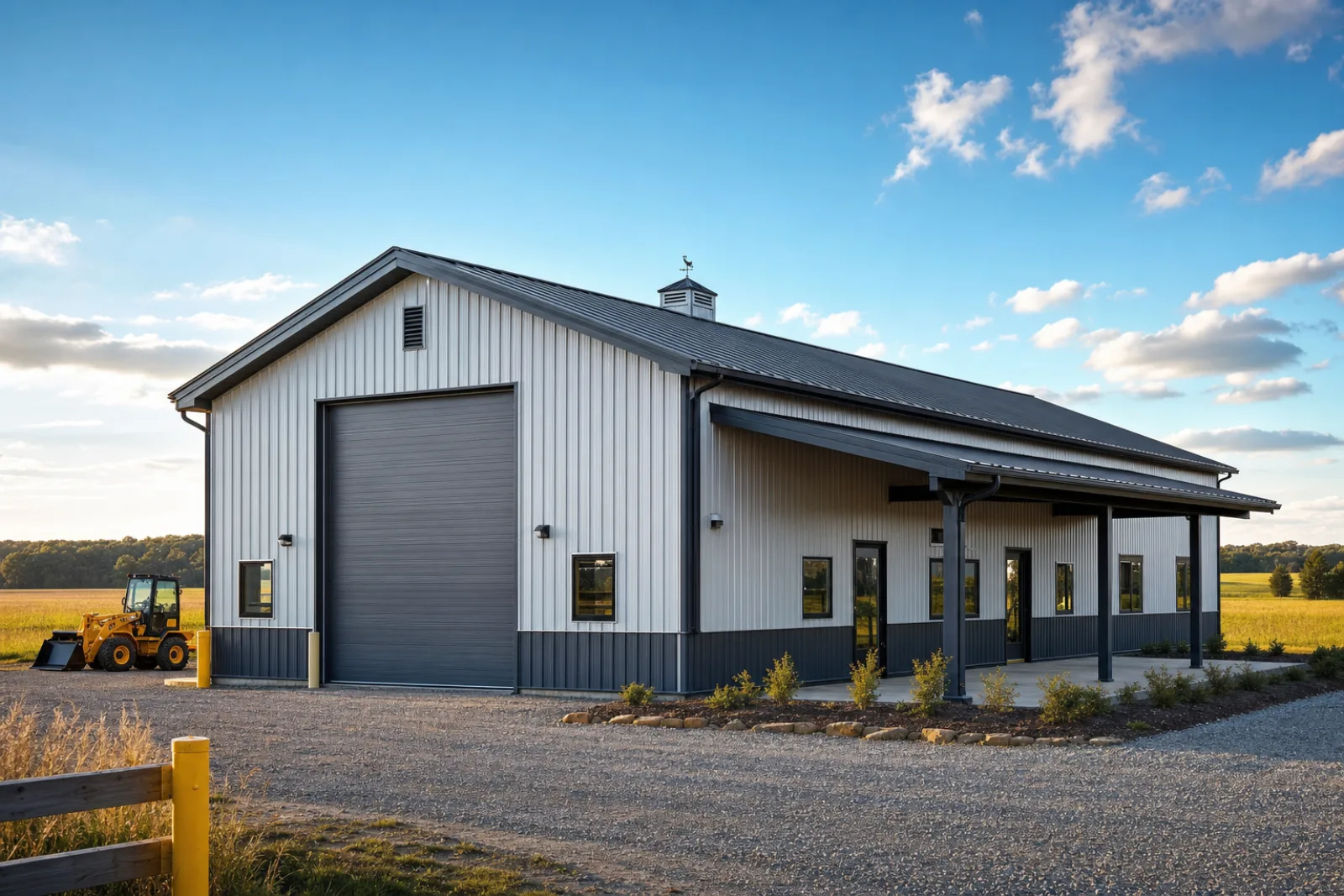
Two facts shape a metal building in North Dakota more than any others: heavy ground snow paired with deep frost drives the structural design, and code enforcement is a local choice, so your permit path depends on which city or county your parcel sits in. North Dakota adopts a statewide building code, then lets each jurisdiction decide whether to enforce it, which means a site inside Fargo follows different rules than a township a few miles out.
This guide sits under our metal buildings by state pillar, where each state page maps the codes, loads, and permit reality that change once you cross a line on the map. Below is how those pieces land in North Dakota, from the Red River Valley to the western oil country. Treat every number here as a starting point and verify it with your local building department before you order steel.
Codes & permits
North Dakota building codes and permits for metal buildings
North Dakota maintains a statewide building code built on the International Code Council family, the IBC for commercial structures and the IRC for one and two-family homes, but it enforces that code through local jurisdictions rather than one statewide inspector. The North Dakota Department of Commerce updates and publishes the code, and the 2024 editions of the IBC and IRC took effect statewide on January 1, 2026, with state amendments such as the 60-inch frost-depth rule. ‹confirm› Some cities still enforce an earlier edition (Bismarck remains on the 2021 codes), so confirm the adopted year with your local building department. ‹confirm›
Here is the part that surprises first-time buyers: North Dakota runs a local-choice model. ‹confirm› Many rural townships and unzoned counties do not enforce building codes at all, while incorporated cities and zoned counties require a permit before you pour concrete or raise steel. The Department of Commerce even publishes a Local Code Enforcement Directory so you can check which office, if any, covers your parcel. ‹confirm› The authority having jurisdiction is your city inspections office or county building department, so two neighbors on the same road can face different rules. Our permits and codes guide walks the full process if this is new to you.
Because of the climate, the state code carries amendments, including a deep frost-depth requirement reported near 60 inches in parts of the state. ‹confirm› In jurisdictions that enforce codes, a one-story detached accessory structure under roughly 120 square feet generally skips a building permit but still answers to zoning setbacks. ‹confirm› For a metal building above that size, expect to submit a site plan, a project valuation, and pre-engineered drawings, often with structural calculations stamped and sealed by an engineer licensed in North Dakota. ‹confirm› Confirm the edition, the stamp rule, and the permit threshold with the people who will inspect your build.
Call before you dig
North Dakota law requires you to contact North Dakota 811 at least 48 hours before any excavation, weekends and holidays excluded. That includes footings, piers, and fence posts, not just deep digging. The free service marks buried gas, power, and water lines and keeps your foundation work clear. Make the call part of your foundation checklist, not an afterthought.
Loads
Snow, wind, and seismic loads in North Dakota
Snow is North Dakota’s dominant design load. Long winters and open country pile real weight on a roof, so your frame, purlins, and roof pitch all answer to the ground snow figure your jurisdiction assigns. A kit engineered for a mild state is the wrong starting point here.
Reported ground snow loads commonly fall between roughly 25 and 60 pounds per square foot depending on the county. ‹confirm› Wind matters too across the plains, where little slows a gust, and design wind speeds typically land in a moderate ultimate range under ASCE 7, lower than the coastal hurricane belt but high enough that anchorage and bracing are not optional. ‹confirm› Seismic demand is low across most of the state, usually a low Seismic Design Category, so snow and frost, not earthquakes, drive the structure. ‹confirm› The snow load and wind load guide explains how these numbers translate into steel, then confirm your site values locally.
| Load type | Typical North Dakota range ‹confirm› | Who sets it |
|---|---|---|
| Ground snow | ~25 to 60 psf, higher in heavier-snow counties | County or city building department |
| Design wind | Moderate ultimate speeds under ASCE 7 | Local code, per ASCE 7 |
| Frost depth (footings) | Down toward ~60 in where amended | State amendment plus local jurisdiction |
| Seismic | Low (low Seismic Design Category) | Adopted local code |
Ranges are illustrative starting points, not a stamp. Your jurisdiction sets the governing values; confirm them locally.
Climate
Climate zone and insulation for a North Dakota steel building
North Dakota sits in some of the coldest climate zones in the lower 48, IECC zones 6 and 7. ‹confirm› That single fact reorders your insulation priorities: the goal is a high R-value envelope that holds heat through long subzero stretches, with condensation control close behind.
A bare steel panel meeting warm interior air is a condensation machine, and in a cold climate that moisture shows up as drips and rust if the wall cannot manage it. Plan for a continuous vapor barrier, a thick insulation system, and air sealing at every penetration. The metal building insulation guide covers the assemblies that work in cold country, and the foundation options guide explains how a frost-protected footing keeps a heated building stable through the freeze-thaw cycle.
Price factors
What drives metal building prices in North Dakota
Steel trades on a national market, so the bulk of your kit price tracks national mill pricing. What moves the North Dakota number is everything around the steel: freight, season, and local labor.
- Freight from the mill. North Dakota is a long haul from many steel plants, and trucking heavy framing across that distance adds cost a buyer near a mill does not pay.
- A short building season. Frozen ground and deep winters compress the window for foundation and erection work, which tightens crew schedules and can push pricing during the busy stretch.
- Heavier engineering. The snow and frost loads above mean more steel and a deeper foundation than a mild-climate build, so the same footprint costs more here.
- Local labor and concrete. Rural sites can mean longer travel for crews and ready-mix, which shows up on the bottom line. ‹confirm›
Use any figure here as illustrative for 2026, not a quote. ‹confirm› For how the full price breaks down line by line, see the metal building kit prices guide.
Popular uses
Popular uses and metro building departments in North Dakota
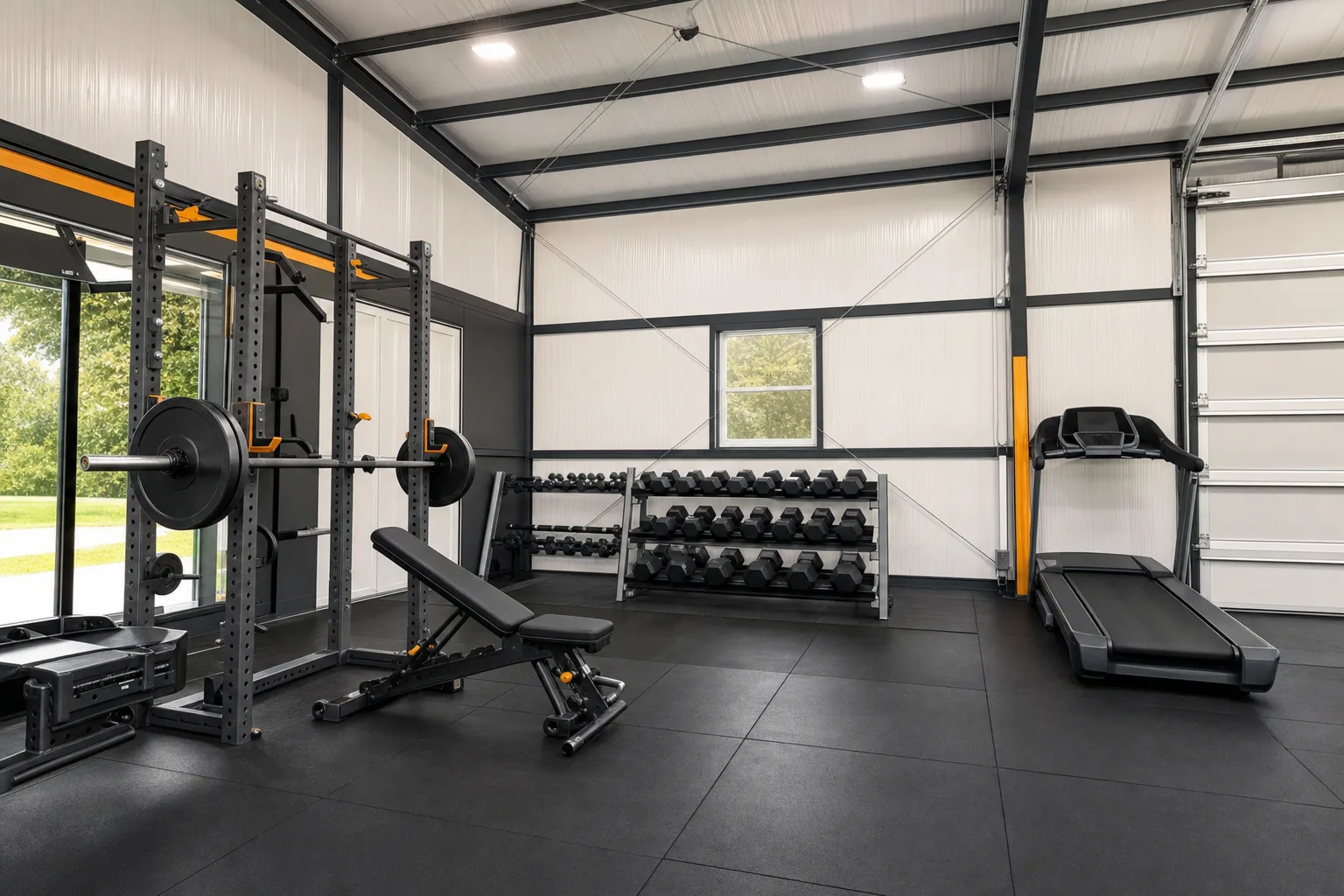
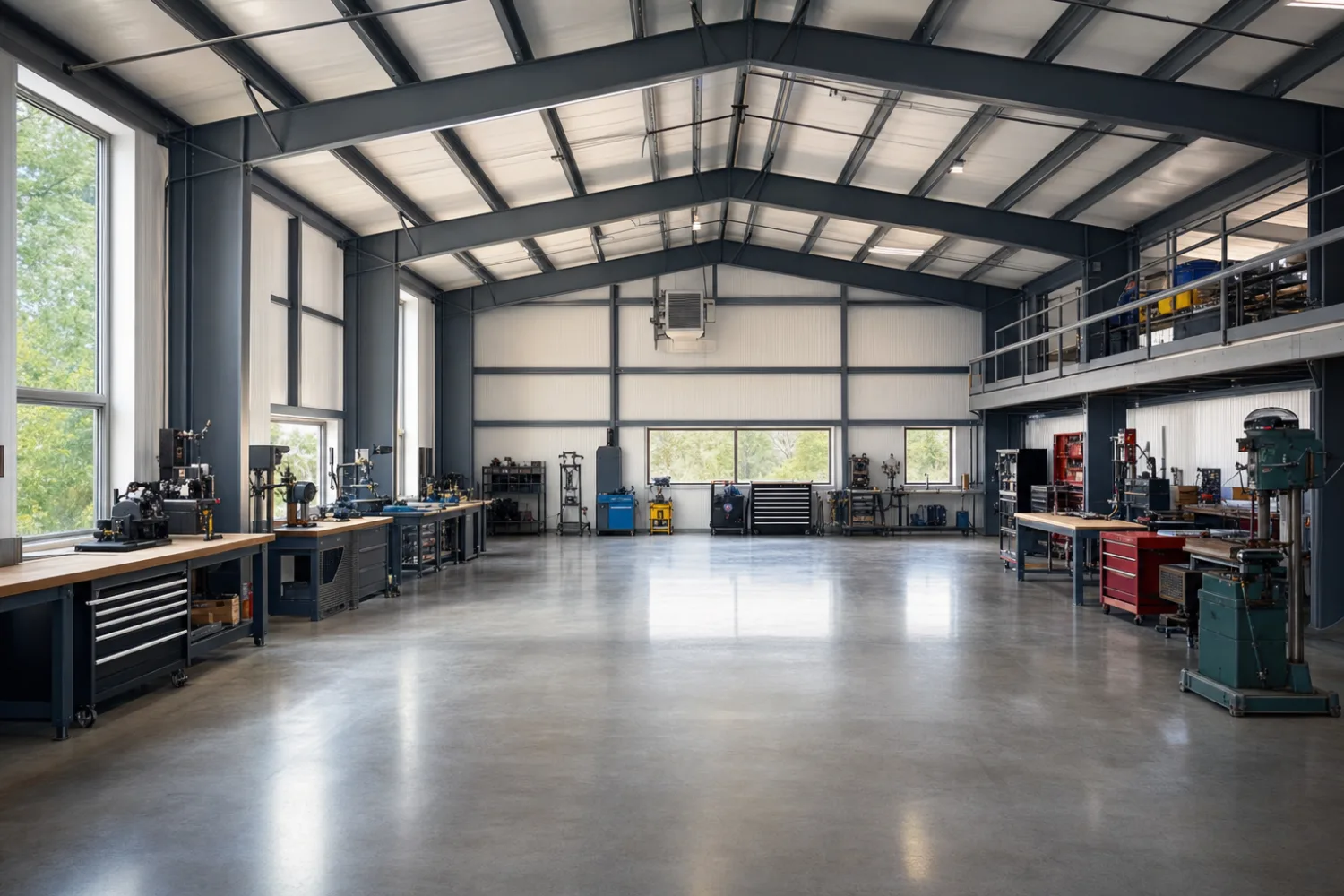
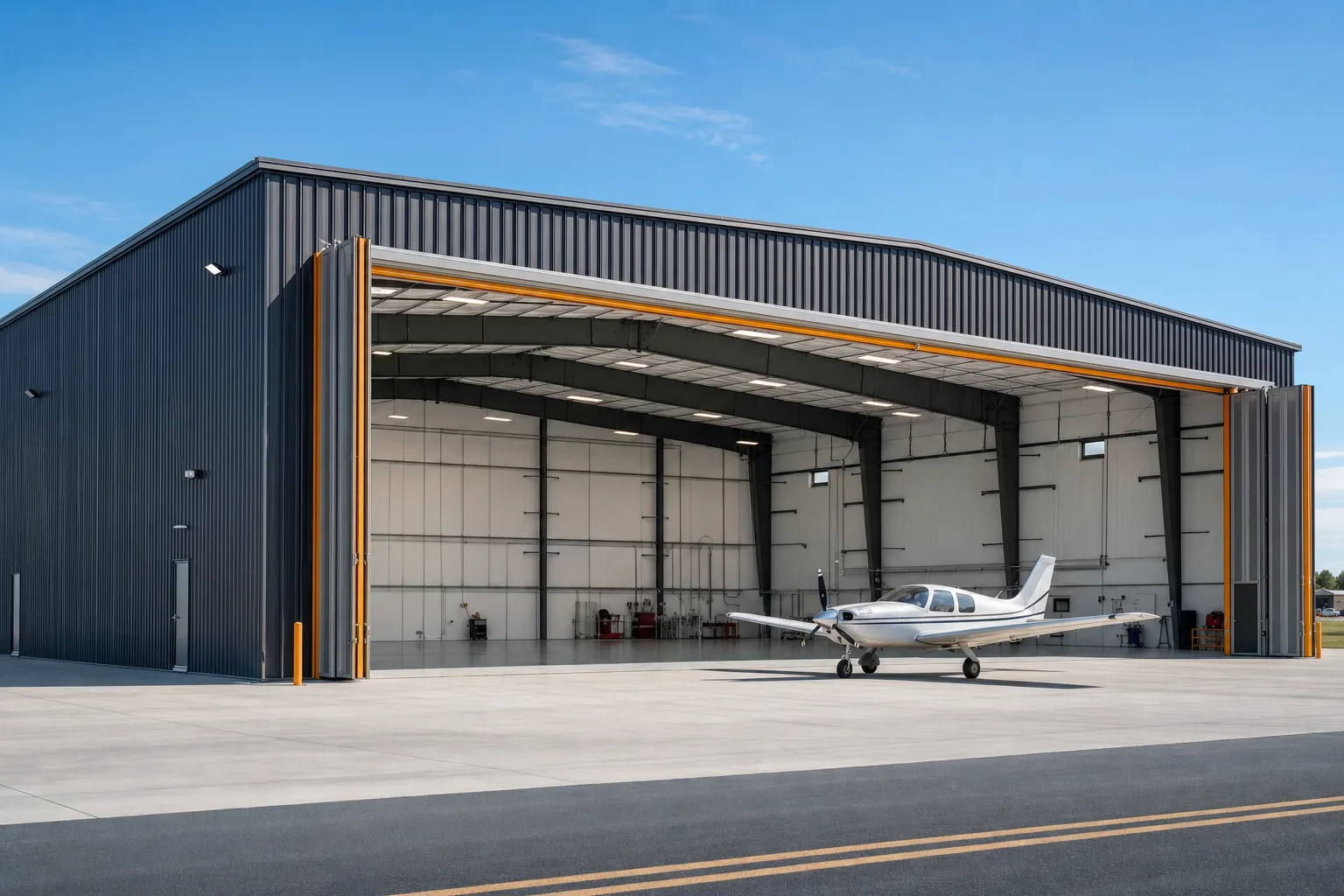
Agriculture and energy shape what North Dakotans build. Machine sheds, equipment storage, and farm shops dominate the rural market, while garages, workshops, and barndominiums fill in around the growing cities. In the western oil country, durable shops and storage buildings serve the energy trade. A metal kit fits all of them because it spans wide and goes up fast in a short season.
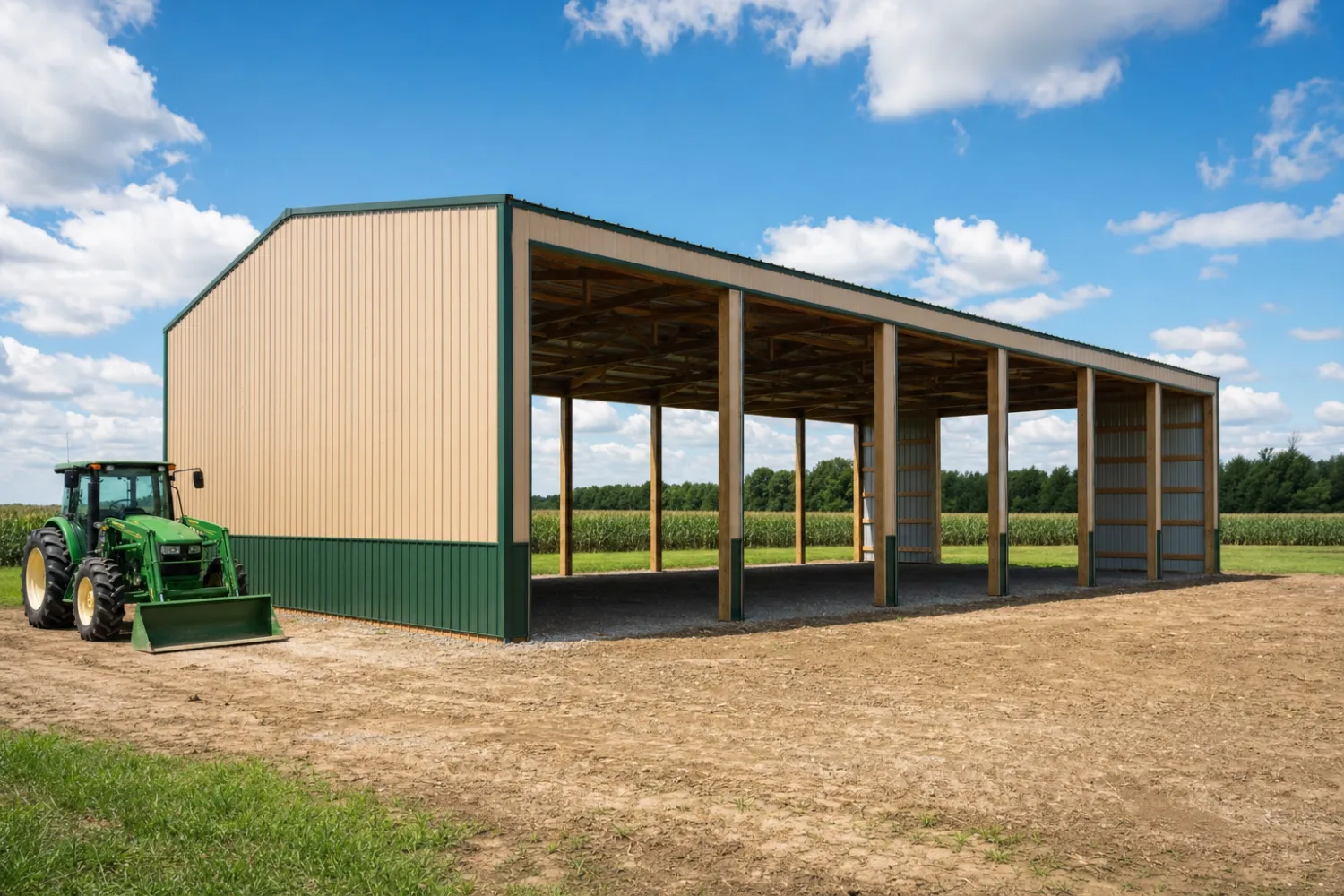
If you build inside a city or a zoned county, your permit and inspections run through a local office. The major metros and the departments to contact:
- Fargo (Cass County): the Fargo City Inspections Department at 225 4th St N, (701) 241-1561, handles permits and inspections for the state’s largest city. ‹confirm›
- West Fargo: the City of West Fargo runs its own inspections for the fast-growing western suburb. ‹confirm›
- Rural Cass County parcels: a site outside city limits may fall under the county rather than a city office, so confirm which jurisdiction covers your exact parcel. ‹confirm›
- Bismarck, Grand Forks, Minot, Williston, and Dickinson: each city inspects within its limits, and oil-country Williston carries its own ordinance language for metal building walls and siding. ‹confirm›
Confirm which office covers your parcel before you order. A site three miles outside city limits can fall under a county that does not enforce codes, or under one that does, and that line decides your whole permit path.
FAQ
North Dakota metal building questions
What building code does North Dakota use?
North Dakota adopts the International Code Council codes, the IBC for commercial buildings and the IRC for homes, as the North Dakota State Building Code, with a new edition effective January 1, 2026. ‹confirm› The Department of Commerce maintains the code, and jurisdictions that enforce it follow that baseline plus state amendments. Confirm the current edition with your local building department, since enforcement and amendments are handled locally.
Do I need a permit for a metal building in North Dakota?
It depends on where you build. ‹confirm› North Dakota uses a local-choice model: incorporated cities and zoned counties require a permit before you pour or erect, while many rural townships and unzoned counties do not enforce building codes at all. A small detached accessory structure under roughly 120 square feet often skips the permit but still answers to zoning setbacks. Call the city inspections office or county building department for your parcel before you order.
Does North Dakota require engineer-stamped drawings?
In jurisdictions that enforce codes, a metal building usually needs pre-engineered drawings, and structural calculations are often required to be stamped and sealed by an engineer licensed in North Dakota. ‹confirm› The exact trigger varies by use and size. A reputable kit supplier provides stamped plans for your local wind and snow loads, so request them up front and verify the stamp rule with the authority having jurisdiction.
How much snow load does a North Dakota building need?
Reported ground snow loads commonly fall between roughly 25 and 60 psf depending on the county, and your local jurisdiction sets the governing figure. ‹confirm› Because a roof has to carry that weight all winter, engineer the building to your county’s number rather than a national average, and confirm the value with your building department before the order is final.
How deep do footings have to go in North Dakota?
North Dakota’s cold drives deep frost, and state amendments push footing depth well down, reported near 60 inches in parts of the state. ‹confirm› A frost-protected foundation keeps a heated building stable through freeze and thaw. Confirm the required depth for your site with the local building department, since it varies by jurisdiction.
What is the 811 law in North Dakota?
North Dakota law requires anyone planning to dig to contact North Dakota 811 at least 48 hours ahead, weekends and holidays excluded. The free One Call service has utility owners mark buried gas, power, and water lines so your excavation stays clear. It applies broadly, down to fence posts and footings, so make the call before any foundation work.
What happens if I build without a permit where one is required?
Where a jurisdiction enforces codes, building without a permit can bring stop-work orders, doubled permit fees, and orders to expose or remove work for inspection, and it can complicate insurance and a future sale. The fix is to confirm whether your parcel needs a permit first, then pull it before you start.
Read next
Keep reading
Compare nearby states and dig into the topics that decide your build:
- Metal building kits in Minnesota (cold-climate code and heavy snow next door).
- Metal building kits in South Dakota (the local-choice neighbor to the south).
- Metal building kits in Montana (mountain snow and western loads).
- Metal building kits in Wyoming (high plains wind and snow).
- Metal building permits and codes (the permit process, step by step).
- Snow load and wind load explained (how loads become steel).
- Metal building foundation options (slabs, piers, and frost-protected footings).
- Metal building insulation (R-value and condensation control).
- Metal building kit prices (the cost pillar for current ranges).
Sources
Sources
- North Dakota Department of Commerce, Building Codes (statewide code, new edition effective Jan. 1, 2026, Local Code Enforcement Directory): commerce.nd.gov/community-services/building-codes
- MeltPlan, A Complete Guide to the North Dakota State Building Code (adopted I-Codes, 60-inch frost-depth amendment): meltplan.com
- PermitsGuide, North Dakota Building Permit Requirements 2026 (local-choice model, permit thresholds): permitsguide.com/north-dakota
- Steel Structures America, Metal Building Permits, Codes, and Engineering Requirements (engineer stamp and load engineering): steelstructuresamerica.com
- City of Williston, ND, Article II Building Code (metal building wall and siding ordinance): ecode360.com/36548156
- North Dakota 811, call-before-you-dig 48-hour excavation law: nd811.com
- Fargo City Inspections Department (permits and inspections, 225 4th St N): fargond.gov/inspections
- City of West Fargo, ND (city inspections): westfargond.gov