Two things decide how a metal building goes up in South Dakota: heavy ground snow paired with open-prairie wind drives the structural design, and the state has no mandatory statewide building code, so your permit and load rules come from your city or county, not from Pierre. Plan for engineered drawings that prove the frame holds your local snow and wind, and confirm the permit threshold before you order steel.
This guide sits under our metal buildings by state pillar, where each state page covers the codes, loads, and permit reality that change once you cross a line on the map. Below is how those pieces land in South Dakota, from the Sioux Falls plains to the Black Hills. Treat every number here as a starting point and verify it with your local building department.
Codes & permits
South Dakota building codes and permits for metal buildings
South Dakota does not enforce a single statewide building code. Each city and county is the Authority Having Jurisdiction, so it decides which code to adopt and when you need a permit. ‹confirm›
When a South Dakota jurisdiction does adopt construction standards, the baseline it works from is the 2021 International Building Code and the 2021 International Residential Code. ‹confirm› The state also runs specialty codes centrally: the South Dakota Electrical Commission handles the National Electrical Code, the Plumbing Commission handles the Uniform Plumbing Code, and the State Fire Marshal enforces the International Fire Code. The one structural standard adopted statewide by law is the seismic steel construction code. ‹confirm› Our permits and codes guide walks the full process if you are new to it.
Most jurisdictions want a permit for any detached accessory structure over 200 square feet, and many require engineer-stamped drawings for commercial, larger, or non-standard buildings. ‹confirm› In Pennington County, for example, commercial buildings or expansions above 2,400 square feet trigger plans stamped by an engineer or architect licensed in South Dakota. ‹confirm› A reputable kit supplier provides those stamped drawings for your wind and snow numbers, so ask for them up front. Verify the exact threshold with your local building department before you buy.
The honest stance
Loads and permit rules are set at the county or city level in South Dakota, not statewide. Use the ranges on this page to budget and to ask better questions. The binding numbers are the ones your local building official gives you in writing.
Loads
Wind, snow, and seismic loads in South Dakota
Snow is the dominant design driver across most of South Dakota, with wind a close second on the open plains. Your frame has to carry whatever ground snow load your county assigns and resist the design wind speed for your site, and both climb in the Black Hills and along exposed western ground.
Ground snow loads in the populated eastern counties often sit in a typical range near 30 to 40 pounds per square foot, and higher-elevation and Black Hills sites can run well above that. ‹confirm› Design wind speeds across the state commonly land in a roughly 105 to 120 mph band. ‹confirm› Seismic demand is low through most of South Dakota, which is why the steel frame design centers on snow and wind. ‹confirm› Read our snow load and wind load explainer to see how those figures translate into steel, then confirm your site values locally.
| Load type | Typical South Dakota range ‹confirm› | Who sets it |
|---|---|---|
| Ground snow | ~30 to 40 psf east; higher in the Black Hills | County or city building department |
| Design wind speed | ~105 to 120 mph | County or city building department |
| Seismic | Low across most of the state | Adopted code plus statewide seismic steel standard |
Typical ranges for planning only. Your jurisdiction assigns the binding values for your parcel.
Climate
Climate and insulation for a South Dakota steel building
South Dakota is a cold-climate state, so insulation is about holding heat and controlling condensation, not fighting summer humidity. The priority is a high effective R-value plus a continuous vapor and air barrier that keeps warm indoor air off cold steel.
Most of South Dakota falls in IECC climate zones 5 and 6, which call for substantial wall and roof insulation. ‹confirm› In a steel building the bigger risk is condensation: when heated interior air meets a cold metal panel, it sweats, and that moisture is what rusts fasteners and soaks insulation over time. A proper vapor barrier and ventilation plan matters as much as the R-value. Our metal building insulation guide covers the assemblies that work in cold, dry plains winters.
Price factors
What drives metal building prices in South Dakota
Steel prices move with the national market, but a few South Dakota realities shape your delivered cost. Freight and load requirements do most of the work.
South Dakota sits a fair distance from major steel mills and fabrication hubs, so freight to a rural parcel can add up, and a long final-mile haul to a remote ranch costs more than a delivery into Sioux Falls. ‹confirm› Heavier snow and wind ratings call for more steel and heavier framing, which raises the shell price in the Black Hills and exposed western counties. Seasonal labor availability and a short building season also nudge installed costs. For 2026 budgeting, treat any figure as illustrative and lean on our metal building kit prices guide for the current ranges. ‹confirm›
Popular uses
Popular uses and where to pull a permit in South Dakota
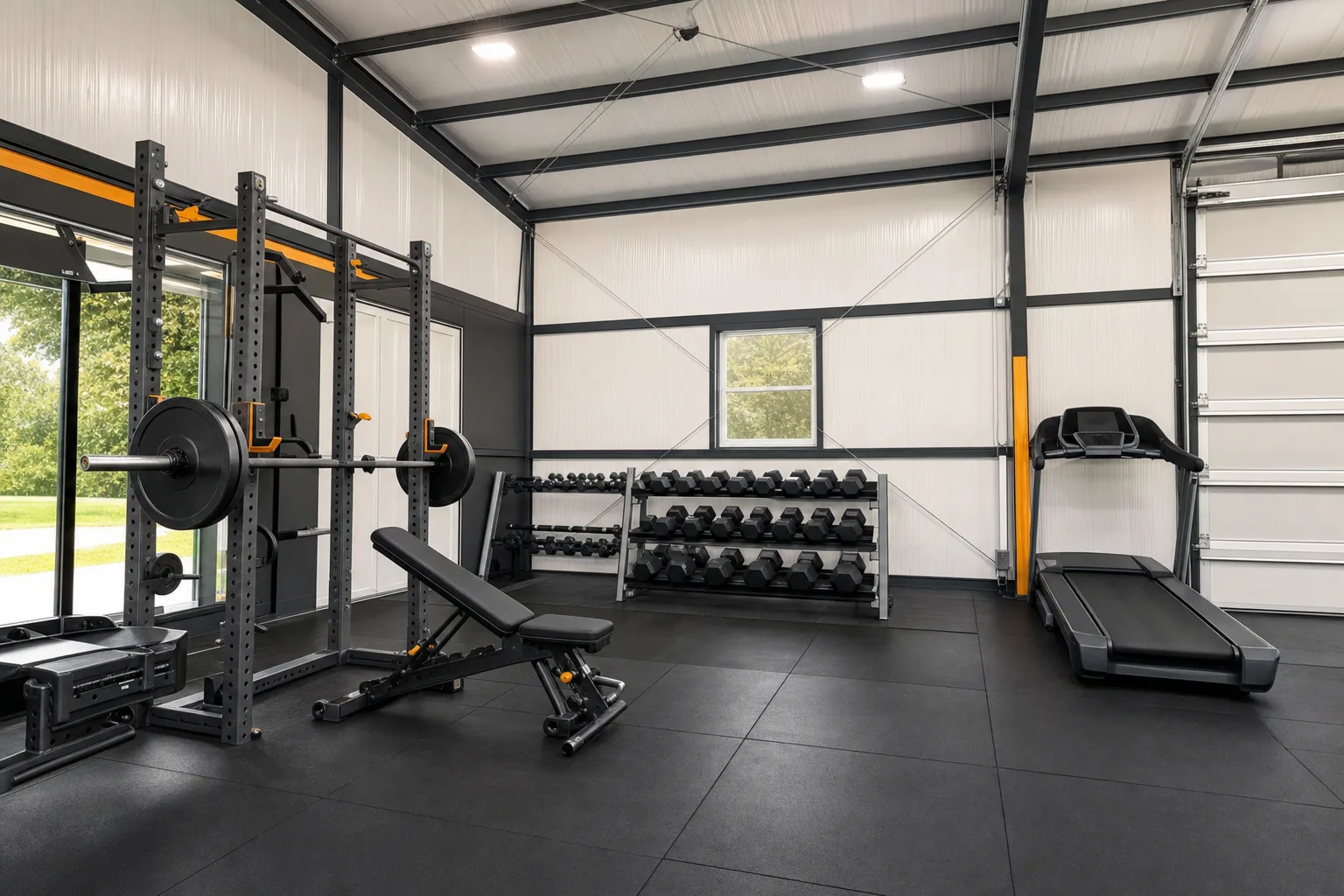
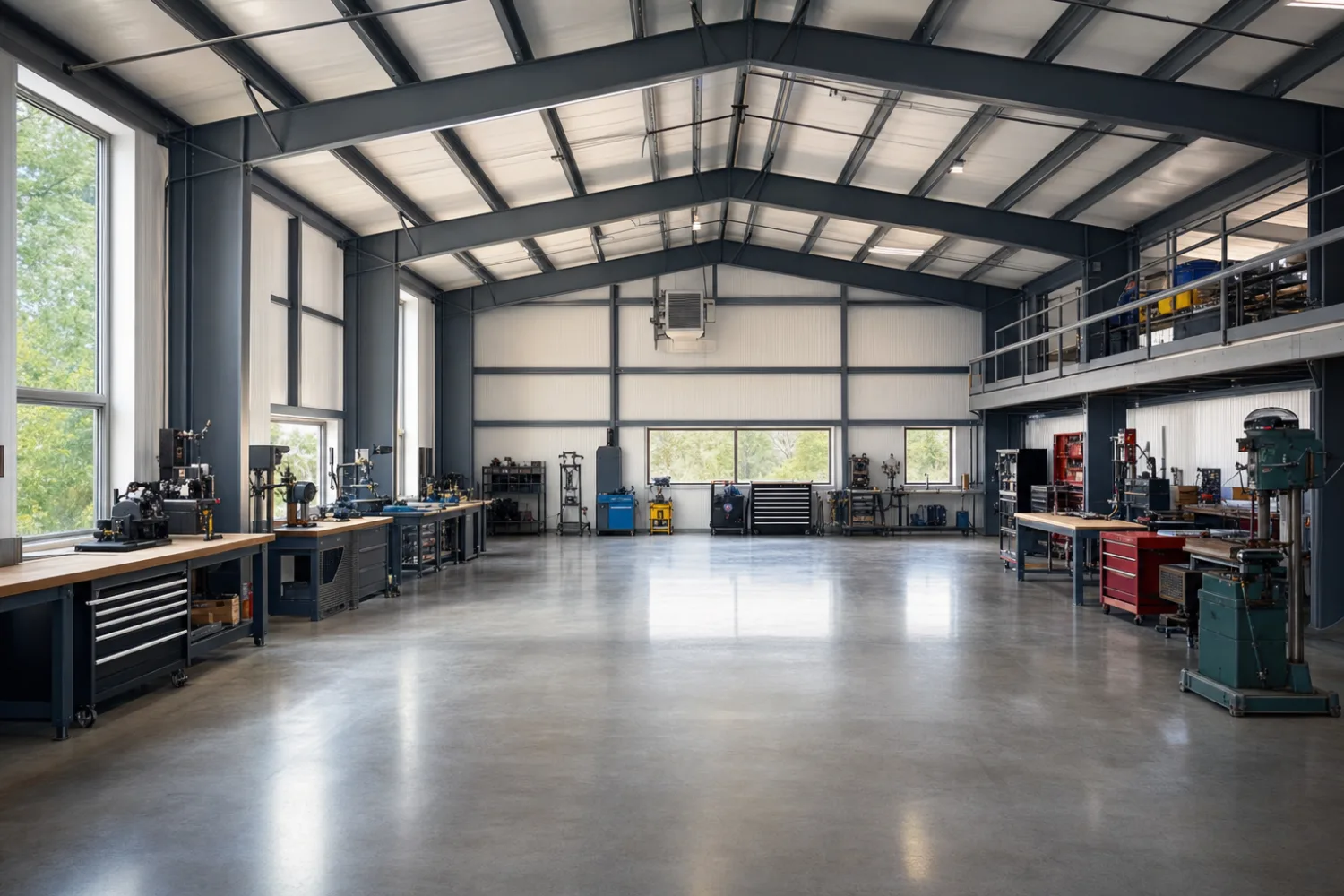
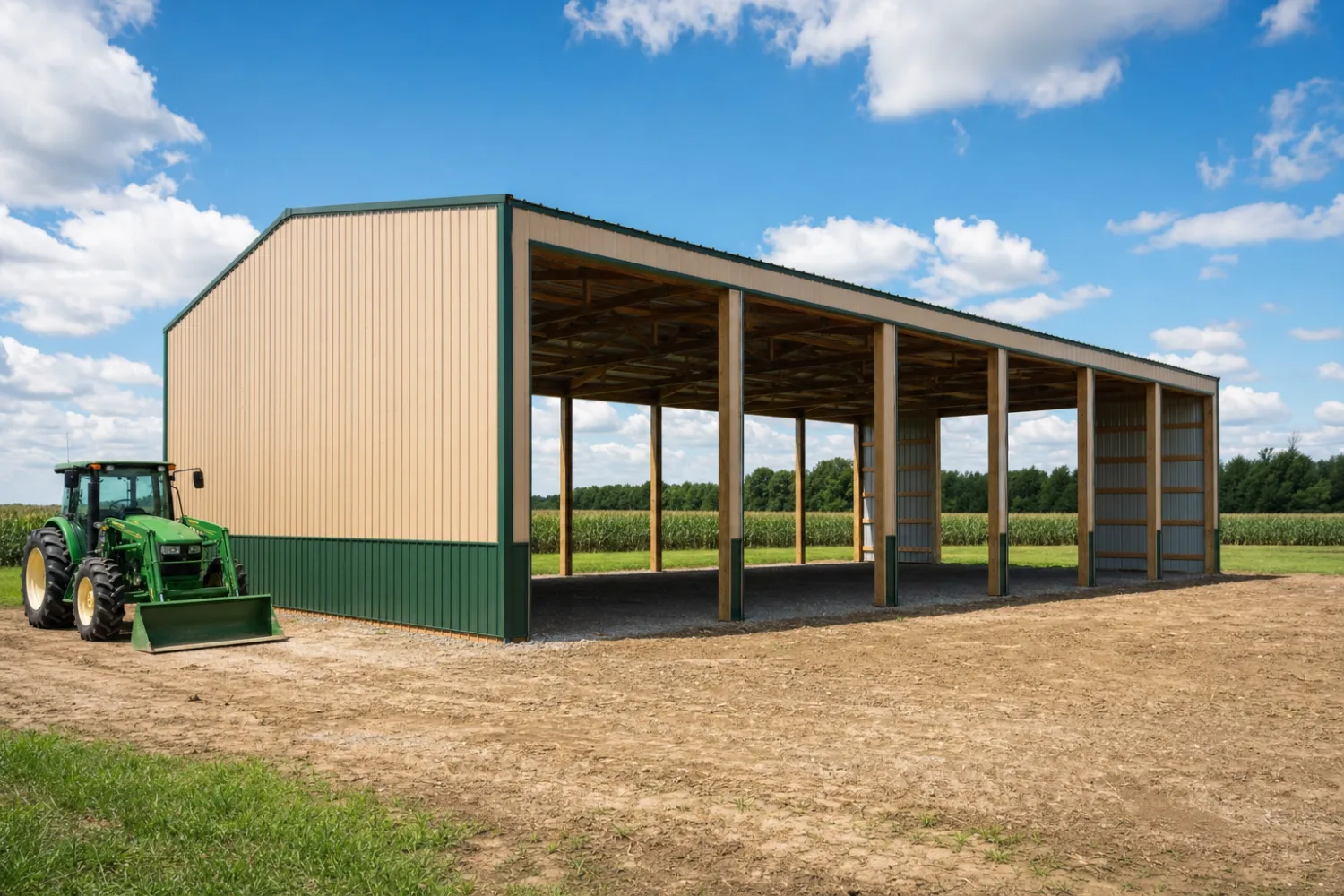
South Dakota leans agricultural and rural, so machine sheds, livestock and equipment barns, and pole-style ag buildings are everywhere, alongside home shops, garages, and a growing number of barndominiums. Many rural counties exempt true agricultural buildings from permits, while a residential garage or shop on the same road still needs one. ‹confirm›
Permits come from your local jurisdiction, so start with the office that covers your parcel. The named metros and their departments to contact:
- Sioux Falls (Minnehaha and Lincoln counties): the City of Sioux Falls handles permits through its Building Services office under Planning and Development Services. ‹confirm›
- Rapid City (Pennington County): the Pennington County building office covers unincorporated parcels and the Black Hills foothills, where snow loads climb. ‹confirm›
- Aberdeen (Brown County) and other regional hubs: check the city building department first, then the county for rural sites. ‹confirm›
Whatever you build, match the frame to your loads and get the stamped drawings before the order is final. If you are weighing the slab and anchoring next, our foundation options guide lays out the choices.
FAQ
South Dakota metal building questions
Does South Dakota have building codes?
Yes, but not one mandatory statewide code. Each city and county chooses what to adopt and enforce. When a jurisdiction adopts construction standards, the 2021 International Building Code and 2021 International Residential Code serve as the baseline, and the state separately enforces electrical, plumbing, fire, and a statewide seismic steel standard. ‹confirm› Confirm what applies with your local building department.
Do I need a permit for a metal building in South Dakota?
Usually, yes. Most jurisdictions require a permit for any detached structure over 200 square feet or one with electrical or plumbing. ‹confirm› Some rural counties exempt genuine agricultural buildings, but a residential garage, shop, or barndominium typically still needs a permit. Check your county or city before you order.
Are agricultural buildings exempt from permits in South Dakota?
Often, but not always. Many rural South Dakota counties exempt true agricultural-use buildings from building permits, while still applying zoning and setback rules. ‹confirm› The exemption rarely covers a building used as a residence, a commercial shop, or a barndominium. Ask your local jurisdiction how it defines agricultural use.
Do I need engineer-stamped drawings for a metal building?
For commercial, larger, or non-standard buildings, yes. Many South Dakota jurisdictions require drawings stamped by an engineer or architect licensed in the state, and Pennington County, for example, sets that trigger at commercial buildings or expansions over 2,400 square feet. ‹confirm› A good kit supplier provides stamped plans for your local wind and snow loads, so request them up front.
What wind and snow loads does my building need to meet?
That depends on your exact site. Ground snow loads in the eastern counties often fall near a 30 to 40 psf range, with higher figures in the Black Hills, and design wind speeds commonly sit around 105 to 120 mph. ‹confirm› These are planning ranges, not approvals. Your county or city assigns the binding values, so verify them before you finalize the order.
What happens if I build without a permit in South Dakota?
You take on real risk. A jurisdiction can issue a stop-work order, charge fines above the normal permit fee, require you to retrofit the building to code, or in the worst case order it removed. Unpermitted structures can also complicate insurance claims, refinancing, and resale. Pulling the permit first is far cheaper than fixing it later.
Does a metal building raise my property taxes?
It can. A permanent, anchored metal building is an improvement that an assessor may add to your property value, which can raise your taxes. ‹confirm› A light, movable structure on a temporary footing is treated differently. Ask your county assessor how your planned building would be classified before you build.
Read next
Keep reading
Building near a state line, or working through the rest of the spec? Start here:
- Metal building kits in North Dakota (the high-snow neighbor to the north).
- Metal building kits in Minnesota (cold-climate code and snow loads next door).
- Metal building kits in Nebraska (plains wind and ag building demand to the south).
- Metal building kits in Montana (mountain snow and western loads).
- Metal building permits and codes (the permit process, step by step).
- Snow load and wind load explained (how loads become steel).
- Metal building foundation options (slabs, piers, and anchoring).
- Metal building insulation (R-value and condensation control).
- Metal building kit prices (the cost pillar for current ranges).
Sources
Sources
- South Dakota building codes overview (no statewide code, local adoption): meltplan.com
- South Dakota adopted codes and statewide seismic steel standard: up.codes/codes/south_dakota
- South Dakota building permit requirements (2026): permitsguide.com/south-dakota
- City of Sioux Falls detached garages and sheds permits: siouxfalls.gov
- Lincoln County, SD adopted International Building Code: codelibrary.amlegal.com
- Pennington County building code ordinance (stamped-plan threshold): docs.pennco.org