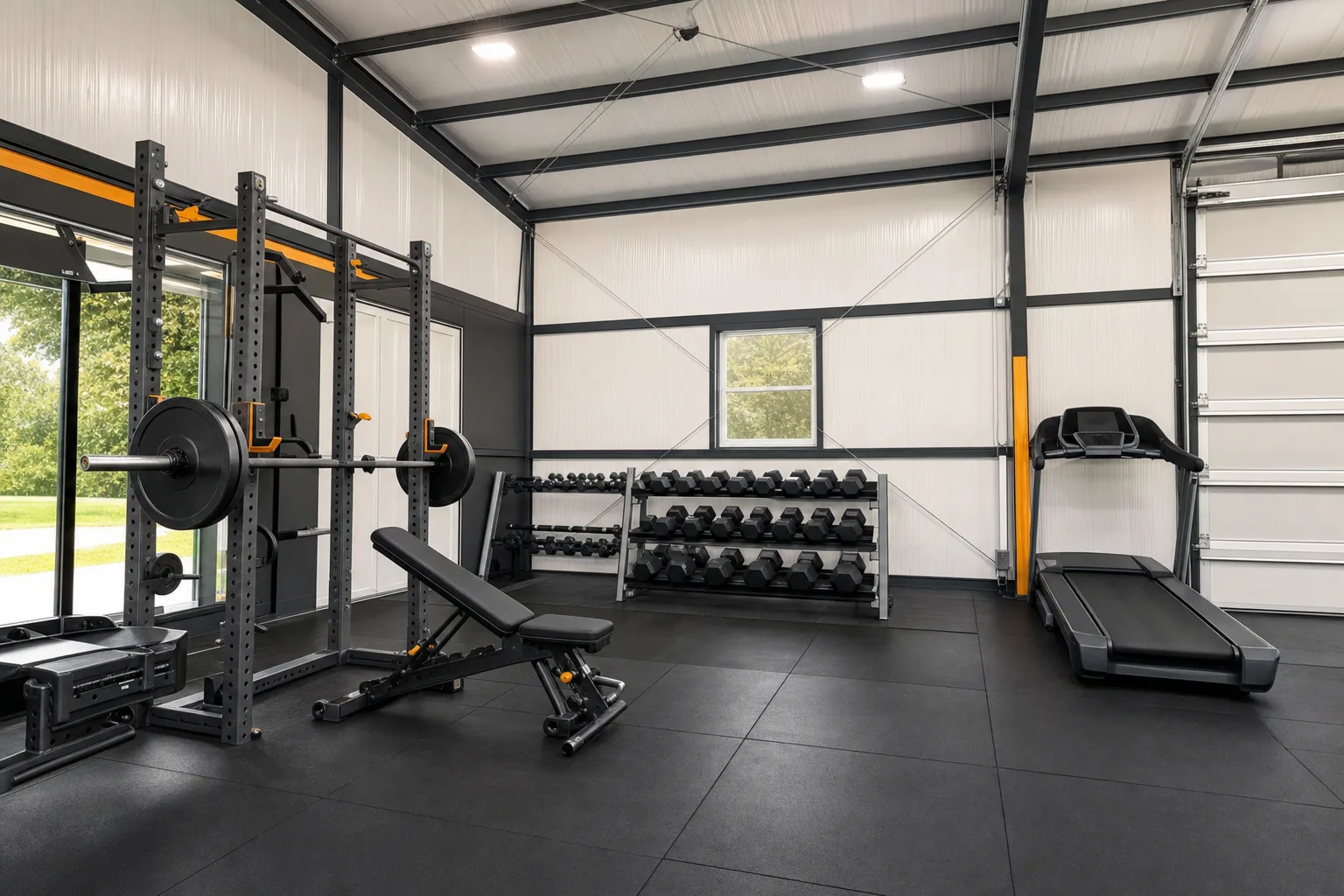
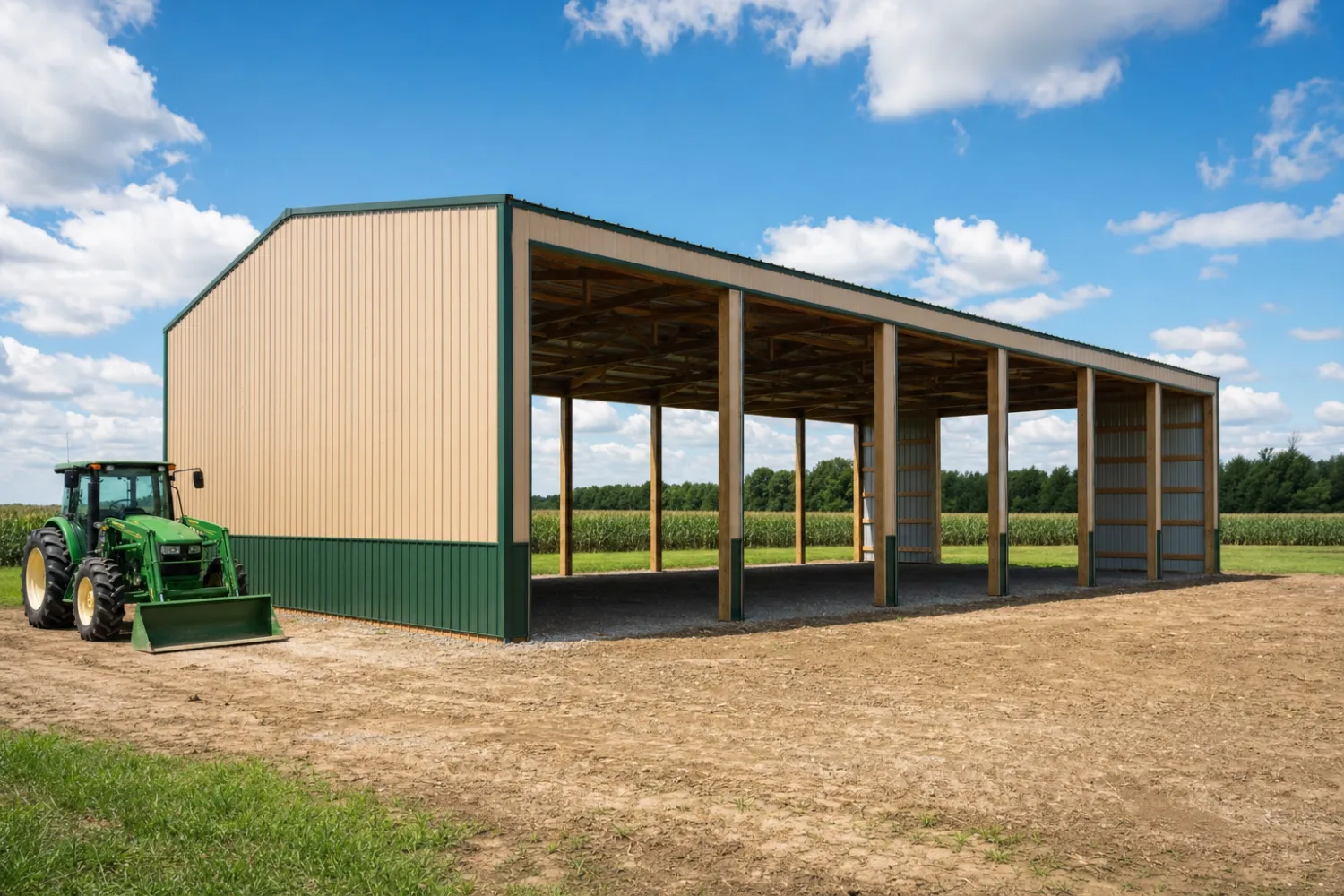
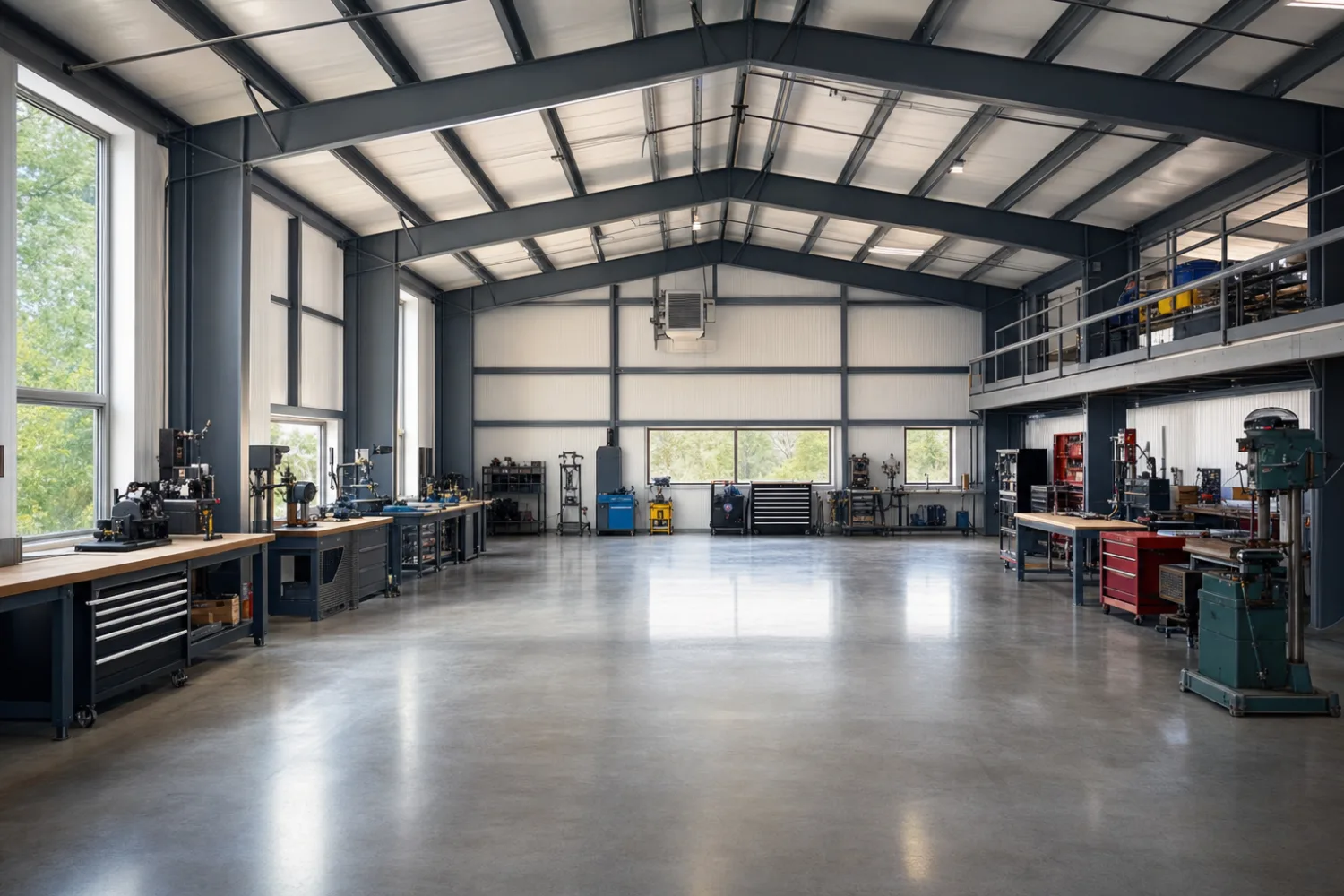
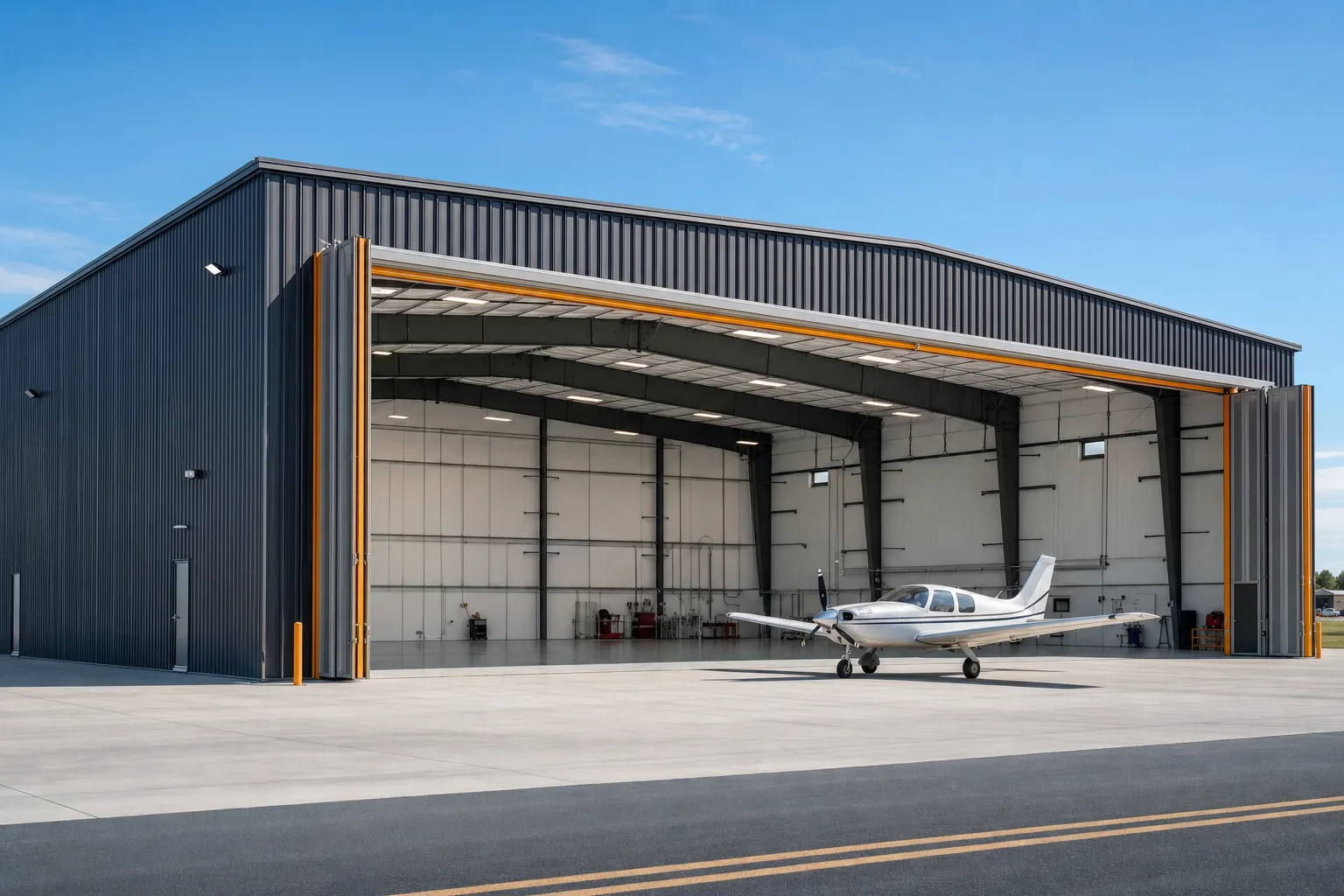
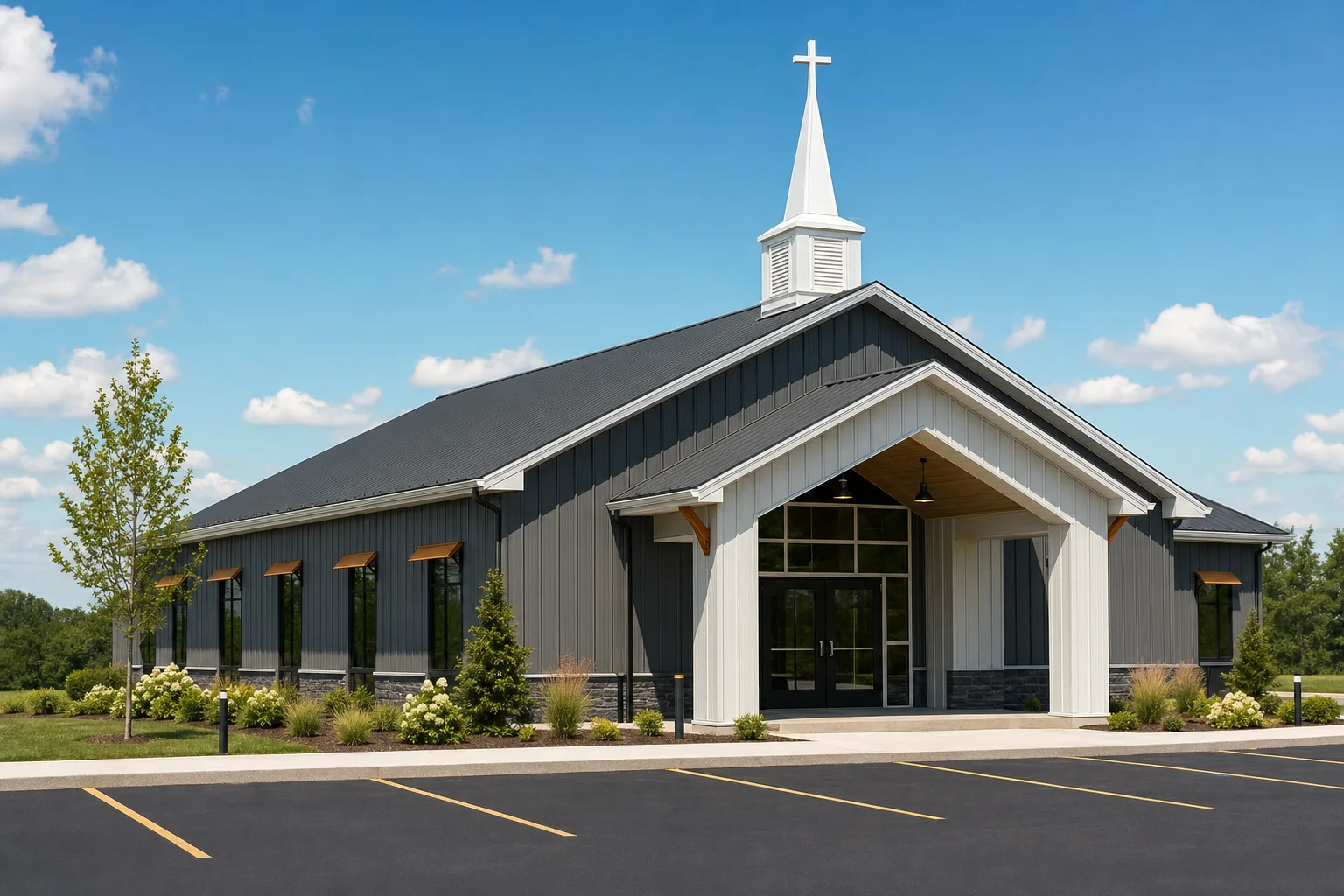
The strongest metal building is a rigid-frame steel building, framed in red iron I-beams and engineered for your site, not a carport or a light tube-steel kit. Its welded, hot-rolled primary frame spans wide with no interior posts and carries far heavier snow and wind than lighter framing, which is why pre-engineered red iron is the steel behind shops, warehouses, aircraft hangars, and storm-rated commercial buildings. Strength is not one feature, though; it comes from the frame type, the steel thickness, and an engineering stamp that matches the building to your local loads.
This page sits under the metal building kits pillar and answers the strength question on its own terms: what makes one steel building stronger than the next, the three specs that decide it, and how to read a quote so you pay for real capacity instead of a bigger number. A building is only as strong as its weakest spec, so the goal is a frame that matches the job, not the heaviest steel you can buy.
The frame
Why a red iron rigid frame is the strongest
Frame type sets the ceiling on strength. A rigid-frame building uses hot-rolled red iron, the I-beam and wide-flange steel that frames bridges and warehouses, welded into columns and rafters that carry the whole load to the foundation. The I-beam shape puts steel where the bending stress is highest, so the frame reaches across a wide span and holds heavy load without sagging or needing posts in the middle of the floor.
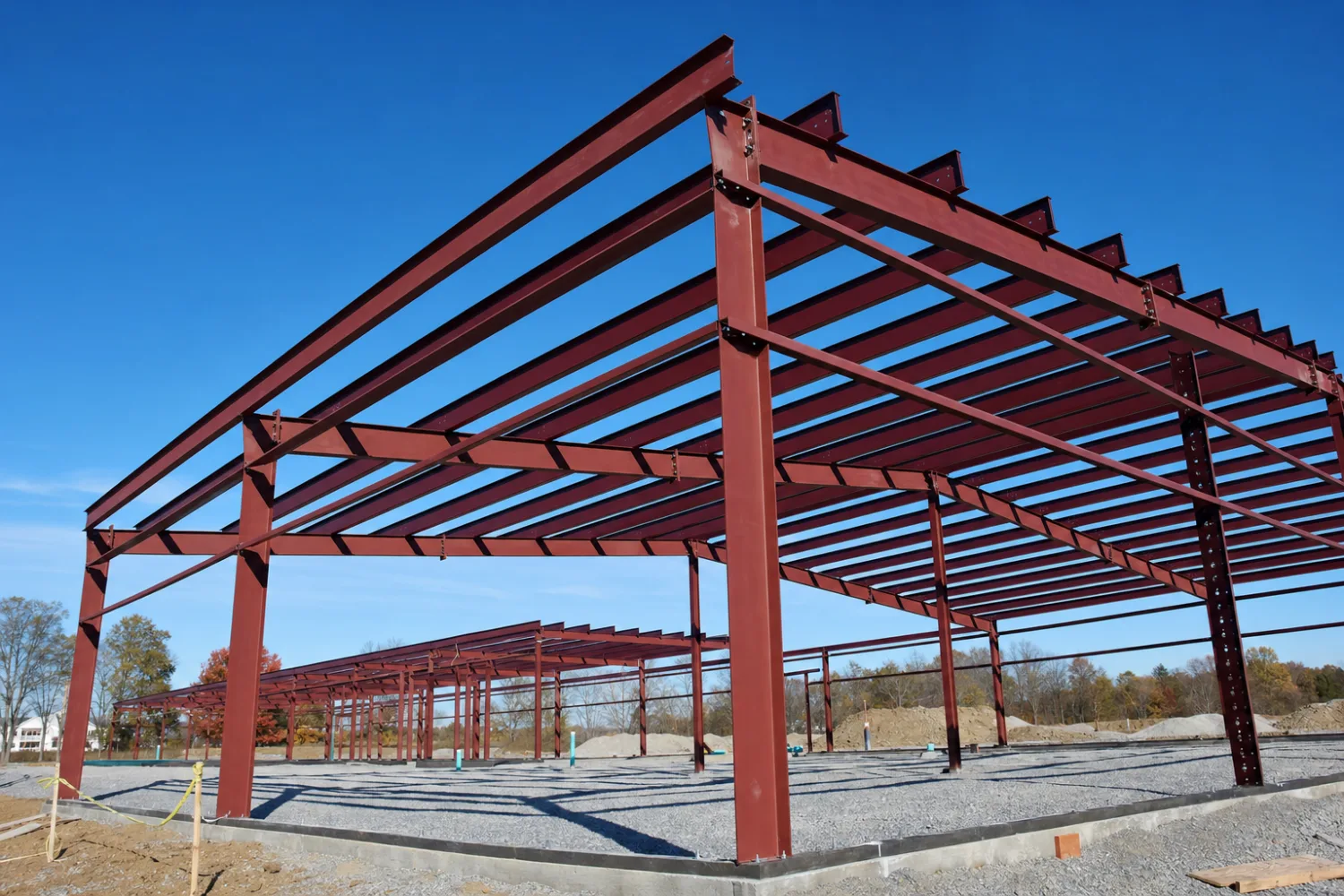
Lighter kits trade that capacity for price. Tube-steel framing, the hollow square tubing on most carports and small garages, weighs less and costs less, but it carries less load and needs interior posts once a building gets wide. For the strongest building, the primary frame is red iron, sized for your span. The deeper red iron versus tube comparison lives in our construction types silo, but the short version holds: rigid red iron is the heavy-duty end of the range.
What makes it strong
The three specs that decide strength
Strength comes down to frame, gauge, and engineering, and all three have to line up. The frame type sets the ceiling, the steel thickness sets how much that frame can take, and the engineering stamp ties both to the loads your site sees. Get one wrong and the others cannot make up for it.
| Spec | What it controls | Stronger when |
|---|---|---|
| Frame type | Span and primary load path | Red iron rigid frame, not tube |
| Steel gauge | Thickness of the steel members | Lower gauge number = thicker steel |
| Load rating | Snow, wind, and seismic it is stamped for | Engineered to your local code, in writing |
| Anchoring | How the building ties to the slab | Engineered anchors into a rated foundation |
| Bracing | Resistance to racking and uplift | Full wind bracing, not minimum |
Strength is a stack, not a single number. The weakest line in the spec sets the limit.
Steel thickness is sold by gauge, where a lower number means thicker steel, so 12-gauge framing is stouter than 14-gauge. Thicker steel and a heavier structural section both add capacity, which is why two buildings the same size can hold far different loads. Ask for the gauge and the section in writing, because a vague spec hides the difference.
Matched to loads
The strongest building is the one engineered for your loads
There is no single strongest model, because strength only means anything against the loads your site faces. A building stamped for heavy snow in the mountains is over-built and overpriced on the Gulf Coast, where wind and uplift are the real threat. The strongest building for you is the one a certified engineer stamps for your local snow and wind loads, then anchors and braces to match.
Strength you can prove
A real strength claim comes with a stamped drawing set, not a sales line. Ask for engineered plans that name your ground snow load, wind speed, and exposure category, and confirm the anchoring is engineered into a rated foundation. That paperwork is what a building inspector, and a future buyer, will want to see. A frame can be heavy and still fail if the anchors or the slab give way first.
Durability is part of the picture too. The strongest frame still has to last, so the panels that face the weather rely on their own coatings, which our galvanized vs Galvalume vs painted steel guide breaks down, and how long metal buildings last depends on keeping water off the steel as much as on the steel itself.
Related
Read more
Strength connects to framing, gauge, and loads. Follow these next:
- Metal building kits: the complete guide (the parent pillar).
- Steel gauge explained (how steel thickness sets capacity).
- Snow load & wind load explained (the loads a frame is stamped to carry).
- Construction types & framing (red iron vs tube and how the frame goes together).
- Galvanized vs Galvalume vs painted steel (the coatings that keep a strong frame lasting).