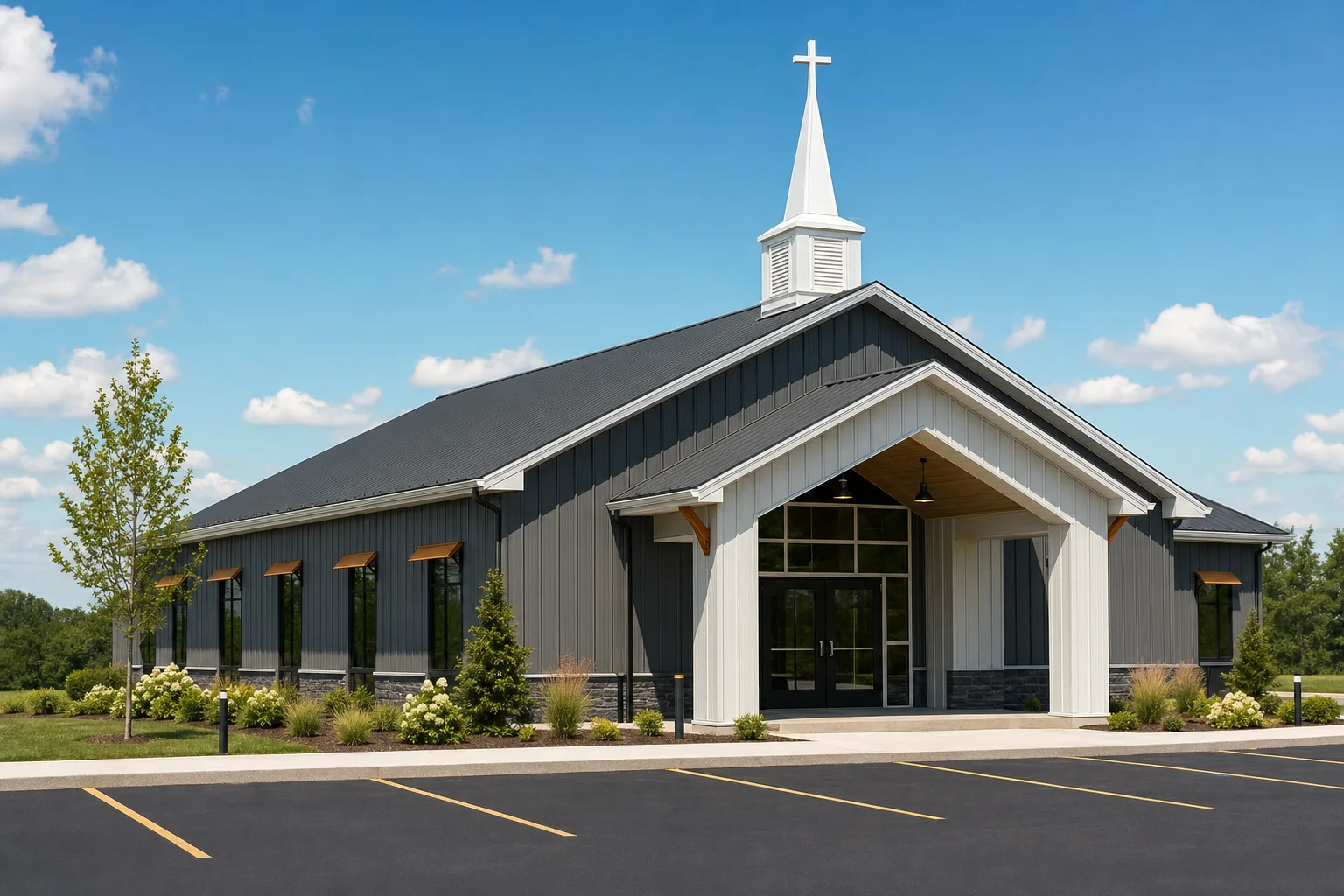
A metal building kit is a pre-engineered steel shell that ships to your site as a set of labeled parts, ready to bolt together. The factory cuts, punches, and welds every frame member, panel, and bracket to fit one specific building, then numbers each piece and packs it with a plan. You supply the foundation and the labor; the kit supplies a complete, code-rated structure designed to go up the same way every time.
This guide sits under the metal building kits pillar and gives you the plain-English version before you dig into the details. Below: what the kit is, what makes it a kit instead of a pile of raw steel, what you get versus what you still have to add, how it goes together, who buys one, and the two things it is not.
Plain definition
What a metal building kit is
A metal building kit is a complete steel building, sold as parts instead of a finished structure. A manufacturer engineers the whole building for your size, your wind, and your snow, then fabricates every column, rafter, purlin, and panel to match that one design. Those pieces arrive on a truck, labeled and grouped, with an erection drawing that shows where each one goes.
The word that matters is pre-engineered. Nothing is cut or sized on site. The holes are already punched, the members are already trimmed, and the fasteners are counted to the building. Your job is the slab, the assembly, and the finishing. The kit’s job is to make sure the steel fits and the building stands up to the loads it was stamped for. For the step-by-step version of that flow, see how metal building kits work.
People use a few names for the same thing: steel building kit, pre-engineered metal building, prefab steel building. The label changes, the idea does not. A factory does the engineering and the fabrication, and you do the groundwork and the bolting. That split is the whole point of buying a kit.
Kit vs raw steel
What makes it a kit and not just steel
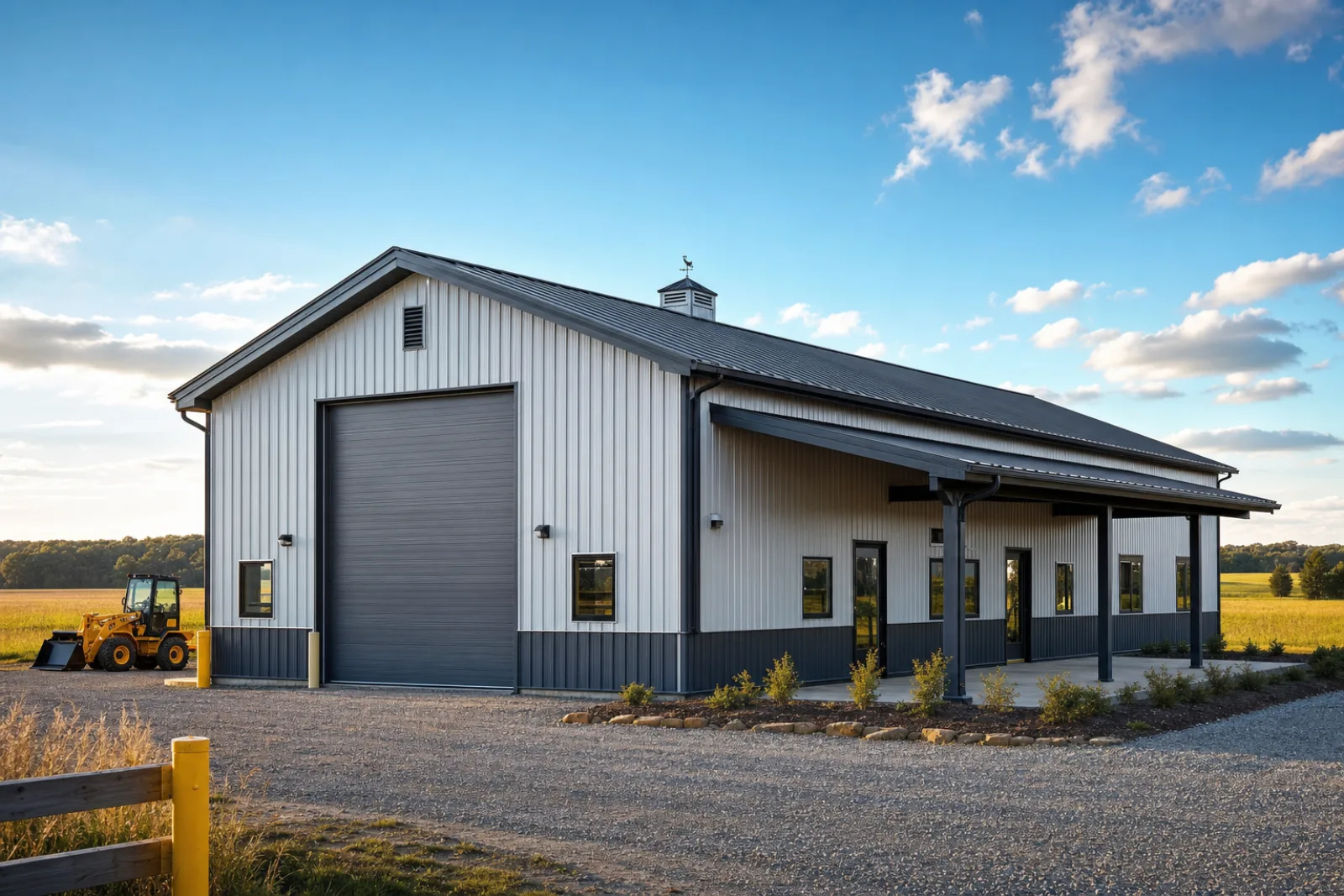
The difference is the engineering and the fit. Raw steel is material you still have to design with, cut, drill, and figure out. A kit is a finished design delivered as parts, so the thinking is already done and the pieces only fit one way.
Buy raw steel and you are the engineer, the fabricator, and the builder. You size the members, you stamp the drawings, you cut and weld, and you carry the risk if a load was missed. None of that is in the price, and most of it needs a shop and a license. That route makes sense for a custom one-off, not for a standard garage or shop.
A kit folds all of that into the purchase. The manufacturer runs the load calculations, produces the stamped plans, fabricates to spec, and ships a parts list that matches the drawing. You are left with assembly, not design. That is why a kit goes up faster and more predictably than a stick-built structure, where the framing is cut and fitted on site.
What you get
What comes in the kit and what you add
A kit gives you the structural shell: the steel that makes the building stand and the skin that keeps weather out. It does not give you the ground it sits on or most of the finishing. Knowing the line between the two is how you avoid a surprise on cost.
| In a typical kit | You add | |
|---|---|---|
| Frame | Columns, rafters, primary frame | Foundation design ‹confirm› |
| Secondary steel | Purlins, girts, bracing | Concrete slab and anchor bolts |
| Skin | Roof and wall panels, trim | Site prep and grading |
| Fasteners | Bolts, screws, closures | Most doors and windows ‹confirm› |
| Plans | Stamped drawings, parts list | Insulation |
| Openings | Framed openings (often) | Electrical, plumbing, interior finish |
What ships versus what stays on your list. Confirm any item against your own quote.
Read that table as a starting point, not a guarantee. Where the line falls depends on the supplier and the package you buy. Some kits include roll-up doors and walk doors; many quote them separately. Insulation is almost always a separate decision, and the slab is always yours. For the full breakdown of every component, see what is included in a metal building kit.
Going together
How a bolt-up kit goes together
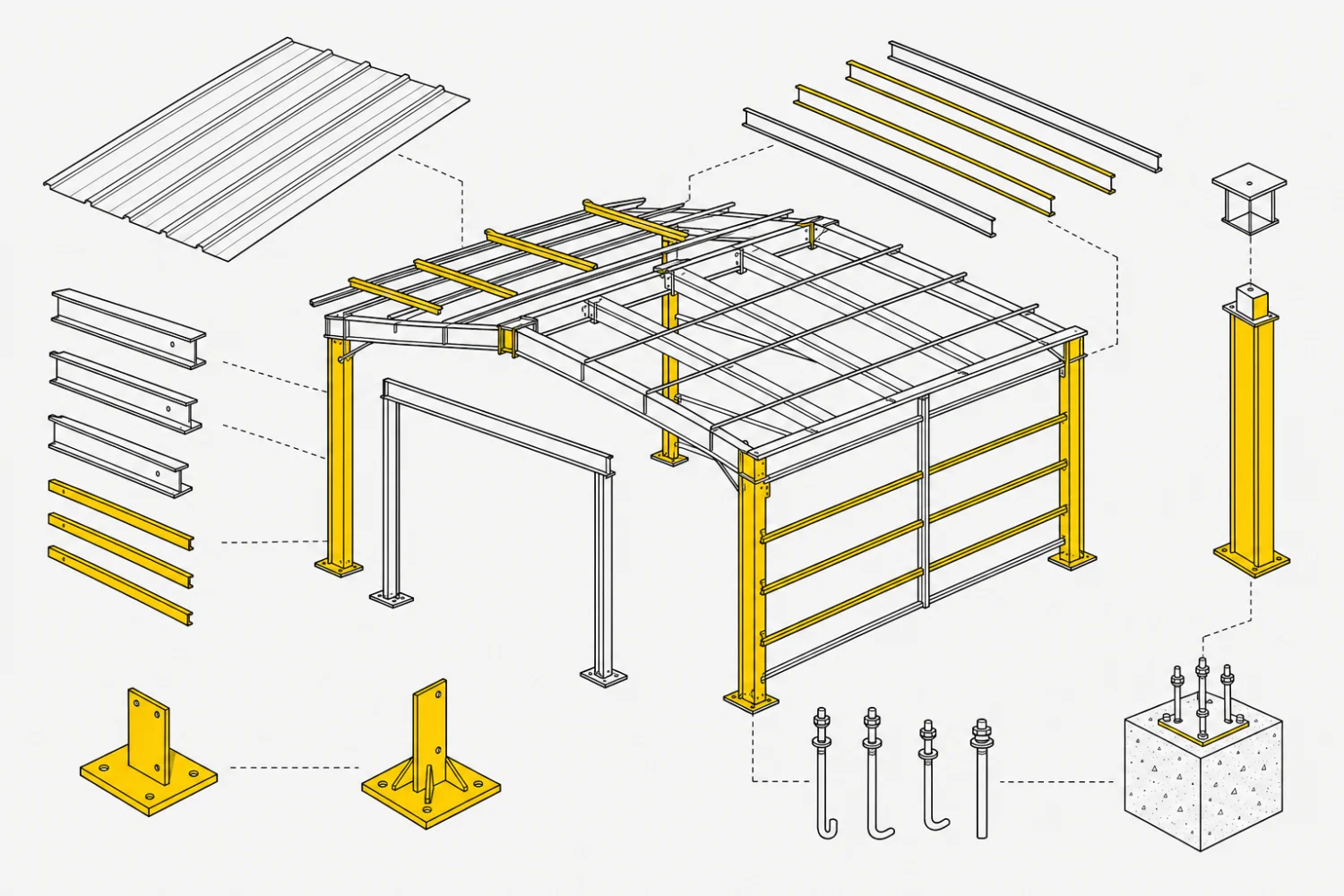
Most kits are bolt-up, which means the building assembles with bolts and screws instead of field welding. You pour the slab, set the anchor bolts, then stand the frames, tie them together with purlins and girts, and close the building in with panels. The plan tells you the order, and the labeled parts tell you what goes where.
Bolt-up is what makes a kit reachable for a capable crew. There is no welding license and no cutting to fit; the holes already line up. A small garage can go up with a couple of people and basic tools, while a wide shop wants a lift and a larger crew to raise the heavy frames safely.
The labeling is the quiet advantage. Every member carries a mark that points to a spot on the drawing, so the work is matching parts to a plan rather than solving a puzzle. That is also why a kit erects on a known schedule. With the slab cured and the parts staged, a straightforward building closes in over days, not the weeks a framed-and-finished structure can take.
The slab comes first
The one thing you cannot skip or rush is the foundation. Your anchor bolts have to match the kit’s frame layout exactly, so the slab is poured to the manufacturer’s drawing before any steel goes up. Get the foundation right and the rest of the build follows the plan. If you are weighing whether a kit fits your skills and site, start with how to choose a metal building kit.
Who buys them
Who buys metal building kits and why
Metal building kits sell to people who want a durable building for less money and less time than conventional construction. The buyer is rarely a steel expert. It is a homeowner, a farmer, a small business, or a contractor who wants a known structure at a known price.
- Homeowners. A garage, a workshop, or a hobby barn that goes up faster and costs less than a framed-and-sided build.
- Farms and ranches. Equipment storage, hay barns, and livestock shelters where clear span and low upkeep matter.
- Small businesses. Shops, warehouses, and commercial buildings that need square footage without a long construction schedule.
- Contractors and DIY builders. A predictable shell they can erect themselves or sub out, with the engineering already handled.
The reasons rhyme across all of them: steel resists fire, rot, and pests; a clear-span frame opens the whole floor with no interior posts; and a kit price is easier to plan around than an open-ended framing job. You trade some design freedom for speed, strength, and a number you can count on.
What it is not
What a metal building kit is not
Two ideas trip up first-time buyers, and clearing them early saves real disappointment. A metal building kit is not a model and it is not turnkey.
It is not a toy or a model kit. The word kit can read small, but this is a full-size, code-rated steel structure that arrives on a flatbed and weighs thousands of pounds. The parts are labeled and the assembly is logical, yet it is real construction with cranes or lifts, anchor bolts, and inspections, not a weekend hobby build.
It is also not turnkey. A kit is the shell, not a finished, move-in building. The slab, the doors and windows, the insulation, the wiring, and the interior are yours to add or contract out. Plenty of buyers do exactly that and end up with a finished building for less, but go in knowing the kit is the start of the project, not the end of it. Every term in that process is defined in our metal building glossary.
FAQ
Metal building kits: common questions
What is a metal building kit?
A metal building kit is a pre-engineered steel building sold as a set of labeled parts. The factory designs and fabricates every frame member and panel for one specific building, then ships them with a plan so a crew can bolt the structure together on site. You provide the foundation and the labor; the kit provides the engineered shell.
Are metal building kits worth it?
For most buyers, yes. A kit usually costs less and goes up faster than conventional framing, and the steel resists fire, rot, and pests. The value is highest when you want a standard size and can handle or sub out the assembly. Whether it pencils out for you depends on your site, your finish level, and how much of the work you do yourself.
What is included in a metal building kit?
A typical kit includes the primary frame, secondary framing, roof and wall panels, trim, and the fasteners to put it together, plus stamped drawings and a parts list. The foundation, insulation, most doors and windows, and all interior finishing are usually separate. See what is included in a metal building kit for the full list.
Are metal building kits hard to assemble?
Most kits are bolt-up, so the parts are pre-cut and pre-punched and the holes line up to a plan. A small garage is within reach of a couple of capable people with basic tools. Larger buildings need a lift and a bigger crew to raise the heavy frames safely. There is no welding or on-site cutting in a standard bolt-up kit.
Do metal building kits come with a foundation?
No. The foundation is almost always separate, and it is your responsibility. Kits are engineered to sit on a concrete slab with anchor bolts placed to match the frame, so the slab is poured to the manufacturer’s drawing before the steel goes up. Budget for site prep and concrete on top of the kit price.
Is a metal building kit the same as a finished building?
No. A kit is the structural shell, not a turnkey, move-in building. You still add the slab, doors, windows, insulation, wiring, and any interior finish. Many buyers reach a finished building this way for less than conventional construction, but plan for those added steps. The kit versus stick-built comparison lays out the tradeoffs.
Related guides
Keep reading
Once the definition is clear, these guides take you to the next decision:
- Metal building kits: the complete guide (the parent pillar).
- How metal building kits work (from order to erected shell).
- What is included in a metal building kit (every component, line by line).
- Metal building kits vs stick-built (the two ways to build, compared).
- How to choose a metal building kit (size, frame, and supplier).
- Metal building glossary (every term in this guide defined).