Two things shape a metal building in Arkansas more than anything else. First, the state has no single building code that covers every structure, so your permit and your load rating are set by your city or county, not by Little Rock. Second, your steel has to answer wind and humidity long before it ever answers snow. Get those two right and the rest of the project follows.
This guide sits under our metal buildings by state pillar, where each state gets the same honest treatment: what the code says, what the weather demands, and what you should confirm before you buy. Arkansas rewards a builder who calls the local office early, because the answer in rural Stone County is not the answer in downtown Fayetteville.
Codes & permits
Permits and codes in Arkansas are set locally
Arkansas does not enforce one statewide building code for all construction, so permit rules change from county to county and city to city ‹confirm›. The state does enforce the Arkansas Fire Prevention Code, which is built on the 2021 International Building Code and International Residential Code ‹confirm›. Steel framing falls under IBC Chapter 22 ‹confirm›. The baseline standards exist; what varies is who inspects against them.
Inside an incorporated city, expect a real permit and a real inspection. Little Rock, Fayetteville, Fort Smith, Jonesboro, and Conway all run formal permitting offices. Step outside city limits into unincorporated county land and enforcement often relaxes, and some rural areas only require a permit for a habitable structure such as a barndominium ‹confirm›. Conway, as one published example, requires a permit for accessory structures larger than 50 square feet ‹confirm›, which tells you how low the threshold can sit.
Verify with your local building department
Before you order steel, call the office that covers your parcel and ask three questions: do I need a permit, do you require engineer-stamped drawings, and what wind and snow load do you enforce. Most Arkansas suppliers can provide sealed drawings, and many city offices ask for them. Our permits and codes guide walks the full submittal.
Loads
Wind drives the design, with snow and seismic close behind
In Arkansas, wind is the load that earns the most attention. The state sits on the eastern edge of severe-thunderstorm and tornado country, so design wind speeds commonly land somewhere in the range of 105 to 120 mph ‹confirm›, set by your jurisdiction under the ASCE 7 standard. Snow is a lighter concern than it is up north, though the Ozark highlands in the northwest carry more ground snow than the Delta in the southeast ‹confirm›. Seismic deserves a real look in the northeast corner, where the New Madrid seismic zone raises the design category ‹confirm›.
| Load type | Typical Arkansas range | Who sets it |
|---|---|---|
| Design wind speed | ≈105–120 mph ‹confirm› | City or county under ASCE 7 |
| Ground snow load | Light south, higher in the Ozarks ‹confirm› | Local building department |
| Seismic design category | Elevated in the northeast (New Madrid) ‹confirm› | Local building department |
Treat every figure as a starting point. The only number that counts is the one your local office enforces for your address.
None of these are statewide constants, and you should never let a salesperson quote one as gospel. Confirm the exact wind, snow, and seismic values with the building department for your site, then have the kit stamped to those numbers. Our snow and wind load guide explains how those ratings translate into steel.
Climate
Humidity makes condensation your first insulation job
Arkansas runs warm and humid for much of the year, and most of the state falls in IECC climate zone 3A, with the northern counties closer to zone 4A ‹confirm›. That climate points the insulation decision toward condensation control before raw R-value. When humid air meets cool steel, it sweats, and an uninsulated panel will drip on whatever you store below it.
A vapor barrier and a continuous insulation layer under the roof keep that moisture off the steel, and good ridge-to-eave airflow carries the rest away. If you plan to heat or cool a shop or a barndominium, you will still want a solid R-value, but in Arkansas the moisture comes first. Our metal building insulation guide covers the assemblies that work in a humid climate.
Price factors
What moves the price in Arkansas
Steel itself is a national commodity, so the bigger swings in an Arkansas quote come from logistics and site work rather than the metal. A few drivers show up again and again:
- Distance to your site. Freight from the mill or fabricator adds up, and a remote Ozark parcel costs more to reach than a lot off I-30.
- Local labor and crews. Rates in the Little Rock and Northwest Arkansas markets differ from rural counties, and crew availability swings with the season.
- Site prep and foundation. Clearing, leveling, and a slab often rival the kit price. Rock in the highlands or soft Delta soils can both add cost.
- Load rating. A higher wind or seismic spec means heavier steel and more anchorage, which raises the shell price.
As an illustration only, a bare 40×60 shell might run in the tens of thousands before slab, freight, and finishing ‹confirm›, and a finished building lands far higher. For dated 2026 ranges and a full breakdown, see our metal building kit prices guide rather than any single quote.
Uses & metros
What Arkansans build, and where to file
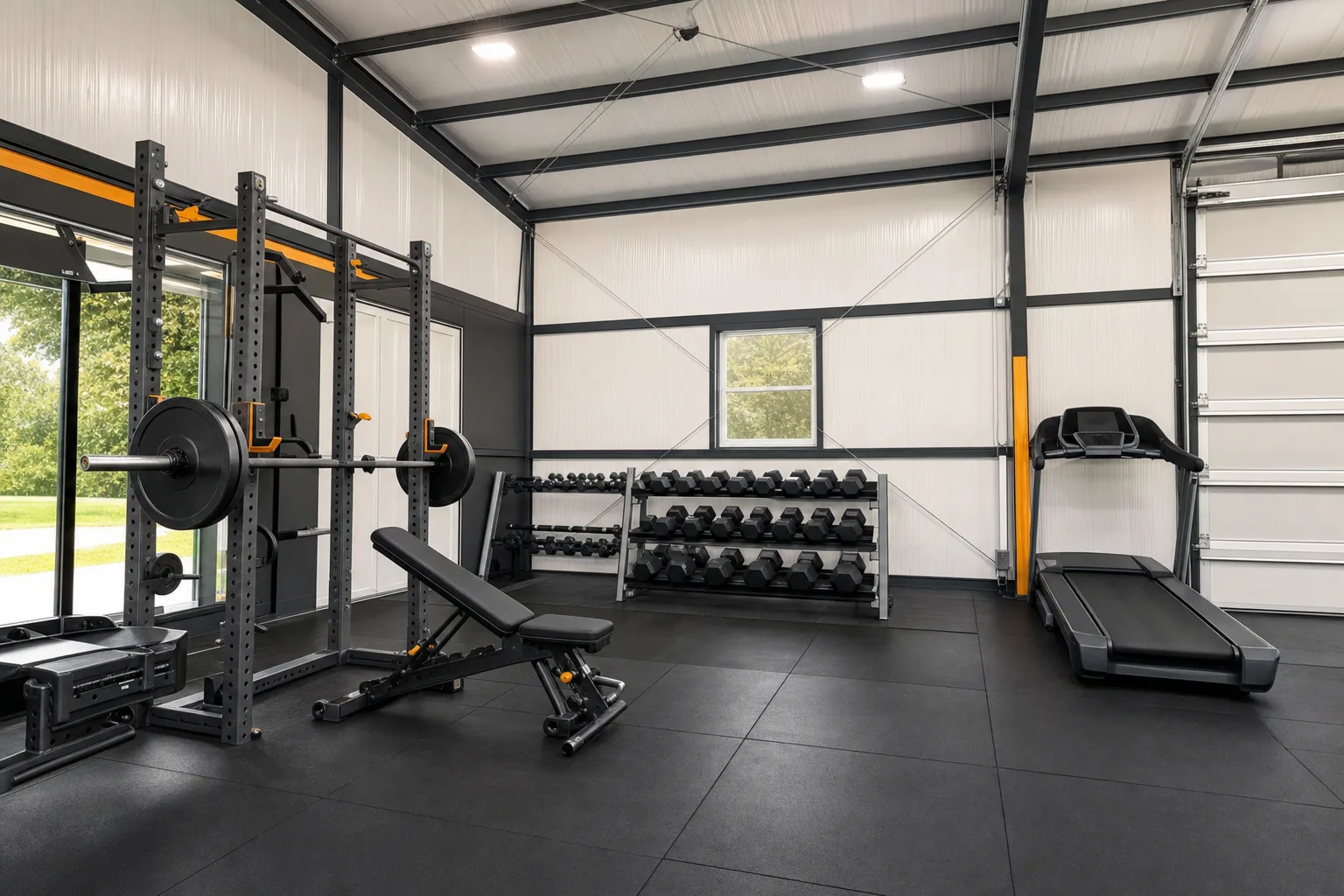
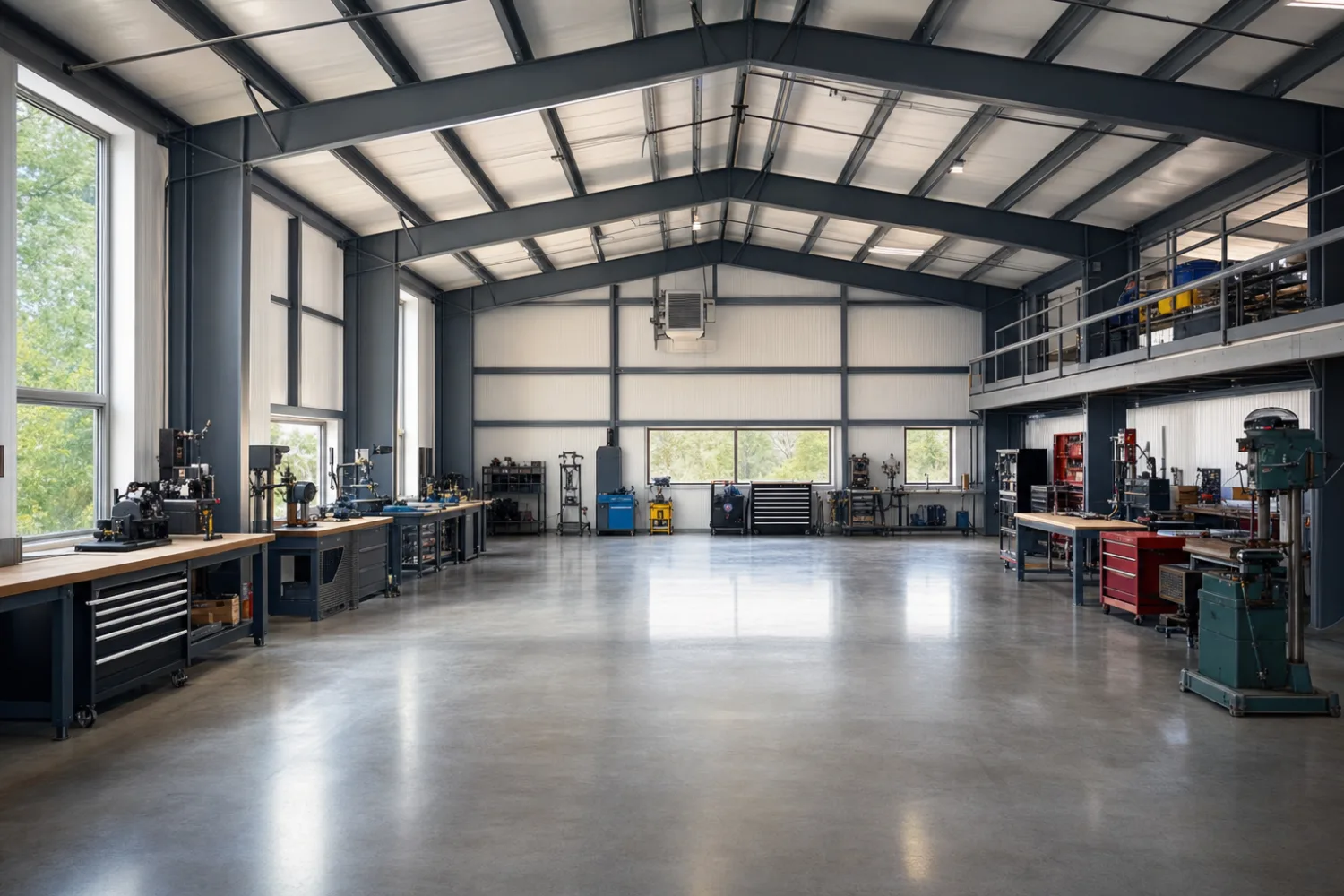
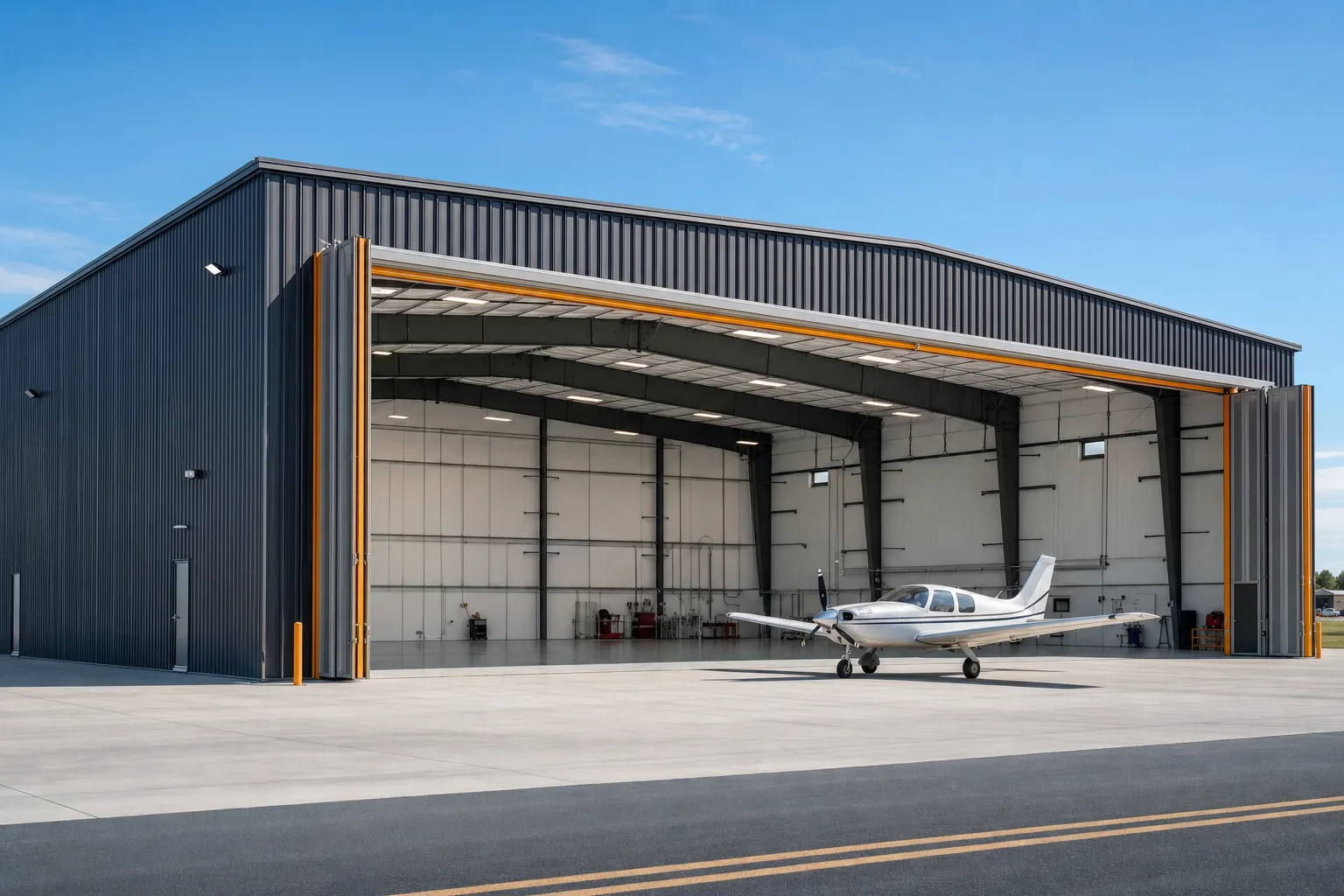
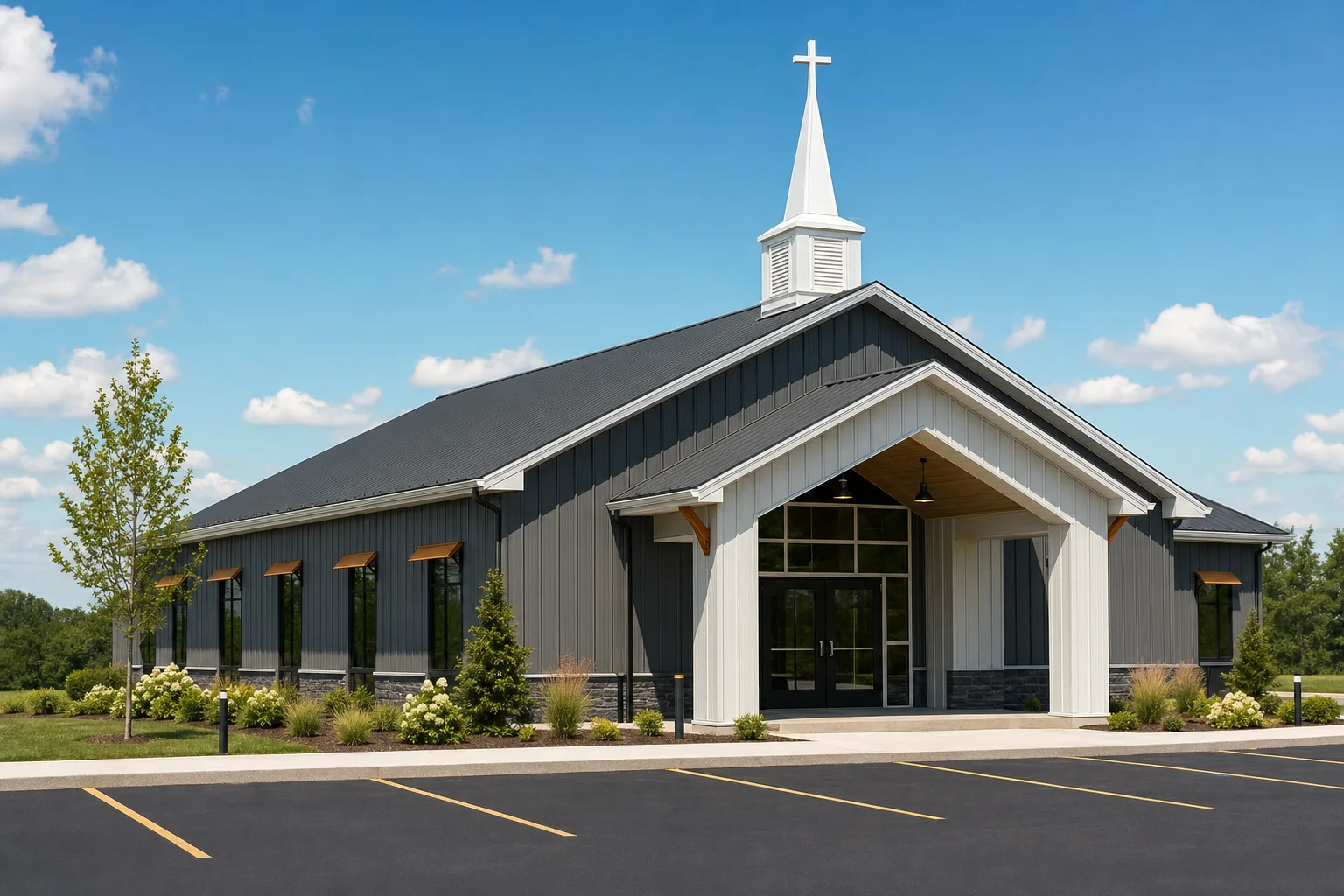
Across Arkansas you see farm and equipment barns, workshops, detached garages, RV and boat storage, and a growing share of barndominiums that fold living space into a steel shell. Agricultural buildings dominate the rural counties, while garages and hobby shops fill the suburban lots around the metros.
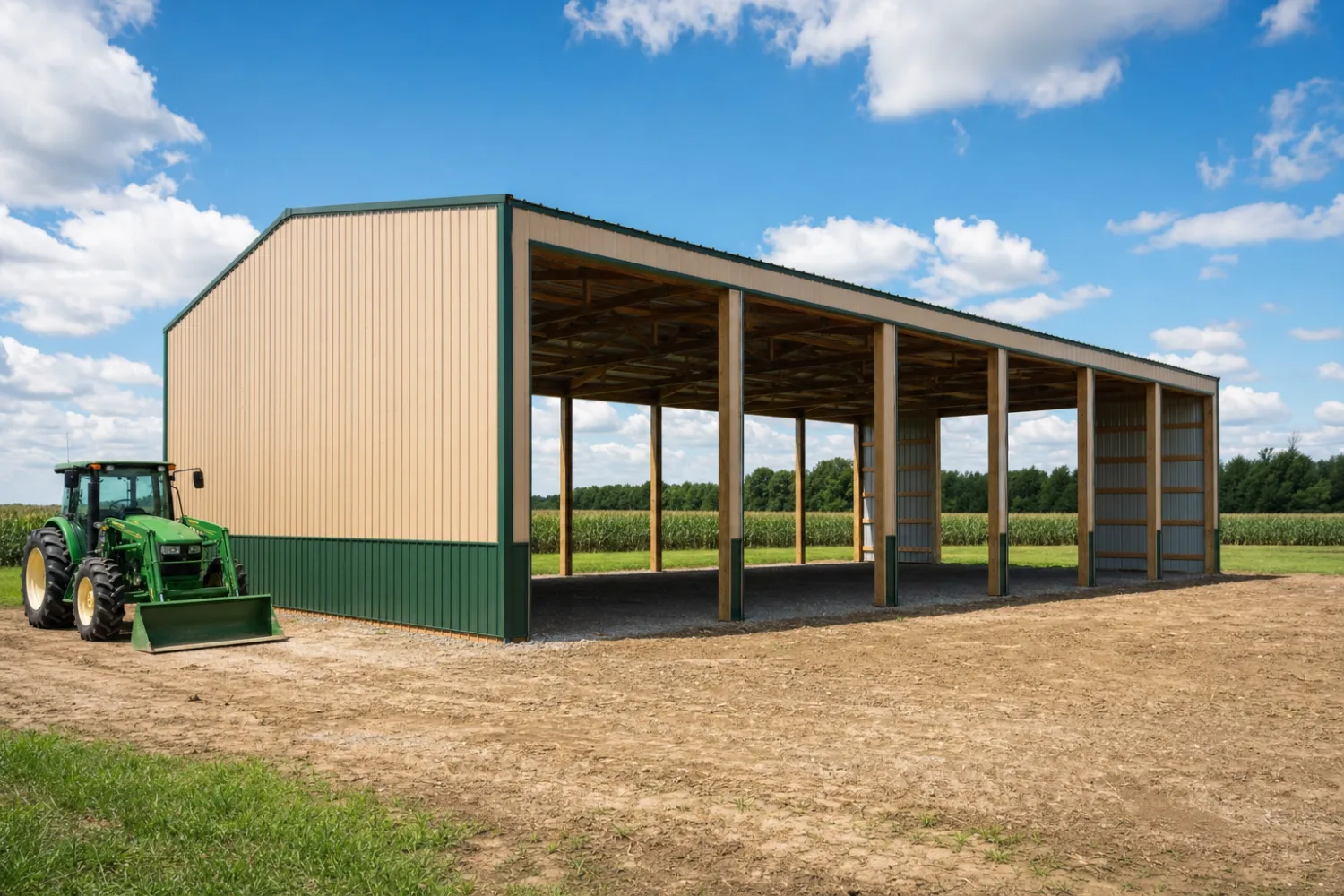
If your build sits inside one of the major metros, here is where the permit conversation starts ‹confirm›:
- Little Rock. Little Rock Planning & Development at 723 W Markham St, and Little Rock Building Services under Public Works at 500 W Markham St, handle permits and inspections in the capital.
- North Little Rock. North Little Rock Planning and Permits at 700 W 29th St covers the north bank of the Arkansas River.
- Northwest Arkansas. Fayetteville, Springdale, Rogers, and Bentonville each run their own permitting office for the state’s fastest-growing corner.
- Fort Smith and Jonesboro. Both run formal building offices; Jonesboro also sits closest to the New Madrid seismic concern.
Confirm the office, the hours, and the submittal list for your exact address before you order. City contact details and thresholds change, so treat the names above as a starting point ‹confirm›.
FAQ
Arkansas metal building questions, answered
Do I need a permit for a metal building in Arkansas?
In most cases inside a city, yes. Arkansas has no single statewide rule, so the answer depends on your jurisdiction. Incorporated cities like Little Rock, Fayetteville, and Conway require permits for almost all permanent structures, while some unincorporated county areas only permit habitable buildings. Call your local building department before you order.
Does Arkansas have strict building codes?
Arkansas enforces the statewide Arkansas Fire Prevention Code, built on the 2021 IBC and IRC ‹confirm›, so the standards themselves are firm. Enforcement is what varies. Major cities inspect rigorously, while rural and unincorporated areas often have far lighter oversight.
Can I build a metal building on my own property in Arkansas?
Usually yes, subject to local zoning, setbacks, and any HOA rules. Check that your parcel’s zoning allows the use, confirm how close to the property line you can build, and verify whether a permit and stamped drawings are required. Rural agricultural land tends to face fewer restrictions than a city lot.
What happens if you build without a permit in Arkansas?
Where a permit is required and you skip it, the jurisdiction can issue a stop-work order, charge penalty fees, require retroactive permitting, or in a serious case order the structure removed. Unpermitted work can also complicate insurance claims and a future sale. The cost of asking first is far lower.
Do I need engineer-stamped drawings for a metal building in Arkansas?
Many Arkansas building offices require engineer-sealed drawings that show the structure meets local wind, snow, and seismic loads, especially inside cities. Most reputable kit suppliers can provide stamped plans for your site. Ask your building department what they require before you finalize the order.
How much does a 40×60 metal building cost in Arkansas?
Costs vary widely with finish level, site prep, and load rating, so treat any figure as illustrative ‹confirm›. A bare shell sits well below a fully finished, insulated, slab-on-grade building. Get a written quote that itemizes the kit, freight, foundation, and any required engineering, then compare on equal terms.
Can you put up a metal building yourself in Arkansas?
A small bolt-up kit on a light frame is a realistic do-it-yourself project. Wider red-iron buildings need equipment and a crew to raise safely. Either way, the permit, the foundation, and the load rating still apply, so handle those whether or not you swing the wrenches yourself.
Read next
Keep reading
Compare nearby states and dig into the specs that decide an Arkansas build:
- Metal building kits in Texas (the neighbor to the southwest).
- Metal building kits in Oklahoma (shared tornado-alley wind concerns).
- Metal building kits in Missouri (north, with the same New Madrid seismic zone).
- Metal building kits in Mississippi (east, with similar humidity).
- Metal building permits and codes (how the approval process works).
- Snow load and wind load explained (what the ratings mean for your steel).
- Metal building foundation options (slab, pier, and what suits your soil).
- Metal building insulation (controlling condensation in a humid climate).
- Metal building kit prices (the cost pillar with 2026 ranges).
Sources
Sources
- Arkansas Metal Structures, “Do I Need a Permit for a Metal Building in Arkansas?” (no statewide code; rules vary by county and city): arkansasmetalstructures.com
- UpCodes, Arkansas Building Code 2021 (IBC 2021), Chapter 22 Steel: up.codes
- City of Conway, Accessory and Prefabricated Building Permit Guidelines (permit for accessory structures over 50 sq ft): conwayarkansas.gov
- City of Little Rock, Planning & Development and Building Services (permit offices and addresses, via Google Maps): littlerock.gov
- City of North Little Rock, Planning and Permits: nlr.ar.gov