If you are putting up a metal building in Louisiana, two things shape the whole job: hurricane-grade wind design near the coast, and a permit you pull from your parish or city, not from the state. Louisiana writes one statewide code, but the office that issues your permit and inspects the steel is local.
This guide sits under our metal buildings by state hub, which tracks how codes, loads, and prices shift from one state to the next. Below you get the Louisiana picture: which code applies, when an engineer has to stamp the drawings, the wind and snow loads that matter on the Gulf, and the parish offices that sign off. Every hard number here is a starting point you confirm with your local building department, because loads and fees are set jurisdiction by jurisdiction.
Codes and permits
What code Louisiana uses and who issues the permit
Louisiana builds to the Louisiana State Uniform Construction Code (LSUCC), which adopts the 2021 family of International Codes statewide ‹confirm›, while the permit itself comes from your parish or municipality. The state sets the floor; the local building department runs the process.
For a metal building, the codes that apply most often are the 2021 International Building Code for commercial work and the 2021 International Residential Code for one and two-family use, paired with the 2020 National Electrical Code ‹confirm›. Parishes and cities can layer on local amendments, so the edition enforced at your site can carry tweaks the statewide code does not.
Most jurisdictions want engineered drawings stamped and sealed by a Louisiana-licensed engineer ‹confirm›, with wind-load certification called out because so much of the state is hurricane country. A pre-engineered metal building (steel columns, rafters, girts, and purlins) or a pole barn generally needs a permit ‹confirm›, while many parishes exempt small accessory structures under about 200 square feet ‹confirm›. Read the rules for your parish before you order steel. The metal building permits and codes guide walks the full national process. Verify the edition, the stamp requirement, and the size threshold with your local building department.
Loads
Wind, snow, and seismic loads in Louisiana
In Louisiana the load that drives the design is wind. The Gulf coast sits in hurricane territory, so coastal design wind speeds run high and push the frame, anchors, and connections, while snow and seismic stay low across most of the state. A frame engineered for South Louisiana wind looks heavier than the same building in a calm inland market.
| Load type | Typical Louisiana range | Who sets it |
|---|---|---|
| Design wind speed | High on the coast, lower inland ‹confirm› | Local department, per ASCE 7 maps |
| Ground snow load | Low across the state ‹confirm› | Local department |
| Seismic demand | Low in most parishes ‹confirm› | Local department |
Treat these as typical ranges, not fixed figures. Coastal wind drives the design; confirm the exact values for your parish.
The honest answer on a specific number is that it depends on your exact site, because wind, snow, and seismic values are assigned locally and a coastal lot and an inland one can land far apart. Our snow load and wind load guide explains how those figures translate into steel. For the design speed and any flood or coastal provisions on your parcel, verify locally with the building department before you finalize the order.
Climate
Climate zone and insulation priorities
Louisiana runs warm and humid, spanning roughly IECC climate zones 2A in the south and 3A in the north ‹confirm›. That shifts the insulation job away from chasing a high R-value and toward controlling condensation, because humid Gulf air meeting cool steel is what drives sweating, drips, and rust inside a metal building.
Condensation comes first here
In a humid 2A climate, a vapor barrier and good airflow matter more than raw R-value ‹confirm›. Insulation that doubles as a moisture break, paired with ridge and eave ventilation, keeps a Louisiana shop dry. Our metal building insulation guide covers the systems that handle humid heat without trapping moisture against the panels.
Price
What moves the price in Louisiana
A Louisiana quote moves with a few regional factors on top of the base steel price. Freight is one: your distance from the supplying mill or rollformer adds to the delivered cost, and a remote parish pays more than a yard near a distribution hub. Local labor rates and crew availability swing the install line too.
The bigger regional driver is the engineering itself. A building designed for coastal hurricane wind carries more steel, heavier anchors, and tighter connections than the same footprint inland, so two identical-looking shells can price apart once the load package is set ‹confirm›. For the line-item breakdown and current illustrative ranges, see the metal building kit prices guide. Treat any figure as a 2026 starting point and confirm a real number with a current quote.
Uses and metros
Popular uses and where to pull a permit
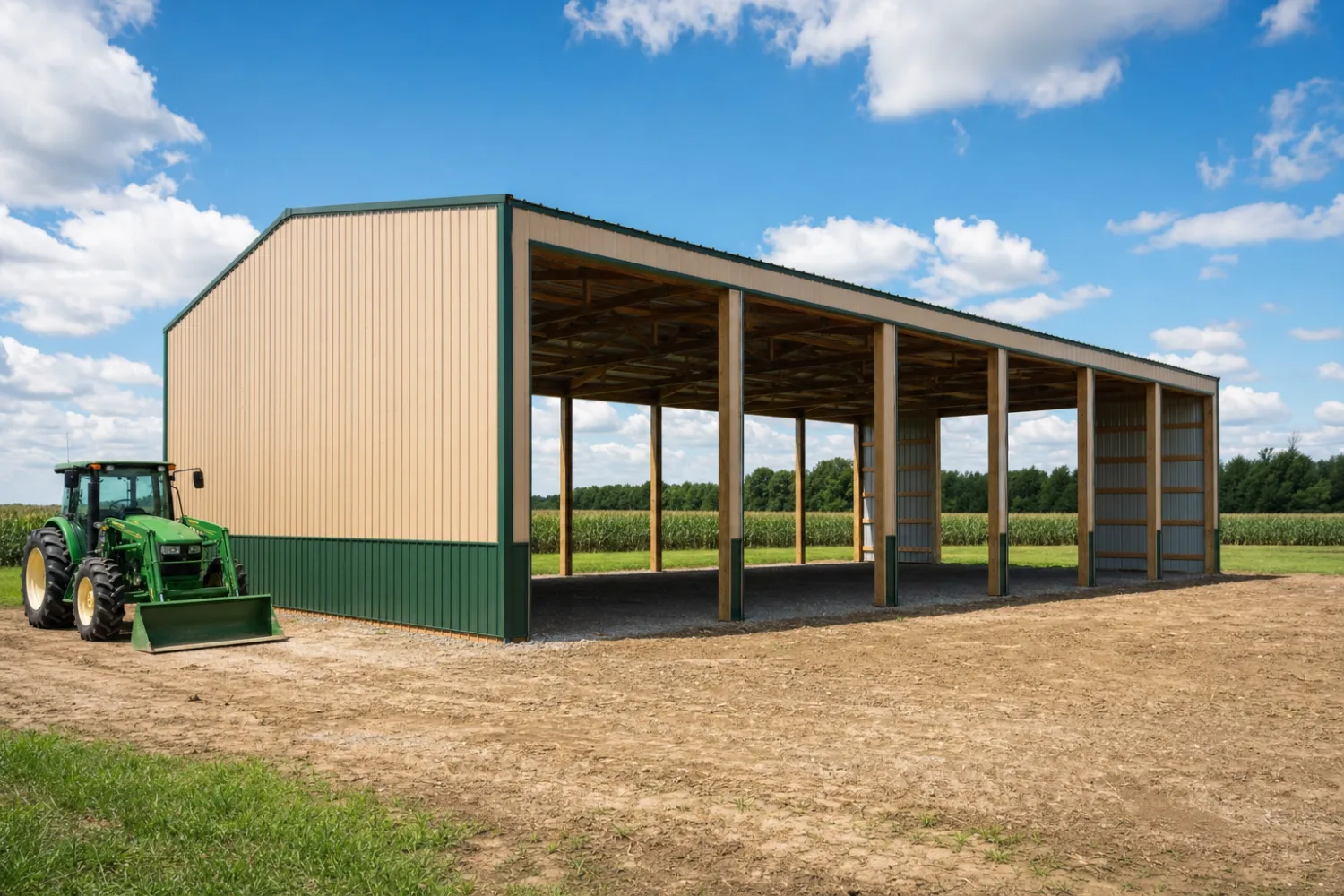
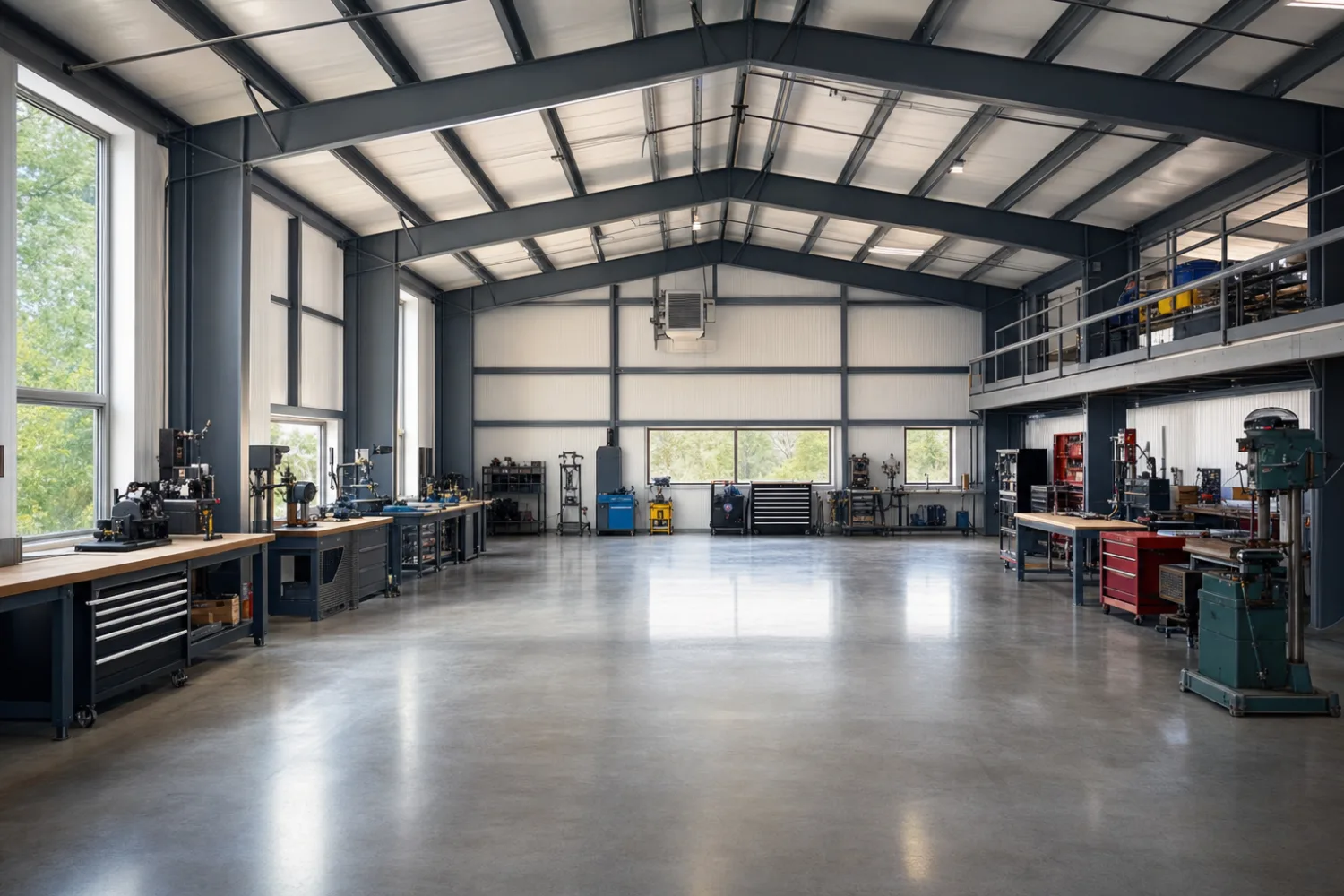
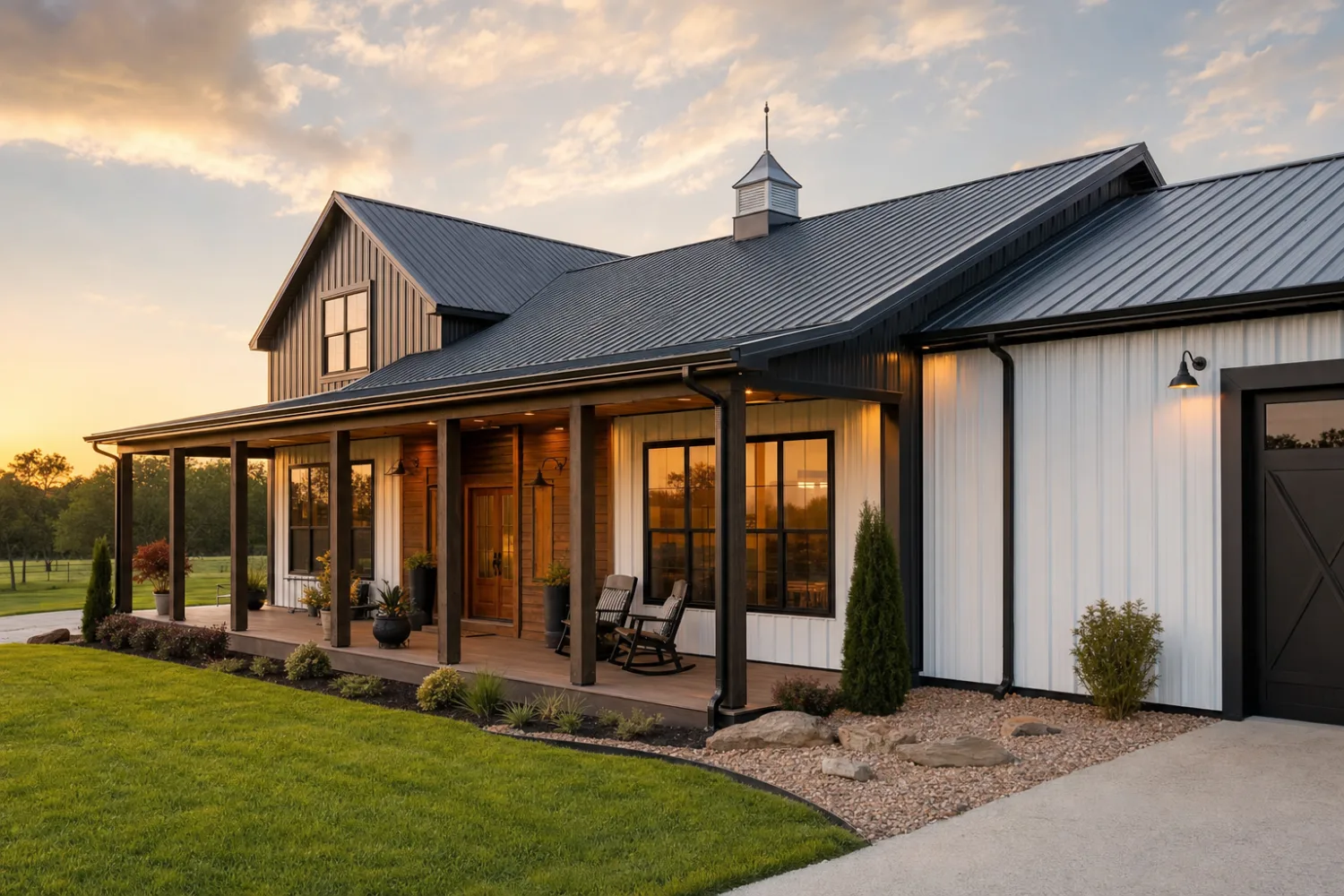
Across Louisiana, people raise metal buildings as barndominiums, agricultural pole barns, workshops, equipment and boat storage, and small commercial shops. Sugar-cane and timber country leans on ag buildings; the suburbs around the big metros lean on garages and shops. The permit office changes with the address, so here is where the major markets send you.
- New Orleans. The City of New Orleans Department of Safety and Permits handles permits and inspections inside the city ‹confirm›.
- Metro Jefferson Parish. Just outside New Orleans, the Jefferson Parish Permit Division issues permits for the unincorporated parish ‹confirm›.
- Lafayette. Lafayette Consolidated Government runs permitting and confirms that pre-engineered metal buildings and pole barns require a permit ‹confirm›.
- Baton Rouge and Shreveport. The capital region and North Louisiana each pull from their own city or parish building offices ‹confirm›.
Names and thresholds change, so confirm the office, the fee, and the submittal list with your parish or city before you build. The state code council site, lsuccc.dps.louisiana.gov, points to the jurisdiction that covers your address.
FAQ
Louisiana metal building questions
What building code does Louisiana use?
Louisiana uses the Louisiana State Uniform Construction Code (LSUCC), which adopts the 2021 International Codes statewide, including the 2021 IBC and 2021 IRC, along with the 2020 National Electrical Code ‹confirm›. Parishes and cities can add local amendments, so confirm the exact edition with your building department.
Do I need a permit for a metal building in Louisiana?
In most cases, yes. A pre-engineered metal building or pole barn generally needs a permit, and many parishes exempt only small accessory structures under about 200 square feet ‹confirm›. The permit comes from your parish or municipality, not the state. Check your local rules before you order.
Do metal buildings need engineer-stamped drawings in Louisiana?
Usually. Most jurisdictions want structural plans stamped and sealed by a Louisiana-licensed engineer, with wind-load certification highlighted because much of the state is hurricane-prone ‹confirm›. Your supplier can often provide stamped drawings for your site. Verify the requirement with your local building department.
What happens if you build a metal building without a permit?
Building without a required permit can bring stop-work orders, fines that run well above the standard permit fee, and an order to bring the structure up to code or remove it. It can also complicate insurance claims, refinancing, and a future sale. Pull the permit first; it is cheaper than the cleanup.
Can I build a metal building on my property in Louisiana?
Most likely, but it depends on your zoning, parish building code, and any HOA or deed covenants. Confirm the zoning allows your intended use, check setbacks from property lines, and verify lot-coverage and height limits with your local building authority before you commit to a size.
Who issues building permits in New Orleans?
Inside the city, the City of New Orleans Department of Safety and Permits issues building permits and runs inspections ‹confirm›. In the surrounding suburbs, the Jefferson Parish Permit Division handles the unincorporated parish. Confirm which office covers your exact address.
Is there a size that does not need a permit in Louisiana?
Many Louisiana parishes exempt small accessory structures under roughly 200 square feet from a building permit ‹confirm›, though zoning setbacks can still apply. Anything larger, or any structure with electrical work, generally needs a permit. Confirm the threshold for your parish.
Read next
Keep reading
Compare neighboring states and dig into the topics that drive a Louisiana build:
- Metal building kits in Texas (the big neighbor to the west).
- Metal building kits in Arkansas (north, with more snow to plan for).
- Metal building kits in Mississippi (the Gulf neighbor to the east).
- Metal building kits in Alabama (more Gulf-coast wind country).
- Metal building permits and codes (the full permit process).
- Snow load and wind load explained (how loads become steel).
- Metal building foundation options (slabs and piers for humid ground).
- Metal building insulation (condensation control for a humid climate).
- Metal building kit prices (the cost pillar).
Sources
Sources
- Louisiana State Uniform Construction Code Council (LSUCCC): https://lsuccc.dps.louisiana.gov/
- UpCodes, Louisiana Building Codes: https://up.codes/codes/louisiana
- MeltPlan, Louisiana Building Codes and State Adoption Profile: https://www.meltplan.com/buildingcodes/louisiana
- Lafayette Consolidated Government, Building Codes: https://www.lafayettela.gov/business-development/building-and-renovating/building-codes/
- Avoyelles Parish Police Jury, Building Permits (200 sq ft threshold): https://appj.org/building-permits/
- City of New Orleans, Department of Safety and Permits: https://www.nola.gov/safety-and-permits/
- Jefferson Parish, Louisiana: http://www.jeffparish.net/