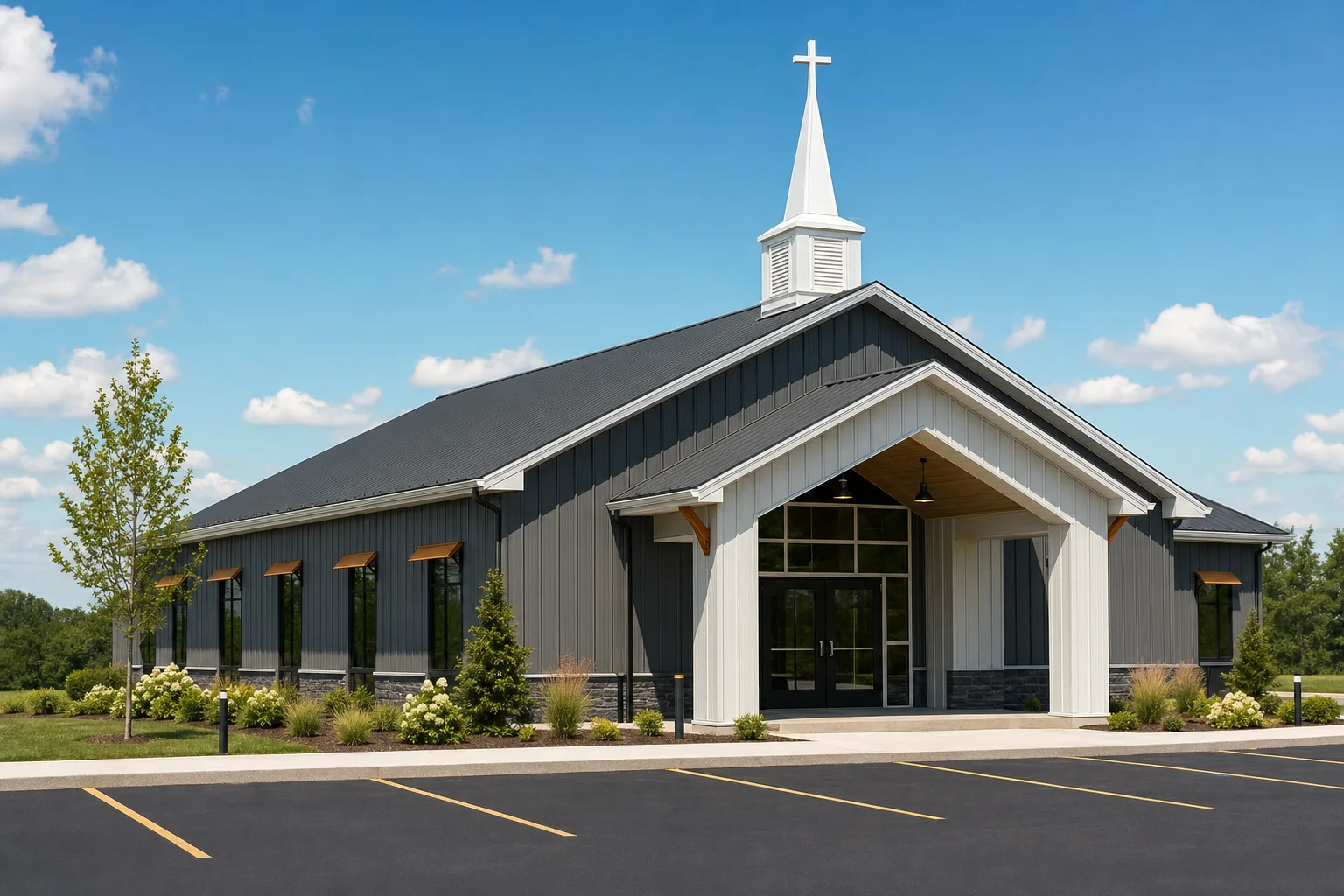
Yes, you can build a barndominium yourself, and many owners do, at least in part. The steel shell arrives as a pre-engineered, numbered kit that bolts together, so a capable DIYer with a small crew and the right equipment can stand the frame and close the building in. The work most owners hand off is the engineering, the foundation, and the plumbing and electrical, since those need a licensed hand and an inspection.
This page sits under the metal building homes pillar and answers the DIY question on its own terms: which stages you can do, which you should hire out, what skills and tools the job takes, and whether the sweat equity pays off. A barndominium is two builds in one, a steel shell and a home interior, so the honest answer depends on which half you mean.
What you can do
Which parts of a barndominium you can build yourself
You can self-build most of the shell and a good share of the interior, and you should hire out the parts the code wants licensed. The dividing line is not the steel. It is the trades that carry a permit and an inspection. A bolt-together kit is designed for owner assembly, while the foundation, wiring, and plumbing answer to the same dwelling code any house does.
Think of the build in stages. The frame and shell are the DIY-friendly half, because the kit ships engineered and labeled. The interior splits: framing, insulation, drywall, and finish work are fair game for a handy owner, while the wet and powered systems usually go to licensed pros. The construction types and DIY pillar in our build silo walks the bolt-up assembly step by step, which is the core of the self-build.
| Stage | DIY realistic? | Why |
|---|---|---|
| Engineering & permit plans | No | A stamped design is required for the kit and the dwelling permit; the supplier or an engineer provides it |
| Foundation / slab | Sometimes | Heavy, load-critical, and inspected; many owners hire a concrete crew even when they DIY the rest |
| Frame & shell erection | Yes, with a crew | The kit bolts together to numbered plans; the limit is weight and lift equipment, not skill |
| Insulation & vapor barrier | Yes | Standard materials and methods; the steel envelope just demands a sealed vapor barrier |
| Interior framing, drywall, finish | Yes | Same work as any house; the open span makes layout easier |
| Plumbing & electrical | Mostly no | Permitted, inspected, and code-bound; most owners hire licensed trades |
A stage map, not a verdict. Confirm what your local code lets an owner-builder do before you start.
The DIY share
How much of the build you can do yourself
A determined owner-builder can handle the shell and much of the finish, which is the largest block of labor on the job. The steel kit is the part that rewards DIY the most: it ships as a numbered package engineered to your width, length, and height, and it bolts to plans like a large kit of parts. With a small crew and a way to lift the steel, you can stand a barndominium frame in a few days rather than weeks ‹confirm›.
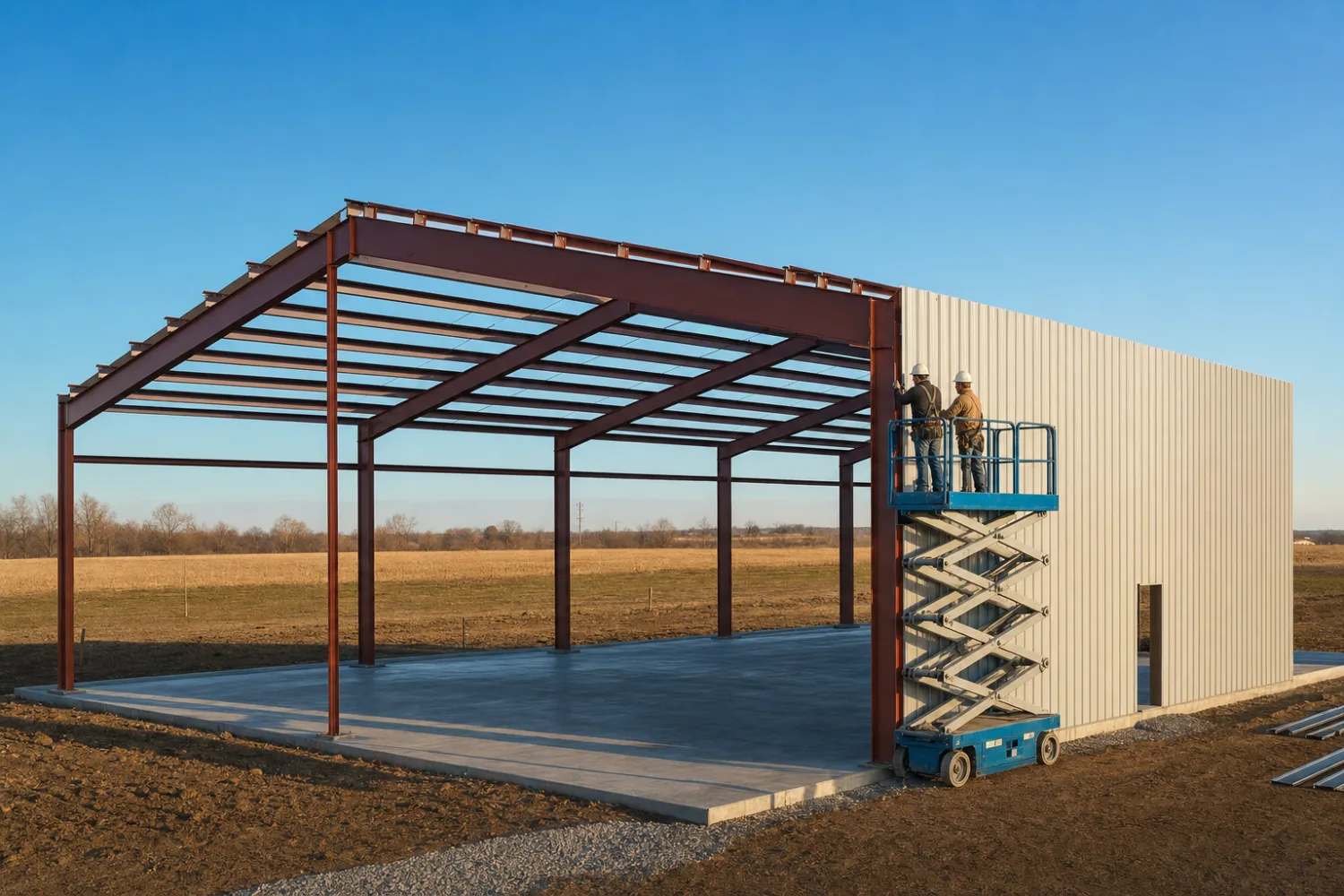
The interior is where the hours pile up. Framing the rooms, insulating, hanging and finishing drywall, laying floors, and setting trim and cabinets are all within reach of a handy owner, and they are most of the build-out budget. Pull a permit, follow the inspection schedule, and you can legally do this work on your own dwelling in most areas. Where you stop is the wet and powered systems, which is the smart place to spend on licensed help.
What it takes
What it takes to build a barndominium yourself
The job asks for general construction ability, a few helpers, and lift equipment, not a specialty trade ticket. If you have framed, roofed, or finished before, the shell reads as a big version of work you know. The honest requirements look like this:
- A crew of two to four. Steel panels and frame members are heavy and awkward; a solo build is slow and unsafe.
- Lift equipment. A telehandler, a boom, or at least scaffolding to set rafters and panels at height. Renting beats trying to muscle it.
- Standard tools plus a few specials. Impact drivers, a metal-cutting saw, a panel screw gun, and fall-protection gear.
- The stamped plans and a permit. The kit and its drawings carry the engineering; your job is to build to them and pass inspection.
- Time and a weather window. Dry the shell in before the interior starts; an open frame in a wet season stalls the whole build.
Respect the lift, not just the wrench
The frame bolts together with hand tools, so owners underrate the real hazard: lifting heavy steel to height. Most self-build trouble traces to setting rafters and panels without the right equipment or fall protection. Budget for a rental lift and a safety setup, and never raise a primary frame shorthanded.
Worth it
Is building a barndominium yourself worth it?
It is worth it when your goal is to save on labor and you have the time, the help, and the skills to trade for the savings. Labor is a large slice of any build, so doing the shell and finish yourself can take a meaningful cut off the all-in cost ‹confirm›. The catch is that the savings are sweat, not magic: every hour you do not pay for is an hour you work, and a stalled DIY build can cost more in time and rework than it saved. Our cost to build a barndominium from a kit guide breaks the shell-versus-finished numbers down line by line.
The kit makes the shell DIY-friendly; the permit and the trades decide the rest. Self-build the parts you can do safely and to code, hire the parts you cannot, and budget the savings as your own labor.
Two things temper the math. First, financing an owner-built barndominium is harder, since some lenders want a licensed general contractor on the paperwork before they release a construction loan, a wrinkle our barndominium financing guide covers. Second, weigh the effort honestly against your own skill and schedule. The full two-sided case, where DIY effort sits as a real tradeoff, lives in our barndominium pros and cons guide. Build what you can do well, and pay for the rest.
Related
Read more
Building it yourself connects to the kit, the cost, and the trades you hire. Follow these next:
- Metal building homes: the complete guide (the parent pillar).
- Cost to build a barndominium from a kit (where DIY labor saves real money).
- Barndominium pros and cons (the honest ledger, including the DIY effort).
- Construction types & DIY (how the bolt-up shell goes together).
- Financing a barndominium (why an owner-build changes the loan).