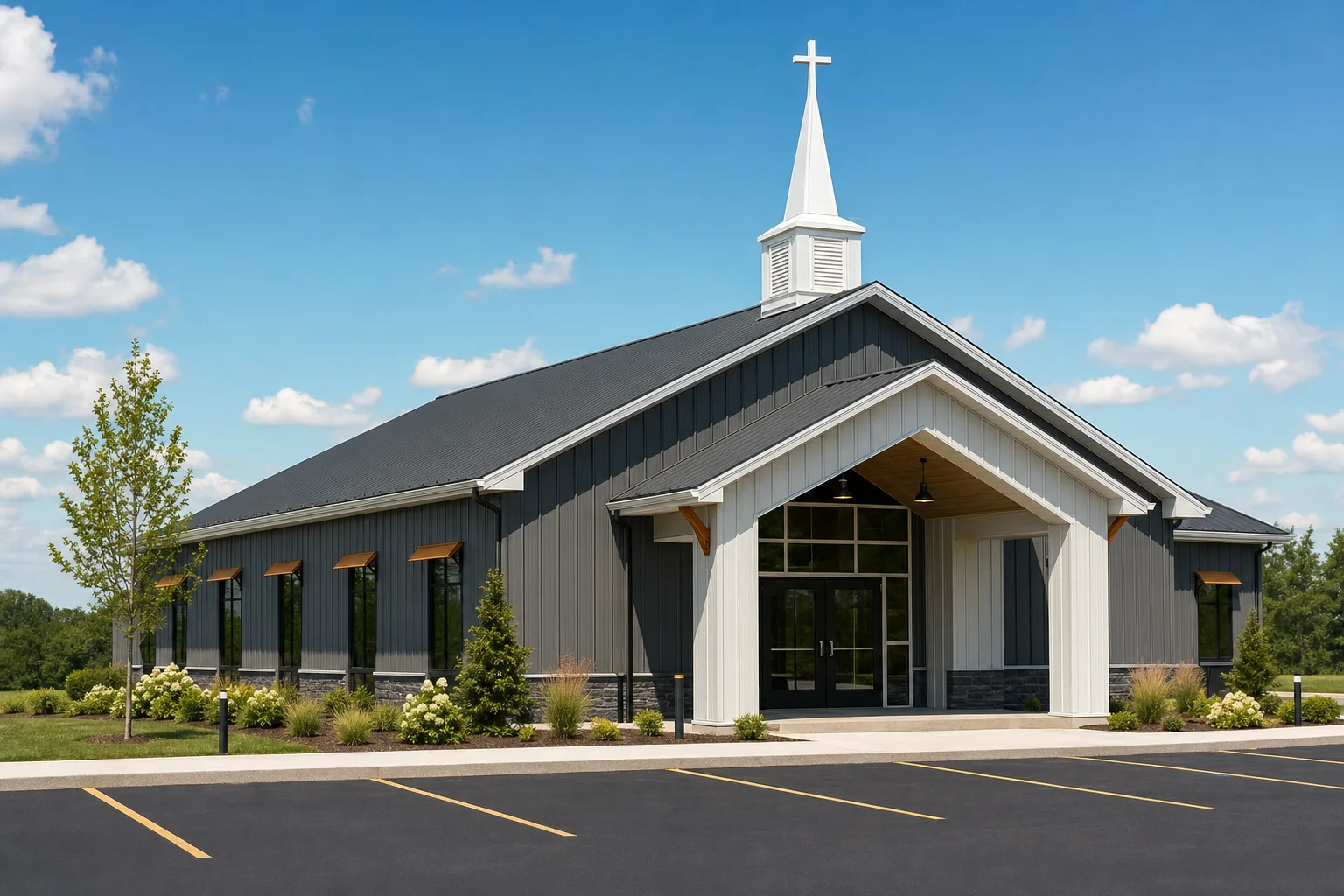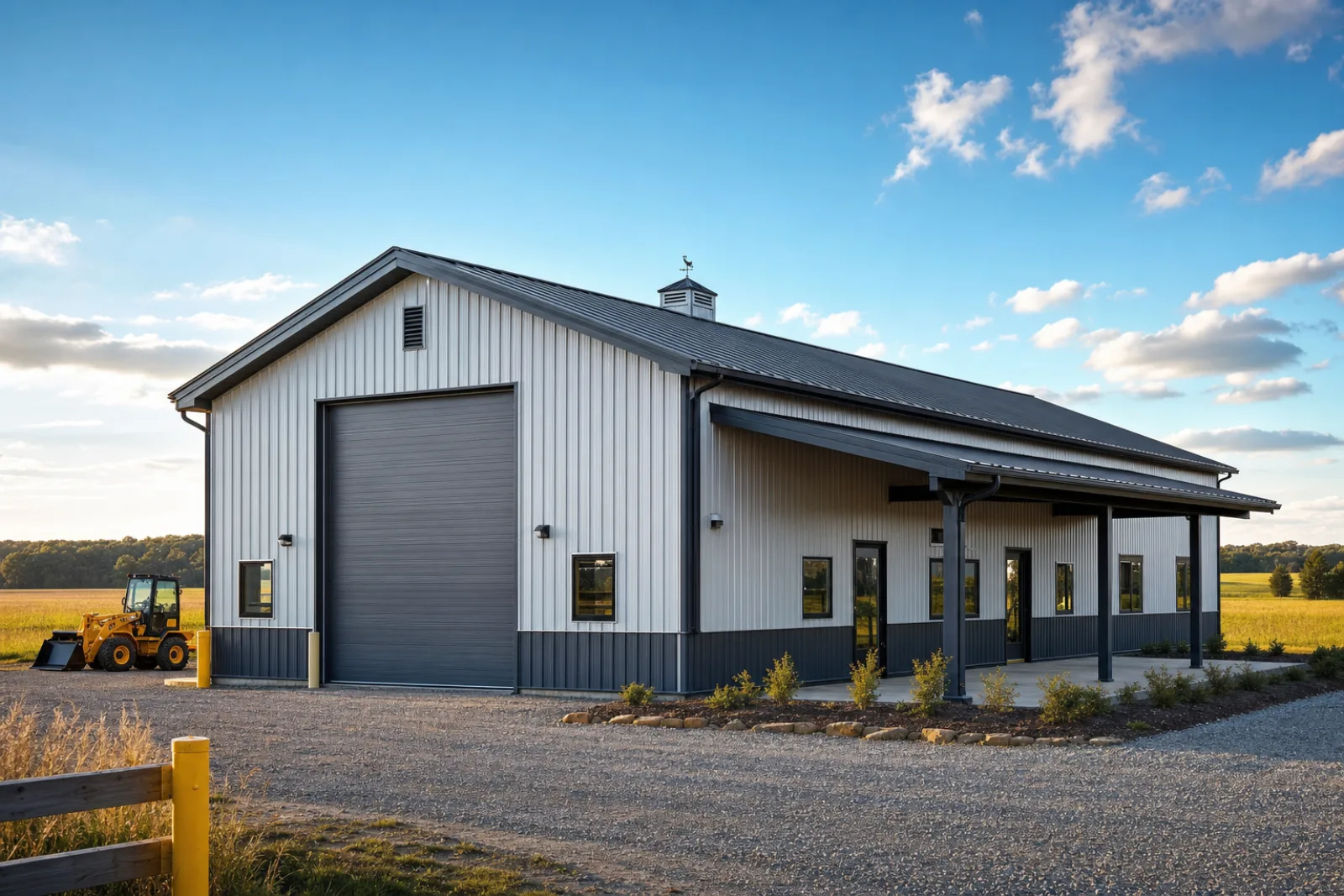
A down payment on a metal building usually runs about 10 to 20 percent of the price as a 2026 illustrative range, so on a $15,000 kit you would put down roughly $1,500 to $3,000 ‹confirm›. The exact number turns on how you finance it: rent-to-own and some dealer programs ask for little or nothing down, often just the first monthly payment ‹confirm›, while a bank or construction loan tends to want 10 to 20 percent or more ‹confirm›. Confirm any figure against a live quote, since steel prices and lender terms shift through the year.
This page sits under the metal building kit prices pillar and answers the down-payment question on its own terms: what each financing route asks up front, what moves the number, and how to lower it. For the low-upfront routes in full, our payment plans and no-money-down options guide covers them in depth, and the metal building financing guide walks lenders, rates, and terms. Here we settle the deposit question itself.
By route
How much you put down depends on how you finance it
The down payment is set by the lender, not the building, so the route you pick decides the number. Rent-to-own and in-house dealer plans set the lowest bar, often a first payment instead of a percentage, while bank and construction loans ask for a real deposit in exchange for a lower rate. The 2026 illustrative ranges below show how the common routes split.
| Financing route | Typical down payment (2026, illustrative) |
|---|---|
| Rent-to-own (RTO) | Often the first month only, no traditional deposit or credit check on small buildings ‹confirm› |
| Dealer / manufacturer financing | Roughly 0 to 10 percent at the point of sale; fast approval, higher rate ‹confirm› |
| Personal / installment loan | No collateral deposit, but the rate and term price in the risk ‹confirm› |
| Construction / property-improvement loan | Commonly 10 to 20 percent of the project, sometimes more ‹confirm› |
| Home equity loan or HELOC | No separate down payment; you draw against existing equity ‹confirm› |
A starting map, not a quote. Every lender sets its own rule, so confirm the deposit before you sign.
The pattern most buyers see is little to nothing down on a carport or single garage through rent-to-own or a dealer, and 10 to 20 percent down on a shop, barn, or commercial shell financed through a bank ‹confirm›. A larger deposit is not wasted money: it shrinks the financed balance and the interest you pay over the term, so it is the cheapest rate you will never owe. For where the steel number itself starts, our how much metal building kits cost guide sets the base price the deposit is a slice of.
What moves it
What changes the down payment on a metal building
Four things move the deposit: the size and price of the building, your credit, whether you own the land, and the route you choose. A small carport on rent-to-own can need almost nothing up front, while a large shop on a construction loan asks for a percentage of a much bigger number.
Land and use change the deposit
A building on land you own can be financed as a property improvement, which often means a smaller percentage down and a longer term than an unsecured loan. A building on leased or family land, or one that reads as a pure outbuilding, has fewer options and may ask for more up front. Tell the lender the use plainly, since a commercial shop, a farm building, and a backyard garage do not underwrite the same way, and that choice flows into your total project cost.
Your credit moves the deposit the ordinary way. A stronger score and documented income can shrink the down payment a bank asks for and lower the rate, while a thin or rough file pushes the deposit up or steers you toward rent-to-own. The price of the building matters too, because 10 percent of a $40,000 shop is a far larger check than 10 percent of a $6,000 carport ‹confirm›. Trim the price first and the deposit follows, which is where our ways to save on a kit guide earns its keep.
Low upfront
Can you get a metal building with no money down?
On small buildings, often yes. Rent-to-own and some dealer programs let you take delivery for a first payment with no traditional down payment or credit check, which is why a carport or single garage can land in your yard with almost nothing up front ‹confirm›. The tradeoff is real: a low or zero deposit means a higher total cost over the term, since you finance the full price and the program prices in its risk.
No money down is not no cost. A zero-deposit plan moves the building today and the math to later, so weigh the all-in total against a deposit-and-loan route before you sign.
Larger buildings rarely go zero down. A bank funding a shop, barn, or commercial shell as a project usually wants a percentage in the deal, because the lender is financing a foundation, delivery, and labor beside the steel, not the kit alone. The full picture of those low-upfront routes sits in our payment plans and no-money-down options guide, and the broader case for borrowing on a kit is in how to finance a metal building kit.
Plan it
How to plan the down payment before you order
Settle the deposit before you order the steel, because it shapes the loan, the slab, and the timeline. Walk in with a whole-project budget, not just a kit quote, and the down-payment conversation gets much simpler.
- Match the route to the building. Rent-to-own or dealer financing for a carport or small garage; a bank or construction loan for a shop, barn, or commercial shell.
- Budget on the project, not the kit. A construction loan sizes its deposit against the slab, kit, delivery, and labor as one number, so price the whole build ‹confirm›.
- Weigh a bigger deposit against the rate. More down shrinks the financed balance and the interest, often more than it stings up front ‹confirm›.
- Compare total cost, not the deposit alone. A zero-down plan can cost more over the term than a deposit-and-loan route ‹confirm›.
- Trim the price first. A lower kit price means a smaller deposit at the same percentage, so cut the steel number before you finance it.
Treat the down payment as one line in the build plan, not a surprise at signing. A kit presented as a permitted, foundationed project is a loan a lender will write on fair terms, deposit included. For where the rest of the dollars go, see the hidden costs guide and the broader metal building cost guide.
Related
Read more
This down-payment answer connects to the financing path and the price it is a slice of. Follow these next:
- Metal building kit prices: the complete guide (the parent pricing pillar).
- Payment plans & no-money-down options (the low-upfront routes in depth).
- How to finance a metal building kit (the full lender and application breakdown).
- How to save money on a metal building kit (cut the price the deposit is based on).
- Metal building cost guide (the total budget the loan and deposit cover).
- Metal building kits (the cross-silo buying pillar).