Yes, for a bare weather-tight shell, metal building kits are usually cheaper than stick-built construction. A pre-engineered steel kit puts a roof and four walls over your slab for less than framing the same footprint in wood, and it bolts together in days instead of weeks, so the labor bill is smaller too. As an illustrative 2026 range, a steel kit shell runs about $20 to $40 per square foot ‹confirm›, against roughly $30 to $60 per square foot ‹confirm› to frame and sheathe a comparable stick-built shell. The catch is that this gap is widest on an unfinished building and narrows as you finish the inside to a residential standard.
This page sits under the metal building kits pillar and answers the price question in full, the question our metal building kits vs stick-built guide covers in brief. Below: where the steel savings comes from, why it shrinks once you finish the interior, and the cost over the whole life of the building. Every dollar figure here is a dated 2026 illustrative range to confirm against a live quote, never a fixed price.
Where steel saves
Where a metal building kit costs less
A steel kit beats stick-built on the cost to enclose, and the saving traces to three things: a frame engineered as a system, a bolt-up sequence with no cutting on site, and steel that spans wide without interior support. For an unfinished shop, garage, or barn, that bare shell is most of the building, so the kit price looks hard to beat.
| Finish level | Steel kit ($/sq ft) | Stick-built ($/sq ft) |
|---|---|---|
| Bare shell, no slab | $20–$40 ‹confirm› | $30–$60 ‹confirm› |
| Shell plus concrete slab | $30–$55 ‹confirm› | $45–$75 ‹confirm› |
| Finished, insulated interior | $60–$110 ‹confirm› | $70–$130 ‹confirm› |
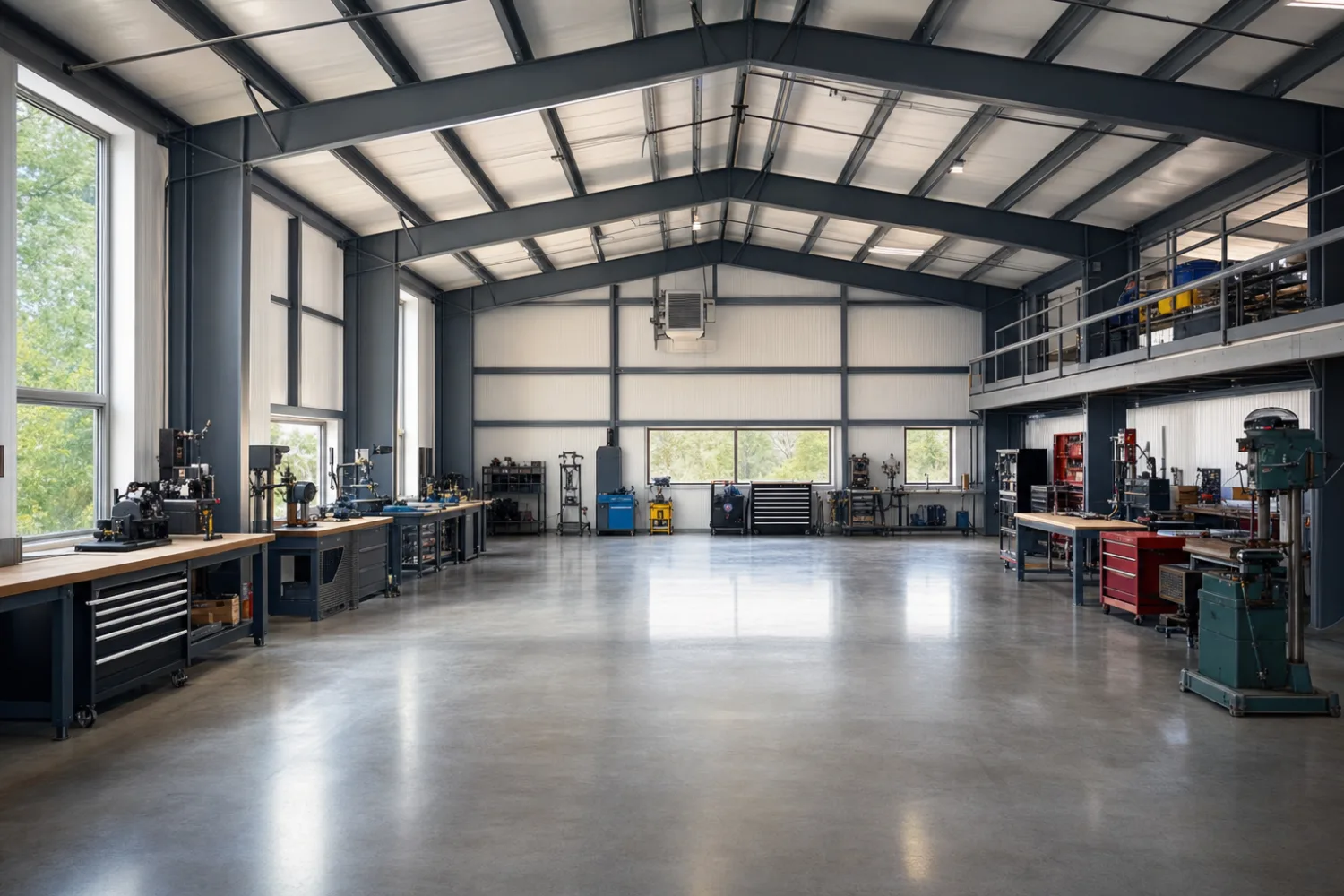
| Wide clear span (50 ft+) | Clears it on the base frame ‹confirm› | Needs added beams or posts ‹confirm› |
Illustrative 2026 ranges to confirm against a live quote. The steel lead is largest on the bare shell and narrowest once both are finished.
Read the table top to bottom and the story is clear. The kit lead is largest on the bare shell, holds through the slab, and shrinks once both buildings get a finished interior, because insulation, wiring, and trim cost about the same either way. On a wide clear span the comparison changes shape, since a steel frame holds the open floor a stick-built building can only reach with added beams. For the per-foot method behind these numbers, see the cross-silo prices pillar.
The catch
Why the savings shrinks once you finish the inside
The steel advantage is largest at the shell and smallest at the finished house, so the headline saving can fade as the finish work goes in. This is the single most useful thing to grasp before you compare the two on price.
On a bare shell, a steel kit can come in well under stick-built for the same footprint ‹confirm›, and for an unfinished shop or barn that number is the whole story. Finish the inside to a residential standard and the math shifts. Insulation, interior walls, wiring, plumbing, HVAC, and trim cost roughly the same whether the shell is steel or wood, and a steel building needs added framing to give those finishes something to attach to. By the time both are move-in ready, the shell saving is a smaller share of the total ‹confirm›.
Price both to the same building
Most steel-versus-wood arguments collapse because the two sides price different buildings. A bare steel shell against a finished stick-built house is not a fair fight. Decide the finish level first, then quote both methods to that exact standard. The quote-reading guide shows which line items hide outside a headline shell price, and the common buying mistakes guide covers the scope traps that make a cheap quote look cheaper than it is.
Lifetime cost
The cost over the life of the building
Upfront price is half the comparison; the other half is what each building costs to own across twenty or thirty years, and that is where steel widens its lead again. A coated steel shell does not rot, warp, or feed termites, so it asks for less maintenance than a wood frame and carries less structural risk over the decades.
Compare the finished building over its lifespan, not the bare shell on day one. Steel wins the race to weather-tight, and it often wins the decade on upkeep too.
Three long-run lines favor steel. Maintenance runs lower, since the frame does not degrade the way wood can. Insurance can come in lower on a non-combustible steel building than on a wood-framed one ‹confirm›, though that varies by carrier and region, so confirm it with your own insurer. Resale tends to read as a permanent structure, especially in rural markets. None of this rules out stick-built: for a heavily detailed custom home, wood framing bends to the geometry more easily, and a steel shell finished to a residential standard, the barndominium path, is the middle ground that keeps the shell economics while giving you a livable result.
Related
Read more
This price answer connects to the rest of the buying decision. Follow these next:
- Metal building kits: the complete guide (the parent pillar).
- Metal building kits vs stick-built (the full method comparison this page deepens).
- Metal building kits vs pole barns (the other build-method cost comparison).
- How to read a metal building quote (the line items behind any price).
- Metal building kit prices (the cross-silo cost pillar).