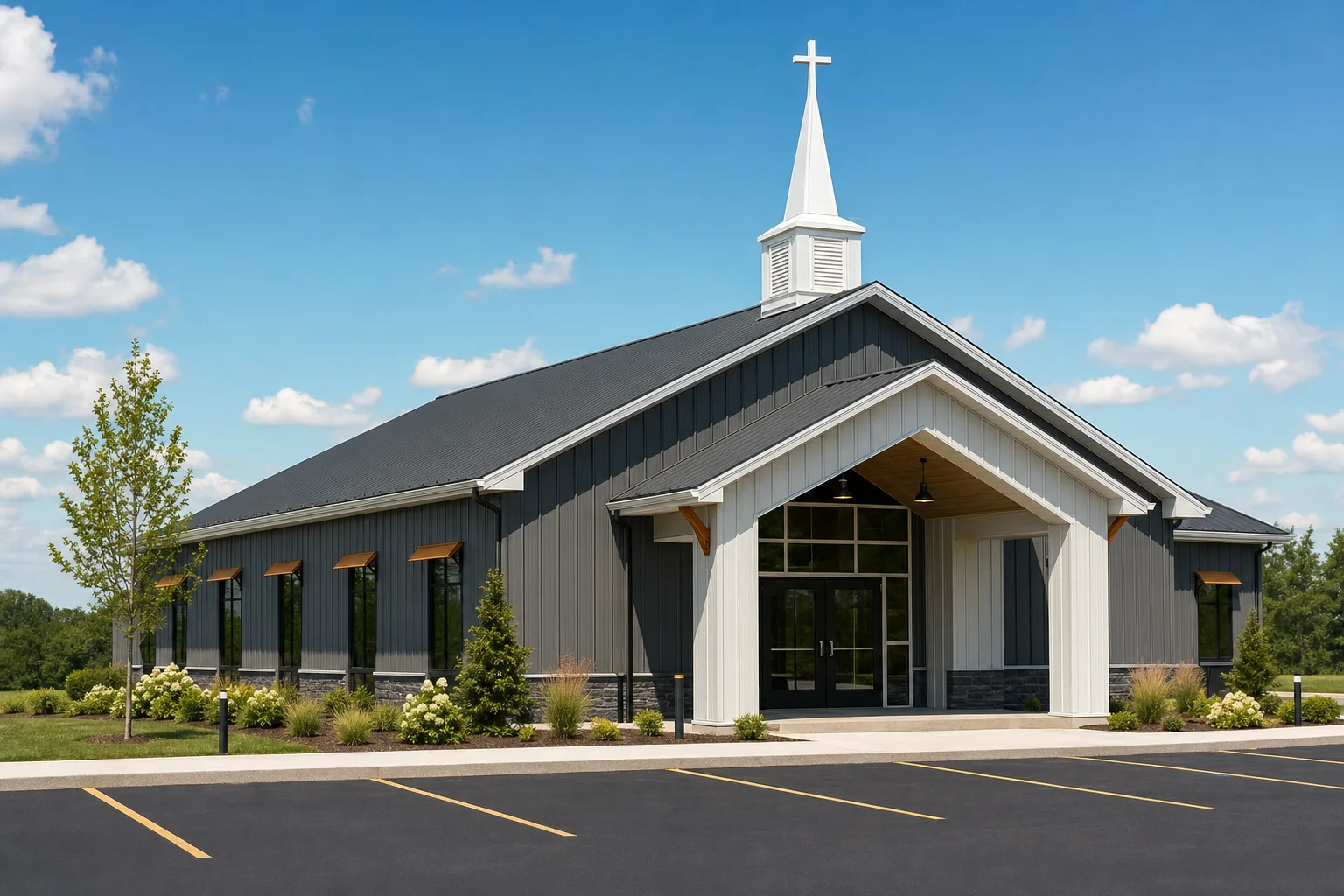
No single company makes the best DIY metal building kit for everyone. The best DIY kit comes from the maker whose bolt-up building matches your span and local loads and ships pre-cut, pre-drilled, labeled parts with step-by-step instructions and a written warranty. For a small garage or carport that points you toward a light-gauge tube specialist; for a wide shop or barndominium it points toward a red-iron manufacturer that engineers heavier loads.
Treat any “best DIY kit” list as a starting point, not an answer. This page sits under the metal building companies pillar and shows you how to judge a kit maker on merit: the traits that make a kit truly buildable by one person or a small crew, how to match a brand to your project, and the warning signs that rule one out. For named brands that fit this mold, our best DIY metal building brands guide walks the field in depth.
No single best
Why no one brand makes the best DIY kit
A brand that ships excellent bolt-together carports may never engineer a 50-foot clear-span shop, and a red-iron manufacturer built for shops may sell a kit too heavy for two people to raise by hand. “Best” only means something once you attach it to a building type, a site, and the size of the crew you have on hand.
Region matters as much as the brand. Snow loads, wind speeds, and code rules change by county, so the kit maker that engineers and stamps for your address beats a bigger name that ships a generic drawing. Freight weighs in too, since a heavy kit trucked across the country can add thousands of dollars ‹confirm› to the total. Weigh a nearby fabricator against a national kit brand with our local dealers vs national manufacturers guide before you pick a buying model.
What good looks like
What makes a DIY metal building kit good
The best DIY kit makers share a handful of traits you can verify before you pay a deposit, and none of them ride on a slogan. A kit is “DIY” in name only if the parts arrive unlabeled or the instructions are thin. Check each line on paper and the field narrows fast:
| What to check | What a strong DIY kit shows | Why it matters |
|---|---|---|
| Pre-fabrication | Pre-cut, pre-drilled, pre-punched parts | You bolt it together instead of cutting or welding on site |
| Labeling & manual | Numbered parts and a step-by-step guide | A one or two-person crew can follow it without a foreman |
| Engineering | Stamped drawings for your local loads ‹confirm› | A kit sized to your snow and wind passes inspection |
| Hardware & fasteners | Bolts, screws, and anchors included | Missing hardware stalls a build and hides cost |
| Quote clarity | An itemized spec, not a lump sum | You can compare the frame, gauge, and coating line by line |
| Support & warranty | Reachable help and written coverage | Build questions and claims need a real contact |
Judge a DIY kit on what it documents, not what it advertises. Each row is something you can confirm in writing.
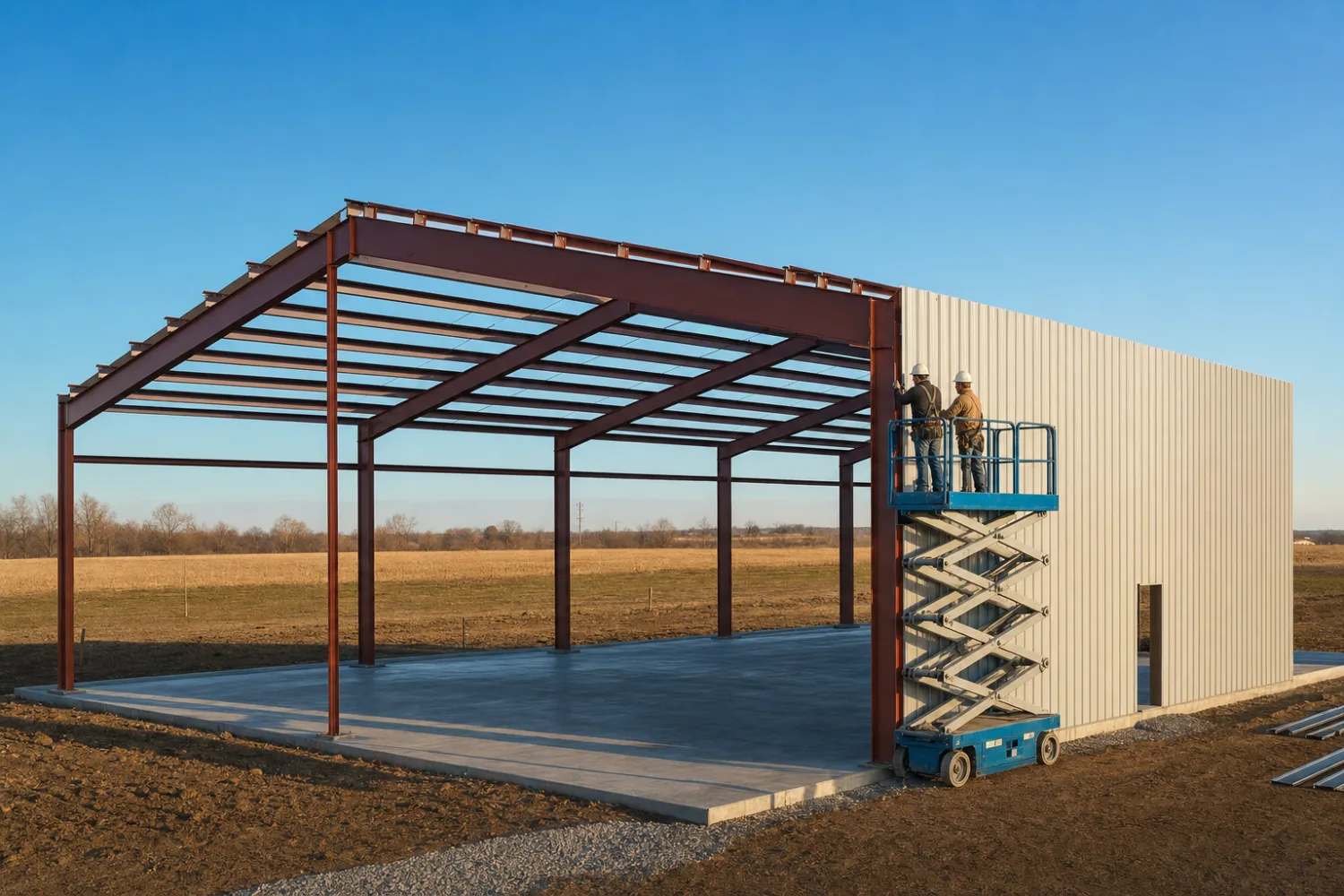
The bolt-up design is what makes a kit DIY in the first place. A maker that pre-punches every connection lets you raise the shell with hand tools and a helper, while a weld-up frame wants a welder and a permit. Read the frame and the build method on the spec sheet, and confirm exactly what shows up on the truck, in our guide to comparing metal building manufacturers.
By project
Match the kit maker to what you are building
The best DIY kit changes with the building, so start from what you are putting up. A maker that runs your size every week knows the spans, the code traps, and the options a generalist learns on your dime.
- Carport or small garage. A light-gauge tube specialist gives you a kit one or two people can raise by hand. Compare options in our best metal garage kit companies guide.
- Workshop, shop, or barn 30 feet wide and up. You want a red-iron maker that engineers the clear span and the load, even though the heavier steel asks for more help on raising day.
- Barndominium or metal home. Look for a brand experienced with living-space framing, insulation, and openings, then check fit in the cross-silo metal building homes pillar.
- Any bolt-up DIY build. Pick a brand known for clear instructions and pre-punched parts. The best DIY metal building brands guide narrows the field by build type.
Price belongs in the decision, but it comes last, after the spec and the maker check out. A low number on a kit you cannot raise alone is not a deal. Sanity-check any quote against real figures in the metal building kit prices hub, and see how the DIY route fits the wider build in the metal building kits pillar.
Red flags
What rules a DIY kit maker out
A few signals should end the conversation no matter how low the price looks. The DIY kit space draws sellers who call a pile of raw steel a “kit,” and the tells are consistent:
- Parts that arrive uncut or unlabeled, so you are fabricating, not assembling.
- No stamped engineering and no named snow or wind load for your address.
- A single lump-sum price with no itemized spec to compare.
- Hardware, anchors, or trim left off the quote and billed later.
- Pressure to sign today on a price that “expires” in hours.
Any one of these is reason to walk. A strong kit maker expects scrutiny and answers in writing; a weak one rushes you past it. Our red flags and scams to avoid guide covers the full list of tactics and how to protect a deposit.
The honest test
The best DIY kit maker for you is the one whose stamped spec matches your loads, whose parts arrive pre-cut and labeled with a real manual, and whose itemized quote holds up against two or three rivals on the same building. A brand can be popular and still be the wrong kit for your span, your site, or your crew.
Do not buy a logo, buy a kit you can raise. The best DIY maker is the one whose pre-punched parts, stamped engineering, and clear instructions match your building and your crew, not the loudest name on the page.
Related
Read more
Choosing a DIY kit maker connects to the rest of the buying decision. Follow these next:
- Metal building companies: the complete guide (the parent pillar).
- Best DIY metal building brands (the named field this page deepens).
- How to compare metal building manufacturers (turn the checklist into a scorecard).
- Best metal garage kit companies (DIY garages and carports specifically).
- Local dealers vs national manufacturers (which buying model fits your project).
- Red flags and scams to avoid (the warning signs before you pay).
- Metal building kit prices (sanity-check any quote by size and scope).