No, a finished metal home does not get hot inside any more than a wood-framed house does. Steel conducts heat, so a bare, uninsulated metal shell will bake in the sun, but a metal home is insulated, finished, and sealed like any other house, which keeps the inside comfortable in summer. The heat myth comes from open metal sheds and barns, not from homes built to live in.
This page sits under the metal building homes pillar and answers the heat question on its own terms: why people worry about it, what controls indoor temperature, and the choices that keep a steel home cool. The frame is steel, but the comfort comes from the same things that comfort any home, insulation, ventilation, roofing, and shading.
The myth
Why people think metal homes get hot
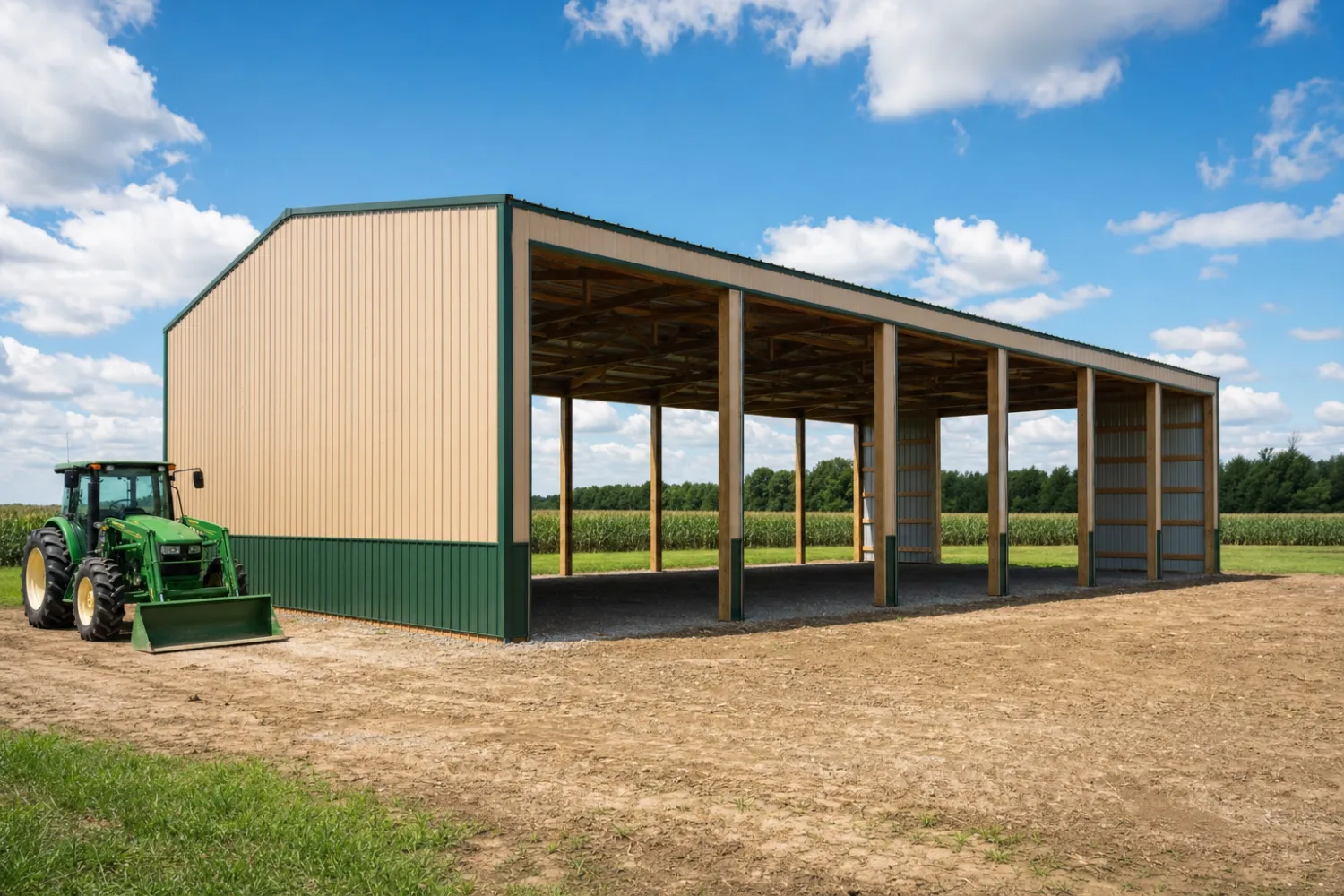
The hot-metal idea comes from buildings that were never meant for living. Picture a bare pole barn or a metal carport on a July afternoon: the steel skin soaks up sun and radiates heat straight into an open, uninsulated space, so it feels like an oven. People feel that, then assume a metal home does the same thing.
A metal home is a different animal. The steel is only the frame and the outer shell; behind it sits insulation, a vapor barrier, an interior finish, and a sealed envelope, the same layers that keep a stick-built house from cooking. Steel does conduct heat fast, which is why the insulation and the thermal break behind the panels do the real work. Done right, the frame material barely registers on the thermostat. That is also why a metal home can be energy efficient rather than a heat trap.
What controls it
What keeps a metal home cool
Indoor temperature is set by the envelope and the systems, not by the frame metal. Five factors do almost all of the work, and a metal home can hit each one as well as any other house.
| Factor | Why it matters | What helps |
|---|---|---|
| Insulation | The single biggest control on heat gain through walls and roof | Spray foam, batt, or rigid board to a solid R-value ‹confirm› |
| Radiant barrier | Reflects the sun’s radiant heat before it loads the shell | Foil-faced barrier under the roof panels |
| Roof color & coating | A light or reflective roof rejects more solar heat than a dark one | Light-colored or cool-rated panel finish |
| Ventilation | Moves trapped attic and interior heat out | Ridge vents, soffit vents, attic airflow |
| HVAC sizing | A right-sized system holds temperature without straining | Load-calculated heating and cooling ‹confirm› |
The frame metal is not on this list. Comfort is built into the envelope, not the steel.
Insulation leads the list by a wide margin. A well-insulated steel shell slows heat at the wall and roof, so the cooling system is not fighting a hot envelope all day. Pair that with a reflective barrier under the roof and a light-colored panel finish and you cut the solar load before it ever reaches the inside. The full picture lives in our insulating and finishing guide.
Hot climates
Metal homes in hot, sunny climates
A metal home works in Texas, Arizona, and Florida heat, and thousands of them already do. The hotter your climate, the more the cooling choices matter, so you lean harder on insulation, a reflective roof, and shade. None of that is unique to steel; a wood house in Phoenix needs the same attention.
Design for the sun, not against the metal
In a hot climate, the wins come from design, not from avoiding steel. A light or cool-rated roof, deep porch overhangs that shade the walls, and continuous insulation with a radiant barrier keep the shell from loading heat. Orient the long walls and big windows away from the worst afternoon sun where the lot allows. These moves cost little at the build stage and pay back every summer on the heating and cooling bill.
The one trait to respect is that steel heats and cools fast. A bare shell spikes in the sun, but the same speed works for you once the envelope is sealed: a well-insulated steel home loses its stored heat quickly in the evening, so it cools down at night instead of holding the day’s warmth like masonry. The frame’s behavior is a detail to design around, not a reason to skip a metal home.
The real issue
The bigger concern is moisture, not heat
If you are weighing a metal home, condensation deserves more of your attention than summer heat. The same insulation and vapor barrier that keep the inside cool also keep warm, humid air from hitting cold steel and beading into water, which is the moisture problem bare metal buildings are known for.
Build the envelope right and heat takes care of itself. A sealed, insulated steel home stays cool in summer and dry year round, because the same layers solve both at once.
So the answer holds: a finished metal home does not run hot, as long as it is insulated and sealed like the house it is. Get the envelope right and you get comfort, low bills, and a dry shell in one. For the room-by-room detail, see insulating and finishing your interior, and for system sizing, the heating and cooling guide.
Related
Read more
This question connects to insulation, comfort, and running costs. Follow these next:
- Metal building homes: the complete guide (the parent pillar).
- Are metal homes energy efficient? (the efficiency side of the same envelope).
- Heating & cooling a metal home (sizing systems and holding temperature).
- Insulating & finishing a metal home interior (the layers that control heat and moisture).
- Metal building uses (where steel shells fit, from homes to shops).