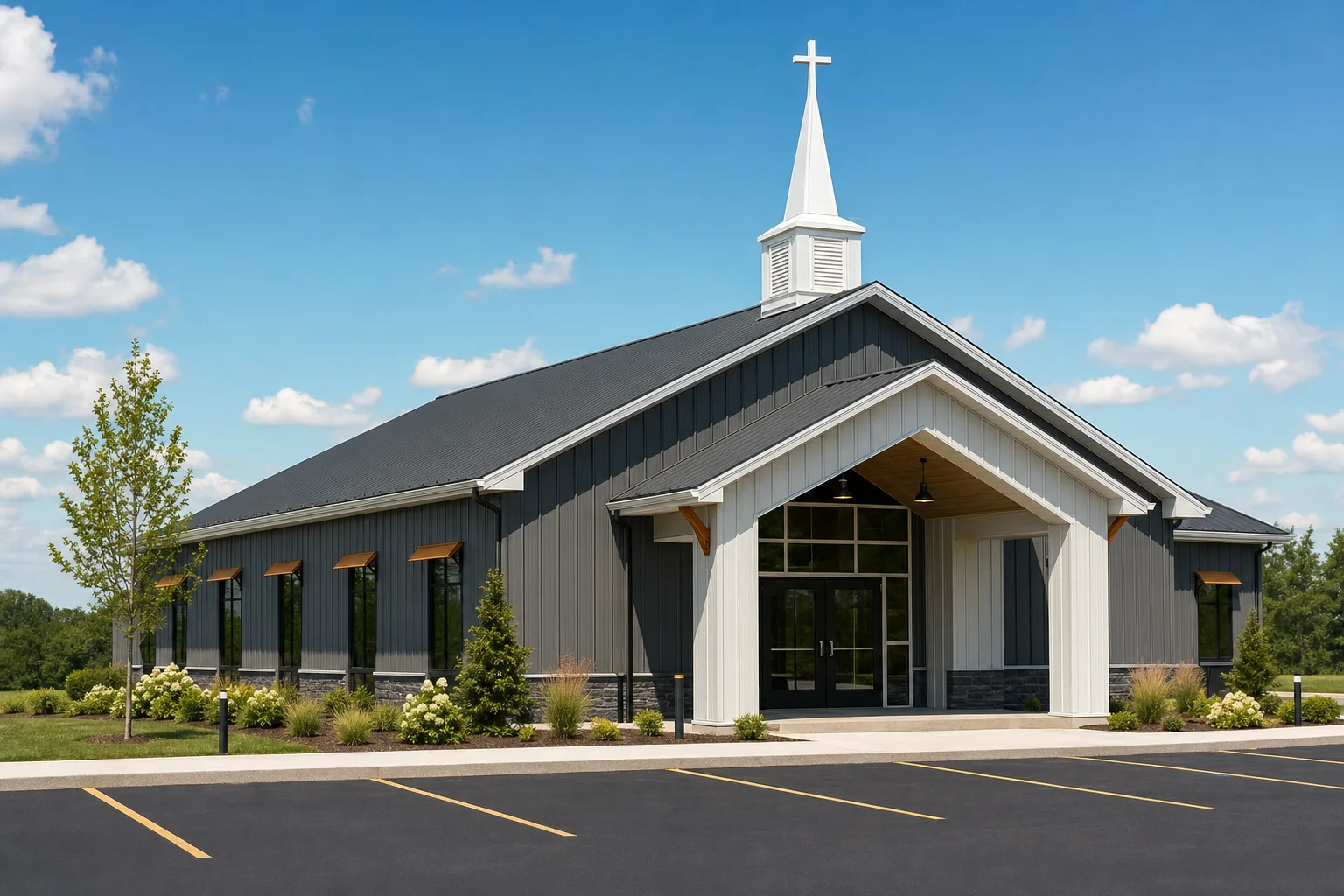
Yes, lightning can strike a metal building, the same way it can strike any tall or exposed structure. A grounded metal building is one of the safer places to be in a storm, though, because the steel frame and panels conduct the charge around the people inside and carry it down to the earth instead of through the interior.
The steel does not attract lightning more than a wood building of the same height, and it does not turn you into a target. What it does is give the strike a clear, low-resistance path to ground, which is exactly what you want. This page is the deep answer to that one question. For how grounding gets verified on paper, see our metal building permits and codes guide, which sits under the metal building kits pillar.
Why it is safer
Why a metal building is safer in a lightning storm
A metal building acts like a Faraday cage: the conductive steel shell carries a strike around its outside and down to the ground, leaving the space inside protected. This is the same principle that makes a car one of the safest places in a storm. The current travels through the metal skin, not through the air inside or the people standing in it.
Steel is a strong conductor, so a strike that lands on a metal roof spreads across the frame and runs down the columns toward the foundation. A wood-framed building offers no such path, which is part of why lightning is more likely to start a fire when it hits wood than when it hits a grounded steel structure. The shell that makes people nervous is the same shell that protects them.
The cage only works if the cage is closed
The Faraday-cage effect depends on the steel being electrically continuous and bonded to a proper grounding system. A frame that is well connected and grounded routes the strike safely. During a storm, stay inside, off the phone on a corded line, and away from plumbing and any wiring that is not surge-protected. The building protects you best when you let the steel do the conducting and keep your hands off paths the current might jump to. Confirm the grounding and electrical work meets your local code.
Grounding
Why grounding is the whole answer
Lightning protection comes down to grounding, not to the steel by itself. A metal building gives the current a path, and grounding gives that path somewhere safe to end. When the frame, the metal panels, and the electrical system are bonded together and tied to grounding electrodes driven into the earth, a strike dissipates into the soil with little drama. When they are not, the current can arc to find ground, and that side-flash is where damage and danger live.
Electrical codes already require the building and its service to be grounded, so a permitted, properly wired metal building starts with much of the protection built in. For high-exposure sites, a hilltop, an open field, the tallest structure for a mile, a dedicated lightning protection system with air terminals and down conductors adds another layer. Either way, the grounding is the part an inspector checks, which is one more reason to keep the permit and code work in the plan rather than skipping it to save a fee.
| The worry | What is true |
|---|---|
| A metal building attracts lightning | No. Height and location decide strike odds, not the material ‹confirm› |
| The steel makes the inside dangerous | No. A grounded shell carries the charge around occupants |
| Lightning will set the building on fire | Less likely than with wood, since steel conducts rather than burns |
| Grounding is optional | No. It is the part that makes the protection real, and code requires it |
| You are safer outside | No. A grounded metal building is among the safest places in a storm |
Common worries about lightning and steel, set against what holds up. Strike odds track height and exposure, not the metal.
What can go wrong
What a strike can still damage
People inside a grounded metal building are well protected, but the building’s electronics are the weak point. A nearby or direct strike can push a voltage surge through the wiring and fry anything plugged in: panels, controls, well pumps, HVAC boards, and shop equipment. The structure shrugs the strike off, while a circuit board does not. That is why a whole-building surge protector at the service panel, plus point-of-use protection on sensitive gear, is the practical upgrade most owners should make.
The other risks sit at the edges. An ungrounded metal carport or a poorly bonded add-on does not get the full cage benefit, so loose connections matter. Trees taller than the building can take a strike and side-flash to the steel, and an antenna or a flagpole rising above the roofline changes the strike geometry. None of this argues against a metal building. It argues for grounding it well and protecting the electronics, the same care you would put into the snow and wind loads that the same storms bring.
Lightning does not punish a metal building. It tests the grounding. Build the path to earth right and the steel does the rest.
Related
Read more
This answer connects to grounding, severe weather, and the rest of the buying decision. Follow these next:
- Metal building permits and codes (where grounding and electrical work get checked and stamped).
- Metal building kits: the complete guide (the parent pillar).
- Snow load and wind load explained (engineering the same building for the storms that bring lightning).
- Metal building homes (the cross-silo pillar for living in a steel-framed structure).