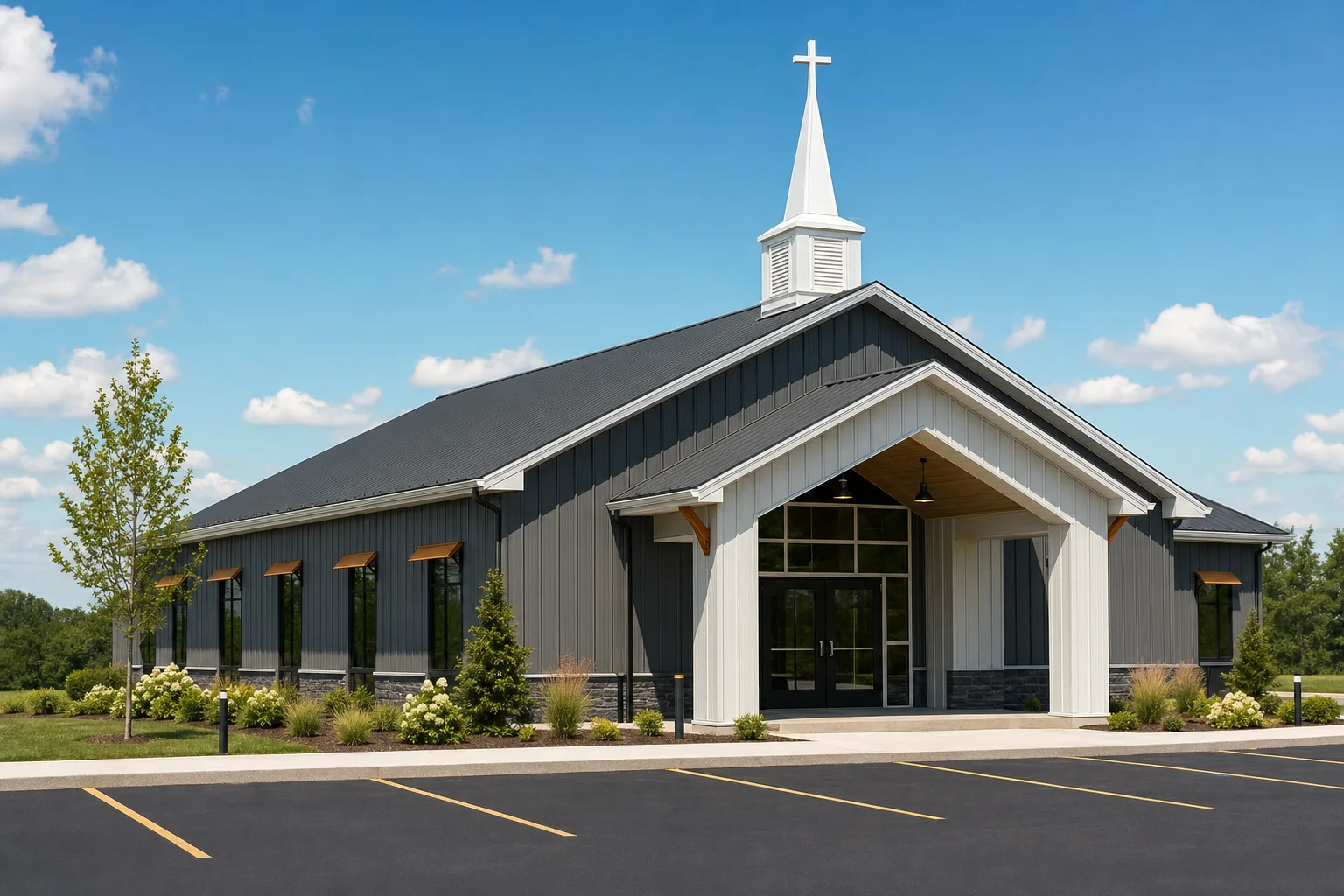
A metal building kit ships as bundled steel on a flatbed truck, and it lands weeks after you order, once the factory has rolled and cut your frame. You prep the site before the truck arrives: clear access for a long rig, level a pad, pour and cure the slab, and set aside a staging area to lay the parts out. When the load arrives you check it against the packing list, document any damage on the spot, and unload, which on most kits is your responsibility, not the carrier’s. Plan the delivery and the site work together, because the steel cannot come off the truck until the ground is ready for it.
This guide sits under the metal building kits pillar in our Basics & Buying silo. Below: how kits ship and what the lead time looks like, the site prep that has to be done before the truck rolls in, how to receive and inspect the load, a rough cost orientation for freight, and where delivery falls in the overall timeline. Get the sequence right and the steel goes from truck to frame without a hitch; get it wrong and you are paying for a redelivery or a crane you did not plan for.
How it ships
How a metal building kit is delivered
Your kit travels by freight, almost always on a flatbed trailer, because the steel comes in long bundles that will not fit in an enclosed box truck. The primary frame, the columns and rafters, ships strapped in bundles, with the panels, purlins, girts, trim, fasteners, and anchor bolts loaded alongside. A small carport kit may come on a single truck, while a large shop or commercial shell can need several loads spread over days.
Lead time is the part that surprises first-time buyers. A metal building kit is engineered and fabricated to your order, so it does not ship the week you pay. From order to delivery often runs several weeks ‹confirm›, longer in busy season or when the engineering needs a permit-stamped revision. The clock starts after your drawings are approved, not the day you place a deposit, so confirm the real ship date in writing and plan the slab pour around it.
Unloading is yours to arrange on most kits. The carrier drives the truck to your site and drops the trailer or waits while you pull the steel off, but the driver does not unload it. You need a forklift, a skid steer with forks, a tractor, or a small crane rated for the heaviest bundle, plus a helper or two. Some suppliers offer a truck with a lift gate or a self-unloading trailer for an added fee, which is worth asking about if you have no equipment. Sort out who unloads before the truck is at your gate, not after, and check the common buying mistakes so you do not get caught flat.
Before the truck
Site prep to finish before the delivery truck arrives
The site has to be ready before the steel shows up, and the work runs in a fixed order. A flatbed is long and heavy, so the approach and the pad both matter, and the slab the frame bolts to has to be poured and fully cured before the columns can stand on it. Run the prep in this sequence:
- Confirm truck access. A loaded flatbed is long and heavy, so check that the rig can reach your pad. Look at gate width, overhead branches and wires, soft or muddy ground, tight turns, and low bridges on the final road. Tell the carrier what the approach is like before they dispatch.
- Clear and grade a level pad. Strip the topsoil, level the building footprint, and compact the base so water drains away from it. A flat, firm pad is what the slab and the frame both sit on, and it is the foundation work covered in the foundation options guide.
- Pour and cure the slab. The concrete slab, with the anchor bolts set in the wet pour, has to be down and cured before the frame can be raised. Concrete needs time to reach strength, so pour well ahead of the steel’s arrival, not the same week.
- Set up a staging area. Clear a flat, dry spot next to the pad to lay the bundles out as they come off the truck. You want room to sort parts by the packing list and keep the steel up off wet ground on dunnage or blocks.
- Stage your unloading equipment. Have the forklift, skid steer, or crane on site and fueled, with the operator ready, so the truck is not waiting on you and racking up demurrage charges.
| Prep item | Why it matters |
|---|---|
| Truck access route | A long flatbed needs width, firm ground, and clearance; a rig that cannot reach the pad means an unload at the road and a longer carry, or a refused delivery |
| Level, compacted pad | The frame and slab both need a flat, well-drained base; an uneven or soft pad leads to a crooked frame and standing water at the column bases |
| Slab poured and cured | The columns anchor into cured concrete; if the slab is not ready or not strong yet, the steel sits and waits and your build stalls |
| Staging area | A dry, flat spot to lay out and sort the bundles keeps the steel off wet ground and lets you check it against the packing list |
| Unloading equipment on site | The driver does not unload; a forklift or crane rated for the heaviest bundle, with an operator, has to be ready when the truck arrives |
Finish each item before the delivery date. The truck cannot wait while you catch up on site work.
Receiving the load
How to receive and inspect the delivery
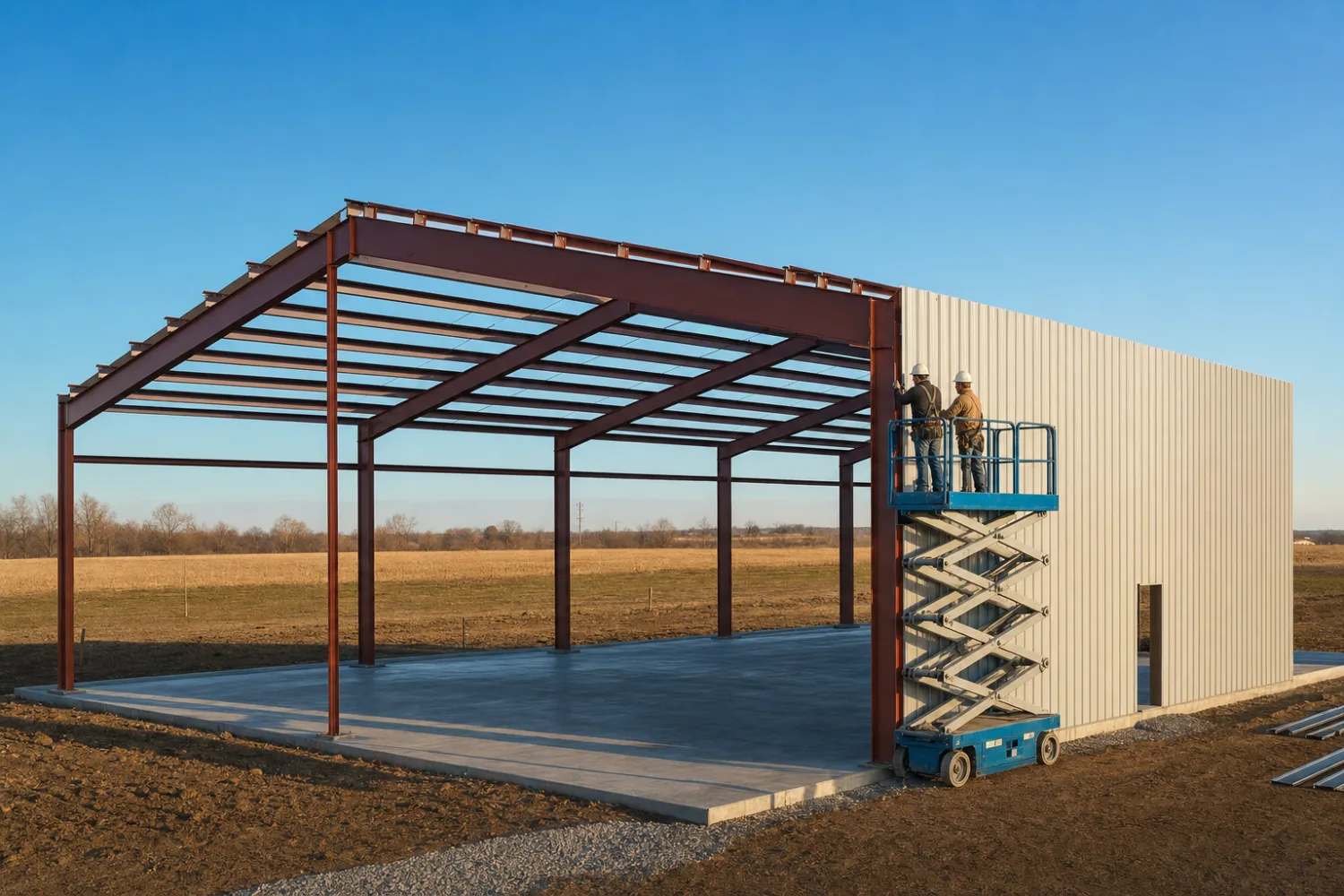
Inspect the load the day it lands, before the driver leaves. The packing list, sometimes called a bill of materials, lists every bundle, panel, and box of fasteners in the shipment. As the steel comes off the truck, check each item against that list and look the bundles over for bent flanges, gouged panels, crushed trim, or water-stained insulation. Freight steel can take a knock in transit, and the time to catch it is while the carrier is still standing there.
If something is short or damaged, write it on the delivery receipt before you sign, and photograph it. A note on the receipt is your proof for a freight claim or a replacement part; a signature with no exceptions tells the carrier and the supplier the load arrived clean. Take photos of the damage and the bundle tags, and call your supplier the same day. Sorting a shortage early keeps it from stopping the build later, and it ties back to the kit parts list you were promised.
Check the load before the truck leaves
Do the count and the damage inspection while the driver is still on site, and note every shortage or ding on the delivery receipt before you sign it. Once you sign a clean receipt and the truck pulls away, a freight claim gets far harder to win, because the carrier can argue the damage happened after delivery. Five minutes with the packing list at the tailgate protects you from paying for parts that arrived broken or never arrived at all.
Cost orientation
What delivery costs
Freight is priced by distance, load size, and fuel, so there is no flat number. As a dated 2026 orientation, delivery on a typical kit often runs somewhere in the hundreds to a few thousand dollars ‹confirm›, rising with the distance from the plant, the number of trucks your kit needs, and any special handling like a lift gate or a remote, hard-access site. A small carport on one local truck sits at the low end; a large multi-load commercial shell hauled across several states sits much higher.
Read how freight is quoted before you compare prices. Some suppliers fold delivery into the kit price, and some bill it separately, so a cheaper sticker can hide a freight charge that closes the gap. Ask whether the quote is delivered or pickup, whether unloading or a lift gate costs extra, and what a redelivery or a wait-time charge runs if the site is not ready. Put freight on the spec sheet next to the steel, the way the cost guide treats it, so you are comparing the same thing across quotes.
The timeline
Where delivery fits in the project timeline
Delivery is the hinge between the paperwork and the build. The order goes like this: you finalize the design and pull the permit, the factory engineers and fabricates the steel over several weeks ‹confirm›, and while that runs you do the site work and pour the slab. The truck arrives once both tracks meet, and the frame goes up after that. The two timelines, fabrication and site prep, run side by side, which is the whole reason to start the foundation early.
The common mistake is treating delivery as the start of the project instead of the middle. If you wait for the steel to land before you grade the pad and pour, the kit sits in your staging area for weeks while the concrete cures, and you may owe storage or have steel exposed to weather longer than you want. Line the slab pour up to finish, cure, and pass inspection a little before the ship date, so the frame can go up soon after the truck leaves. The buying checklist lays out the full order of operations from quote to finished building.
FAQ
Metal building delivery and site prep: common questions
How is a metal building kit delivered?
By freight, almost always on a flatbed trailer, because the steel ships in long bundles. The primary frame, panels, trim, fasteners, and anchor bolts arrive strapped together, with a packing list. A small kit may come on one truck; a large shell can need several loads. See what is included in a kit for the full parts list you should expect on the truck.
How much does delivery cost?
Freight is priced by distance, load size, and fuel, so it varies. As a dated 2026 orientation, delivery on a typical kit often runs from the hundreds into a few thousand dollars ‹confirm›, more for long hauls, multiple trucks, or a hard-access site. Ask whether the quote is delivered or pickup, and whether a lift gate or wait-time charge costs extra, before you compare prices.
What site prep do you need before delivery?
Confirm the truck can reach the pad, clear and level a compacted base, pour and cure the slab with the anchor bolts set, set aside a staging area for the bundles, and have unloading equipment on site. The slab work is covered in the foundation options guide. Finish all of it before the delivery date, because the truck will not wait on site work.
Who unloads the truck?
You do, on most kits. The driver delivers the steel but does not unload it, so you need a forklift, a skid steer with forks, a tractor, or a small crane rated for the heaviest bundle, plus a helper or two. Some suppliers offer a lift-gate truck or self-unloading trailer for a fee, which is worth asking about if you have no equipment of your own.
How long does delivery take?
From order to delivery often runs several weeks ‹confirm›, because the kit is engineered and fabricated to your order, with longer waits in busy season or when the drawings need a permit revision. The clock starts after your engineering is approved, not the day you pay a deposit. Confirm the real ship date in writing and plan your slab pour to finish a little before it.
What do you do if the load arrives damaged?
Inspect the load against the packing list before the driver leaves, note any shortage or damage on the delivery receipt before you sign, and photograph it. That written exception is your proof for a freight claim or a replacement part. Call your supplier the same day. A clean signature with no notes makes a later claim much harder to win.
Related guides
Keep reading
Delivery connects to the foundation, the kit contents, and the order of operations. Follow these next:
- Metal building kits: the complete guide (the parent pillar).
- Foundation options for metal buildings (the slab and pad that have to be ready first).
- What’s included in a metal building kit (the parts list the truck should match).
- Common metal building buying mistakes (the delivery and prep traps to avoid).
- Metal building buying checklist (the full order of operations from quote to finished building).