Yes, Home Depot sells metal building kits. You will find steel carports, metal garages, and pre-engineered building kits, mostly through homedepot.com and its online marketplace rather than stocked on the store floor. Home Depot does not manufacture these buildings; it lists kits from third-party steel brands and ships them to you, so the company you buy through is the retailer, not the maker of the building.
This page is the deep answer to a question our metal building companies pillar and a few silo guides touch on briefly. Below is what Home Depot offers, how the marketplace model changes who stands behind your kit, and how buying this way compares to going to a dedicated steel dealer.
What they sell
What Home Depot offers under metal buildings
Home Depot carries the lighter end of the market more than heavy red-iron shops. The catalog leans toward carports, covers, and small to mid-size steel garages, with larger pre-engineered kits available online from outside brands.
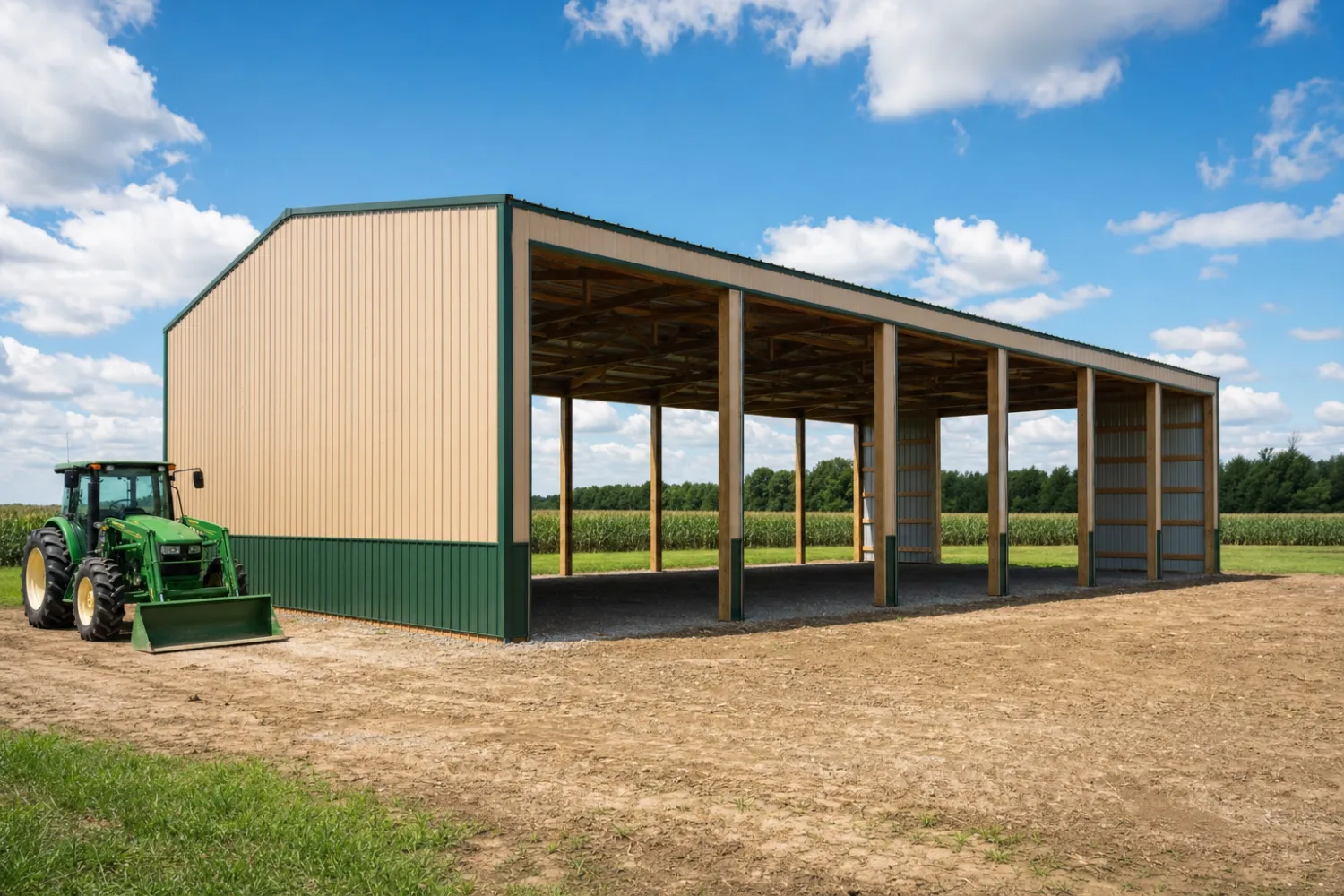
- Metal carports and covers. Open and partly enclosed steel carports for vehicles, RVs, and equipment are the most common listing, often the same tube-frame style sold by carport specialists.
- Steel garages and small shops. Enclosed metal garage kits in common sizes, suited to single and two-vehicle bays. See the best metal garage kit companies for how the dedicated brands compare.
- Larger building kits, online. Bigger pre-engineered steel kits appear in the online marketplace from third-party manufacturers, shipped direct rather than held in a local store.
- Sheds and accessory structures. Smaller metal and steel sheds sit alongside the building kits for storage-scale needs.
What you usually will not find is a fully custom, locally engineered red-iron shop stamped for your exact site. For that, a steel building dealer is the better route, which is the heart of local dealers vs national manufacturers.
How it works
How buying a kit through Home Depot works
When you order a metal building through Home Depot, the building itself comes from a separate steel manufacturer, and Home Depot is the storefront and payment layer. That split matters because it shapes who handles your engineering, delivery, and any warranty claim.
- The maker is a third party. The kit is designed and built by the listed manufacturer, so the steel gauge, frame type, and warranty are theirs, not the retailer’s.
- Delivery ships from the maker. Freight and lead times follow the manufacturer’s schedule, and install may be a separate add-on ‹confirm› or left to you.
- The spec still drives the price. Frame type, metal building kit inclusions, and load rating decide what you pay for, the same as buying direct.
Read who stands behind it
Because the building is a third-party product, find the manufacturer’s name on the listing before you buy, then check that brand’s warranty, frame spec, and load rating ‹confirm›. The retailer handles the transaction; the maker handles the building.
Compare
Home Depot vs a dedicated steel dealer
Buying through a big retailer trades local engineering and hands-on support for a familiar checkout and a one-stop catalog. Neither is wrong; they fit different projects. These are general patterns, not a scorecard of any one brand.
| Through Home Depot | Through a steel dealer | |
|---|---|---|
| Who makes the kit | Third-party brand on the listing | The dealer or its named factory |
| Best for | Carports, small garages, simple kits | Custom, wide-span, engineered shops |
| Engineering support | Limited, varies by seller ‹confirm› | Direct, site-specific stamps |
| Customization | Catalog sizes and options | Built to your size and loads |
| Where you buy | Online and select stores | Quote and order with the dealer |
General comparison, not a verdict. The right path depends on how custom and how load-rated your building must be.
If you are weighing the box stores against each other, the same model applies at Lowe’s and Menards: each is a retailer listing third-party steel. The deeper look at this one lives in our Home Depot metal buildings review.
Is it right for you
When buying through Home Depot makes sense
A retailer kit makes sense when your building is simple, common in size, and you value a familiar checkout over local engineering. It makes less sense when you need a wide-span, heavily load-rated, or custom shop.
- Good fit: a standard carport, cover, or small steel garage where catalog sizes match your need.
- Check first: that the kit is stamped for your local snow and wind loads, because a generic rating can fall short of code where you build.
- Look elsewhere: for a wide red-iron shop or a custom footprint, where a dealer’s site-specific engineering earns its place.
Whichever way you go, compare the full spec, not the headline price. Two kits at the same number can hide different gauges, frame types, and inclusions, and the cheaper sticker is rarely the cheaper building once you add freight, anchoring, and a slab.
Related
Read more
Keep going with the guides that put this question in context:
- Metal building companies: the complete guide (the parent pillar).
- Home Depot metal buildings review (the full look at what they list and how).
- Local dealers vs national manufacturers (who engineers and backs your kit).
- Best metal garage kit companies (the dedicated brands to compare against).
- Metal building kits (the cross-silo guide to what a kit includes).