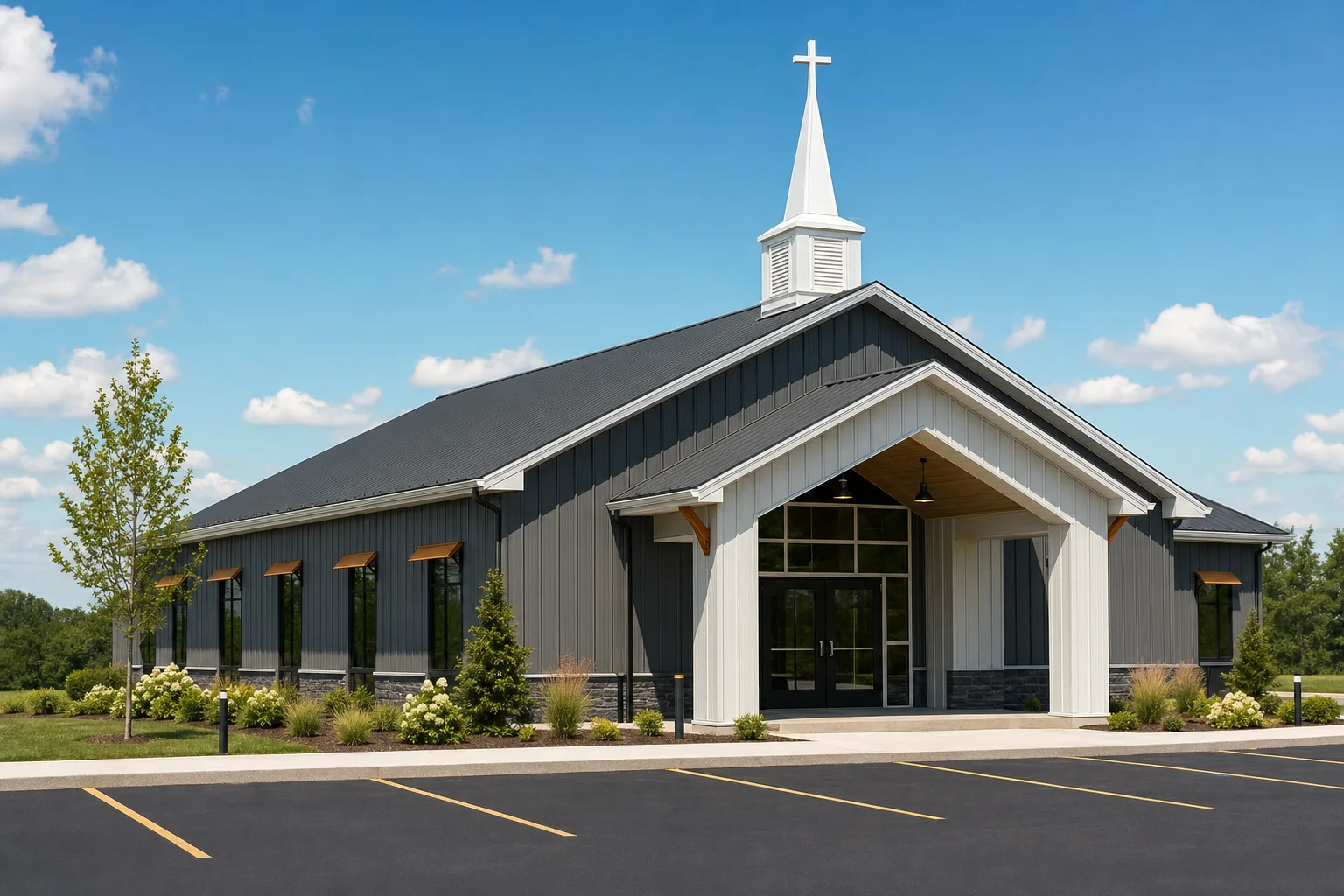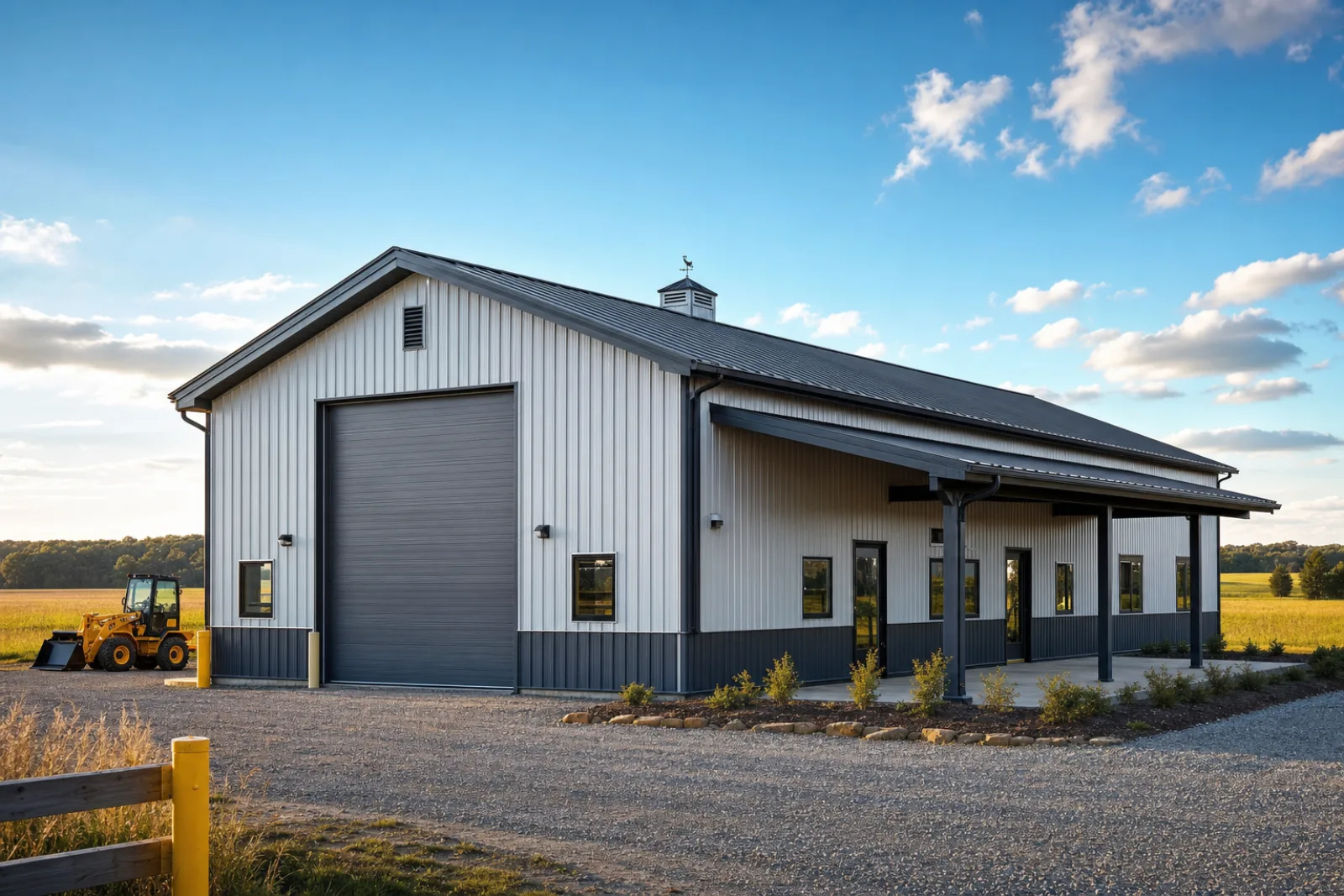
A bare, uninsulated metal building can be loud in heavy rain, because the thin steel roof panels vibrate and amplify the drumming sound. An insulated, finished metal building is about as quiet as a shingled house, and often quieter. Noise is not a property of the steel itself; it is a property of an empty shell with nothing between you and the panel to absorb the sound. Add insulation and an interior ceiling and the rain becomes background, not a roar.
This page sits under the metal building kits pillar and answers the noise question on its own terms: why an open shell drums, what each layer does to quiet it, and how loud the common building types land in a storm. For the full how-to on the layer that does most of the work, our metal building insulation guide walks the options. Here we settle the question itself.
Why it drums
Why an uninsulated metal building is loud in rain
An empty metal shell is loud for one reason: nothing absorbs the impact. A raindrop hits a thin steel panel, the panel flexes, and the air gap behind it acts like a drum that broadcasts the sound into the room. Three things make a bare shell ring.
- Thin, stiff panels. A roof panel is light gauge steel stretched over wide spacing, so it flexes and rings on impact the way a drumhead does.
- A large unbroken surface. A whole roof of connected panels carries and spreads the vibration, so the sound fills the building instead of staying at one spot.
- Hard, empty interior. Bare steel walls and a concrete floor reflect sound rather than soak it up, so the drumming bounces and feels louder than it is.
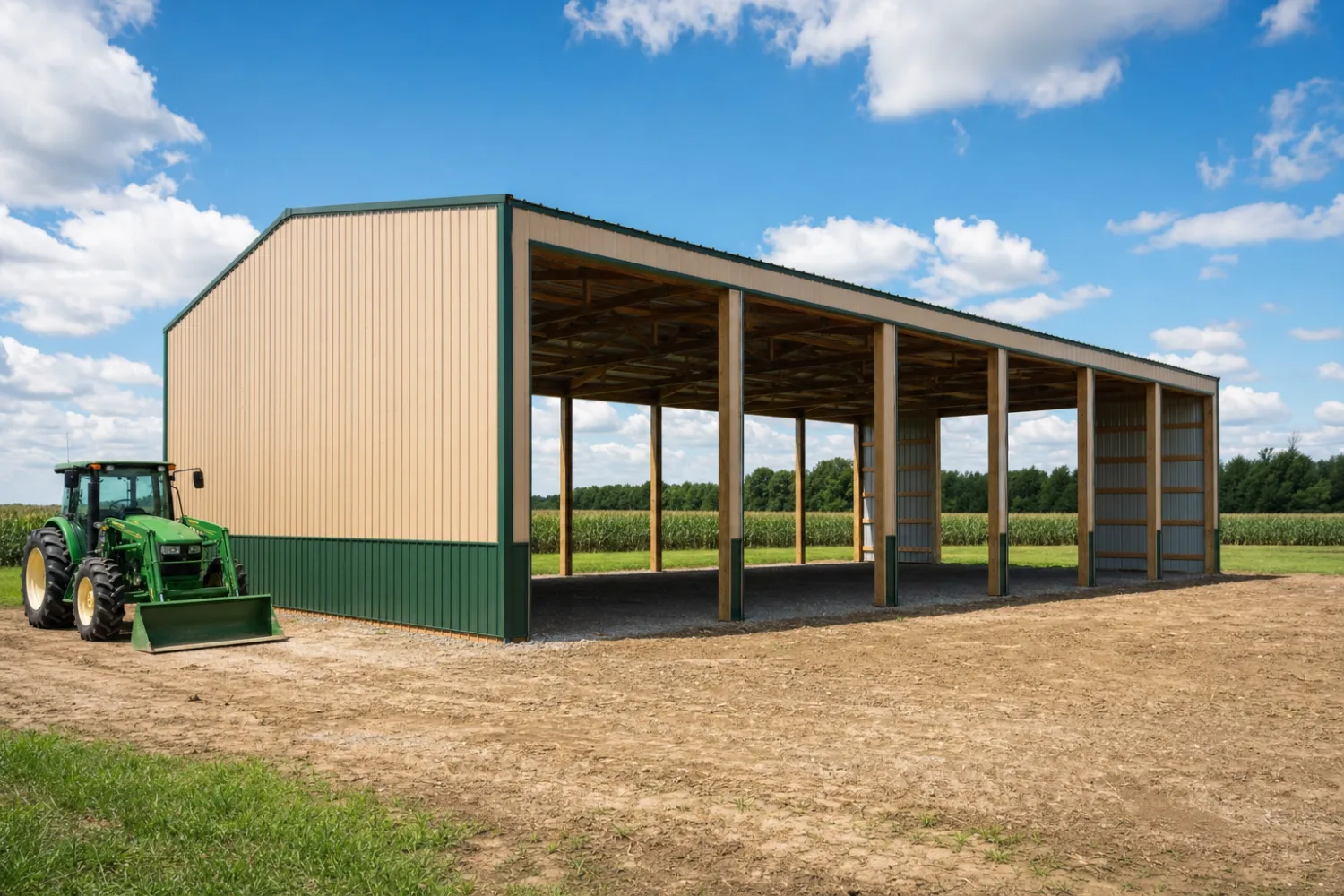
Picture a tin carport or an open pole barn in a downpour: that is the worst case, an exposed panel with nothing behind it and hard surfaces all around. It is the version of a metal building most people have stood under, which is why the loud reputation sticks. A finished building is a different animal, because every layer you add between the panel and your ear takes energy out of the sound.
What quiets it
What makes a metal building quiet in the rain
Quiet comes from layers, not from thicker steel. Each layer you put between the roof panel and the room either dampens the panel so it cannot ring or absorbs the sound before it reaches you. Stack a few and a storm drops to background noise.
| Layer | What it does to the noise |
|---|---|
| Insulation | The biggest fix. Batt, blanket, or spray foam dampens the panel so it cannot ring and absorbs the impact sound |
| Solid roof deck or sheathing | A wood or board deck under the panel kills the drum effect by removing the open air gap behind the steel |
| Attic or ceiling cavity | An air space and a finished ceiling put distance and a second surface between the panel and the room |
| Interior lining | Drywall, plywood, or a finished ceiling adds mass and a soft surface that soaks up reflected sound |
| Panel profile and gauge | A heavier gauge or a stiffer standing-seam profile flexes less, so it rings less to begin with |
Noise is a layering problem. The more you put between the panel and your ear, the quieter the storm.
Insulation does most of the work, which is why it is the first upgrade for any building you plan to spend time in. The same insulation that quiets the rain also controls the condensation that beads on bare panels, so one layer pays off twice. Your roof choice helps too: a standing-seam panel over a solid deck runs quieter than exposed-fastener panels on open purlins, a tradeoff our roof styles guide covers in full.
A finished metal home is not loud
Owners of insulated metal building homes report that heavy rain reads as a soft hush, not a roar. By the time the sound passes through insulation, an attic, and a drywall ceiling, a steel roof is no louder than asphalt shingles. If quiet matters, build it in, the way you would in any metal building home, and the storm stops being a talking point.
By type
How loud each building type gets in a storm
How loud your building gets in the rain comes down to how finished it is, not whether it is steel. Run the common types from open to enclosed and the noise drops at every step.
- Carport or open cover. Loudest. A single exposed panel with nothing behind it, and you are standing right under it. This is the sound people remember.
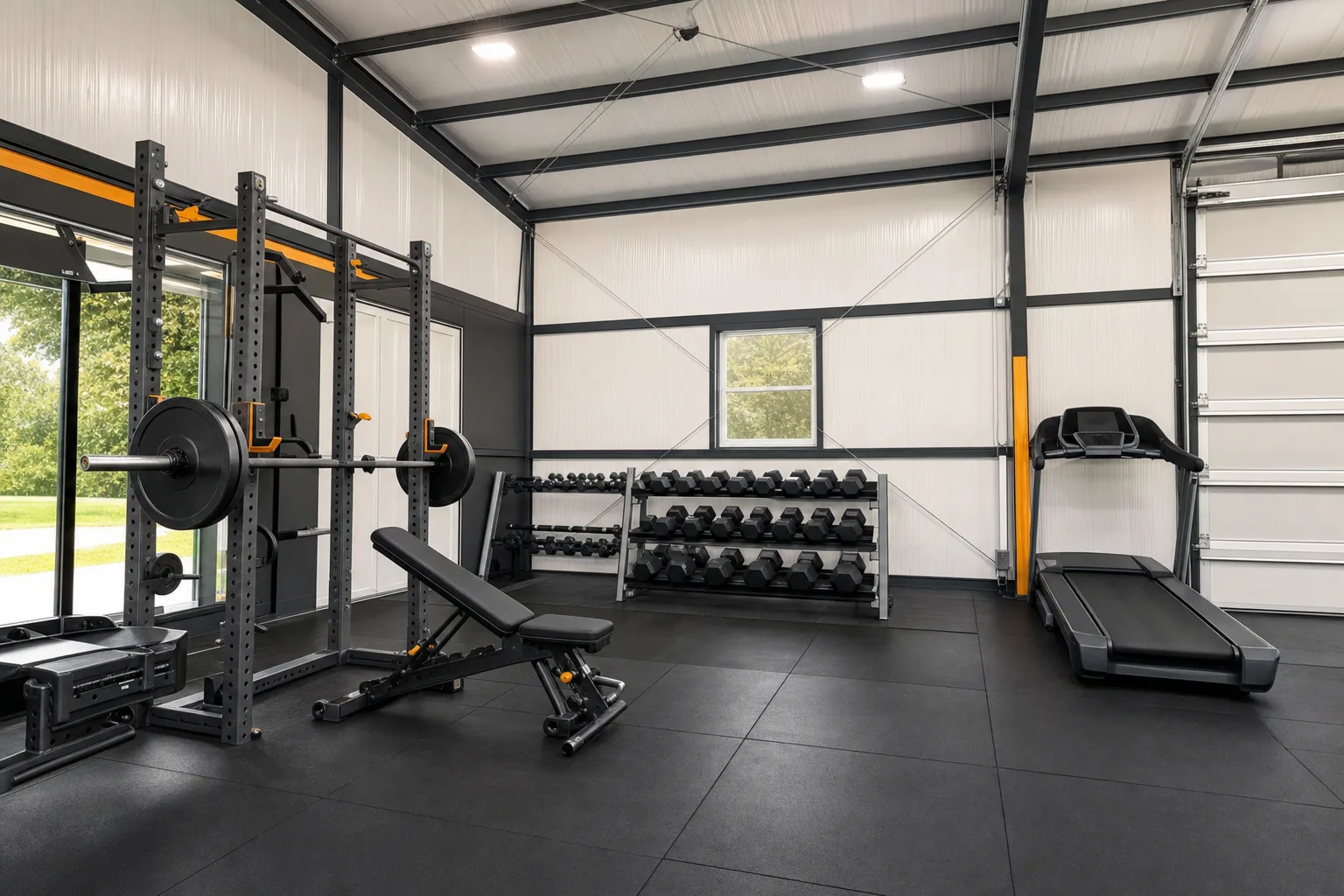
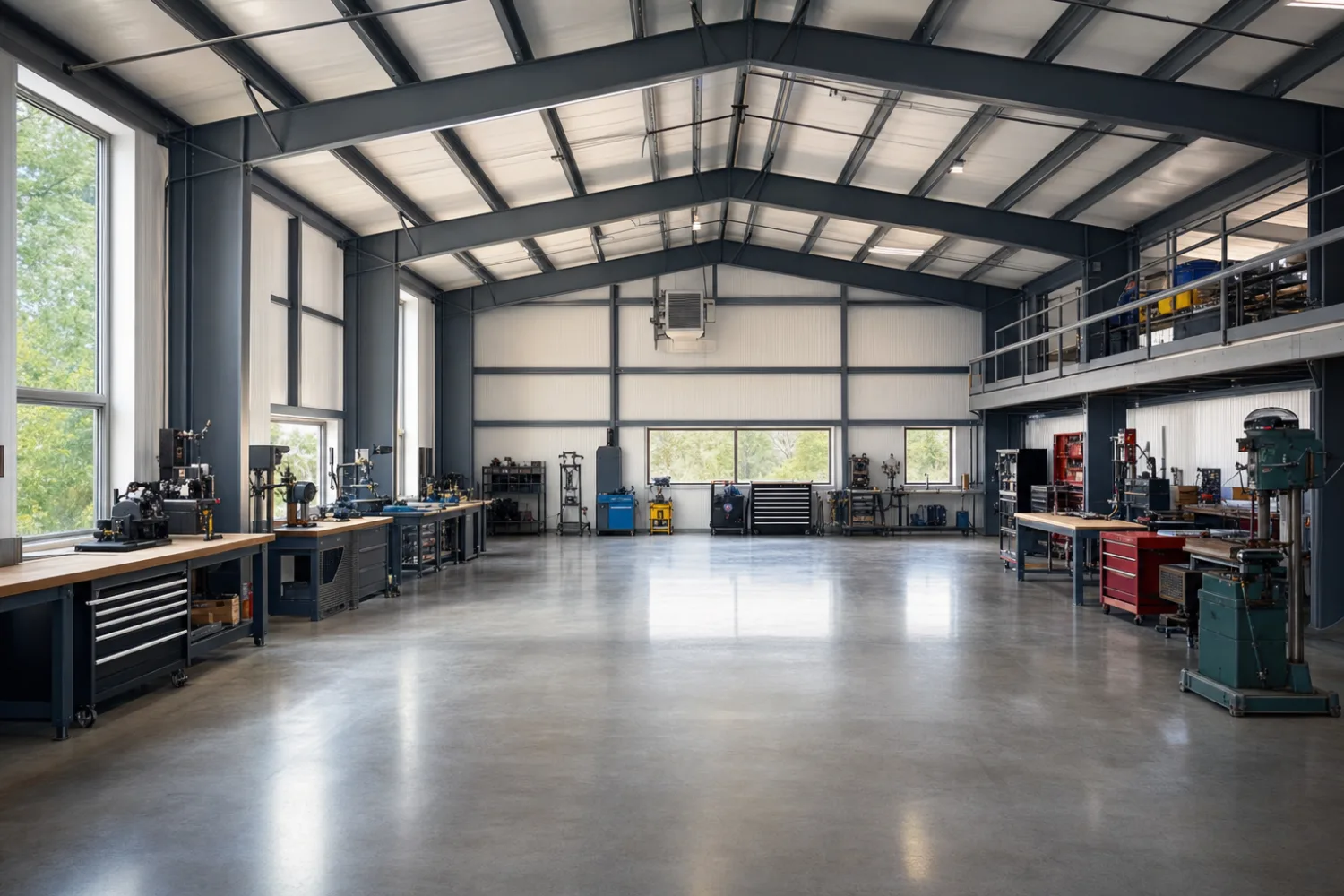
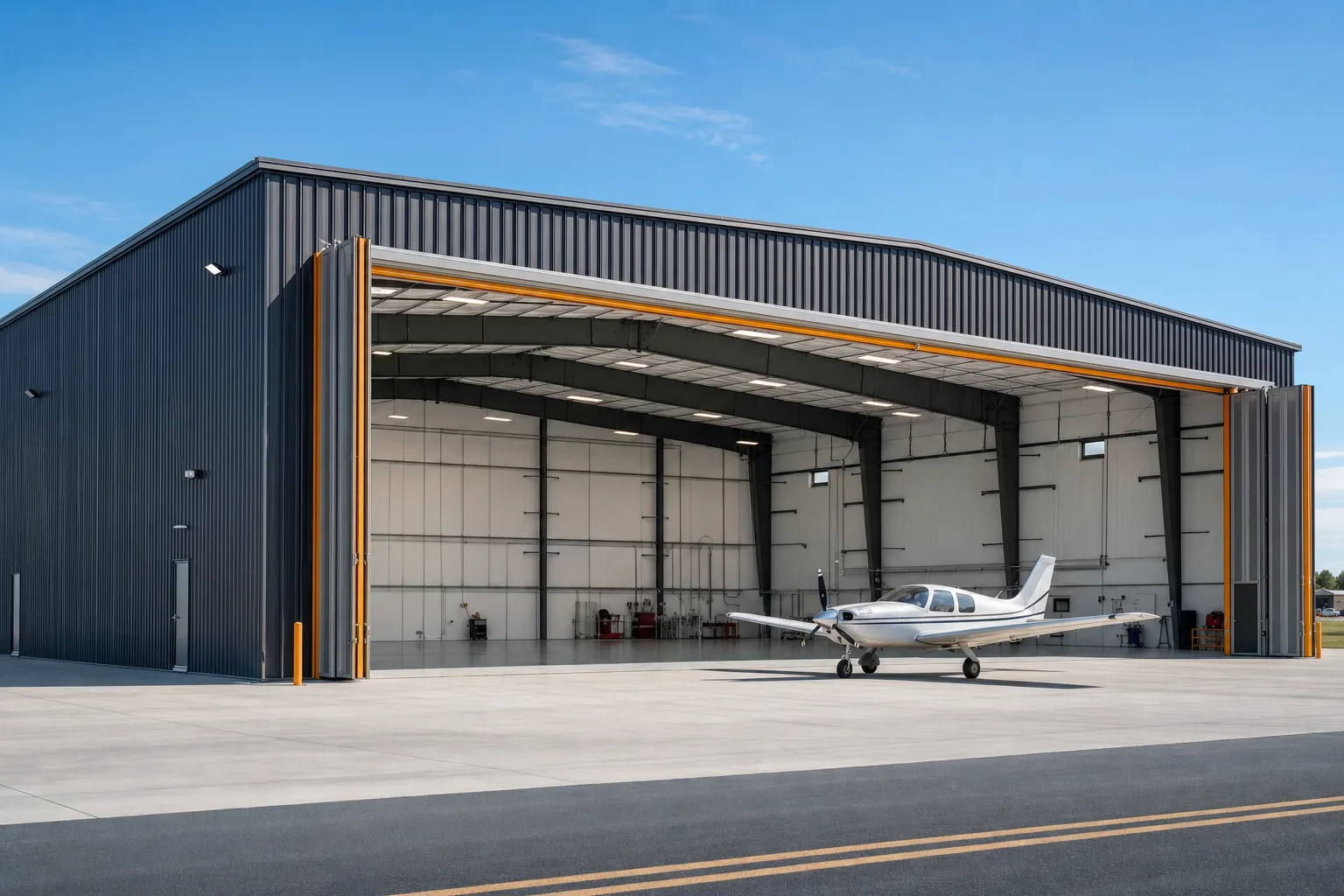
- Bare metal shop or barn. Loud during a downpour, fine in light rain. An uninsulated shell with hard surfaces, livable but echoey in a real storm.
- Insulated shop or garage. Quiet. Insulation alone takes most of the edge off, and rain becomes a background sound you stop noticing.
- Insulated, finished home. Quietest. Insulation, an attic, and a ceiling put a shingled house and a steel home on even footing.
The roof material is not what you hear in a storm. What you hear is everything you did, or did not, put underneath it.
So the honest answer fits the building, not the metal. If you are pricing a structure you will work or live in, treat insulation as standard, not an add-on, and weigh it the way the common buying mistakes guide warns: skipping it to shave the quote is the choice owners regret first. Build the layers in and rain noise stops being the reason anyone hesitates on steel.
Related
Read more
This question connects to insulation, moisture, and roof choice. Follow these next:
- Metal building kits: the complete guide (the parent pillar).
- Metal building insulation (the layer that does most of the quieting).
- Metal building condensation & ventilation (the same insulation that quiets rain controls moisture).
- Metal building roof styles (how panel and deck choices change the sound).
- Common metal building buying mistakes (why skipping insulation is the regret owners name first).
- Metal building homes (how a finished steel home stays as quiet as any house).