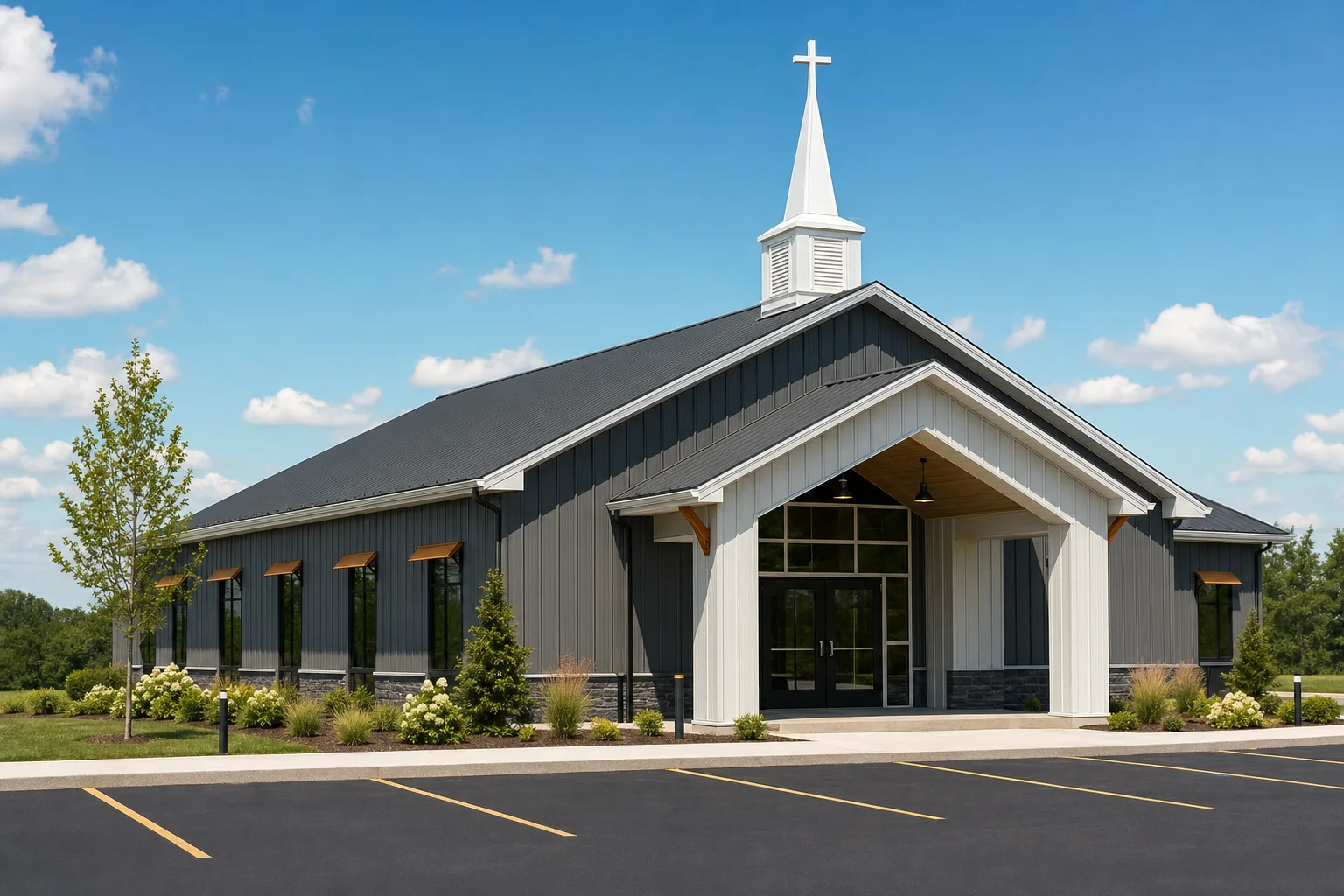
Mueller does not publish a fixed price list, so the honest answer is a range: a Mueller metal building shell tends to run roughly $12 to $25 per square foot as a 2026 illustrative figure, which puts a common 40×60 shop near $29,000 to $60,000 for the steel alone ‹confirm›. That number buys the kit, the frame, the roof and wall panels, the trim, and stamped drawings, not the slab, the doors, the freight, or the labor, so the price you pay to stand the building up is higher. Every figure here is an illustrative 2026 range to confirm against a live Mueller quote, since steel pricing shifts month to month.
This page is the deep cost answer that our metal building companies pillar and our Mueller metal buildings review touch on in brief. Below: what a Mueller price covers, how it moves with size and spec, what the shell number leaves out, and how to pull a real quote you can compare. No price here is a Mueller-published figure, so treat each one as a starting range to verify, not a fact about the brand.
The price
What a Mueller building price covers
A Mueller building price is the steel shell, not a finished structure. Like most manufacturers, Mueller quotes the kit: the primary frame, the roof and wall panels, the secondary framing, the fasteners and trim, and engineered drawings stamped for your site. That is the number a quote leads with, and it is where an honest budget starts. What it leaves out is everything that turns a weathertight shell into a usable building.
Split the budget into two buckets and the math stays clear: the kit, the steel you bolt up, and the build-out, the foundation, openings, and labor that make it stand. The kit is usually the smaller of the two, which is why a low shell price never means a cheap project. For what changes between buying direct from a manufacturer and through a dealer, see our local dealers vs national manufacturers guide.
By size
How much a Mueller building costs by size
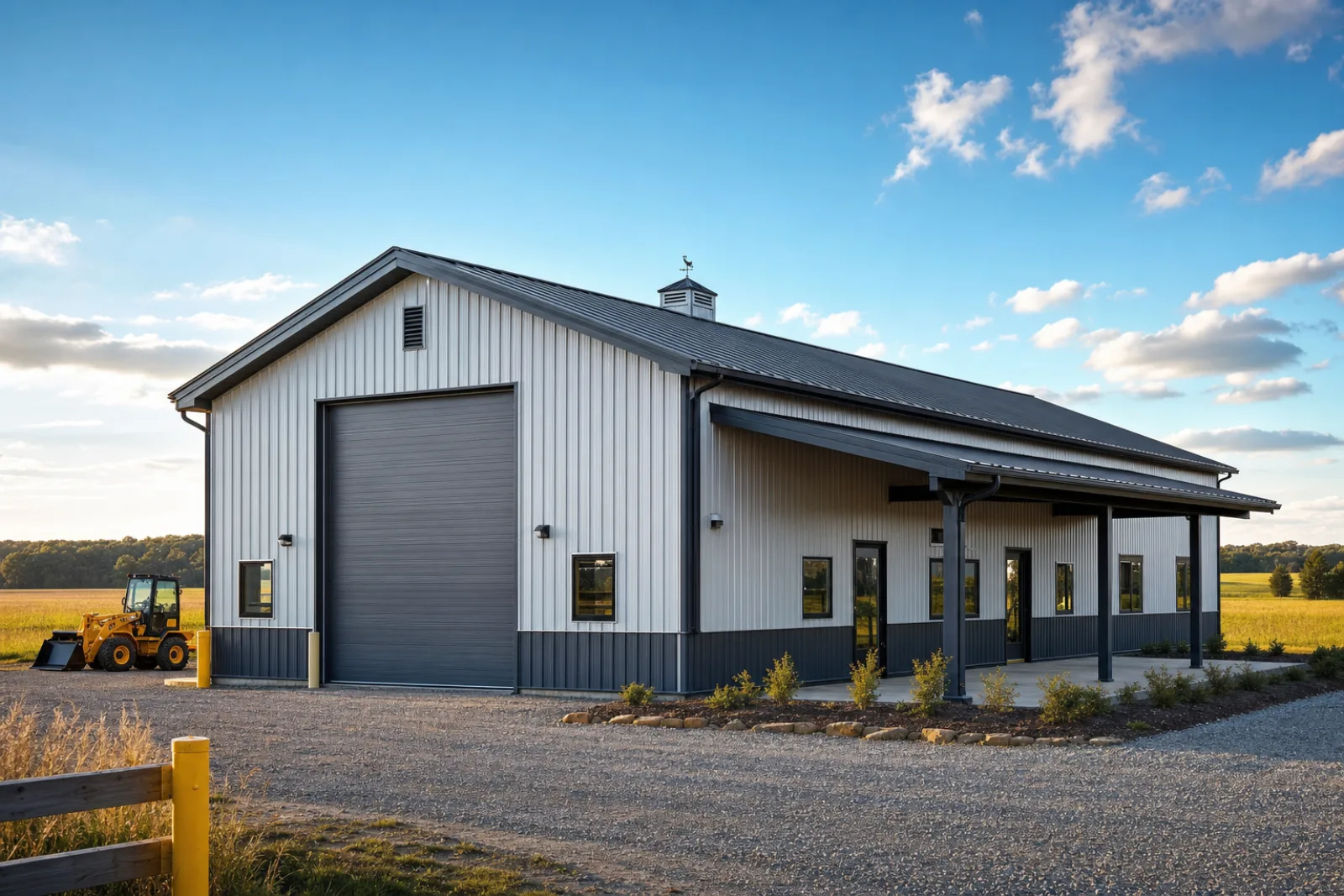
Price tracks footprint more than any other factor, because you buy steel by the pound. The sizes below cover what most Mueller shoppers ask about, from a single garage to a wide shop. These are shell-only, illustrative 2026 ranges that apply to metal buildings of this class, not Mueller-published prices. The spread inside each row is real: the low end is a lighter frame on a mild load, and the high end carries heavier steel, a taller wall, and stiffer engineering for snow or wind.
| Size | Footprint | Shell range (2026, illustrative) |
|---|---|---|
| 24×30 | 720 sq ft, two-car garage | $10k–$20k ‹confirm› |
| 30×40 | 1,200 sq ft, small shop | $16k–$32k ‹confirm› |
| 40×60 | 2,400 sq ft, common shop or barn | $29k–$60k ‹confirm› |
| 50×100 | 5,000 sq ft, large or commercial | $60k–$125k ‹confirm› |
Shell only, illustrative for 2026, not Mueller-published. Foundation, openings, freight, and labor are separate. Confirm against a live quote.
Notice the price per square foot falls as the building grows, because the fixed cost of the frame and the engineering spreads over more floor. A taller wall, a wider clear span, or a heavier load rating moves the same footprint up the range. To line a Mueller number up against rivals on the same spec, the how to compare metal building manufacturers guide turns this into a side-by-side scorecard.
The all-in cost
What the shell price leaves out
The shell is the first line of the budget, not the whole of it. None of the lines below are hidden, since any honest quote names them when you ask, but they rarely show up beside a shell number, which is how buyers get blindsided. The stack below sits on top of the steel, as illustrative 2026 figures to confirm locally:
| Cost line | What it is | Illustrative 2026 range |
|---|---|---|
| Foundation | Slab, footings, anchor bolts, grading | $5–$12 per sq ft ‹confirm› |
| Freight | Delivery from plant to your site | By distance, often $1k–$5k ‹confirm› |
| Openings | Doors, windows, framed-out walls | Per unit, priced to spec ‹confirm› |
| Erection labor | Crew to stand and sheet the shell | Often the largest single share ‹confirm› |
| Permits & engineering | Plan review, site-specific stamp | By jurisdiction ‹confirm› |
Illustrative 2026 ranges, not Mueller figures. Each line shifts with region, finish level, and DIY versus hired crew. Confirm each locally.
Shell price vs all-in price
A “kit” or “shell” price is the steel only. An “all-in” or “turnkey” price is the standing, finished building. The two can sit tens of thousands of dollars apart on the same footprint, so always ask which one a Mueller number describes.
Read a Mueller quote for what it includes, not just the number at the bottom. The cheapest shell on the page is often the one that leaves the most build-out off the spec sheet.
What moves it
What moves a Mueller building price
Two Mueller buildings of the same size can price thousands apart, and the spec sheet explains the gap. Before you weigh one quote against another, check the lines that drive the steel number:
- Footprint and height. Square footage sets most of it, and a taller wall for an RV bay or a loft adds steel on every column.
- Frame type. Red iron carries wide clear spans and costs more than light tube; the frame is the single biggest line on the shell.
- Snow and wind loads. A building stamped for heavy local loads uses heavier steel, so the same size costs more in snow country than on a mild site ‹confirm›.
- Panel gauge and coating. Thicker panels and a longer-lived coating raise the price up front and lower upkeep later.
- Openings and finish. Each framed door, window, and trim package adds material and engineering to the shell.
None of these are upsells; they are the spec that makes the building stand where you put it. When you compare a Mueller price against another brand, line up the frame, gauge, and load rating first, then the totals. A lower number on a lighter spec is not a better deal, and a vague quote that names none of these is the warning sign the red flags and scams to avoid guide walks through.
Your quote
How to get a real Mueller price for your build
Because Mueller prices to spec, the only number that matters is the one quoted for your exact building. Hand over an identical specification to Mueller and two or three rivals, then read the quotes side by side, so the only thing that moves is price and terms. Mueller sets its own current pricing, lead times, and product lines, so confirm every company-specific figure with them directly ‹confirm›, since this page gives ranges, not a live quote. For the wider cost method across the market, the metal building kit prices pillar reads each shell number next to its all-in cost.
Related
Read more
Keep going with the guides that turn a Mueller price into a decision:
- Metal building companies: the complete guide (the parent pillar).
- Mueller metal buildings review (the full company breakdown this page deepens).
- How to compare metal building manufacturers (line two quotes up on the same spec).
- Local dealers vs national manufacturers (how the buying channel moves price).
- Red flags and scams to avoid (the warning signs in a vague quote).
- Metal building kit prices (the cross-silo cost pillar).