A metal building sweats when warm, moist air inside it touches cold steel and the water in that air turns back to liquid on the surface. The panels and frame act like a cold glass on a humid day: drops form, run, and drip. The fix is not a better grade of steel. It is controlling moisture and air with insulation, a vapor barrier, ventilation, and a dry slab so the steel never reaches the temperature where water condenses on it.
This guide sits under the metal building kits pillar and answers the condensation question that decides whether your shell stays dry or rusts from the inside. Below: why steel sweats, the damage it does, how to stop it with insulation and airflow, how climate changes the plan, and how to fix a building that already drips.
Why it happens
Why a metal building sweats
Condensation forms when humid air meets a surface colder than its dew point, the temperature at which the air can no longer hold its moisture. Steel cools fast and holds little heat, so on a clear cold night the roof and walls drop below the dew point of the air inside long before the ground does. Water then collects on the underside of the panels and on the frame, the same way it beads on a cold drink in summer.
The moisture has to come from somewhere, and most of it comes from inside. People breathing, a running engine, a kerosene heater, wet firewood, damp gear, and bare concrete all add water to the air. A workshop with no airflow traps that moisture until the next cold surface pulls it out as liquid. The drier and better ventilated the air, the higher you can let the steel get cold before it sweats.
Bare steel with no insulation is the worst case because the panel sits at outdoor temperature while the air inside stays warm and damp. That single temperature gap is what you are fighting. Close it with insulation, lower the indoor humidity with ventilation, and the sweat has nowhere to form.
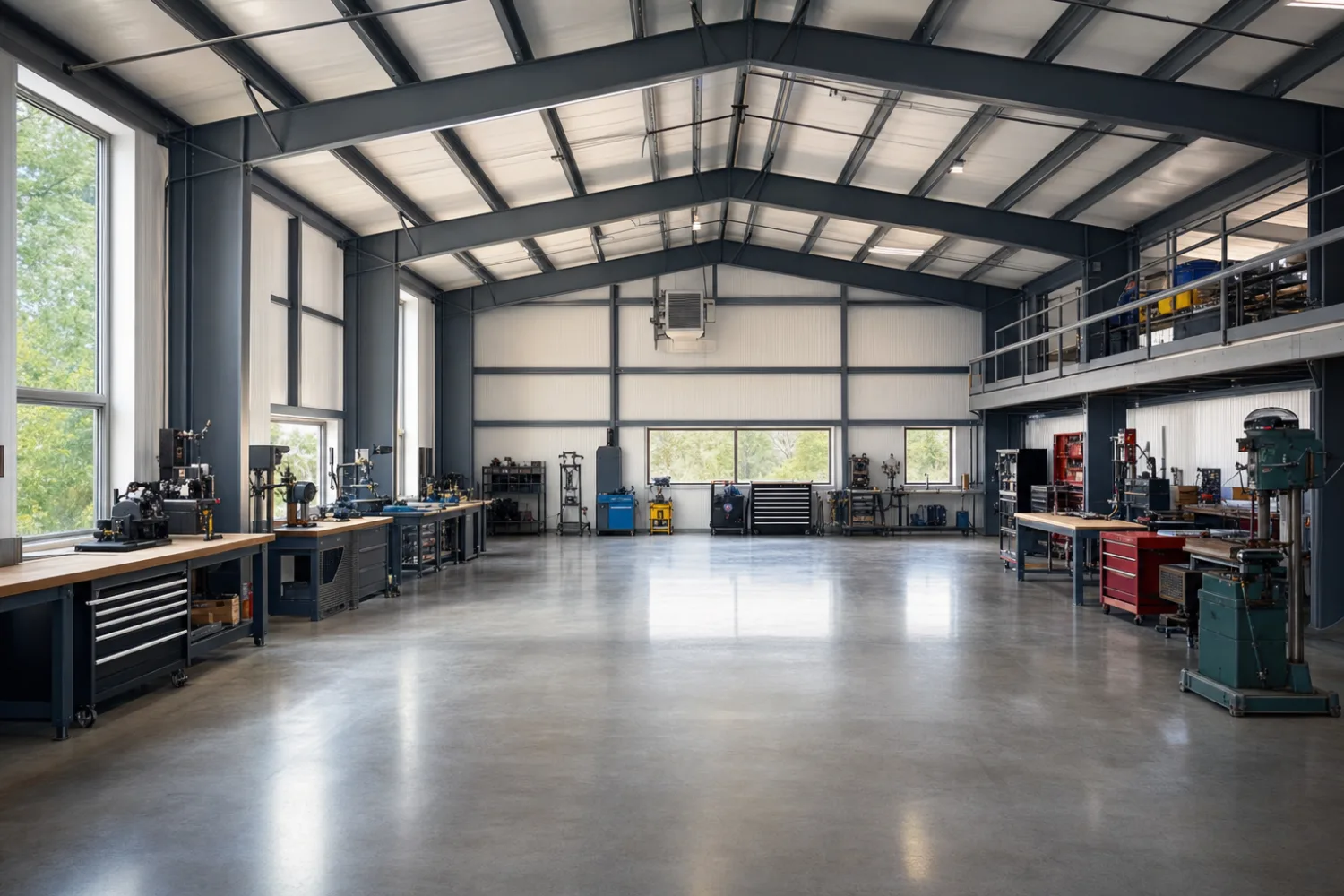
The damage
What condensation does to a metal building
Left alone, condensation rusts steel, ruins what you store, and rots anything organic in the building. The water that beads on the frame and panels is the leading cause of corrosion in an enclosed metal building, more than rain or weather, because it forms on the inside where coatings are thinner and inspection is rare. A frame that would last for decades dry can pit and streak in a few wet winters.
The drips do not stop at the steel. Water falls onto stored tools, vehicles, drywall, and electronics, leaving rust spots, water stains, and mold. People often blame a roof leak when the real source is the ceiling sweating and dripping in a pattern no rain would make. Damp insulation loses its value, fasteners weep rust trails, and wood framing or stored lumber starts to mold.
The slow cost is the one that hurts. Condensation works quietly through a cold season and shows up as rust streaks, musty air, and ruined boxes in spring. Because it traces back to rust on the inside of the shell, it shortens the life of the steel you paid a premium for. Stopping it is cheaper than repairing what it ruins.
How to stop it
Insulation, a vapor barrier, and a dry shell
You stop condensation by keeping the steel warm and the air dry, and insulation does both. A layer of insulation under the panels holds the inside surface above the dew point so water cannot form, and the facing on that insulation acts as a vapor barrier that blocks moist air from reaching the cold metal in the first place. Together they break the contact between humid air and cold steel that the whole problem depends on.
The vapor barrier has to face the warm, humid side, which in most buildings is the interior. A barrier installed backward traps moisture against the steel instead of keeping it away, so the facing direction matters as much as the insulation itself. Seal the seams, tape the tears, and do not leave gaps, because moist air finds the smallest opening. Our insulation guide walks the material choices and R-values for your climate.
Every common cause of condensation has a matching fix, and most buildings need two or three of them working at once. Map the cause to the cure before you spend money:
| Cause of condensation | What fixes it |
|---|---|
| Warm humid air on bare cold steel | Insulation with a vapor barrier facing the interior |
| High indoor humidity with no airflow | Ridge and gable vents, exhaust fans, open the air path |
| Moisture rising from a bare slab | Vapor barrier under the concrete, a sealed or dry floor |
| Unvented heaters and engines indoors | Vent combustion outside, dry firewood and gear before storage |
| A roof panel colder than the dew point | Insulate the roofline, add a thermal break at the panel |
Condensation is a moisture-and-temperature problem, so every fix either warms the steel or dries the air.
Insulation alone is not enough
Insulation raises the surface temperature, but it does not remove the water already in the air. A tightly sealed, well-insulated building with no ventilation can still sweat at cold bridges and trap humidity until it finds one. Pair insulation with airflow ‹confirm› so the moisture has a way out, and keep up basic maintenance so seals and vents stay clear.
Move the air
Ventilation: ridge vents, gable vents, and a path for moist air
Ventilation lowers indoor humidity by trading damp inside air for drier outside air, and it works best when the air has a path to flow. The proven pattern is low intake and high exhaust: air enters near the eaves or through gable vents and leaves through a ridge vent at the peak, so the warm, moist air rises and escapes on its own. That steady exchange keeps the dew point inside below the temperature of the steel.
Ridge vents run the length of the roof peak and let the hottest, dampest air out where it collects. Gable vents and louvers in the end walls add intake and cross-flow. On a working shop, a powered exhaust fan or a turbine vent moves more air when the building is sealed tight or the load of moisture is high. The goal is the same in every case: never let humid air sit still against a cold panel.
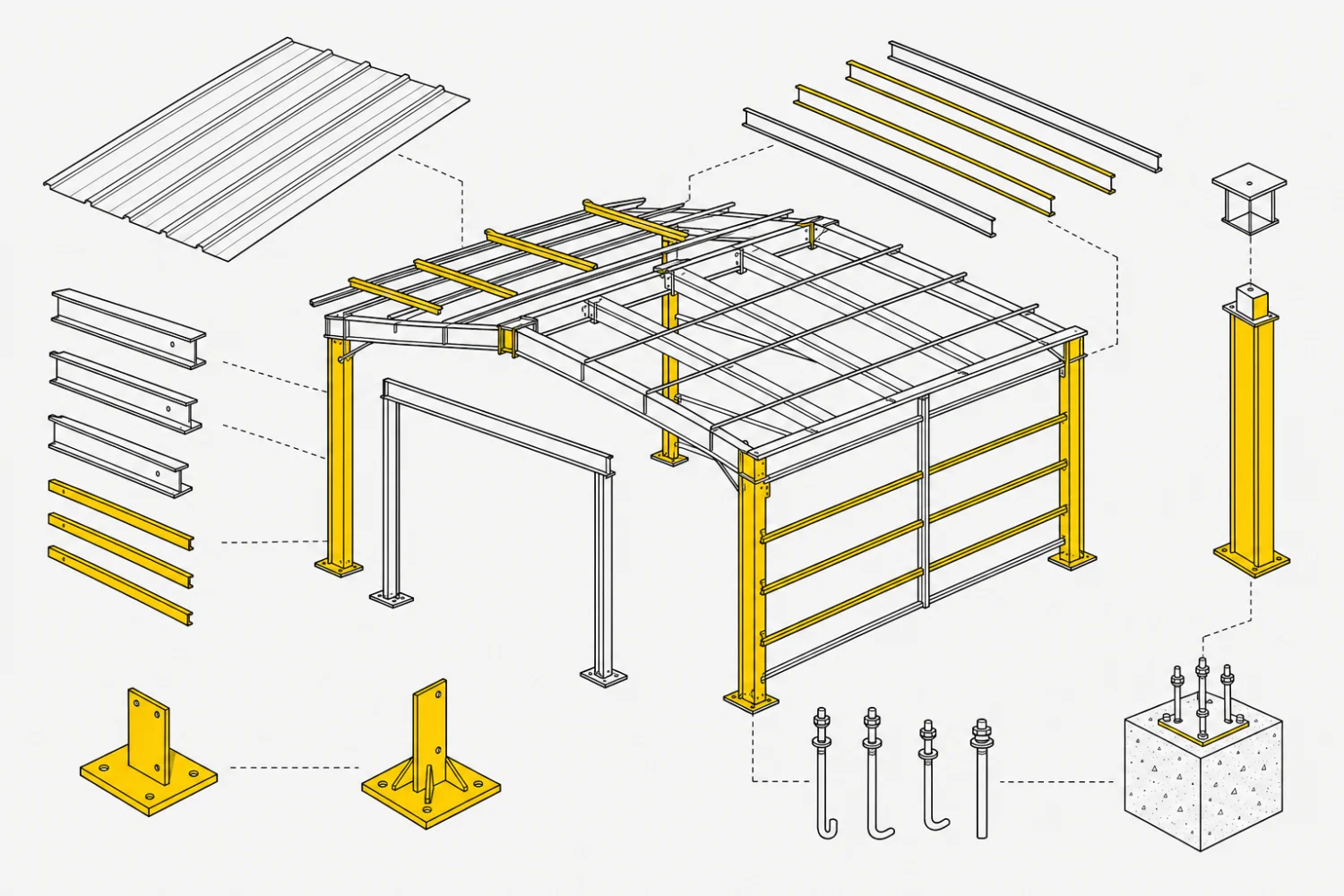
Ventilation and insulation are partners, not rivals. Insulation keeps the steel warm and the vapor barrier keeps bulk moisture off it, while ventilation carries away the humidity that still builds up from people, heaters, and the slab. A building that has both stays dry through the seasons. A building with neither sweats every cold night, no matter how good the steel.
Slab and climate
The slab underfoot and your climate
A bare concrete slab is a hidden humidifier. Concrete wicks moisture from the ground and releases it into the building as vapor, which then condenses on the cold steel above. A polyethylene vapor barrier under the slab, poured in at construction, cuts that moisture off at the source. On an existing floor, a penetrating concrete sealer and a dry, well-drained site reduce how much water the slab gives up.
Climate sets how hard you have to work. In cold or northern regions the steel spends long stretches below the dew point of heated indoor air, so insulation and a vapor barrier do the heavy lifting. In hot, humid regions the outside air itself carries moisture, so ventilation and dehumidification matter more, and a vapor barrier may need to face differently. In dry climates a building can get away with less, though a cold clear night still sweats an uninsulated roof.
The swing between day and night drives the worst of it. Steel that bakes warm by afternoon and drops fast after sunset crosses the dew point right as the building cools, which is why so much condensation forms overnight. Match the plan to your local pattern: more sealing and insulation where it is cold, more airflow where it is humid, and a vapor barrier under any slab you can reach.
Retrofit
Fixing condensation after the building is up
You can stop condensation in a building that already drips, though the work is harder than building it dry from the start. The most effective retrofit is to add insulation to the underside of the roof and walls, because that warms the steel and adds a vapor barrier in one step. Closed-cell spray foam bonds to the panels and seals the gaps at the same time, which is why owners of sweating buildings reach for it first.
If full insulation is out of budget, you still have moves. Add ridge and gable vents to pull humid air out, run a dehumidifier through the cold months, vent any combustion heater to the outside, and store damp gear and firewood elsewhere until it dries. Seal a bare slab and fix the drainage around the building so the ground stops feeding moisture upward. Each step lowers the humidity or warms the steel, and a few together often settle a sweating building.
Whatever you do, treat the existing rust first. Wire-brush and prime the streaks before you cover the panels, because sealing insulation over active corrosion hides it instead of stopping it. Pair the retrofit with steady rust prevention and routine maintenance, and a building that once dripped every winter stays dry.
FAQ
Metal building condensation: common questions
Why does my metal building sweat?
It sweats because warm, moist air inside touches steel that has cooled below the dew point, and the water in the air condenses on the cold surface. Steel cools fast, so on a clear cold night the roof and walls drop below the dew point and water beads on the underside. The moisture comes from people, heaters, a bare slab, and damp gear with no airflow to carry it away.
How do you stop condensation in a metal building?
You keep the steel warm and the air dry. Add insulation with a vapor barrier facing the interior so the panel surface stays above the dew point, and add ridge and gable vents so humid air leaves the building. Seal a bare slab with a vapor barrier underneath, and vent any combustion heater outside. Most buildings need two or three of these working together.
Do metal buildings need ventilation?
Yes. Ventilation trades damp inside air for drier outside air and keeps indoor humidity from building up against cold steel. The standard pattern is low intake at the eaves or gables and high exhaust at a ridge vent, so moist air rises and escapes on its own. A sealed building with no airflow can still sweat even when it is well insulated.
Does insulation stop condensation?
Insulation goes most of the way by holding the steel surface above the dew point and, with its vapor barrier facing, blocking moist air from reaching the metal. It does not remove the water already in the air, so a tightly sealed building still needs ventilation to carry humidity out. Insulation and airflow together are what keep a building dry.
Can you fix condensation after the building is built?
Yes. The strongest retrofit is adding insulation to the underside of the roof and walls, and closed-cell spray foam both warms the steel and seals the gaps. On a smaller budget, add ridge and gable vents, run a dehumidifier in cold months, vent heaters outside, and seal the slab. Treat any existing rust before you cover the panels.
Is the water dripping from my roof a leak or condensation?
It is often condensation, not a leak. Condensation drips along the whole underside of the roof in a spread-out pattern and shows up on cold nights even when it has not rained, while a leak follows a seam, fastener, or flashing and tracks rain. If the drips appear in cold, clear weather and cover a wide area, the ceiling is sweating.
Related guides
Keep reading
Condensation ties into the rest of keeping a metal building sound and dry. Follow these next:
- Metal building kits: the complete guide (the parent pillar).
- Metal building insulation (the layer that keeps the steel warm and dry).
- Metal building rust prevention (stopping the corrosion condensation starts).
- Metal building maintenance (keeping vents, seals, and the shell in shape).
- Metal building glossary (dew point, vapor barrier, and every other term defined).